When should brake pads be replaced? signs, mileage, and safety risks
Brake pads do not fail suddenly. They wear gradually, often giving clear warning signs before performance becomes unsafe. Knowing when brake pads should be replaced helps drivers avoid reduced stopping power, rotor damage, and unnecessary repair costs.
This guide explains the most reliable signs of brake pad wear, typical replacement intervals, and the safety risks of delaying service.
For full context on how replacement timing fits into overall brake maintenance, review how brake inspection and pad replacement affect safety.
Why brake pad replacement timing matters
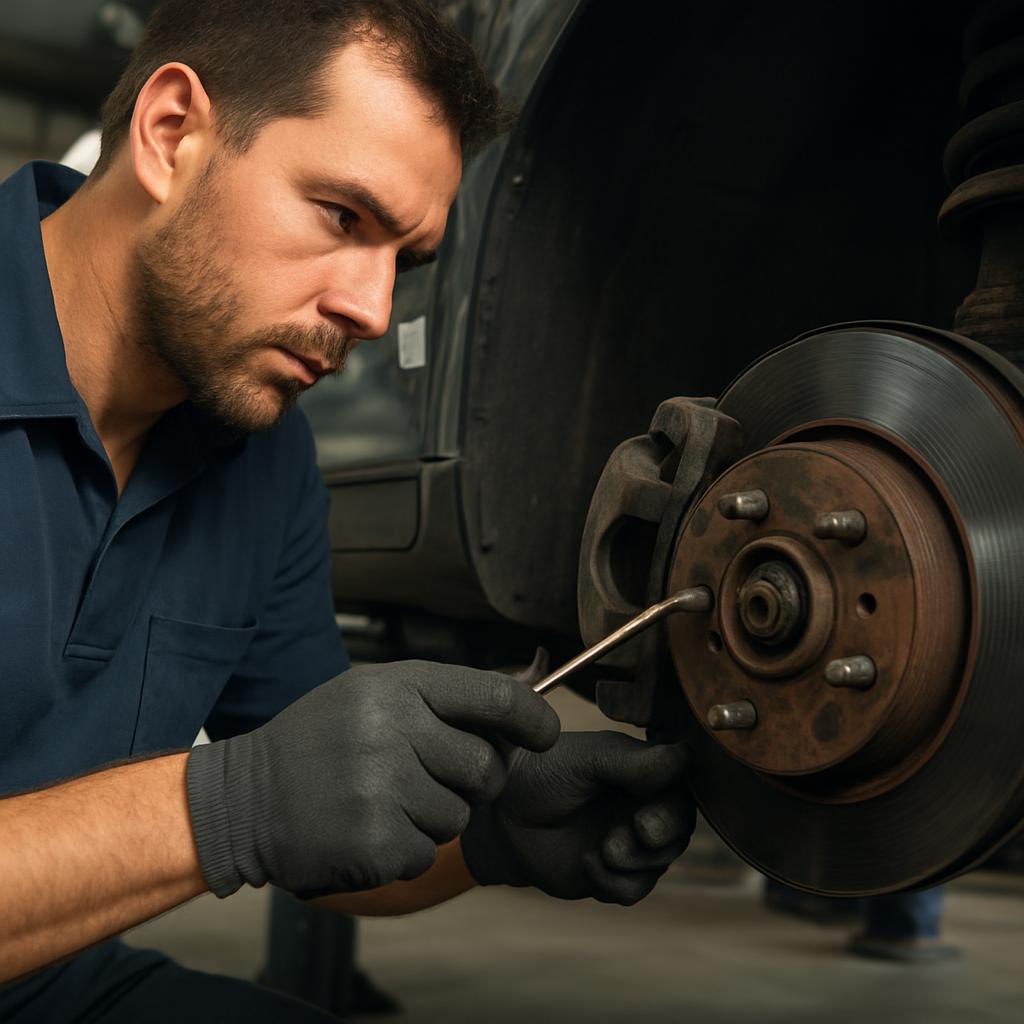
Brake pads are designed to wear out before other brake components. When replacement is delayed, worn pads can damage rotors, overheat calipers, and increase stopping distance.
Replacing pads at the right time protects the entire braking system. It also reduces the risk of sudden brake failure during emergency stops.
Proper timing is a safety decision, not just a maintenance task.
Average brake pad lifespan by mileage
Most brake pads last between 30,000 and 70,000 miles, depending on driving conditions, vehicle type, and pad material.
City driving, heavy traffic, towing, and mountainous terrain accelerate wear. Highway driving and smooth braking habits extend pad life.
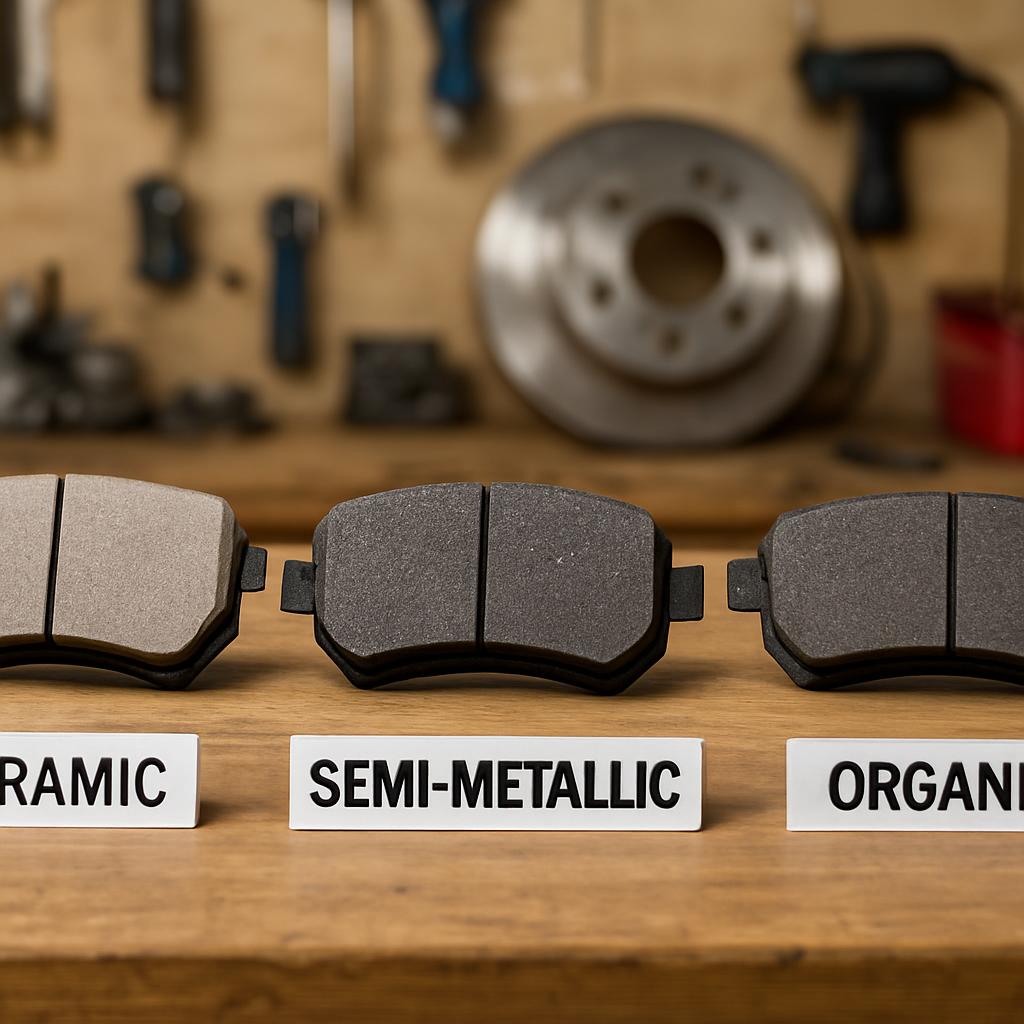
Understanding pad materials helps explain lifespan differences, which are covered in brake pad types explained: ceramic vs semi-metallic vs organic.
Common signs brake pads need replacement
Brake pads usually provide multiple warnings before they are fully worn. Ignoring these signs increases repair costs and safety risks.
Squealing or high-pitched noises
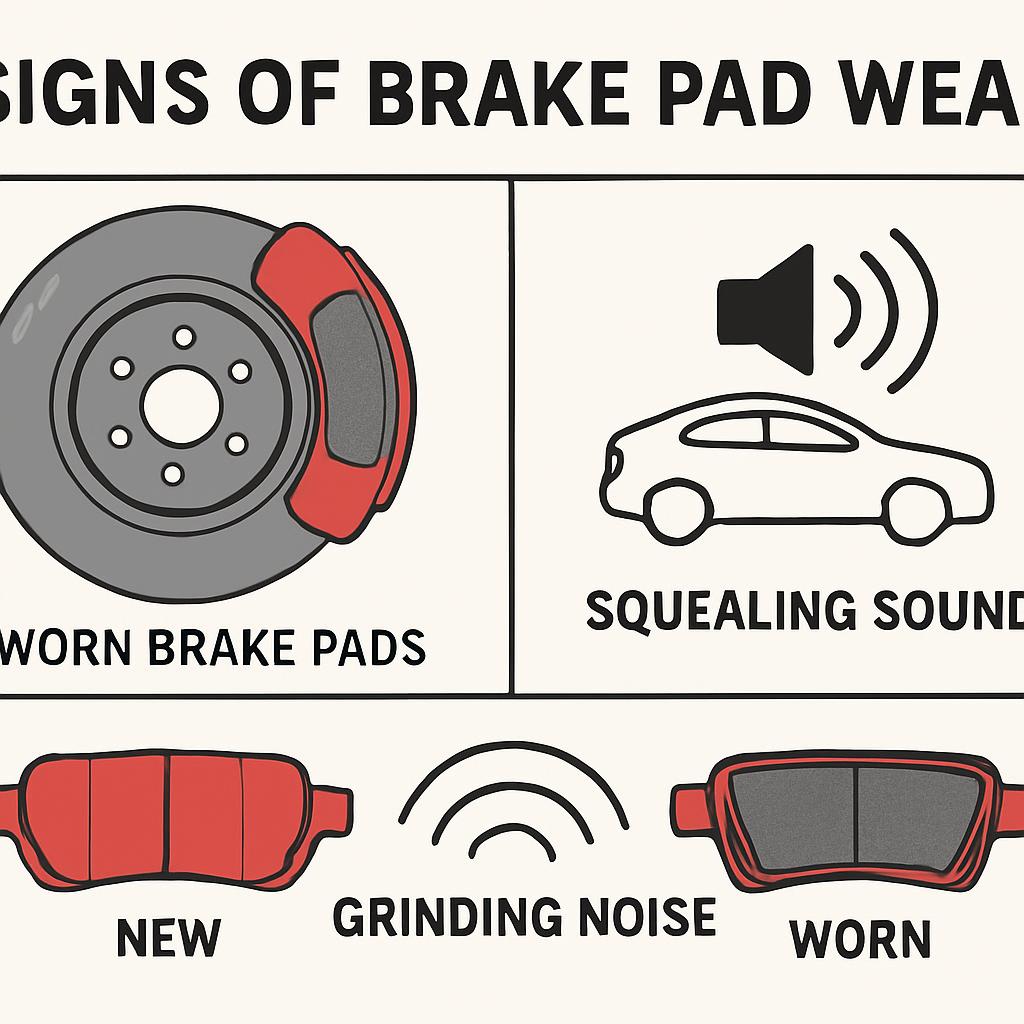
Most pads include wear indicators that create a squealing sound when pad thickness becomes low. This is an early warning and should not be ignored.
Grinding noises
Grinding indicates the pad material is completely worn and metal is contacting the rotor. This requires immediate service to prevent rotor damage.
Reduced braking performance
Longer stopping distances or weaker braking response often indicate worn pads.
Vibration during braking
Shaking or pulsing may result from uneven pad wear or damaged rotors caused by delayed replacement.
Visual indicators of worn brake pads
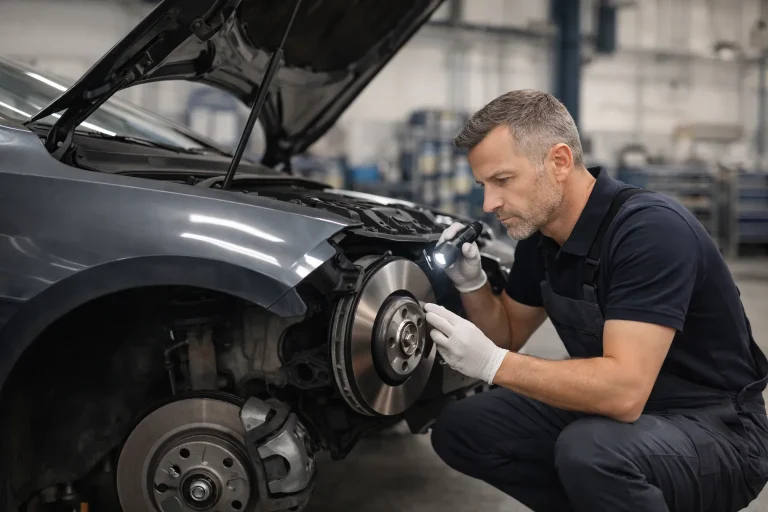
Visual inspection is one of the most reliable ways to assess pad condition. Pads should generally be replaced when friction material reaches about 3 millimeters.
Uneven wear between inner and outer pads may indicate caliper issues. Regular inspection helps catch these problems early, as explained in how to inspect your brakes: a step-by-step safety guide.
Brake warning lights and sensors
Many modern vehicles are equipped with brake wear sensors or dashboard warning lights. These systems alert drivers when pads reach minimum thickness.
While sensors are helpful, they should not replace regular inspection. Sensors may fail or trigger later than ideal replacement timing.
Drivers should treat warning lights as a confirmation, not the first indicator.
Risks of delaying brake pad replacement
Driving with worn brake pads creates multiple risks:
- Increased stopping distance
- Rotor damage and overheating
- Brake fade under repeated braking
- Higher repair costs
In severe cases, metal-on-metal contact can compromise braking entirely. Planning service early reduces both safety and financial risks.
To understand financial impact, review average brake pad replacement costs in the U.S. before damage occurs.
How driving habits affect brake pad wear
Aggressive braking, frequent stop-and-go traffic, and heavy loads accelerate pad wear. Riding the brakes downhill also increases heat buildup and reduces lifespan.
Smooth braking, maintaining distance, and using engine braking when appropriate can significantly extend pad life.
Driving habits are one of the most controllable factors in brake maintenance.
Should brake pads be replaced early?
Replacing pads slightly early is often safer and more cost-effective than waiting until they are fully worn. Early replacement protects rotors and ensures consistent braking performance.
Drivers who prefer predictable maintenance schedules often replace pads before minimum thickness is reached.
Whether to handle replacement yourself or hire a professional depends on experience, which is covered in DIY vs professional brake service.
Common mistakes when replacing brake pads
A common mistake is replacing only one axle instead of both front or both rear pads. Another is ignoring rotor condition during pad replacement.
Using the wrong pad material for driving conditions can also reduce performance or increase noise.
Proper replacement includes inspection, correct pad choice, and professional installation when needed.
Final thoughts on brake pad replacement timing
Knowing when brake pads should be replaced is essential for safe driving and long-term brake system health. Warning noises, visual wear, reduced performance, and mileage are all reliable indicators.
Replacing pads on time protects rotors, reduces costs, and ensures consistent stopping power.
For a complete brake maintenance overview, return to reliable brake pad options for everyday driving.