When seniors should drop collision coverage in Florida
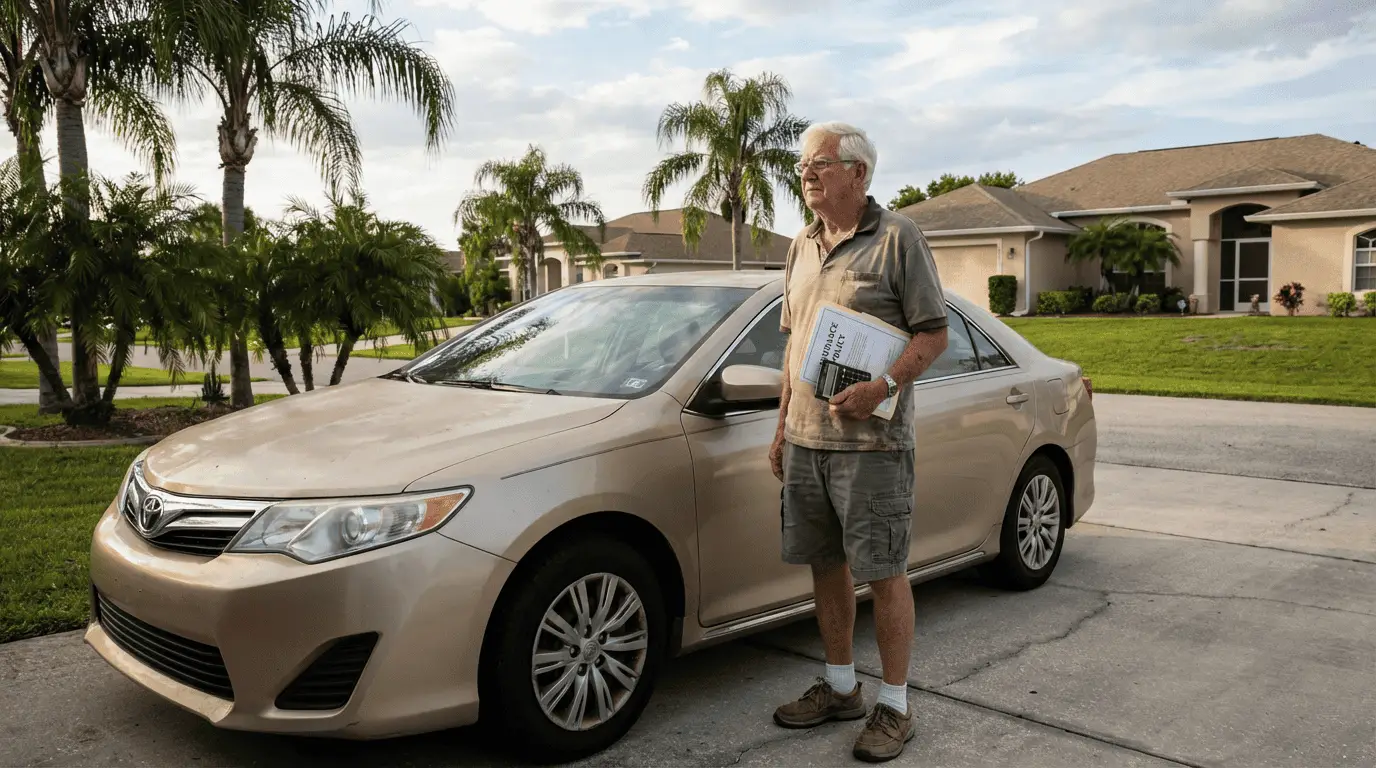
My neighbor Jim drives a 2011 Toyota Camry worth maybe $5,000 on a good day. Last month he showed me his insurance bill and I nearly spit out my coffee. He was paying $720 annually for collision and comprehensive coverage on that car. That’s 14% of what the vehicle is actually worth just for optional coverage he probably doesn’t need.
This happens all the time with senior drivers. You’ve had the same insurance policy for years, maybe decades. The car gets older and loses value but your coverage stays the same. Nobody at the insurance company is going to call and suggest you drop expensive coverages you don’t need anymore. They’re perfectly happy taking your money.
Florida seniors on fixed incomes need to be strategic about insurance spending. Collision and comprehensive coverage make sense for newer valuable vehicles, but they become wasteful expenses on older cars. Knowing when to drop these coverages can save you hundreds or thousands annually without sacrificing the protection you actually need.
Understanding collision and comprehensive coverage
These are the parts of your policy that cover damage to your own vehicle. Collision pays for repairs if you hit another car or object regardless of who’s at fault. Comprehensive covers theft, vandalism, weather damage, hitting an animal and other non-collision incidents.
Neither is legally required in Florida. The state only mandates liability coverage and personal injury protection. You must have collision and comprehensive if you’re financing or leasing a vehicle because the lender requires it. Once the car is paid off these coverages become optional.
That’s the key word. Optional. You get to decide if they’re worth the cost based on your vehicle’s value and your financial situation.
Most people keep collision and comprehensive out of habit. You’ve always had full coverage so you just keep renewing it every year without thinking about whether it still makes sense. Insurance companies count on this autopilot behavior.
The 10% rule explained
Insurance professionals use a simple guideline called the 10% rule. If your annual collision and comprehensive premiums exceed 10% of your car’s actual cash value you should seriously consider dropping those coverages.

Here’s how it works. Look up your car’s current market value using Kelley Blue Book or Edmunds. Be honest about the condition. Then check how much you’re paying annually for collision and comprehensive. Divide the premium by the vehicle value.
Jim’s 2011 Camry is worth $5,000. His collision and comprehensive cost $720 yearly. That’s 14.4% of the car’s value. Way over the 10% threshold. He’s overpaying for coverage that doesn’t make financial sense.
Let’s say Jim keeps that coverage and has an accident next year. After his $500 deductible the maximum payout would be $4,500. But he’s already spent $720 in premiums. If he goes two years without a claim he’s paid $1,440 for coverage on a $5,000 car. Three years is $2,160. You see the problem.
The insurance company will never pay more than the actual cash value minus your deductible. As your car depreciates that maximum payout keeps shrinking while your premiums often stay flat or even increase slightly.
Calculating your specific threshold
Pull out your current insurance policy declarations page. Find the line items for collision and comprehensive. Add those together for your annual cost. If you pay monthly multiply by 12.
Now look up your vehicle’s value. KBB and Edmunds both have free valuation tools. Enter your make, model, year and mileage. Be realistic about condition. Most used cars fall into fair or good condition not excellent.
Divide your annual collision and comprehensive cost by your car’s value. If the result is over 0.10 or 10% you’re in the danger zone for overpaying.
My neighbor Jim’s calculation was $720 divided by $5,000 equals 0.144 or 14.4%. Well above the threshold. I had him drop both coverages and his annual premium fell from $1,240 to $520. Same liability limits, same coverage for injuries and damage he causes to others, just no coverage for his own vehicle damage.
Some financial advisors use an even stricter rule. They say drop these coverages when premiums hit 5% of vehicle value. That’s more conservative but makes sense if you’re trying to minimize insurance spending in retirement.
What happens when you drop coverage
You save money immediately. Collision and comprehensive typically account for 40-60% of your total premium depending on your age, location and driving record. Dropping them cuts your bill roughly in half.
The trade-off is you’re self-insuring for damage to your own vehicle. If you total the car in an accident you get nothing from insurance. If someone steals it you’re out of luck. If a tree falls on it during a hurricane you pay for repairs yourself.
This sounds scary but think about it practically. If your car is worth $5,000 and you have $5,000 in savings you can replace it if something happens. You’re essentially your own insurance company at that point.
Actually you’re in a better position than with insurance. No deductible to pay. No waiting for claims processing. No risk of your rates going up after a claim. You just use your savings to buy another similar used car and move on.
The risk you’re taking is having to spend $5,000 unexpectedly if your car gets totaled or stolen. For many retirees that’s an acceptable risk especially when the alternative is paying $700 or more annually for coverage that might never pay out.
When to keep collision and comprehensive
If your car is worth more than $10,000 think carefully before dropping these coverages. A $15,000 vehicle represents substantial value you might not want to self-insure.
Run the 10% calculation. If collision and comprehensive cost $1,200 annually on a $15,000 car that’s only 8%. Below the threshold. Keeping the coverage might make sense.
Also consider your emergency fund. If you don’t have savings to replace your vehicle losing it to theft or an accident creates a serious transportation problem. Florida isn’t walkable in most areas. You need a car to get around.
Some seniors have low savings but own their home with equity. In theory you could borrow against your home to replace a car but that’s expensive and complicated. Better to keep the insurance coverage if you don’t have liquid savings available.
Another factor is your driving record. If you have multiple accidents or claims in recent years you might want to keep coverage even on an older vehicle. You’re statistically more likely to have another incident.
Florida weather is worth considering too. Hurricane season brings risks of flooding and wind damage. Comprehensive covers weather-related vehicle damage. If you live in a flood zone or area prone to hurricanes keeping comprehensive might be smart even if collision isn’t worth it.
Keeping comprehensive while dropping collision

You don’t have to drop both coverages. Some seniors choose to drop collision but keep comprehensive. This makes sense in certain situations.
Collision covers accidents you cause or share fault for. If you’re a cautious driver who hasn’t had an at-fault accident in decades your collision risk is low. Dropping it saves money on coverage you’re unlikely to use.
Comprehensive covers things outside your control. Theft, vandalism, weather, animal strikes. These risks exist regardless of your driving skill. Comprehensive usually costs less than collision too.
I’ve seen this strategy work well for Florida seniors living in areas with higher vehicle theft rates or severe weather exposure. Drop collision to save money but keep comprehensive for protection against external risks.
The combined cost of just comprehensive might stay under that 10% threshold even when collision alone would exceed it. Worth calculating both scenarios.
Raising deductibles as a middle ground
If you’re not ready to drop collision and comprehensive entirely consider raising your deductibles instead. This reduces premiums while maintaining some coverage.
Standard deductibles run $500 or $1,000. Increasing to $2,500 or even $5,000 can cut your collision and comprehensive costs by 30-50%. You’re still covered for total losses but small claims come out of your pocket.
This approach makes sense if you have savings to cover a higher deductible but want protection against catastrophic vehicle loss. A $5,000 deductible on a $12,000 car means insurance only kicks in for major damage but your premiums might drop from $900 to $450 annually.
For seniors with adequate emergency funds high deductibles offer a middle path between full coverage and liability-only. You’re self-insuring for minor damage while maintaining protection for total losses.
Notifying your insurance company
Call your agent or the company directly. Tell them you want to remove collision and comprehensive from your policy. They’ll probably try to talk you out of it. That’s their job.
They might say things like “what if you total your car” or “you’ll regret not having coverage.” Stick to your decision if you’ve done the math and know it makes sense for your situation.
Ask for the new premium quote in writing before finalizing the change. Verify the collision and comprehensive line items show zero. Make sure your liability limits and other coverages remain unchanged.
Some companies allow this change online through your account portal. Others require a phone call or meeting with an agent. Either way get written confirmation of the change and your new lower premium.
The change usually takes effect immediately or at your next renewal. Some insurers might prorate and refund part of your current premium if you’re mid-term.
What to do with the savings

If dropping collision and comprehensive saves you $600 annually consider putting that money into a dedicated car replacement fund. Open a separate savings account and deposit $50 monthly.
After two years you’ll have $1,200 saved. Four years is $2,400. Six years gets you to $3,600. By the time you might actually need to replace your vehicle you’ve accumulated substantial funds for it.
This strategy works especially well for seniors who drive the same car for many years. My neighbor Jim is 68 and plans to drive his Camry until it dies. If he saves the $600 yearly he was wasting on unnecessary coverage for five years that’s $3,000 toward his next vehicle.
You could also use the savings to boost emergency funds or reduce other debts. The point is that money becomes available for whatever financial priority matters most to you instead of disappearing into insurance premiums for coverage you probably won’t use.
Making the decision
Dropping collision and comprehensive isn’t right for everyone but it makes solid financial sense for many Florida seniors driving older paid-off vehicles. Run the numbers for your specific situation.
Calculate your vehicle’s current value honestly. Check your annual collision and comprehensive costs. Do the 10% math. Consider your savings and ability to replace the vehicle if something happens.
Talk it over with your spouse or family. Some people sleep better knowing they have full coverage even if it’s not the most economical choice. Peace of mind has value too.
Remember you can always add coverage back if your situation changes. Buy a newer vehicle and you’ll want collision and comprehensive again. Your financial situation improves and you prefer the coverage even on an older car, no problem adding it back.
Insurance should adapt to your changing needs and circumstances. What made sense at 45 when you were working and driving a newer financed vehicle might not make sense at 70 with a paid-off older car and limited retirement income.
Understanding comprehensive senior driver auto insurance tips in Florida means knowing when to adjust your coverage as your vehicles age and your financial priorities shift in retirement. The goal is adequate protection without overpaying for coverage that doesn’t match your current situation. For seniors already maximizing other savings opportunities, learning about available discounts for senior drivers helps create a complete strategy for managing insurance costs throughout retirement.
Stay covered, stay safe, and happy driving.