When is the best time to switch auto insurance in California?

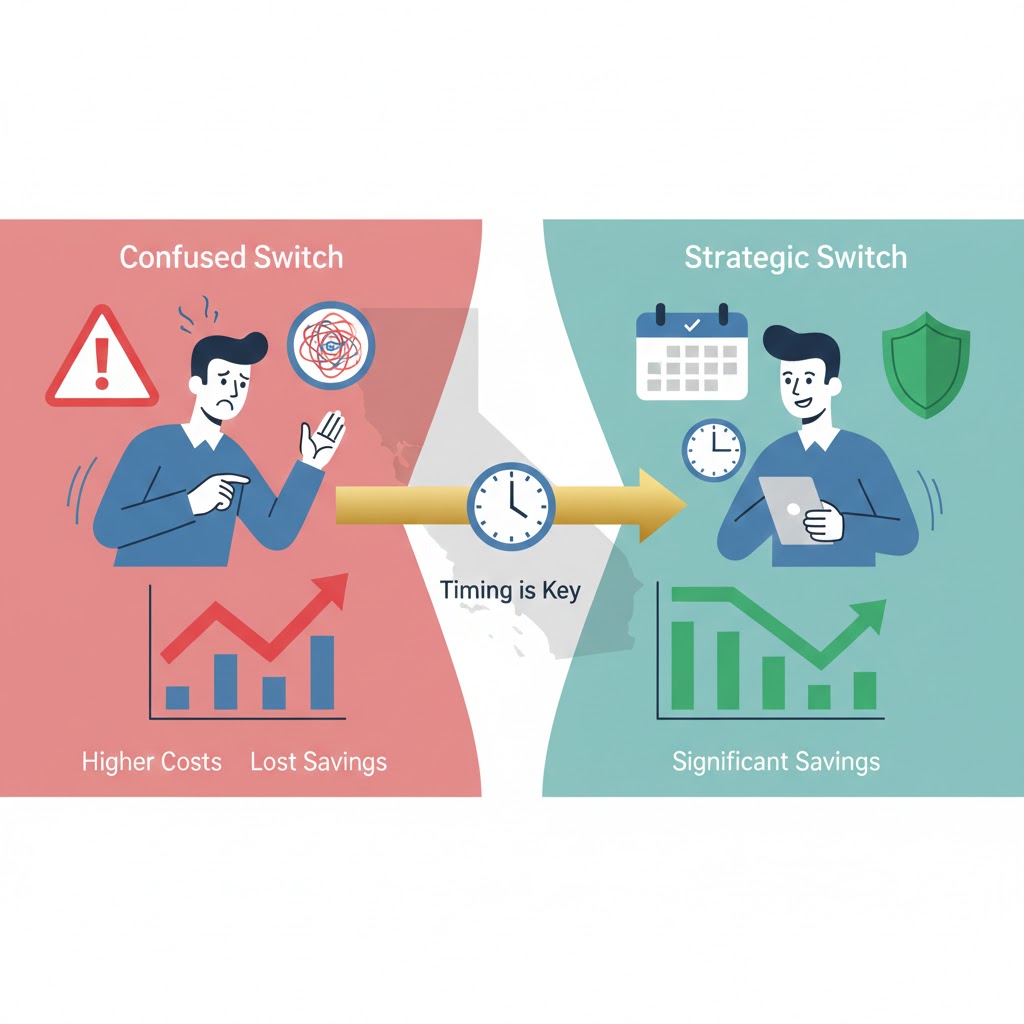
Switching auto insurance providers can lead to substantial savings, but timing is everything, especially in California. Many drivers focus on how to switch insurers but overlook when to do it. In a highly regulated insurance market like California, choosing the right moment can mean the difference between modest savings and a significant long-term reduction in premiums.
California’s insurance system is shaped by strict consumer protection laws, unique underwriting rules, and mandatory discounts such as the Good Driver Discount. These factors make timing more important than in many other states. Certain moments create optimal pricing conditions, while others can unintentionally lock drivers into higher rates.
This article explains when the best time to switch auto insurance in California truly is, based on state law, insurer pricing behavior, discount eligibility windows, and real-world driving record timelines. It is written for drivers who want to switch strategically, not impulsively, and for niche automotive insurance websites seeking evergreen, high-authority content.
Why timing matters more in California
California auto insurance pricing is not fluid in the same way it is in other states. Because insurers are limited in the factors they can use, rate recalculations occur at specific trigger points, not continuously.
Timing affects:
- How insurers evaluate your driving record
- Which discounts apply at binding
- Mileage tier placement
- How violations and accidents are weighted
- Whether rate increases are locked in for a full term
Switching at the wrong time can freeze unfavorable factors into a new policy, while switching at the right time can immediately unlock savings.
The single best time to switch: at policy renewal
For most California drivers, policy renewal is the optimal moment to switch auto insurance providers.
Why renewal is ideal
At renewal:
- Insurers recalculate premiums from scratch
- Discounts are reassessed
- Mileage estimates are updated
- Claims and violations are re-evaluated
Switching at renewal avoids:
- Mid-term cancellation complications
- Refund delays
- Coverage overlap confusion
Most importantly, renewal is when insurers are most competitive, knowing drivers are actively comparing options.
Switching after a rate increase
One of the most common reasons California drivers switch insurers is a sudden premium increase at renewal.
Why rate increases happen
Common causes include:
- Loss of a discount
- Reclassification into a higher mileage tier
- Area-wide rate adjustments
- Changes in insurer risk appetite
Because California limits how insurers justify increases, shopping immediately after a rate hike is often highly effective. Another insurer may price the same risk profile very differently.
Switching after violations age off your record
California insurers primarily evaluate the most recent three years of driving history.
Why this matters
If:
- A traffic violation turns three years old
- An at-fault accident exits the rating window
- License points drop off
Then your risk profile improves instantly.
Best practice
Drivers should:
- Check their DMV record
- Confirm violation dates
- Shop for insurance immediately after eligibility improves
Waiting even one extra renewal cycle can cost hundreds of dollars.
Switching after regaining good driver discount eligibility
The Good Driver Discount is mandatory in California and worth at least 20 percent.
Timing strategy
If you recently:
- Regained Good Driver eligibility
- Corrected an error on your driving record
- Completed the three-year clean period
That moment is an ideal time to switch insurers.
Some insurers apply the discount more consistently and transparently than others. Switching ensures the discount is properly applied from day one.
Switching after reducing annual mileage
Mileage is one of the most powerful pricing factors in California.
Life changes that reduce mileage
- Transition to remote or hybrid work
- Retirement
- Relocation closer to work
- Adding a second vehicle to the household
Why timing matters
Insurers typically lock mileage estimates at policy inception. Switching after mileage drops allows you to reset your mileage tier immediately instead of waiting for reassessment.
Switching after buying or selling a vehicle
Vehicle changes create natural insurance transition points.
After buying a new vehicle
Switching insurers can:
- Prevent overpricing based on default assumptions
- Ensure correct safety feature discounts
- Avoid inflated collision and comprehensive rates
After selling or downgrading a vehicle
Switching allows:
- Immediate premium recalculation
- Removal of unnecessary coverage
- Adjustment of deductibles
Vehicle changes are one of the cleanest switching opportunities.
Switching after a life change
Certain life events alter risk exposure in ways insurers recognize.
High-impact life changes
- Moving to a different city or ZIP code
- Marriage or divorce
- Adding or removing household drivers
- Children leaving for college
California insurers reprice aggressively around these changes, making them ideal moments to shop.
Switching mid-policy: Is it ever a good idea?
While renewal is usually best, mid-policy switching can still make sense.
Situations where mid-policy switching works
- Severe rate increase applied mid-term
- Discovery of major discount errors
- Significant mileage reduction mid-policy
- Dissatisfaction with claims handling
Risks of mid-policy switching
- Temporary coverage overlap
- Delayed refunds
- Administrative errors
Mid-policy switching requires careful coordination but can still produce savings when timing is critical.
Switching after an accident: Timing considerations
Many drivers assume switching after an accident is pointless. In California, this is not always true.
Fault matters
- Not-at-fault accidents often have limited pricing impact
- Comprehensive claims are weighted differently
- Insurers vary in how heavily they penalize claims
Best timing strategy
Switching is most effective:
- After claim resolution
- When fault determination is clear
- When time has passed since the incident
Immediate switching is not always optimal, but strategic waiting can be.
Switching with an open claim
California drivers are allowed to switch insurers even with an active claim.
Important rules
- The old insurer remains responsible for the claim
- The new insurer covers future incidents only
- Claim history still follows the driver
Timing should prioritize claim resolution clarity to avoid confusion.
Switching before vs after renewal: Cost comparison
Switching before renewal
Pros:
- Immediate relief from high rates
- Early discount correction
Cons:
- Possible forfeiture of prepaid premiums
- Less competitive pricing
Switching at renewal
Pros:
- Maximum insurer competition
- Clean pricing reset
- Simplified administration
Cons:
- Requires planning ahead
For most drivers, renewal switching remains superior.
How often should California drivers switch insurance?
There is no penalty for switching frequently.
Best practice
- Shop every 12 months
- Switch only when value improves
- Avoid loyalty without savings justification
California’s consumer protections make regular shopping safe and effective.
Common timing mistakes to avoid
- Switching before violations age off
- Waiting too long after eligibility improves
- Canceling before new coverage is active
- Switching without updating mileage
- Ignoring discount verification
These mistakes can erase expected savings.
Timing and discount stacking
Optimal timing allows drivers to stack:
- Good Driver Discount
- Low mileage pricing
- Multi-policy discounts
- Vehicle safety discounts
- Defensive driving discounts
Switching at the wrong time may delay or block stacking opportunities.
In California, switching auto insurance is not just about finding a lower price it is about choosing the right moment. Because insurers operate under strict regulations, timing determines how your driving record, mileage, and discounts are evaluated.
Drivers who switch at renewal, after eligibility improvements, or following meaningful life changes consistently achieve the best results. Those who switch impulsively or without preparation often miss out on significant savings.
Understanding when to switch auto insurance in California turns a simple administrative task into a powerful financial strategy. For drivers committed to long-term cost control, timing is not a detail it is the advantage.