When does minimum auto insurance coverage make sense in California?
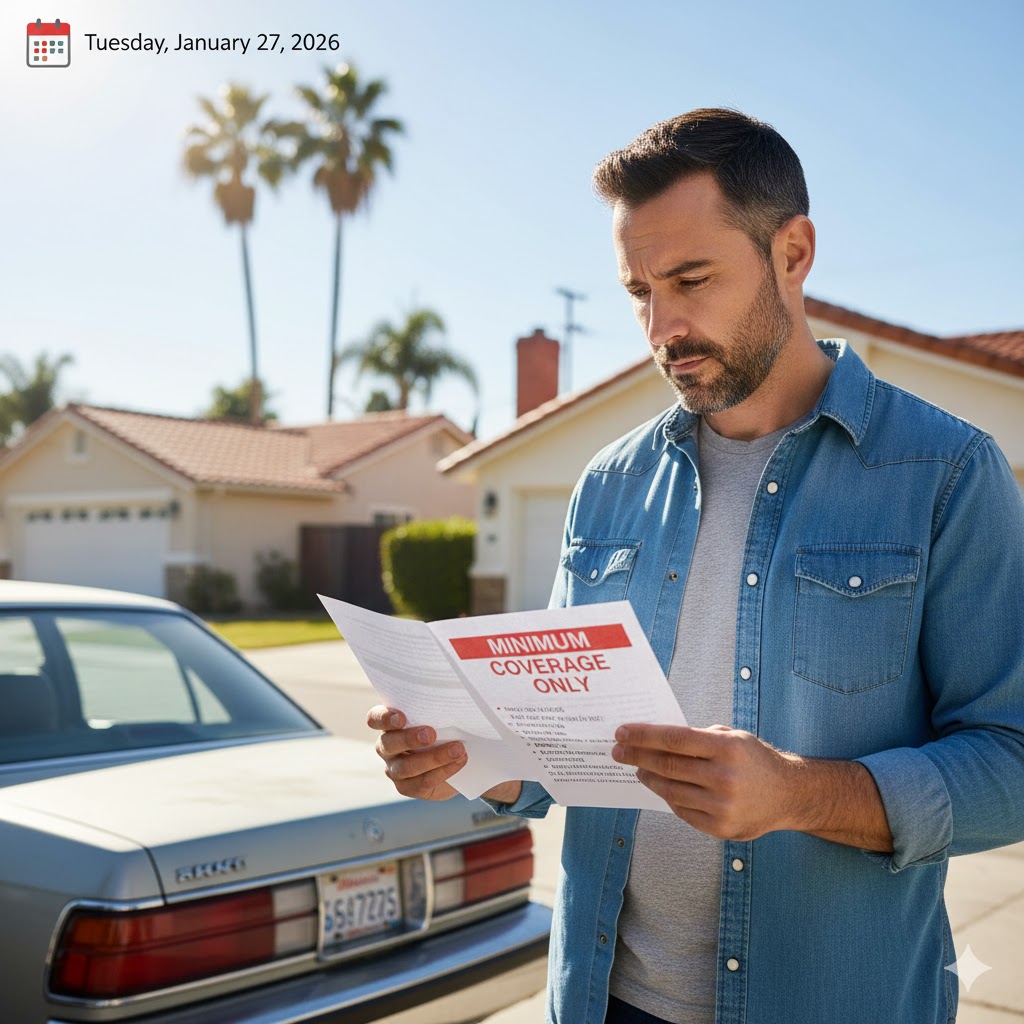
California’s minimum auto insurance requirements establish the legal baseline for driving, but legality and suitability are not the same thing. While minimum coverage is often criticized for being inadequate, there are limited situations where carrying only minimum auto insurance can make sense—provided drivers understand the risks and consciously accept them.
In California, minimum coverage decisions should be driven by a realistic assessment of vehicle value, financial exposure, driving habits, and personal risk tolerance. This article explains when minimum auto insurance coverage may be a reasonable choice, when it clearly is not, and how drivers can minimize risk if they decide to carry minimum limits.
This guide is written for California drivers seeking practical clarity and for automotive insurance niche websites building balanced, high-trust content.
What minimum coverage means in California (quick recap)
California’s required minimum liability limits are:
- $15,000 bodily injury liability per person
- $30,000 bodily injury liability per accident
- $5,000 property damage liability per accident
This 15/30/5 coverage protects other people, not you.
The core question: who can afford the risk ?
Minimum coverage is not about saving money it is about risk acceptance.
Drivers choosing minimum coverage are effectively saying:
- “I can absorb potential losses.”
- “I accept personal responsibility beyond insurance limits.”
- “I understand that one accident could create out-of-pocket costs.”
For some drivers, that calculation can be reasonable. For many others, it is not.
Scenario 1: Very low-value vehicles
Minimum coverage may make sense when the vehicle itself has little or no replacement value.
Examples
- Older vehicles worth less than a few thousand dollars
- Cars near the end of their usable life
- Vehicles that would not be repaired after a loss
In these cases:
- Collision and comprehensive coverage may cost more than the car is worth
- Paying out of pocket for vehicle loss may be acceptable
However, this applies only to vehicle damage, not liability risk.
Scenario 2: Drivers with minimal assets
Minimum coverage may be considered by drivers who have:
- No significant savings
- No property ownership
- No high wages subject to garnishment
Because liability insurance protects assets, drivers with little to protect face lower long-term exposure.
Important reality
Even drivers with few assets can still face:
- Wage garnishment
- Court judgments
- Credit damage
Asset-poor does not mean risk-free.
Scenario 3: Limited vehicle use
Drivers who:
- Drive very infrequently
- Use vehicles only for short, low-speed trips
- Avoid highways and congested urban areas
may statistically reduce accident likelihood.
Examples include:
- Retirees with occasional local driving
- Secondary vehicles driven sparingly
Lower exposure reduces risk but does not eliminate it.
Scenario 4: Temporary coverage situations
Minimum coverage may be acceptable short-term, such as:
- Transition periods between vehicles
- Temporary financial hardship
- Preparing to sell or replace a vehicle
In these cases, minimum coverage is often a temporary compromise, not a permanent solution.
Scenario 5: Drivers with strong backup resources
Some drivers rely on alternative safety nets:
- Robust health insurance
- Emergency savings earmarked for vehicle loss
- Ability to replace vehicles without financing
While these resources do not replace liability insurance, they can reduce the impact of uncovered losses.
When minimum coverage does not make sense
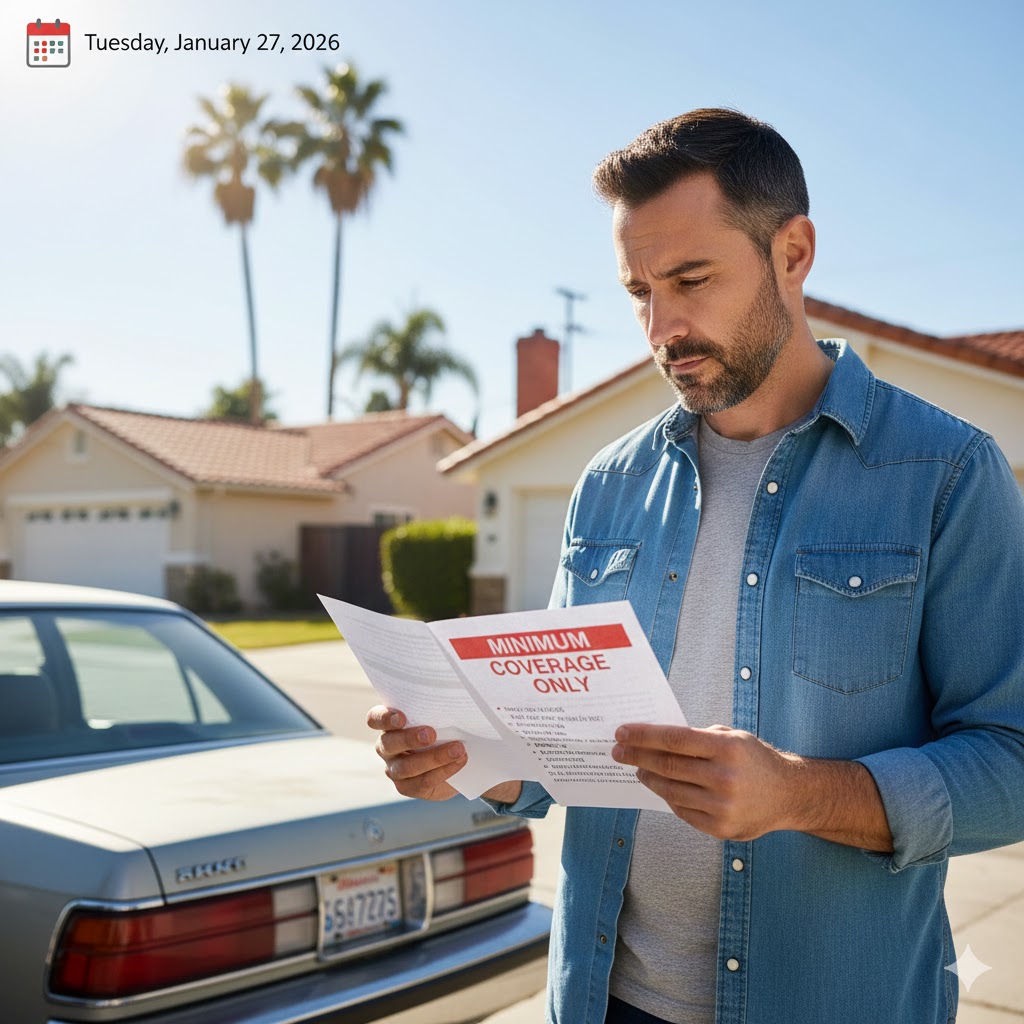
For most California drivers, minimum coverage is inappropriate.
Minimum coverage is a poor choice if you:
- Own property or have savings to protect
- Have steady wages subject to garnishment
- Drive frequently in urban or freeway environments
- Transport passengers regularly
- Would struggle to pay medical bills or judgments
In these cases, the downside risk outweighs premium savings.
The liability gap: the biggest risk of minimum coverage
Vehicle damage is not the primary danger. Liability is.
Why liability risk is so high
- Medical costs exceed $15,000 easily
- Multi-party accidents exhaust $30,000 limits quickly
- Modern vehicle repairs exceed $5,000 regularly
One moderate accident can exceed minimum limits by tens of thousands of dollars.
Minimum coverage and lawsuits
Minimum coverage does not prevent lawsuits.
If damages exceed policy limits:
- The injured party may sue you personally
- Courts may pursue wages or assets
- Judgments can last for years
Insurance limits define how much protection you buy not how much damage you can cause.
Minimum coverage vs. “no insurance”
Minimum coverage is always better than driving uninsured.
Minimum coverage:
- Keeps you legal
- Avoids DMV penalties
- Provides some liability protection
Driving uninsured exposes drivers to:
- Fines
- Registration suspension
- Full financial liability for accidents
If the choice is minimum coverage or none, minimum coverage wins every time.
How to reduce risk if you choose minimum coverage
Drivers who choose minimum coverage should take additional steps.
Add uninsured/underinsured motorist coverage
This protects you if the other driver lacks sufficient insurance.
Increase property damage limits
Even modest increases can dramatically reduce exposure.
Drive defensively and reduce mileage
Lower exposure reduces accident probability.
Avoid high-risk driving situations
Night driving, heavy traffic, and long commutes increase risk.
The cost difference is often smaller than expected
Many drivers overestimate the savings of minimum coverage.
In practice:
- Increasing liability limits often costs relatively little
- The jump from minimum to moderate coverage can be modest
- The protection gained is disproportionate to the price increase
Comparing quotes with higher limits often changes the decision.
Minimum coverage and long-term financial health
Short-term premium savings can lead to:
- Long-term debt
- Legal stress
- Financial instability
Insurance is designed to protect against rare but severe events. Minimum coverage reduces protection precisely where it matters most.
Common misconceptions about minimum coverage
Myth: Careful drivers do not need more coverage
False. Accidents are unpredictable.
Myth: Old cars don’t justify higher coverage
False. Liability risk is independent of vehicle value.
Myth: Minimum coverage is the smart budget choice
False. It is the riskiest legal choice.
A practical pecision framework
Minimum coverage may make sense only if all are true:
- Vehicle value is very low
- Assets and income are minimal
- Driving exposure is limited
- Risk is consciously accepted
If any of these are untrue, higher coverage is usually the smarter choice.
Minimum auto insurance coverage in California is not inherently wrong—but it is rarely optimal. It can make sense in very specific situations involving low-value vehicles, minimal assets, and limited driving exposure. Even then, it represents a calculated risk rather than true protection.
For most California drivers, minimum coverage satisfies the law but fails real-world needs. Understanding when it makes sense—and when it does not—allows drivers to make informed decisions rather than defaulting to the cheapest option.
In California, minimum coverage is a legal floor. Whether it is a smart choice depends entirely on the risk you are willing to carry.