What to do immediately after a car accident in California
The actions you take immediately after a car accident in California can determine the outcome of your auto insurance claim long before an adjuster reviews the file. Insurance companies rely heavily on early evidence, initial statements, medical timelines, and compliance with state reporting laws. A single mistake in the first hours after a crash can reduce settlement value, delay payment, or lead to a denied claim.
California’s auto insurance system is built around fault determination and documentation. Drivers are expected to follow specific legal steps after an accident, regardless of whether the crash appears minor. Even low-speed collisions can later involve injury claims, liability disputes, or allegations of comparative fault.
This guide explains what to do immediately after a car accident in California, in the exact order it should be done. It focuses on legal obligations, safety priorities, evidence preservation, medical considerations, reporting duties, and insurance claim protection. It is written as a standalone authority resource and as the first satellite supporting a complete California auto insurance claim guide silo.
Step 1: Stop immediately and remain at the scene
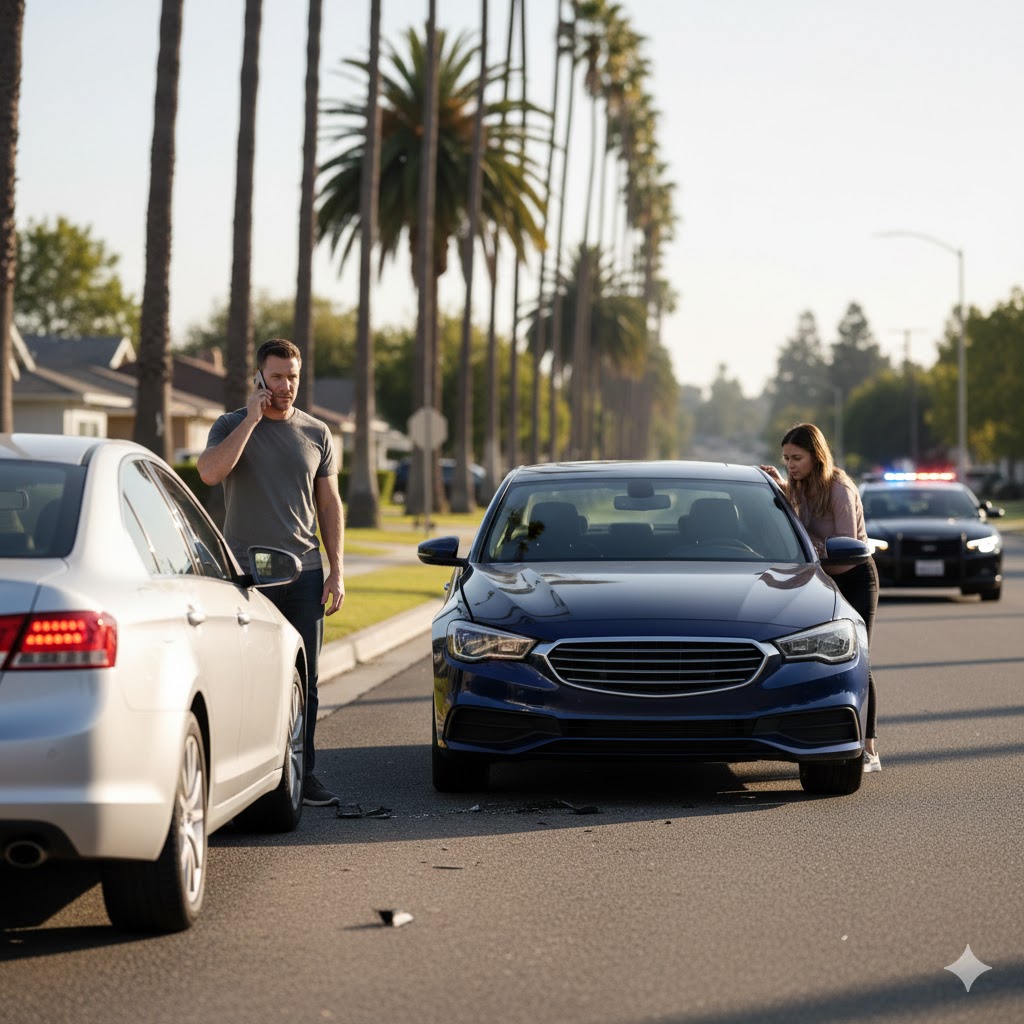
California law requires drivers in volved in accidents to stop at the scene.
You must stop if:
- There is any vehicle damage
- There are injuries or fatalities
- Property other than vehicles is damaged
Leaving the scene, even after a minor accident, can result in hit-and-run charges.
Step 2: Ensure safety and prevent further harm
Your first responsibility is safety.
Move vehicles when appropriate
If the vehicles are operable and no one is seriously injured:
- Move vehicles out of active traffic lanes
- Pull to the shoulder or a nearby safe location
- Activate hazard lights
If moving vehicles is unsafe:
- Remain in place
- Stay inside the vehicle if traffic conditions are dangerous
- Exit only when it is safe to do so
Secondary collisions are common after accidents and pose serious risks.
Check for injuries
Check yourself, passengers, and occupants of other vehicles for injuries.
If anyone reports pain, dizziness, confusion, or visible injury:
- Call emergency services immediately
- Do not attempt to move injured individuals unless necessary for safety
Injury assessment should always err on the side of caution.
Step 3: Call emergency services when required
Certain accidents require law enforcement involvement.
You should call the police if:
- Anyone is injured or killed
- Vehicles are blocking traffic and cannot be moved
- There is significant vehicle or property damage
- A driver appears intoxicated
- A hit-and-run occurred
- There is a dispute over fault
Police presence creates an official record that insurers rely on during claim investigations.
Step 4: Cooperate with law enforcement
When police arrive:
- Provide factual information
- Show your driver’s license, registration, and insurance
- Answer questions honestly but concisely
Avoid speculation or assumptions about fault. Fault determinations are based on evidence, not on apologies or guesses made at the scene.
Step 5: Exchange required information with other drivers
California law requires drivers involved in accidents to exchange information.
You must exchange:
- Full name and address
- Driver’s license number
- Vehicle registration number
- Insurance company name and policy number
If another driver refuses to provide information, note the refusal and inform the police.
Step 6: Document the accident scene thoroughlyTerms of Use
Evidence collected immediately after an accident is often decisive.
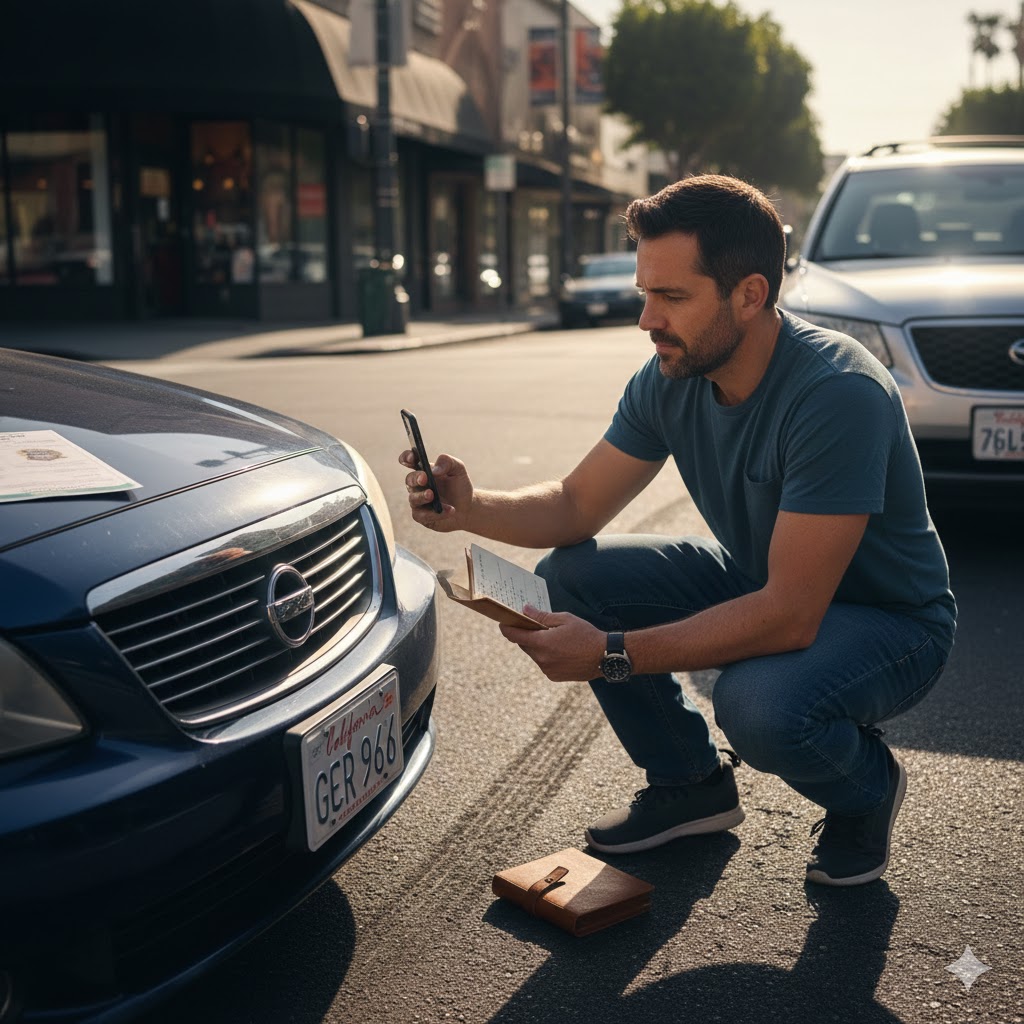
Take photographs
Photograph:
- All vehicle damage
- Vehicle positions before moving, if safe
- License plates
- Skid marks and debris
- Traffic signals and signs
- Road conditions
- Weather conditions
- Visible injuries
Take wide shots and close-ups from multiple angles.
Capture video when possible
Short video clips can document:
- The overall scene
- Traffic flow
- Environmental conditions
- Spontaneous statements made by drivers
Video can help insurers reconstruct events later.
Step 7: Identify and secure witness information
Independent witnesses can be critical in disputed claims.
If witnesses are present:
- Ask for names and contact information
- Ask where they were positioned during the accident
- Do not coach or influence their statements
Witnesses often leave quickly. If you do not collect their information immediately, insurers may never locate them.
Step 8: Be careful with what you say
Statements made at the scene can be used in claims decisions.
What to say
- Stick to objective facts
- Cooperate with law enforcement
- Exchange required information
What to avoid saying
- Do not admit fault
- Do not apologize in a way that implies responsibility
- Do not speculate about causes
- Do not argue with other drivers
Fault determination should be left to insurers and investigators.
Step 9: Seek medical evaluation promptly
Medical documentation is essential for injury claims.
Even if you feel fine:
- Seek medical evaluation as soon as possible
- Document all symptoms, even mild ones
Many injuries worsen hours or days after a collision. Delayed treatment often leads insurers to question causation.
Step 10: Follow all medical recommendations
Once medical care begins:
- Attend follow-up appointments
- Follow prescribed treatment plans
- Keep copies of all medical records and bills
Gaps in treatment are frequently used to reduce claim value.
Step 11: Notify your insurance company
Most policies require prompt accident notification.
You should notify your insurer even if:
- You were not at fault
- You do not plan to file a claim immediately
- Damage appears minor
Notification protects your rights under the policy.
Step 12: Provide initial claim information carefully
When reporting the accident:
- Provide basic facts
- Avoid speculation
- Do not give recorded statements without preparation
You may request time to review the situation before giving detailed statements.
Step 13: Decide which claim path to take
In California, you may have multiple options.
You may file:
- A collision claim with your insurer
- A liability claim with the at-fault driver’s insurer
- An uninsured motorist claim if applicable
Each option has different timelines and strategic considerations.
Step 14: Preserve all documentation
Create a claim file and keep:
- Photos and videos
- Police reports
- Medical records
- Repair estimates
- Rental car receipts
- Communications with insurers
Well-organized documentation strengthens claims and reduces delays.
Step 15: Report the accident to the DMV when required
California requires certain accidents to be reported to the DMV.
You must file a report if:
- Anyone is injured or killed
- Property damage exceeds the statutory threshold
This requirement applies regardless of fault and insurance involvement. Failure to report can result in license suspension.
Step 16: Avoid social media and public statements
Insurance companies monitor public activity.
Avoid:
- Posting accident details online
- Sharing photos publicly
- Discussing injuries or fault on social platforms
Public statements can be misinterpreted or used against you.
Step 17: Understand how early actions affect fault
California uses pure comparative negligence.
This means:
- Fault can be shared
- Compensation is reduced by your fault percentage
- Early evidence heavily influences fault assignment
Strong early documentation protects your position.
Step 18: Be Cautious with insurance adjusters
Adjusters may contact you quickly.
Best practices:
- Be polite but cautious
- Avoid recorded statements immediately
- Do not sign releases prematurely
- Request communications in writing when possible
Adjusters represent insurers, not policyholders.
Step 19: Monitor physical and emotional symptoms
Post-accident symptoms may include:
- Delayed pain
- Headaches
- Dizziness
- Emotional distress
- Sleep disruption
Document symptoms and seek care promptly.
Common mistakes that harm claims immediately after accidents
The most damaging mistakes include:
- Leaving the scene early
- Failing to call police
- Not seeking medical care
- Admitting fault
- Accepting quick settlement offers
- Missing reporting deadlines
Avoiding these mistakes preserves claim value.
How the first 72 hours shape the entire claim
In California, insurers rely heavily on:
- Early evidence
- Initial statements
- Medical timelines
- Compliance with reporting laws
Strong early action simplifies the entire claims process.
The moments immediately following a car accident in California are not just stressful, they are decisive. Drivers who prioritize safety, document evidence carefully, seek medical care promptly, and communicate strategically with insurers place themselves in the strongest position to recover fair compensation.
Mistakes made immediately after an accident are rarely fixable later. Understanding what to do from the first moment protects your legal rights, financial interests, and insurance claim outcomes.
This article serves as the first deep-dive satellite in a comprehensive California auto insurance claim guide. The next satellite will explain how fault is determined in California auto insurance claims and why that process matters.