What is my car worth? how to price a used car in 2026
Most sellers get this part wrong. They pull up a car value calculator, glance at the number, round it up a little because they feel their car deserves it, and post the listing. Three weeks later the car is still sitting there, and they’ve already dropped the price twice.
Pricing a used car isn’t guesswork. It’s a short but deliberate process, and when you get it right, you sell faster and at a higher number than sellers who skip it. If you’re working through the full transaction — from prep to paperwork — our complete used car selling walkthrough covers every phase. But determining exactly what is my car worth is where it starts, and it deserves its own focused treatment.
Why a single car value calculator isn’t enough
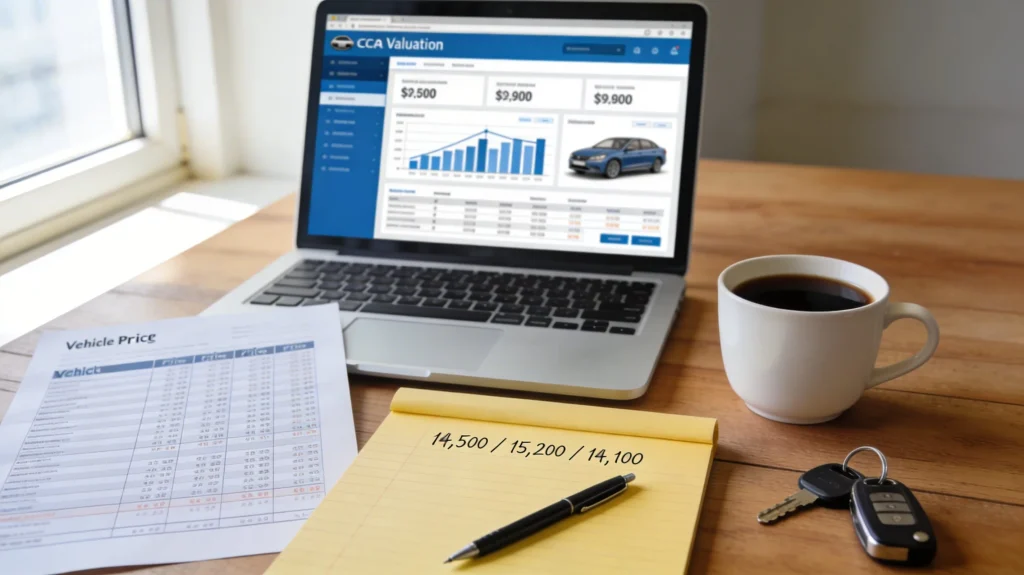
Kelley Blue Book is the industry default, and it’s a solid starting point. But it’s calibrated to a national average. Your car isn’t selling in a national average — it’s selling in your zip code, to a buyer who’s also looking at three other listings within 30 miles of you.
A reliable used car pricing strategy requires three data sources, not one.
First, pull your KBB private-party value. Input the exact mileage, your zip code, and every factory option. This gives you your baseline. Next, check the NADA car value. NADA runs roughly 5 to 8 percent higher than KBB because it was built with dealer-facing transactions in mind. That doesn’t make it wrong for private sellers — it makes it useful as a ceiling reference. When a buyer challenges your price, being able to say “KBB puts this at $14,200; NADA has it at $15,100” is a completely different conversation than just saying “I checked KBB.”
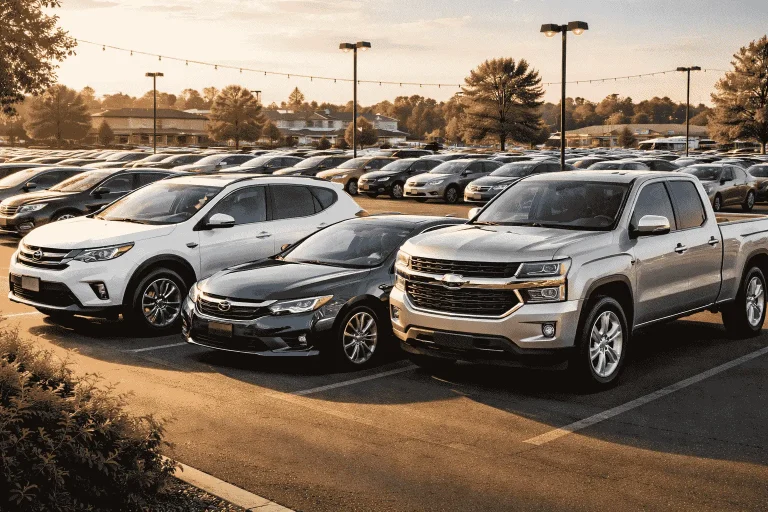
Then there’s local comp research, which most sellers skip entirely. Spend 20 minutes on Facebook Marketplace and Craigslist searching your exact make, model, year, and trim within a 50-mile radius. If six similar vehicles are listed between $13,800 and $14,500 and yours is at $15,400 with no visible differentiation, you’re not competitive.
Condition matters more than sellers admit
When checking your KBB used car value, the condition tiers — Fair, Good, Very Good, Excellent — aren’t just minor labels. The gap between “Good” and “Very Good” on a $16,000 car is typically around $1,100. That’s a meaningful spread, and it’s one sellers frequently miscalculate in their own favor.
Walk around your car as if you’re the buyer. Look at the paint under direct sunlight, not in a garage. Check the interior for stains, worn fabric, cracked trim, and odors. Start it cold. Listen for anything that takes more than one turn of the key. Note anything you’d want to know if you were buying.
Most sellers rate their car “Very Good” when it’s actually “Good.” Buyers arrive, see the reality, and immediately recalibrate downward — which sets the negotiation tone from the first minute. Price accurately based on true condition, and you avoid that friction entirely.
Mileage thresholds are not gradual
Depreciation in used cars doesn’t happen in a straight line. The market prices in psychological thresholds — specific mileage points where perceived risk increases sharply, regardless of actual mechanical condition.
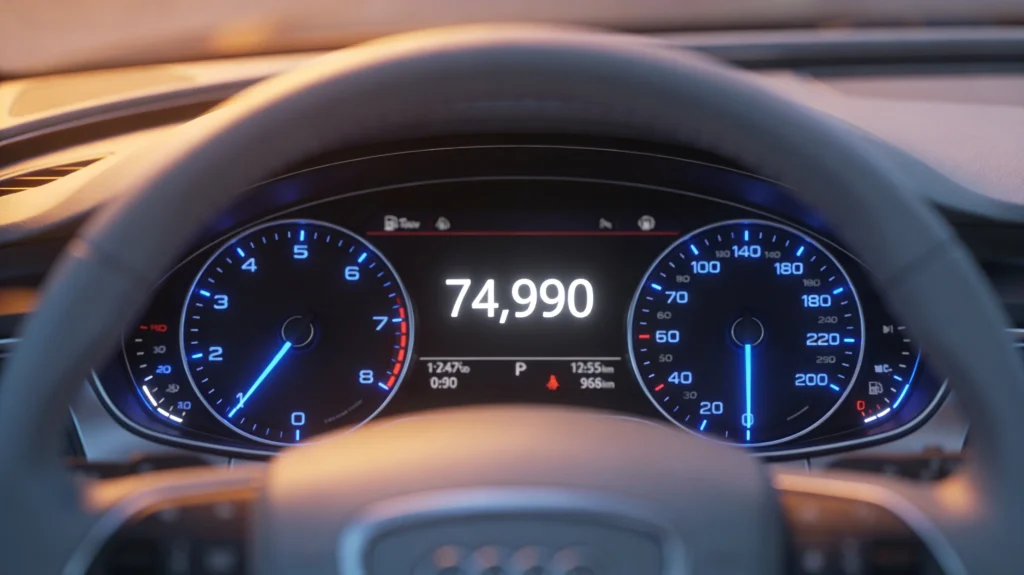
The two biggest thresholds for most vehicles are 75,000 miles and 100,000 miles. A car at 73,000 miles commands meaningfully more than the same car at 77,000 miles. The difference isn’t just wear; it’s buyer psychology. Once you cross 75K, buyers start mentally discounting for potential timing belt service, transmission fluid intervals, and other maintenance items that land around that range.

If your odometer sits within 2,000 miles of one of these thresholds, factor that into your pricing conversation with yourself.
The $40 document that earns back $380
A single-vehicle CarFax report costs $39.99. In private sale listings that include one, average closing prices run about $380 higher than comparable listings without documentation. The math requires about four seconds to run.
Buyers price in uncertainty. When there’s no vehicle history report, a buyer imagines the worst — undisclosed accidents, flood damage, odometer rollback, lapsed maintenance. They either walk away or open low. A clean CarFax eliminates the single biggest unspoken objection before a buyer ever asks.
If the report shows minor issues like a bumper repair from three years ago or a late oil change, you’re still better off having it. Buyers who discover issues through their own research feel deceived. Buyers who see the same information disclosed upfront feel informed. Those are very different negotiation starting points.
Setting your number
After running KBB, NADA, and local comps, you’ll have a range rather than a single price. Your target is the top of the KBB private-party range, provided your condition assessment is honest and your local comps support it.
List about 3 to 5 percent above your actual floor price. That gap gives you room to move during negotiation without going below what you need. Buyers expect some movement — a seller who won’t move at all comes across as rigid and sometimes drives buyers toward other listings.
If you’ve priced correctly, you should see serious inquiries within 48 to 72 hours of posting. If you hit day five without a single reasonable offer, the price isn’t the platform’s fault. Drop 4 to 5 percent and reset.
One more thing worth doing
Check whether your state requires an emissions certificate or a safety inspection prior to private sale. About a third of U.S. states have some form of pre-sale disclosure requirement, and a handful require documentation at the time of transfer. Finding this out after you’ve accepted a deposit is an avoidable headache.
If there’s an outstanding loan on the vehicle, contact your lender before you list. You’ll need a payoff amount and a clear process for releasing the title at closing. Buyers who discover a lien they didn’t know about at the last minute tend not to close.
Once you’ve settled on a defensible price backed by real data, your next decision is where to sell. Each platform serves a different type of seller, and the difference in net proceeds between the wrong choice and the right one averages over $1,000. Our breakdown of the best platforms to sell your used car in 2026 walks through Carvana, CarMax, Facebook Marketplace, and four other options with actual numbers rather than marketing copy.