used car title problems: red flags to walk away from
A used car can look spotless, drive smoothly, and still carry a legal record that should end the deal immediately. Title problems are invisible on the surface — you won’t spot a salvage designation by looking at the paint or listening to the engine. They live in databases and documents, and the only way to catch them is to know what to look for before you hand over any money.
Most buyers understand that a vehicle history report matters, but far fewer know how to interpret what those reports actually reveal. If you’re building a full picture of the risks involved in buying pre-owned, this complete guide to used car buying mistakes is worth reading alongside this page. Here, the focus is entirely on title types, what each one means for you as a buyer, and the specific situations where walking away is the only sensible move.
used car title problems: what the status actually tells you
A vehicle title is a legal document issued by the state that identifies who owns a car. It contains the VIN, the registered owner’s name, the vehicle description, and — critically — a designation that tells you the car’s history as an asset.
That designation is what most buyers overlook. A clean title means the car has never been declared a total loss, hasn’t been significantly flood-damaged, and carries no major legal encumbrances. Any other designation signals that something happened — and depending on what that was, it may or may not affect whether the car is worth buying.
The mistake is treating “title” as just ownership paperwork. It’s actually a concise summary of the car’s legal and insurance history, compressed into a single status. Used car title problems almost always trace back to buyers who skipped this check entirely.
According to the National Motor Vehicle Title Information System (NMVTIS), buyers can verify a vehicle’s title brand, theft records, and total loss history before committing to any purchase — free of charge.
clean title: the baseline every buyer should expect
A clean title is what you want. It means no major damage has been declared by an insurance company, no flood or fire event has been recorded, and no structural write-off has occurred.
It doesn’t guarantee the car is in perfect condition. Plenty of clean-title vehicles have been in accidents that were repaired out-of-pocket, without any insurance involvement. But a clean title eliminates a whole category of documented risk.
Even with a clean title, run a full vehicle history report through Carfax or AutoCheck and have a pre-purchase inspection done by an independent mechanic. A clean title is the starting point for due diligence, not the end of it.
salvage title: what it means and why It matters
A salvage title is assigned when an insurance company declares a vehicle a total loss — meaning the estimated repair cost exceeded a threshold percentage of the car’s market value, typically 70% to 80% depending on the state.
The car might have been in a severe collision, sustained flood damage, or been stolen and recovered after the owner was paid out. In each case, the insurer took ownership and branded the title.
Buying a salvage title vehicle isn’t automatically a disaster, but the implications are serious:
- Most major insurers won’t offer comprehensive or collision coverage on a salvage title car
- Resale value typically runs 20% to 40% below a comparable clean title vehicle
- Structural integrity may be compromised in ways that aren’t obvious without specialist inspection
If it’s disclosed and you’re still considering it, price it accordingly and get a structural inspection from a certified body shop before committing.
rebuilt title: repaired, but not fully restored
A rebuilt title — sometimes called a reconstructed title — is the status assigned to a salvage vehicle that has been repaired and passed a state inspection. The car has been through the administrative process of being certified roadworthy again.
This sounds better than it is. State inspections that clear a rebuilt title vehicle are often basic and don’t evaluate the quality of the repair work. Cosmetic damage can be corrected while underlying structural issues remain. Airbags may have been replaced with aftermarket units — or not replaced at all.
Rebuilt title vehicles are also difficult to insure at full comprehensive and collision coverage with many providers. Like salvage titles, they carry a permanent depreciation penalty that makes them hard to sell later.
The rule most experienced buyers apply: a rebuilt title vehicle needs to be priced at a steep enough discount to compensate for the insurance limitations, the resale penalty, and the cost of a thorough independent inspection. If the price doesn’t reflect all of that, the deal isn’t worth it.
flood damage: the most deceptive title problem of All
Flood damage is one of the most insidious vehicle problems because it doesn’t always show up immediately. A car that was submerged, dried out, and detailed can look and drive normally for weeks before electrical corrosion and mold damage begin to manifest.
States that have experienced major flooding — Louisiana, Texas, Florida, and the Carolinas — produce large numbers of flood-damaged vehicles that sometimes find their way to other states for resale. This is called title washing when it involves deliberately obscuring the flood designation by reselling across state lines.
Physical signs to check before any purchase:
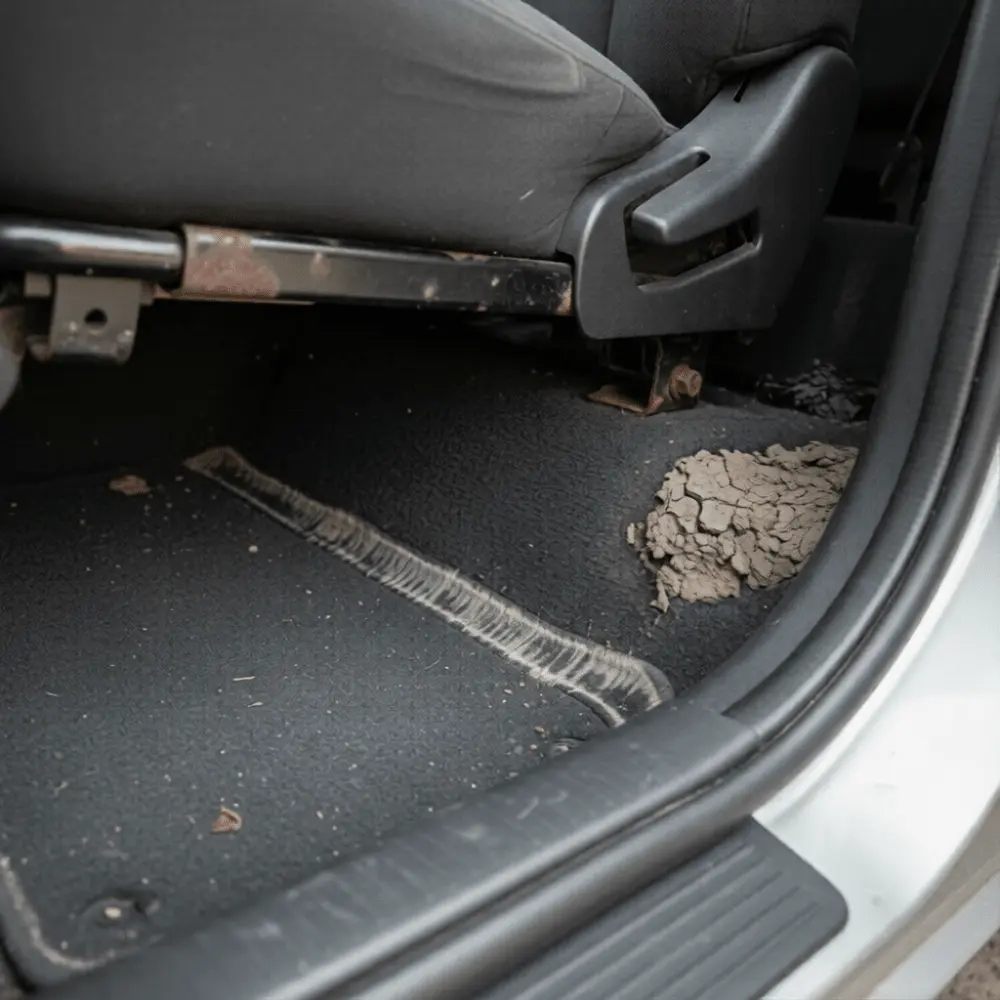
- Musty or damp smell inside the cabin
- Waterline marks under seats or in the trunk
- Rust on bolts and brackets in areas that don’t normally rust
- Mud or silt residue in the spare tire compartment
- Corrosion on electrical connectors under the dashboard
If any of these signs are present on a car without a flood designation on its title, treat it as a flood vehicle regardless of what the paperwork says. Cross-reference the VIN through Carfax for a full title and damage history before making any decision.
lien on a used car: the ownership trap
A lien is a legal claim against the vehicle by a lender who financed the original purchase. If the current owner still has an outstanding loan on the car, the lender has a legal interest in it — meaning they can repossess it even after you’ve bought it, if the seller defaults.
This happens more often than buyers expect. Private party sales carry the highest risk. A seller who is underwater on their loan — owing more than the car is worth — may be motivated to sell quickly and quietly, without disclosing the outstanding balance.
Before buying any used car privately, search the VIN through your state DMV’s lien records or through the NMVTIS database to confirm there are no outstanding financial claims. When buying from a dealership, the dealer should clear any existing lien as part of the sale — but verify this in writing before signing anything.
how to do a proper car title check
You don’t need legal expertise to do basic title due diligence. The process is straightforward:
- Get the VIN from the seller before any money changes hands
- Run it through Carfax or AutoCheck for title events, accident records, and odometer readings
- Cross-check with NMVTIS at vehiclehistory.gov for title brand information
- Ask the seller for a copy of the physical title — the brand should appear printed on the document
- Verify the VIN on the title matches the VIN plate on the dashboard and the door jamb sticker
- In a private sale, use an escrow service to ensure the title transfers cleanly before funds are released
A proper car title check takes less than an hour. Skipping it can cost you the full value of the vehicle.
when to walk away without hesitation
Some title situations are dealbreakers regardless of the price:
- Salvage title with no documentation of the damage or repair
- Rebuilt title priced near clean-title market value with no inspection records
- Signs of flood damage on a car showing a clean title — possible title washing
- Outstanding lien the seller won’t or can’t clear before the sale
- Title not in the seller’s name, or seller unable to produce the title at all
- VIN on the title that doesn’t match the physical vehicle
Price is never a justification for ignoring these. A cheap car with a problem title can end up costing far more in insurance complications, repair bills, and resale losses than a slightly more expensive clean-title vehicle would have.
The title is the legal foundation of the entire purchase. Get that right and you’ve eliminated one of the largest categories of risk in the used car market.
The next layer of protection — or vulnerability, if you’re not careful — is what happens after the sale. Extended warranties and service contracts are pushed hard in the finance office, and understanding which coverage is genuinely worth having and which plans exist only to generate dealer profit is the difference between smart protection and a very expensive mistake.
FAQ
Q: What is the most serious used car title problem a buyer can face?
A salvage title with no repair documentation is the most serious. It combines unknown structural damage with near-uninsurability and permanent resale depreciation.
Q: Can a rebuilt title car be insured?
Some insurers offer liability-only coverage on rebuilt title vehicles. Comprehensive and collision coverage is rarely available, and when it is, premiums are significantly higher.
Q: How do I do a car title check before buying?
Run the VIN through NMVTIS at vehiclehistory.gov and cross-reference with Carfax or AutoCheck. Then ask the seller for the physical title and verify the VIN matches the car.
Q: What is title washing?
Title washing is the practice of moving a flood or salvage-branded vehicle across state lines to obtain a clean title in a new state. It’s illegal but it happens — a full NMVTIS report helps detect it.
Q: Should I buy a salvage title car if the price is very low?
Only if you can verify the exact nature of the damage, have a certified body shop inspect it for structural integrity, and you’re prepared to carry only liability insurance with limited .