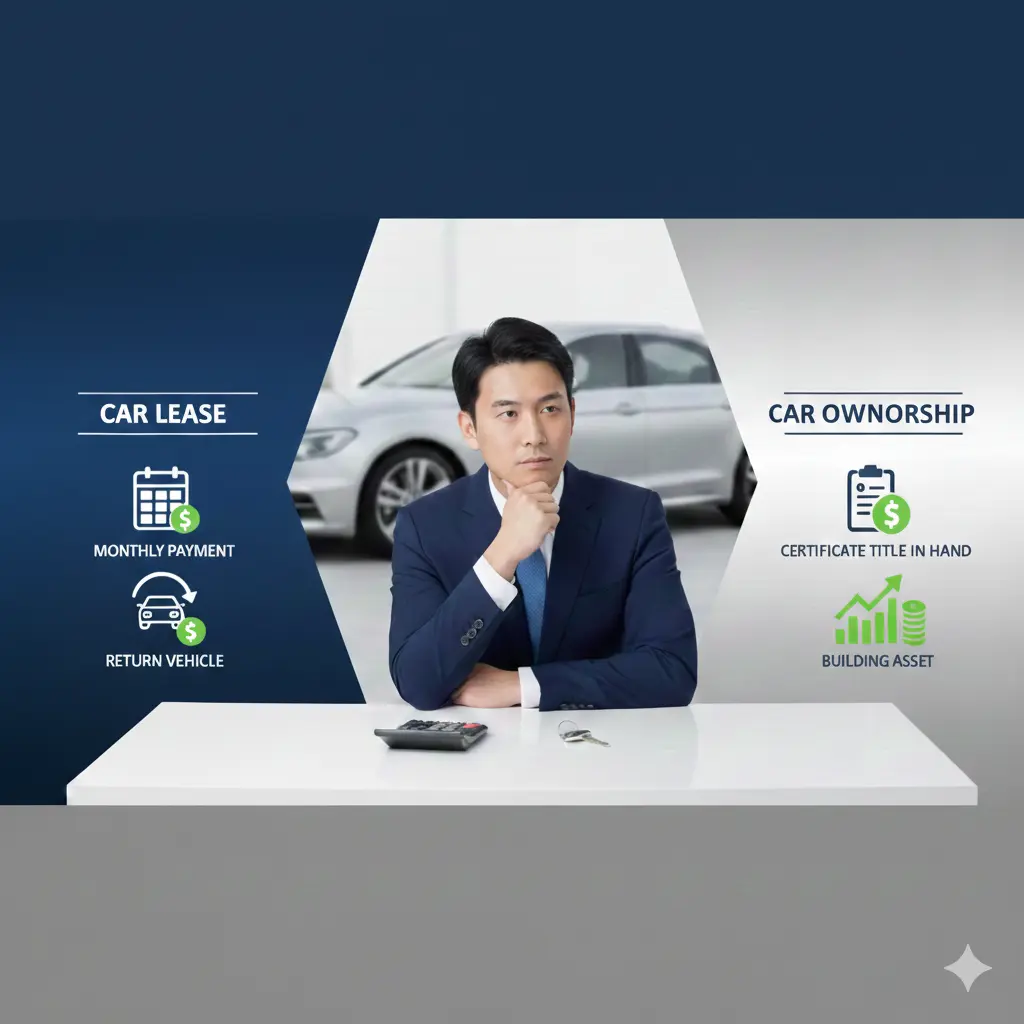
Used car lease vs buy: complete cost comparison
The lease versus buy decision significantly impacts your long-term automotive expenses and ownership experience. Leasing offers lower monthly payments and frequent vehicle upgrades, while purchasing builds equity and eliminates mileage restrictions. Used car leases are less common than new vehicle leases but provide middle-ground savings. Consider factors like annual mileage, maintenance preferences, and financial stability when evaluating each path. This comparison connects directly to broader considerations about used car financing structures and payment methodologies, helping you align your choice with lifestyle needs and budget constraints.
Understanding used car leasing basics
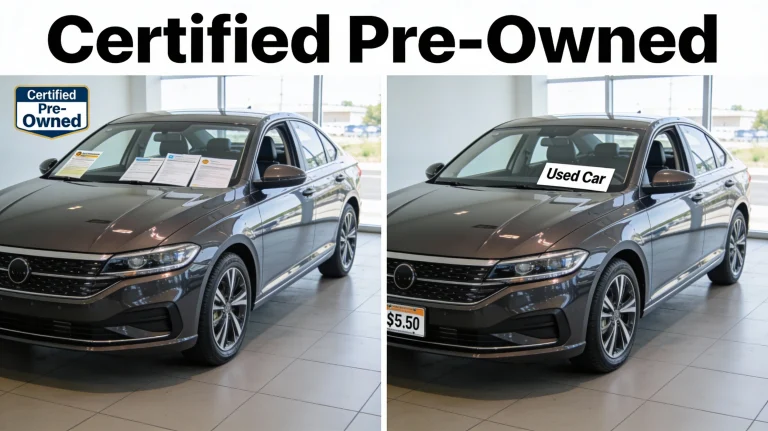
Most people associate leasing with new cars but certified pre-owned (CPO) leases exist at select dealerships. These programs target buyers who want lease benefits without new car prices. CPO leases typically cover vehicles two to three years old with low mileage and remaining factory warranties.
Monthly lease payments on used cars run 20% to 40% lower than new car leases for similar models. You’re paying for less depreciation because the steepest value drop already occurred. A three-year-old Honda Accord might lease for $280 monthly while a new one costs $380 for similar terms.
Lease terms usually span 24 to 36 months with annual mileage limits between 10,000 and 15,000 miles. Exceeding these limits triggers penalties of 15 to 25 cents per mile which adds up quickly. Someone driving 18,000 miles yearly on a 12,000-mile lease pays $900 to $1,500 in excess mileage fees.
At lease end you return the vehicle and walk away or purchase it for the predetermined residual value. This flexibility appeals to people who prefer driving different cars every few years or those uncertain about long-term vehicle needs.
The financial reality of buying used
Purchasing a used car means higher initial costs but long-term savings through equity building. Once you finish paying off the loan, you own an asset you can drive for years without monthly payments. This ownership model rewards buyers who keep vehicles past the typical five to seven-year loan term.
A $22,000 used car financed at 7% APR for 60 months costs roughly $436 monthly. After five years you own the vehicle outright and it might retain $8,000 to $12,000 in value depending on condition and market demand. That equity either trades toward your next car or represents cash if you sell privately.
Maintenance and repair costs become your responsibility immediately with ownership. Budgeting $100 to $150 monthly for routine maintenance, repairs, and unexpected issues protects you from financial surprises. Older vehicles require more frequent service than newer ones so factor this into total ownership costs.
Insurance premiums for owned vehicles offer more flexibility because you can drop comprehensive and collision coverage once the loan is paid. Leased cars require full coverage throughout the lease term which keeps insurance costs higher.
Monthly payment comparison scenarios
Comparing identical vehicles reveals the true cost difference between leasing and buying. A 2023 Toyota Camry with 25,000 miles and a $24,000 retail price illustrates the point well.
Leasing this Camry for 36 months with $2,000 down and 12,000 annual miles might cost $310 monthly. You’ll pay roughly $13,160 over three years including the down payment but you won’t own anything at the end.

Buying the same Camry with $2,000 down at 7% APR for 60 months runs about $450 monthly. Total payments over five years reach $29,000 but you own a vehicle worth approximately $12,000 at that point. Your net cost is around $17,000 after accounting for residual value.

The monthly payment gap of $140 favors leasing in the short term. However, ownership becomes cheaper after year five when you drive payment-free. Someone keeping the car for eight years effectively drives for free years six through eight aside from operating costs.
Leasing makes sense if you want the lowest possible monthly obligation and definitely won’t keep the vehicle beyond three years. Buying wins for anyone planning to drive the car into the ground or who values long-term savings over short-term cash flow.
Hidden costs that shift the equation
Lease agreements include disposition fees of $300 to $500 when you return the vehicle. Acquisition fees at lease signing add another $500 to $1,000 to your upfront costs. These fees don’t apply to purchases and they’re often buried in lease contract fine print.

Excess wear and tear charges catch lessees by surprise at lease end. Normal wear is expected but significant damage to upholstery, scratches, dents, or mechanical issues trigger repair bills. Inspection standards are subjective and dealers sometimes inflate damage costs to maximize profits.
Early termination penalties make breaking a lease extremely expensive. Life circumstances change and you might need out of the lease before the term ends. Penalties can equal several months of payments or the total remaining obligation depending on contract terms.
Purchase agreements avoid these hidden costs but carry different expenses. Sales tax applies to the full purchase price immediately rather than being spread across lease payments. Registration and title fees also run higher for purchased vehicles in most states.
Mileage considerations
Annual driving distance dramatically affects the lease versus buy decision. Leases penalize high-mileage drivers through expensive overage fees while owners drive unlimited miles without penalty.
Someone commuting 50 miles daily racks up 18,000 to 20,000 miles yearly when including weekend trips and errands. Standard 12,000-mile leases leave them 6,000 to 8,000 miles over annually. At 20 cents per mile, that’s $1,200 to $1,600 in penalties or $3,600 to $4,800 over a three-year lease.

High-mileage lease options exist but they cost significantly more monthly. Bumping from 12,000 to 15,000 annual miles might add $30 to $50 to your payment. This extra cost often negates the monthly savings that made leasing attractive initially.
Buying eliminates mileage anxiety completely. Drive across the country, take long road trips, or handle a lengthy commute without worrying about penalties. The vehicle depreciates faster with high mileage but you’re not penalized directly for using your own car.
Maintenance and warranty coverage
Certified pre-owned leases usually include remaining factory warranty coverage plus extended CPO warranties. These warranties cover most mechanical issues during the lease term protecting you from unexpected repair bills. Routine maintenance like oil changes and tire rotations might be included depending on the program.
Purchased used cars come with whatever warranty remains from the original sale date. A three-year-old vehicle with a five-year warranty has two years of coverage left. After that you’re on your own for repairs unless you purchase an extended warranty.
Extended warranties for purchased vehicles cost $1,500 to $3,000 depending on coverage level and vehicle value. Not all extended warranties provide good value and some exclude common failure points. Research warranty providers carefully and read exclusions before buying coverage.
Self-insuring by setting aside money monthly for repairs often makes more sense than extended warranties. Banking $100 monthly in a dedicated repair fund gives you $1,200 annually for maintenance and repairs. This approach provides flexibility without restrictive warranty limitations.
Tax implications and deductions
Business owners and self-employed individuals can deduct vehicle expenses on their taxes. The deduction method differs between leasing and buying with each offering specific advantages.
Lease payments are fully deductible as a business expense when the vehicle is used primarily for work. Someone leasing at $300 monthly and using the car 80% for business deducts $240 monthly or $2,880 annually. This deduction reduces taxable income by the same amount.
Purchased vehicles allow depreciation deductions spread over several years plus deductions for loan interest. Section 179 of the tax code lets some business owners deduct the full vehicle cost in year one up to certain limits. However, these deductions phase out over time unlike the ongoing lease payment deduction.
Personal use vehicles don’t qualify for tax deductions regardless of lease or purchase status. Commuting to a regular workplace doesn’t count as business use even if you’re driving to your job. Only mileage between job sites or client visits qualifies.
Making the right choice for your situation

Lease if you drive under 12,000 miles yearly, want the lowest monthly payment, prefer driving newer cars every few years, and don’t mind having a perpetual car payment. The flexibility to walk away every few years appeals to people whose needs change frequently.
Buy if you drive more than 15,000 miles annually, plan to keep the vehicle beyond five years, want to build equity, or need payment-free transportation eventually. Ownership provides freedom from restrictions and long-term cost savings for patient buyers.
Consider your job stability and income predictability too. Leasing requires consistent income to cover payments indefinitely. Buying offers the security of eventual payment-free ownership which matters during income disruptions or financial hardships.
Your mechanical aptitude and comfort with older vehicles influences the decision as well. Confident DIY mechanics save thousands maintaining their own cars making ownership more attractive. People who prefer worry-free transportation might value lease warranty coverage despite higher total costs.
The lease versus buy debate has no universal answer because personal circumstances vary widely. Calculate total costs for your specific situation including all fees, insurance differences, and opportunity costs. Once you’ve decided which path makes sense, determining how much to put down on your used car purchase becomes the next critical step in managing your total transportation costs effectively.