Pennsylvania choice no-fault: limited vs full tort guide
Pennsylvania gives drivers a choice that most other states don’t offer. When you buy auto insurance in Pennsylvania you have to decide between limited tort and full tort. This decision affects both your premiums and your legal rights after an accident.
Most people pick limited tort because it’s cheaper. A lot of them regret it later when they realize what they gave up.
I’ve seen this play out dozens of times over the years. Someone saves $150 a year on their premium by choosing limited tort. Then they get rear-ended and suffer serious neck injuries. Suddenly they discover they can’t sue for pain and suffering because of the choice they made to save money.
Let me break down what limited tort and full tort actually mean and how to decide which one makes sense for you.
What limited tort means
Limited tort restricts your right to sue for pain and suffering after an accident. You can still recover medical expenses and lost wages. You can still get your car fixed. But you give up the ability to sue for non-economic damages unless your injuries are serious enough to meet Pennsylvania’s threshold.
What counts as serious enough? Permanent serious disfigurement or serious impairment of body function.
That sounds clear until you start looking at actual cases. A broken bone might qualify. Whiplash probably doesn’t. Chronic back pain is a gray area. It depends on the specific injury and how it affects your life.
The benefit of limited tort is lower premiums. Most drivers save between $100 and $300 per year by choosing limited tort instead of full tort. For a family with multiple vehicles that adds up.
The risk is that you’re betting you won’t get seriously injured in an accident. If you’re wrong about that bet you’ve given up potentially thousands of dollars in compensation for pain and suffering.
What full tort means
Full tort preserves your complete right to sue for all damages including pain and suffering after an accident. There’s no injury threshold. Even minor injuries let you pursue non-economic damages.
If someone rear-ends you and you have whiplash that lasts six months you can sue for pain and suffering with full tort. With limited tort you probably can’t unless the whiplash somehow meets the serious injury threshold.
Full tort costs more. You’re paying for the option to sue even if you never use it. Most people with full tort never get in accidents serious enough to file lawsuits. But the protection is there if you need it.
Insurance companies prefer limited tort because it reduces their exposure to lawsuits and large settlements. They price full tort higher to discourage people from choosing it. But the price difference really isn’t that dramatic when you think about what you’re getting.
Pennsylvania’s no-fault system
Pennsylvania operates what’s called a choice no-fault system. You have mandatory medical benefits coverage that works like PIP in other states. This pays your medical expenses up to your policy limit regardless of fault.
The minimum medical benefits coverage in Pennsylvania is $5,000. Most people carry higher limits. The medical benefits pay first then your health insurance kicks in for anything beyond your policy limit.
This is separate from the tort choice. Whether you pick limited or full tort you still have medical benefits coverage that pays your bills immediately. The tort choice only affects your right to sue for pain and suffering.
Pennsylvania also requires liability coverage. The minimum is 15/30/5 which is pretty low. That’s $15,000 per person for bodily injury, $30,000 per accident, and $5,000 for property damage.
Those minimums are nowhere near adequate for modern accidents. A single vehicle repair can exceed $5,000 easily. Medical bills blow past $15,000 constantly. Most Pennsylvania drivers carry much higher limits.
How to decide between limited and full tort
This is the hard part. There’s no universal right answer. It depends on your situation.
Here’s how I think about it.
If you have significant assets like a house or substantial savings full tort makes sense. You’re protecting yourself from losing those assets in a lawsuit where you’re the defendant. But you’re also preserving your ability to recover full damages if you’re the victim.
If you have kids or other family members on your policy full tort is worth considering. Injuries to children can be particularly devastating and limiting their right to sue for pain and suffering seems shortsighted when you’re talking about saving $20 a month.
If you commute long distances or drive frequently for work full tort is probably smart. More time on the road means higher accident risk. Higher risk means the protection of full tort becomes more valuable.
If you’re on a very tight budget and every dollar matters limited tort isn’t crazy. You’re accepting more risk in exchange for lower cost. Just understand what you’re giving up.
One thing that surprises people is that limited tort doesn’t prevent all lawsuits. If your injuries are serious enough you can still sue. The threshold is high but it’s not impossible to meet. Permanent disfigurement or serious impairment of body function opens the door even with limited tort.
When limited tort fails to protect the insurance company
Insurance companies push limited tort because it saves them money most of the time. But there are exceptions built into Pennsylvania law that let limited tort drivers sue anyway.
You can sue for full damages even with limited tort if:
The at-fault driver was driving under the influence The at-fault driver was convicted of certain serious traffic offenses You were injured as a pedestrian or bicycle rider You were a passenger in a vehicle registered in another state The at-fault driver was driving a vehicle registered in another state Your injuries meet the serious injury threshold
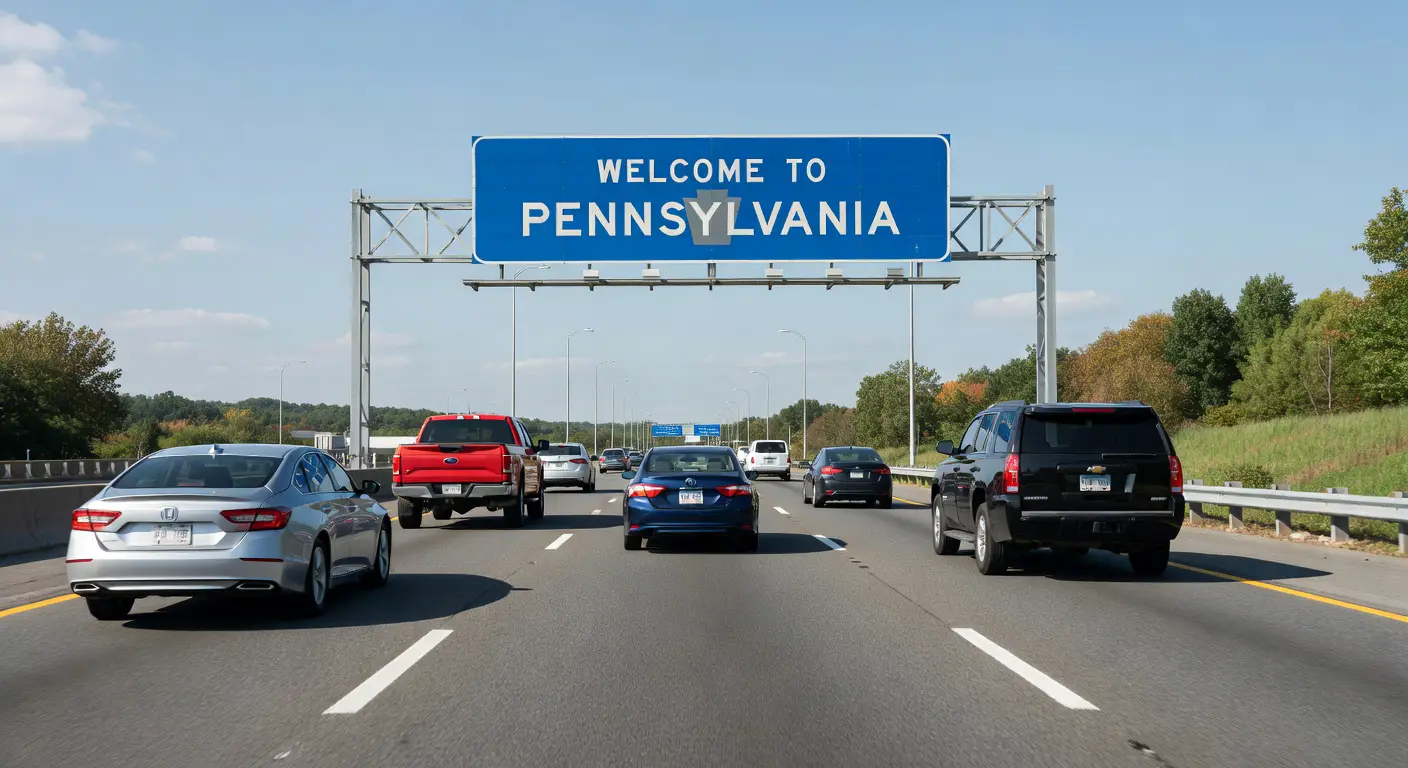
These exceptions matter. A surprising number of accidents involve at least one vehicle from out of state especially near the borders with New York, New Jersey, Ohio, Maryland, and Delaware.
If you’re hit by someone from New Jersey your limited tort restriction doesn’t apply. You can sue for full damages because they’re from out of state. This quirk in the law means limited tort provides less protection to insurance companies than they’d like.
How Pennsylvania compares to other states
Pennsylvania is one of the few states that lets drivers choose their tort rights. Most states either give you full rights to sue or restrict those rights through a no-fault system. Pennsylvania splits the difference.
When you look at how auto insurance works across different states Pennsylvania’s approach is unusual. You get immediate medical payment through your medical benefits coverage. You also get to decide whether you want full lawsuit rights or reduced premiums.
New York has mandatory PIP and full lawsuit rights with a serious injury threshold. Florida has mandatory PIP and very limited ability to sue. Michigan has the highest medical benefits coverage in the country with its own unique tort rules.
Pennsylvania tries to give drivers flexibility. Whether that’s better or worse than a one-size-fits-all approach depends on whether you think most people make informed choices about their coverage.
My experience suggests most people don’t. They pick limited tort because their agent tells them it’s cheaper and they don’t fully understand what they’re giving up.
What you actually need in Pennsylvania
The legal minimum in Pennsylvania is 15/30/5 liability, $5,000 medical benefits, and either limited or full tort.
I’d recommend most Pennsylvania drivers carry at least 100/300/100 liability coverage. The minimum 15/30/5 is a joke by modern standards. It won’t come close to covering a serious accident.
Increase your medical benefits to at least $25,000 or $50,000. Five thousand dollars doesn’t go far with medical expenses. Even if you have health insurance your auto medical benefits pay first and can prevent hassles with deductibles and coverage disputes.
Add uninsured motorist coverage even though Pennsylvania doesn’t require it. About 7% of Pennsylvania drivers are uninsured. That’s better than some states but still means you’re likely to encounter an uninsured driver eventually.
As for the tort choice that’s personal. But if you can afford the extra $100 to $300 per year for full tort I think it’s worth it for most people. You’re preserving options you might desperately need someday.
Common mistakes Pennsylvania drivers make
The biggest mistake is choosing limited tort without understanding it. People see the lower premium and sign up without reading what they’re agreeing to.
Another mistake is sticking with minimum liability limits. 15/30/5 satisfies the law but leaves you massively exposed to personal liability in any accident involving injury or a newer vehicle.
A lot of Pennsylvania drivers also skip uninsured motorist coverage because it’s optional. That’s penny-wise and pound-foolish. The coverage isn’t expensive and the protection it provides is substantial.
Some people think they can change their tort selection after an accident. You can’t. Once you have an accident you’re stuck with whatever choice you made when you bought the policy. You can’t upgrade from limited to full tort retroactively.
Final thoughts
Pennsylvania’s choice no-fault system gives drivers control over their coverage and costs. That’s good in theory. In practice it means a lot of people make decisions without fully understanding the tradeoffs.
Limited tort saves money but restricts your lawsuit rights. Full tort costs more but preserves your ability to recover full damages for pain and suffering. There’s no right answer that works for everyone.
If you’re trying to understand how Pennsylvania fits into the broader picture of state-by-state insurance requirements it occupies a middle ground between pure no-fault states and traditional tort states. And if you want to see how a straightforward tort state with no choice operates Texas offers a clear example where everyone has full lawsuit rights and the minimum requirements are higher.
Stay covered, stay safe, and happy driving.