Penalties for driving without insurance in California: fines, DMV actions, and long-term consequences
Driving without auto insurance in California is not a minor oversight it is a serious legal and financial violation. California enforces mandatory auto insurance laws through electronic verification, traffic stops, court systems, and accident reporting. As a result, uninsured drivers face immediate penalties and long-term consequences that often far exceed the cost of maintaining coverage.
Many drivers underestimate these consequences. Some assume penalties apply only after accidents. Others believe a short lapse will go unnoticed. In reality, California’s enforcement system is designed to detect uninsured vehicles quickly and impose escalating penalties.
This article provides a complete, in-depth explanation of the penalties for driving without insurance in California, including fines, DMV actions, registration suspension, vehicle impoundment, accident liability exposure, and how uninsured driving affects future insurance costs. It is written for drivers seeking accurate, state-specific guidance and for automotive insurance niche websites building evergreen legal-content authority.

Is driving without insurance illegal in California?
Yes. California law requires continuous financial responsibility for every registered vehicle, whether or not the vehicle is actively driven.
Drivers must maintain:
- Valid liability insurance, or
- An approved alternative (such as a cash deposit or self-insurance certificate)
Failure to do so constitutes a violation, even if:
- The vehicle is parked
- The driver is not stopped by police
- No accident occurs
How California detects uninsured drivers
California does not rely solely on traffic stops.
Electronic insurance verification
Insurance companies report coverage directly to the California DMV. This allows the DMV to:
- Detect lapses automatically
- Flag uninsured vehicles
- Trigger registration actions
A lapse of even a single day can be detected.
Traffic stops and accidents
Uninsured status is also discovered during:
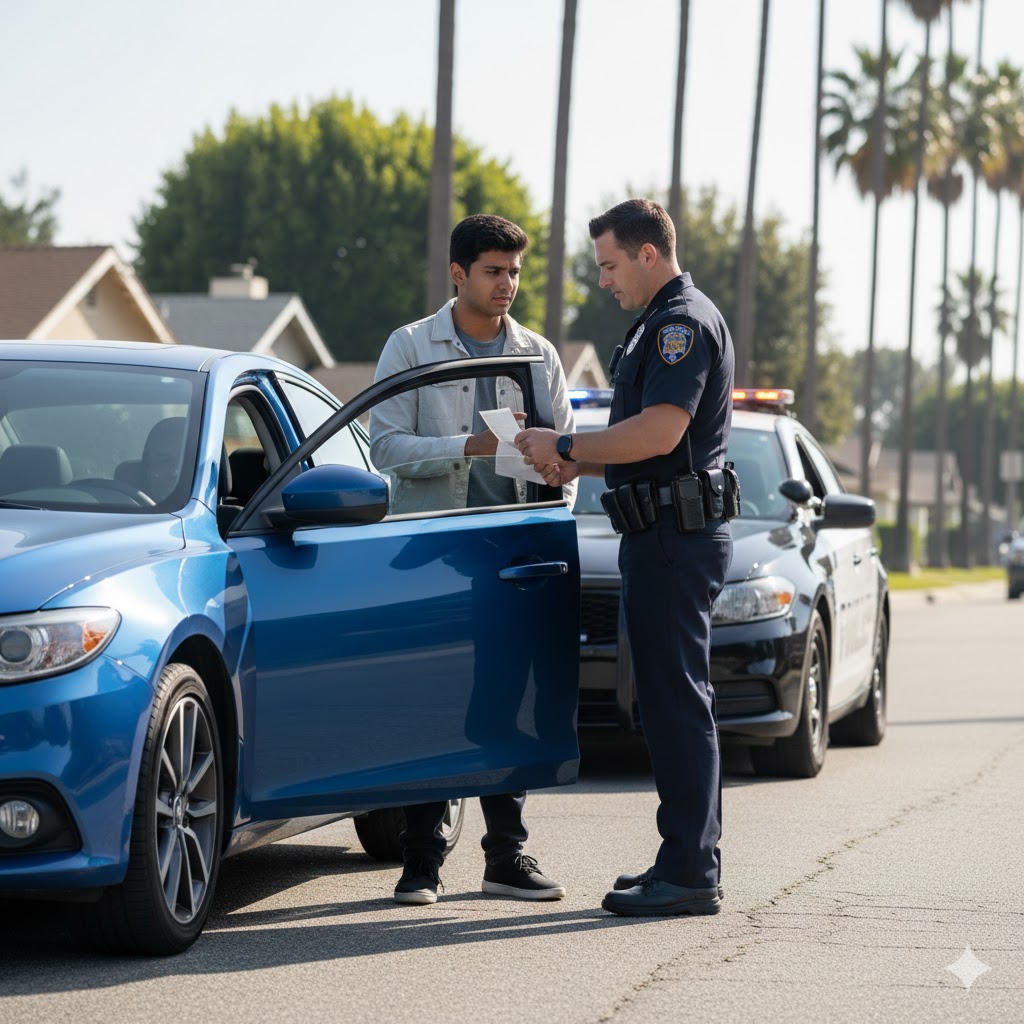
- Traffic stops
- Vehicle registration checks
- Accident investigations
Drivers must provide proof of insurance upon request.
Penalties for a first offense of driving without insurance
California imposes penalties even for a first offense.
Base fines
For a first offense, fines typically include:
- $100 to $200 base fine
- Additional penalty assessments and fees
With added court fees, the total cost often exceeds $450 to $900.
Proof of insurance requirements
Courts may require drivers to:
- Provide proof of insurance by a deadline
- Appear in court
- Pay reinstatement or compliance fees
Failure to comply can result in additional penalties.
Penalties for repeat offenses
Penalties increase significantly for subsequent violations.
Second and subsequent offenses
Repeat offenses can result in:
- Base fines of $200 to $500
- Total costs exceeding $1,000
- Increased court supervision
Courts treat repeat uninsured driving as a serious pattern of non-compliance.
Vehicle registration suspension
One of the most serious consequences is registration suspension.
How suspension happens
If the DMV detects uninsured status:
- Registration is suspended automatically
- Renewal is blocked
- Driving the vehicle becomes illegal
Suspension can occur even without a traffic stop.
Reinstating a suspended registration
To reinstate registration, drivers must:
- Obtain valid insurance
- Pay a reinstatement fee
- Submit proof of insurance to the DMV
Until reinstated, the vehicle cannot be legally driven.
Vehicle impoundment risks
In some situations, uninsured vehicles may be impounded.
When impoundment occurs
Impoundment may occur if:
- The driver is stopped while uninsured
- The vehicle is already under registration suspension
- The driver cannot provide proof of insurance
Impoundment adds towing and storage fees, which can quickly exceed insurance costs.
Driving without insurance after an accident
The consequences escalate dramatically if an uninsured driver causes or is involved in an accident.
At-fault accidents
If you are uninsured and at fault:
- You are personally responsible for all damages
- Insurance does not cover injuries or repairs
- Lawsuits are likely
Medical bills and property damage can reach tens or hundreds of thousands of dollars.
Not-at-fault accidents
Even if not at fault:
- Recovering damages becomes more complicated
- Medical expenses may be unpaid initially
- Legal disputes may arise
Uninsured drivers have fewer legal protections.
Civil liability and lawsuits
California allows injured parties to pursue personal assets when insurance is absent.
Potential consequences
- Wage garnishment
- Bank account levies
- Property liens
- Long-term judgments
Insurance exists to protect against exactly these outcomes.
SR-22 and proof of financial responsibility
Some uninsured drivers are required to file an SR-22.
What an SR-22 means
An SR-22:
- Is not insurance itself
- Proves future financial responsibility
- Is filed by an insurer with the DMV
Drivers required to carry an SR-22 face:
- Higher premiums
- Limited insurer options
- Mandatory filing periods
How driving without insurance affects future insurance costs
Uninsured driving has long-term pricing consequences.
Insurance risk assessment
Insurers view uninsured periods as:
- High-risk behavior
- Indicator of financial instability
- Predictor of future claims
As a result:
- Premiums increase
- Fewer insurers offer coverage
- Down payments may be required
How long an insurance lapse stays on record
Lapses may affect pricing for:
- Several years
- Multiple policy renewals
Even short lapses can trigger long-term rate increases.
Common myths about driving without insurance
Myth: Short lapses do not matter
False. Even one day can trigger penalties.
Myth: Parking the car avoids penalties
False. Registered vehicles must remain insured.
Myth: Insurance can be bought after a stop
False. Coverage must be active at the time of the violation.
Legal alternatives to auto insurance in California
California allows limited alternatives, but they are uncommon.
Approved alternatives include
- Cash deposit with the DMV
- Surety bond
- Self-insurance certification
These options require significant financial resources and are rarely practical for most drivers.
How to avoid penalties for driving without insurance
Drivers should:
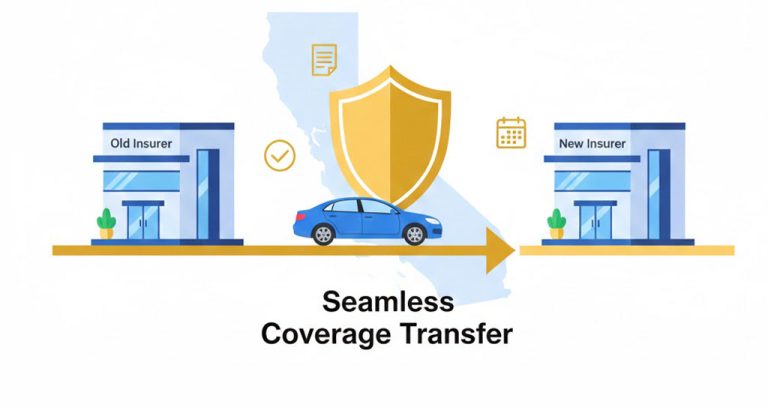
- Maintain continuous coverage
- Avoid canceling policies before replacements are active
- Monitor payment schedules
- Verify DMV insurance status
Proper planning prevents nearly all uninsured penalties.
What to do if you are caught driving without insurance
Immediate steps include:
- Obtain insurance as soon as possible
- Comply with court deadlines
- Submit proof of coverage promptly
- Seek legal advice if necessary
Delays worsen consequences.
Uninsured driving vs minimum coverage
Minimum coverage:
- Meets legal requirements
- Prevents penalties
- Provides limited protection
Driving uninsured offers no benefits and extreme risks.
Driving without insurance in California carries consequences far beyond a simple traffic ticket. From fines and registration suspension to lawsuits and long-term insurance challenges, uninsured driving exposes drivers to financial and legal risks that far exceed the cost of coverage.
California’s enforcement system is designed to detect uninsured vehicles quickly and penalize non-compliance consistently. Maintaining at least the minimum required coverage is not only a legal obligation it is a critical safeguard against severe financial harm.
For California drivers, insurance is not just about compliance. It is about protection, stability, and avoiding consequences that can follow you for years.