Ohio auto insurance laws: what 25/50/25 really covers
Ohio requires every driver to carry 25/50/25 liability coverage. On paper that looks reasonable. In practice it’s barely enough to cover one moderately serious accident in 2026.
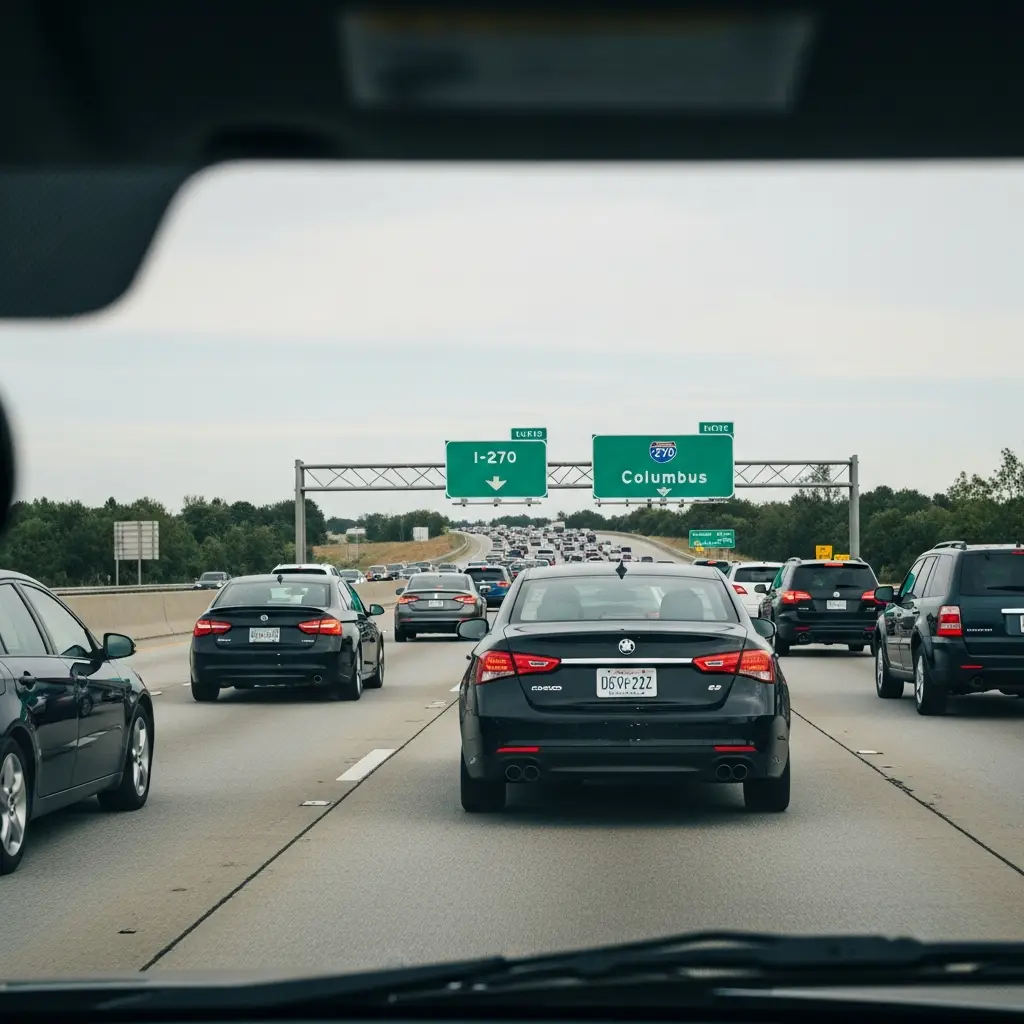
I’ve looked at hundreds of insurance claims from Ohio over the years and the pattern is always the same. Driver thinks they’re properly covered because they meet state requirements. Then they cause an accident on I-71 or I-270 and discover their coverage runs out before the bills stop coming.
Columbus, Cleveland, Cincinnati. These cities have real traffic and real accident costs. The minimum coverage Ohio requires hasn’t kept pace with either.
Let me break down what Ohio actually mandates and why it’s not enough.
What Ohio requires
Ohio mandates liability insurance of 25/50/25 for every registered vehicle. That’s $25,000 per person for bodily injury, $50,000 total per accident for bodily injury, and $25,000 for property damage.
You need proof of insurance to register your vehicle. You need to carry proof while driving. Get caught without it and you’re looking at fines, license suspension, and potential vehicle impoundment.
Ohio doesn’t require Personal Injury Protection. No mandatory uninsured motorist coverage. No required medical payments coverage. Just basic liability.
That makes Ohio a traditional at-fault state. Whoever causes the accident is responsible for damages. Their insurance pays up to policy limits. After that the at-fault driver is personally liable.
Simple system but those 25/50/25 minimums create massive gaps between what insurance covers and what accidents actually cost.
Why these limits fail in real accidents
Twenty-five thousand dollars per person sounds adequate until someone actually gets injured.
Emergency room visit in Columbus or Cleveland runs $5,000 to $12,000 for anything beyond minor scrapes. Add imaging, specialists, maybe admission. The bills climb fast.
If someone needs surgery you’re looking at $40,000 to $80,000 easily. Orthopedic surgery for a broken leg or shoulder repair. Back surgery. Anything serious blows past your limits before the patient even starts physical therapy.
Then comes rehabilitation. Physical therapy three times a week for three months costs $8,000 to $12,000. If they can’t work for a month that’s another $4,000 to $8,000 in lost wages depending on their income.
Your $25,000 per person limit gets exhausted before they finish treatment. Then their lawyer starts looking at your personal assets for the difference.
The property damage limit is even worse in 2026. Twenty-five thousand dollars doesn’t cover most newer vehicles.
Average new car price is around $48,000 now. Trucks and SUVs that dominate Ohio roads cost $55,000 to $70,000. Hit a newer Ram or Silverado and the repair estimate alone can hit $25,000 before you even talk about total loss scenarios.
Rear-end a Tesla or Audi and your property damage limit is gone before the appraiser finishes writing up the estimate.
Ohio is an at-fault state
Ohio uses a traditional fault-based system. Whoever causes the accident pays for damages through their liability insurance.
If you run a red light and T-bone someone you’re at fault. Your insurance covers their damages up to your policy limits. Everything beyond that comes directly from your pocket.
Ohio allows injured parties to sue without meeting any injury threshold. Even relatively minor accidents can end up in court if someone claims ongoing problems or disputes the settlement offer.
Ohio also uses modified comparative negligence. If you’re more than 50% at fault you can’t recover damages from the other party. If you’re less than 50% at fault you can recover but your compensation gets reduced by your fault percentage.
This creates disputes where both drivers claim the other person caused the accident. Insurance companies investigate. Lawyers get involved. What should be a straightforward claim turns into months of back and forth while everyone argues about fault percentages.
Cleveland and Cincinnati courts are reasonably balanced. Columbus tends to be slightly more plaintiff-friendly. But anywhere in Ohio if you’re at fault with minimum coverage you’re exposed to significant personal liability.
Real scenario on I-270
Let me give you a realistic example that happens all the time in Columbus.
You’re heading west on I-270 near Easton. It’s 5:30 PM on a weekday. Traffic is heavy but moving. Someone ahead brakes suddenly because of congestion. You’re checking your blind spot to change lanes and don’t see it in time.
You hit the SUV in front of you hard enough to deploy your airbags.
The other driver is a 35-year-old office worker. She hits her head on the side window during impact. Concussion. She goes to the ER that night. CT scan, evaluation, observation for a few hours. Initial bill is $9,200.
Over the next two months she has persistent headaches and dizziness. Multiple follow-up appointments with her primary doctor and a neurologist. Medications to manage the symptoms. Another $4,800. She misses three weeks of work because she can’t focus or drive safely. Lost wages of $3,600.
Total medical and lost wages so far is $17,600. Her lawyer is claiming ongoing symptoms and demanding $45,000 total to settle.
Your $25,000 per person limit covers $25,000. You’re personally liable for $20,000 on top of that.
Now the vehicle damage. Her 2024 Honda Pilot has extensive front-end damage. Frame damage, sensors, airbags deployed, mechanical components compromised. It’s borderline total loss but they decide to repair it. Estimate comes back at $28,400.
Your property damage limit is $25,000. The vehicle repair is $28,400. You owe $3,400 personally just for her car.
Add your own vehicle which might be totaled. Your collision coverage handles that if you have it. Plus your premium is jumping significantly after an at-fault accident with injury.
This is a normal accident. Not some five-car pileup. Not a catastrophic injury. Just a regular rear-end collision in Columbus traffic because you looked away for three seconds.
Your minimum coverage left you owing $23,400 personally plus dealing with lawyers and potential wage garnishment if you can’t pay it all at once.
How Ohio compares to surrounding states
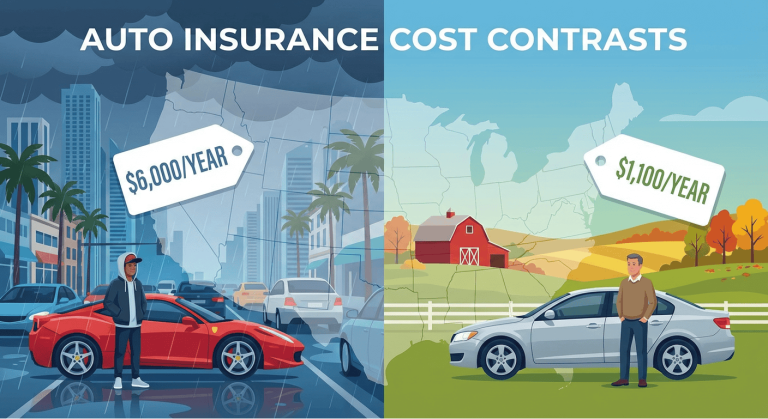
Ohio’s 25/50/25 requirement is identical to what Indiana requires. It’s slightly higher than Michigan’s 20/40/10 but lower than what Pennsylvania recommends.
When you look at how different states structure their insurance requirements Ohio sits in the lower-middle range. Not the absolute worst but nowhere near adequate for 2026 accident costs.
Ohio also doesn’t require uninsured motorist coverage which is honestly a problem given that about 13% of Ohio drivers have no insurance. That’s roughly one in eight vehicles on the road.
Cincinnati, Cleveland, and Columbus all have significant uninsured driver populations concentrated in certain neighborhoods. Get hit by someone with nothing and you’re stuck paying your own bills unless you bought optional UM coverage.
What you actually need in Ohio
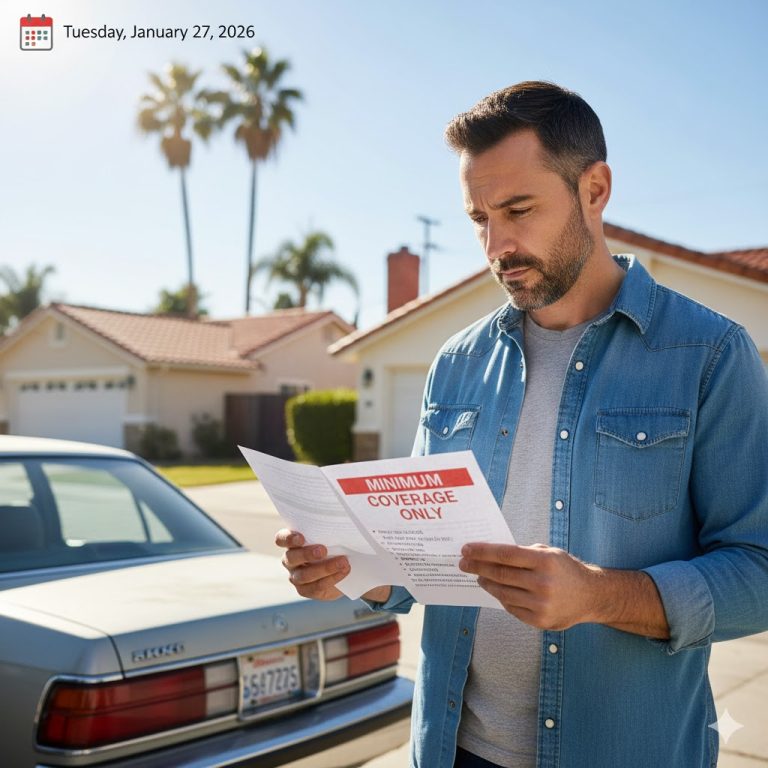
The legal minimum in Ohio is 25/50/25 liability. That keeps you legal. It doesn’t keep you protected.
Here’s what I’d recommend for Ohio drivers in 2026.
Carry at least 100/300/100 liability coverage. That’s $100,000 per person for bodily injury, $300,000 per accident, and $100,000 for property damage. This provides real protection against modern costs without being ridiculously expensive.
The premium difference between minimum and adequate coverage in Ohio is usually $45 to $75 per month depending on location, age, and driving history. Cleveland and Columbus cost more than Dayton or Toledo but it’s manageable for most people.
Add uninsured motorist coverage at matching limits. With 13% of drivers uninsured you absolutely need protection for when someone with no insurance hits you. UM coverage typically costs $20 to $35 per month and it’s worth every penny.
Consider medical payments coverage of $5,000 to $10,000. Ohio doesn’t require PIP so you need a way to pay your own medical bills quickly after an accident while fault gets determined and liability gets sorted out.
Keep comprehensive and collision if your vehicle is worth more than $5,000. Ohio weather can be brutal. Ice storms, flooding, hail in some areas. Plus Cleveland and Columbus both have vehicle theft issues that make comprehensive coverage worthwhile.
Common mistakes Ohio drivers make
The biggest mistake is sticking with 25/50/25 minimum coverage and thinking you’re good. You meet legal requirements sure but you’re one accident away from financial disaster.
Another mistake is declining uninsured motorist coverage to save money. Ohio doesn’t require it so many people skip it without really thinking about what happens when they get hit by an uninsured driver. And they will eventually.
A lot of Ohio drivers don’t understand that their liability coverage only pays for damage they cause to others. It doesn’t cover their own injuries or vehicle damage. That’s what medical payments and collision coverage are for. This confusion leads to nasty surprises after accidents.
Some people think they can negotiate with insurance companies after an accident to increase their coverage retroactively. That’s not how it works. You’re stuck with whatever limits you had at the time the accident happened. Period.
Young drivers often go with minimum coverage because insurance is already expensive when you’re under 25. But young drivers cause more accidents statistically which makes low limits even more dangerous for them specifically.
Different risks across Ohio
Insurance needs vary somewhat across Ohio depending on where you live and drive but not as much as people think.
Columbus drivers deal with heavy traffic on I-270, I-71, and Route 315. Accidents are frequent. Higher liability limits are essential here.
Cleveland drivers face similar traffic on I-90, I-71, and I-480. Plus Cleveland has higher auto theft rates than the state average especially in certain neighborhoods. Comprehensive coverage matters more there.
Cincinnati drivers navigate I-75, I-71, and I-275 plus deal with Kentucky and Indiana drivers crossing state lines constantly. Out-of-state drivers increase complexity when accidents happen because different insurance rules can come into play.
Rural Ohio drivers in places like Mansfield, Zanesville, or Lima pay less for insurance and face less daily traffic. But they still need adequate liability limits. A serious accident costs the same whether it happens in Columbus or Cambridge. Medical bills don’t care about population density.
Northern Ohio along Lake Erie gets hammered with lake-effect snow and ice in winter. Winter driving creates different accident risks that people from southern Ohio don’t always appreciate.
Regardless of where you live in Ohio the 25/50/25 minimum is inadequate. Everyone needs higher coverage. The specific amount depends on your assets and risk tolerance but nobody should carry just the minimum and feel good about it.
Final thoughts
Ohio’s 25/50/25 minimum insurance requirement meets the legal standard but falls dramatically short of real financial protection in 2026.
Modern vehicles cost more. Medical care costs more. Legal settlements cost more. Everything costs more except the minimum insurance requirements which haven’t changed in years despite all this cost inflation.
The cost to upgrade from minimum to adequate coverage is usually $50 to $100 per month. That’s real money especially if you’re on a tight budget but it’s nothing compared to being personally liable for $50,000 or $100,000 after an at-fault accident.
If you want to see how Ohio fits into the national picture of auto insurance regulations it’s in the middle tier with plenty of room for improvement. And if you’re comparing Ohio to states with slightly higher minimums Texas requires 30/60/25 which is better but still insufficient for serious accidents by today’s standards.
Stay covered, stay safe, and happy driving