Illinois minimum auto insurance: 25/50/20 explained
Illinois requires 25/50/20 liability coverage, That’s $25,000 per person for bodily injury, $50,000 per accident for bodily injury, and $20,000 for property damage.
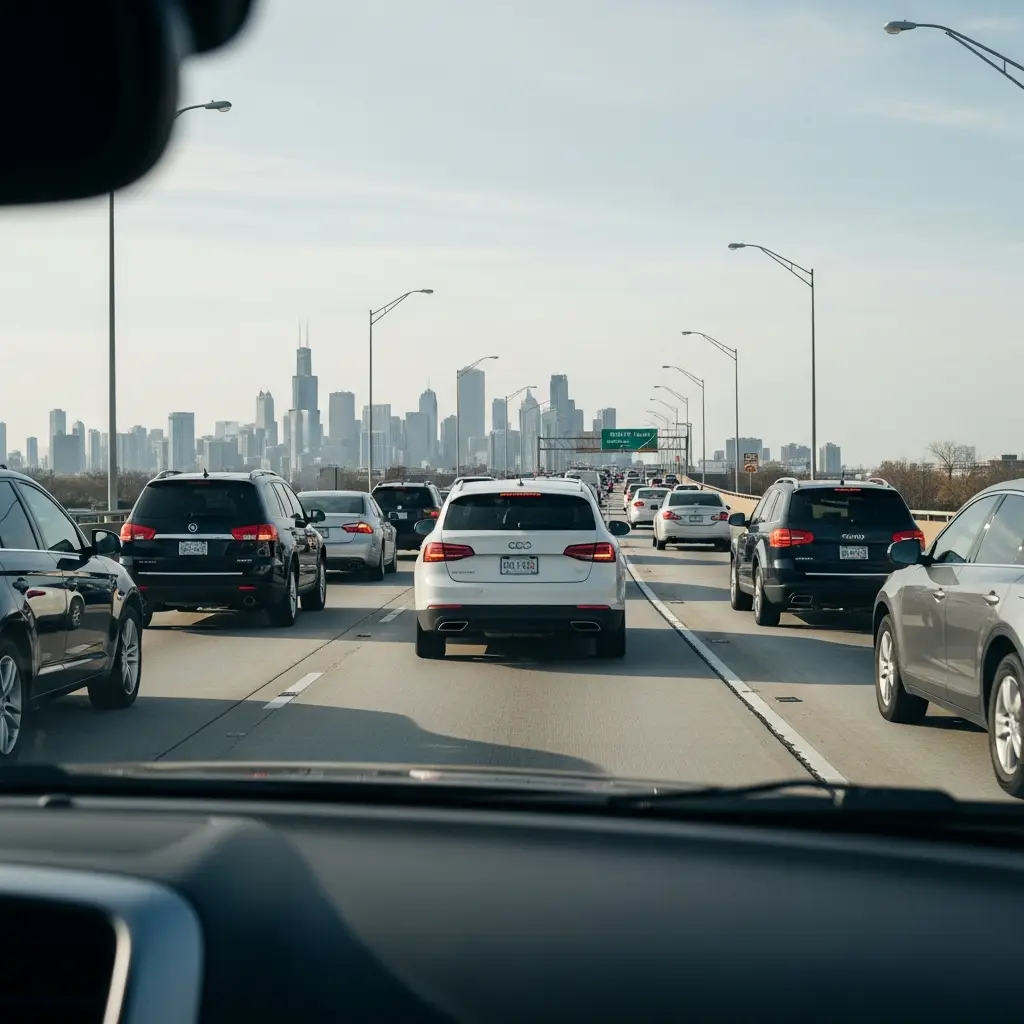
If you live in Chicago or the suburbs you already know these minimums are a joke. One accident on the Kennedy or Dan Ryan and your coverage is gone before the tow truck even arrives.
I’ve been writing about insurance for over a decade now and Illinois consistently shows up as a state where drivers are shocked at how fast their minimum coverage runs out. They think they’re covered because they meet state requirements. Then reality hits and the bills start piling up.
Let me walk you through what Illinois actually requires and why you need way more than that.
What Illinois requires
Every driver in Illinois needs liability insurance. The minimums are 25/50/20 which breaks down to $25,000 per person for bodily injury, $50,000 total per accident for bodily injury, and $20,000 for property damage.
You need this coverage to register your vehicle. You need proof of insurance in your car at all times. Get caught without it and Illinois doesn’t mess around. Fines, license suspension, vehicle impoundment. They have electronic verification systems now so they catch people pretty quickly.
Illinois doesn’t require Personal Injury Protection. No mandatory uninsured motorist coverage though insurance companies have to offer it and you have to actively decline it. No required medical payments coverage.
Illinois is a traditional fault-based state. Whoever causes the accident is responsible for damages. Their insurance pays up to policy limits. Everything beyond that is personal liability.
Simple enough until you look at what accidents actually cost in 2026 especially in Chicago.
Why these limits fail on Chicago roads
Twenty-five thousand dollars per person for bodily injury might have worked twenty years ago. Not anymore.
Emergency room visit at Northwestern or Rush, or any Chicago hospital runs $8,000 to $15,000 for anything serious. That’s just to get evaluated and stabilized. Add imaging, specialists, admission if needed. The bills climb fast.
If someone needs surgery you’re talking $50,000 to $100,000 easily. Orthopedic surgery. Back surgery. Internal injuries. Chicago has world-class hospitals and they charge accordingly.
Then comes follow-up care. Physical therapy for three months costs $10,000 to $15,000. Specialist visits. Medications. If they miss work you owe lost wages too.
Your $25,000 per person limit gets eaten up before they’re even done with initial treatment. Then their lawyer starts looking at your house and your bank account for the rest.
The property damage limit is even worse. Twenty thousand dollars doesn’t cover much in 2026.
Average new vehicle costs $48,000 now. Chicago roads are full of SUVs and trucks that cost $60,000 to $80,000. Hit a newer Tahoe or Expedition and the repair bill alone can exceed $20,000 before you talk about total loss.
Rear-end a Tesla in Lincoln Park and your property damage coverage is gone instantly. Those cars are expensive to fix even for minor damage because of all the technology packed into them.
Illinois is an at-fault state
Illinois uses traditional fault-based liability. Whoever causes the accident pays for damages through their insurance.
If you blow through a stop sign and hit someone you’re at fault. Your liability insurance covers their damages up to your limits. Everything beyond that comes from you personally.
Illinois allows injured parties to sue without any injury threshold. Even relatively minor accidents can end up in litigation if someone claims ongoing problems or disputes the settlement offer.
Illinois also uses modified comparative negligence. If you’re more than 50% at fault you can’t recover from the other party. If you’re less than 50% at fault you can recover but your damages get reduced by your percentage of fault.
This creates situations where both drivers claim the other person caused it. Insurance companies investigate. Police reports get analyzed. Witnesses get interviewed. Lawyers get involved. A simple accident turns into a year-long dispute.
Cook County courts tend to be fairly plaintiff-friendly. Juries in Chicago can award substantial damages especially if you caused serious injuries. Having low liability limits in Cook County is playing with fire.
Real scenario on the Dan Ryan
Let me paint you a picture that happens constantly in Chicago.
You’re heading south on the Dan Ryan near Chinatown. It’s 5:45 PM on a Wednesday. Traffic is crawling. Stop and go. Stop and go. You’re tired from work and frustrated with traffic.
Someone three cars ahead brakes hard. Chain reaction. You hit the car in front of you harder than you meant to because you were distracted by your phone for just a second.
The driver is a 40-year-old accountant. She hits the steering wheel during impact. Chest contusion and whiplash. She goes to Northwestern ER that night. CT scan, X-rays, evaluation, pain medication. Initial bill is $11,400.
Over the next six weeks she sees her doctor four times and does physical therapy twice a week. Her neck and back are messed up. Another $7,200. She misses two weeks of work. Lost wages of $4,200.
Total medical and lost wages is $22,800. Her lawyer is demanding $50,000 to settle because she’s claiming ongoing pain and limited mobility.
Your $25,000 per person limit covers $25,000. You’re personally liable for $25,000 more.
Now the vehicle damage. Her 2023 Toyota Highlander has rear-end damage. Sensors, tailgate, frame components, mechanical systems. The estimate comes back at $18,900.
Your property damage limit is $20,000. That barely covers her vehicle. If there was any additional property damage or if the repair came in higher you’d owe the difference personally.
Add your own vehicle damage which your collision coverage handles if you have it. Plus your insurance rates are about to skyrocket after an at-fault accident with injury in Cook County.
This is a completely normal accident. Not a catastrophic pileup. Not a death or permanent disability. Just regular Chicago traffic collision.
Your minimum coverage left you personally liable for $25,000 plus whatever your premium increase costs you over the next few years.
The uninsured driver problem in Illinois
Here’s something that should worry every Illinois driver. About 14% of vehicles on Illinois roads have no insurance. That’s roughly one in seven cars.
In Chicago especially in certain neighborhoods that number is even higher. Some estimates put it at 20% or more in parts of the South Side and West Side.
Illinois doesn’t require uninsured motorist coverage but insurance companies have to offer it. You can decline it but you have to sign paperwork actively rejecting it.
A lot of people decline it to save $20 or $30 per month. Then they get hit by someone with no insurance and suddenly they’re stuck paying all their own medical bills and vehicle damage with no way to recover anything.
I talked to a guy in Naperville last year. Got T-boned by someone who ran a red light. Serious injuries. Medical bills over $60,000. The other driver had no insurance and no assets. Judgment proof basically.
This guy had declined uninsured motorist coverage to save twenty-five bucks a month. Now he’s dealing with medical debt that’ll follow him for years. For twenty-five dollars a month.
Don’t be that guy. Get uninsured motorist coverage especially in Illinois where the uninsured rate is so high.
How Illinois compares to other states
Illinois’s 25/50/20 requirement is middle of the pack nationally. It’s higher than California’s 15/30/5 and Florida’s minimums. It’s lower than Texas’s 30/60/25.
When you look at auto insurance requirements across all states Illinois sits somewhere in the middle. Not the worst but far from the best.
The problem is these minimums were set decades ago when vehicles cost half what they do now and medical care was way cheaper. They haven’t been updated to reflect 2026 reality.
Illinois also has higher than average insurance costs overall especially in Chicago. Partly because of the high uninsured rate. Partly because Cook County is expensive to insure in. Partly because fraud and theft rates are high in parts of the metro area.
The average Illinois driver pays around $2,100 per year for auto insurance. Chicago drivers pay significantly more. Downstate drivers in places like Springfield or Peoria pay less.
What you actually need in Illinois
The legal minimum in Illinois is 25/50/20. That keeps you legal but doesn’t keep you protected especially if you live anywhere near Chicago.
Here’s what I’d recommend for Illinois drivers in 2026.
Carry at least 100/300/100 liability coverage. That’s $100,000 per person for bodily injury, $300,000 per accident, and $100,000 for property damage. This gives you real protection against modern accident costs.
If you live in Cook County or have significant assets consider even higher limits. 250/500/250 or an umbrella policy that adds another million in coverage across all your policies.
The premium difference between 25/50/20 and 100/300/100 in Illinois is usually $50 to $90 per month depending on where you live, your age, and your driving record. Chicago and suburbs cost more than downstate but it’s manageable.
Add uninsured motorist coverage at matching limits. With 14% of drivers uninsured you absolutely need this protection. It typically costs $25 to $45 per month depending on your limits.
Consider medical payments coverage of $5,000 to $10,000. Illinois doesn’t require PIP so you need a way to pay your own medical bills quickly after an accident while fault gets sorted out.
Keep comprehensive and collision if your vehicle is worth more than $5,000. Chicago has high vehicle theft rates especially for certain makes and models. Comprehensive coverage protects against that plus weather damage and vandalism.
Common mistakes Illinois drivers make
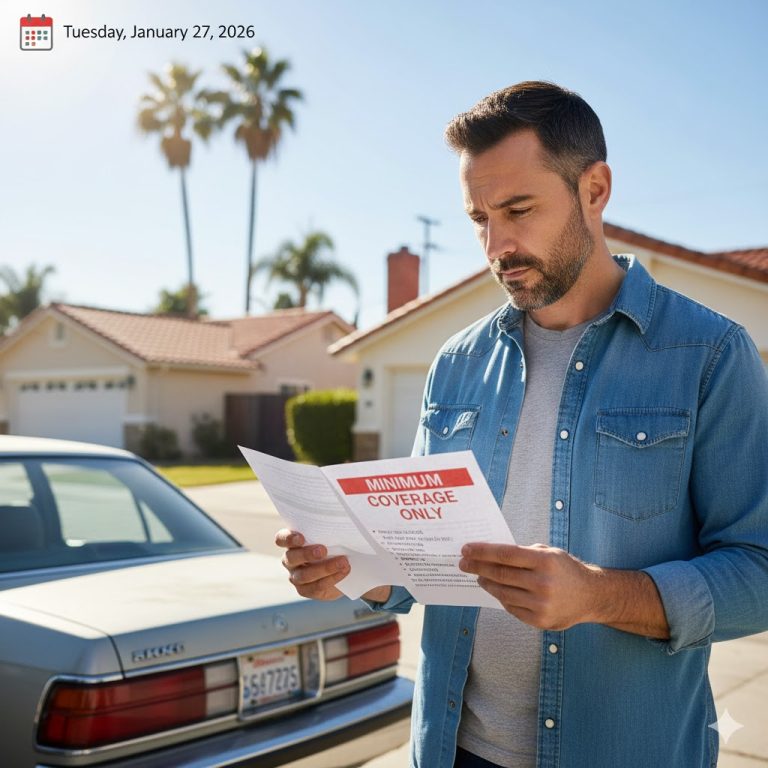
The biggest mistake is sticking with minimum 25/50/20 coverage and thinking you’re adequately protected. You’re legal but you’re one accident away from serious financial problems.
Another huge mistake is declining uninsured motorist coverage to save a few bucks per month. Given Illinois’s high uninsured rate this is penny-wise and pound-foolish.
A lot of Illinois drivers also don’t understand that liability coverage only pays for damage they cause to others. It doesn’t cover their own injuries or vehicle. That’s what medical payments and collision coverage handle. This confusion leads to nasty surprises after accidents.
Some people think they can change their coverage after an accident. You can’t. You’re stuck with whatever you had when the accident happened. You can increase it at renewal but not retroactively.
Young drivers in Illinois often go minimum coverage because premiums are already expensive when you’re under 25. But statistically young drivers cause more accidents which makes low limits especially dangerous for that age group.
Chicago versus downstate Illinois
Insurance needs and costs vary across Illinois but not as much as people think.
Chicago and Cook County drivers face the highest premiums and the highest risk. The traffic is terrible. The roads are crowded. Accidents happen constantly. The uninsured rate is high. Higher liability limits are absolutely essential in Chicago.
Collar counties like DuPage, Lake, Kane, Will. Still expensive. Still high traffic. You need solid coverage here too.
Downstate Illinois in places like Springfield, Champaign, Rockford, Peoria. Lower premiums. Less traffic. But accidents still cost the same. Medical bills don’t care whether you crashed in Chicago or Carbondale.
The minimum 25/50/20 is inadequate everywhere in Illinois. The degree of inadequacy might vary slightly but everyone needs more than the minimum regardless of location.
Final thoughts
Illinois’s 25/50/20 minimum insurance requirement meets legal standards but falls way short of real financial protection in 2026.
Chicago traffic alone should convince most drivers they need higher limits. But even downstate where traffic is lighter modern vehicle costs and medical expenses make minimum coverage a risky gamble.
The cost difference between minimum and adequate coverage is usually $60 to $120 per month. That’s real money but it’s nothing compared to being personally sued for $75,000 or $100,000 after an at-fault accident.
If you want to understand how Illinois compares to the broader landscape of state insurance requirements nationwide it sits in the middle with lots of room for improvement. And if you’re looking at states with slightly different minimums New York requires 25/50/10 which is marginally better but still insufficient for serious accidents in 2026.
Stay covered, stay safe, and happy driving.