
Florida snowbird auto insurance: senior guide 2026
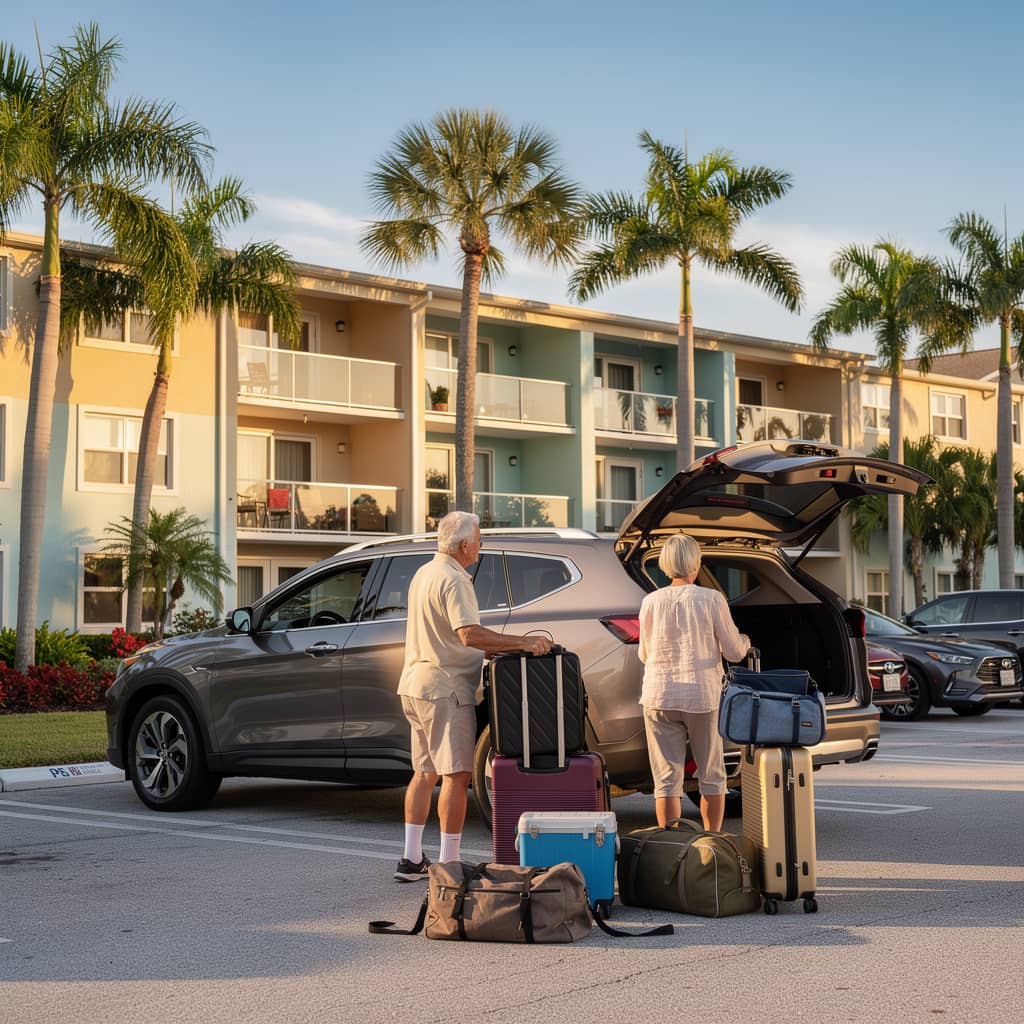
My parents have been snowbirds for eight years now. They spend November through April at their condo in Clearwater and May through October at their house in Michigan. For the first three years they paid full auto insurance premiums in both states year-round because nobody told them there were better options.
When I finally looked at their policies I couldn’t believe what I was seeing. They were paying $1,850 annually in Florida and $1,320 in Michigan for insurance on two cars that were never in both places simultaneously. One car stayed in Michigan all winter while they drove the other to Florida. Total waste of money.
After restructuring their coverage they now pay about $2,100 total instead of $3,170. Same protection, just smarter about how it’s configured. That $1,070 in annual savings adds up to real money over years of retirement and they’re far from unique. Thousands of Florida snowbirds overpay on insurance simply because they don’t understand their options.
Understanding the snowbird insurance challenge
The fundamental problem is that you own vehicles and property in two states but you’re only physically present in each location part of the year. Standard auto insurance assumes you live in one place year-round and use your vehicles there consistently.
Most insurance policies don’t neatly accommodate splitting time between states. You can’t just turn coverage on and off monthly as you migrate. Insurance companies want continuous coverage and many states legally require it.
Florida requires all registered vehicles to carry minimum liability coverage of 10/20/10. Michigan has different requirements including personal injury protection. If you maintain vehicle registration in both states you technically need compliant coverage in both places.
The confusion gets worse because insurance rates vary dramatically between states. Florida typically costs more than most northern states due to higher accident rates, uninsured drivers and weather risk. You want Florida coverage when you’re there but you don’t want to pay Florida rates year-round for a car sitting in a Michigan garage six months.
Add in questions about residence status, which state you claim as primary and where you pay taxes and the whole situation becomes a mess. Most snowbirds I talk to either overpay by maintaining full coverage in both states or underinsure by dropping coverage completely during off-season which creates dangerous gaps.
Primary residence declaration

The first decision you need to make is which state you claim as your primary residence. This affects more than just insurance though insurance is definitely part of it.
Your primary residence determines where you pay state income tax, where you vote, where you register vehicles and where you maintain your driver’s license. Most snowbirds choose Florida as primary residence because Florida has no state income tax. Michigan and most northern states do.
For insurance purposes your primary residence state is where you maintain your main auto policy. If Florida is your domicile you’ll have a Florida insurance policy as your base coverage even if you spend half the year elsewhere.
Establishing Florida residency requires a few specific steps. You need a Florida driver’s license, Florida vehicle registration and you should register to vote in Florida. File a declaration of domicile with the county clerk’s office. Update your address with social security, banks and credit cards.
Spend at least 183 days per year in Florida to meet the substantial presence test. Keep records of your time in each state because if there’s ever a dispute you’ll need to prove Florida is truly your primary home.
Once you’ve established Florida as your domicile your auto insurance should be a Florida policy. But that doesn’t solve the problem of what happens to your vehicle when you’re up north for six months.
Seasonal suspension of coverage
Some insurance companies allow you to suspend comprehensive and collision coverage on vehicles during months when they’re not being driven. This is sometimes called seasonal or storage coverage.
The idea is simple. If your car sits in a Florida garage unused from May through October you don’t need collision coverage during those months. You’re not driving it so you can’t crash it. Comprehensive stays in place to cover theft, fire or weather damage to the parked vehicle but collision drops off.
In practice this saves maybe 30-40% of your total premium for those months. Not a full 50% because comprehensive coverage remains and your liability coverage continues even when the car isn’t being driven.
Not all carriers offer this option and those that do have specific requirements. The vehicle must be garaged in a secure location. You can’t drive it at all during suspension periods. Some companies require you to remove the license plates and turn them in to the DMV.
State Farm offers seasonal suspension in some states. So does Progressive. Smaller regional carriers sometimes have better flexibility than national companies. You need to specifically ask about it because agents don’t always volunteer the information.
My parents tried this approach initially. The savings were decent but the hassle of coordinating suspension dates, dealing with plate removal and making sure coverage resumed before they drove the car again proved annoying. They eventually went with a different solution.
Non-owned vehicle coverage
Another option is keeping just one vehicle and renting or borrowing a car in your secondary location. Your auto insurance typically includes coverage when you drive rental cars or vehicles you don’t own.
This works well for snowbirds who don’t mind renting. Rent a car for the six months you’re in Michigan instead of maintaining a second vehicle there year-round. Your Florida insurance policy covers you while driving that rental.
The numbers can work in your favor. If you’re paying $1,200 annually to insure a second car in Michigan plus depreciation, maintenance and registration fees you might be better off renting when needed. A monthly rental for six months runs maybe $3,000-4,000 which seems expensive but compare it to the total cost of owning and insuring that second vehicle.
Some snowbirds borrow vehicles from family in their northern location. Your adult child who lives near your summer home loans you a car while you’re there. Your insurance provides secondary coverage but their policy is primary since they own the vehicle.
This creates potential complications if there’s an accident. Whose insurance pays? Whose rates go up? Having clear conversations with family about this arrangement prevents problems. Some people prefer the rental option specifically to avoid mixing family and insurance claims.
Multi-state insurance policies
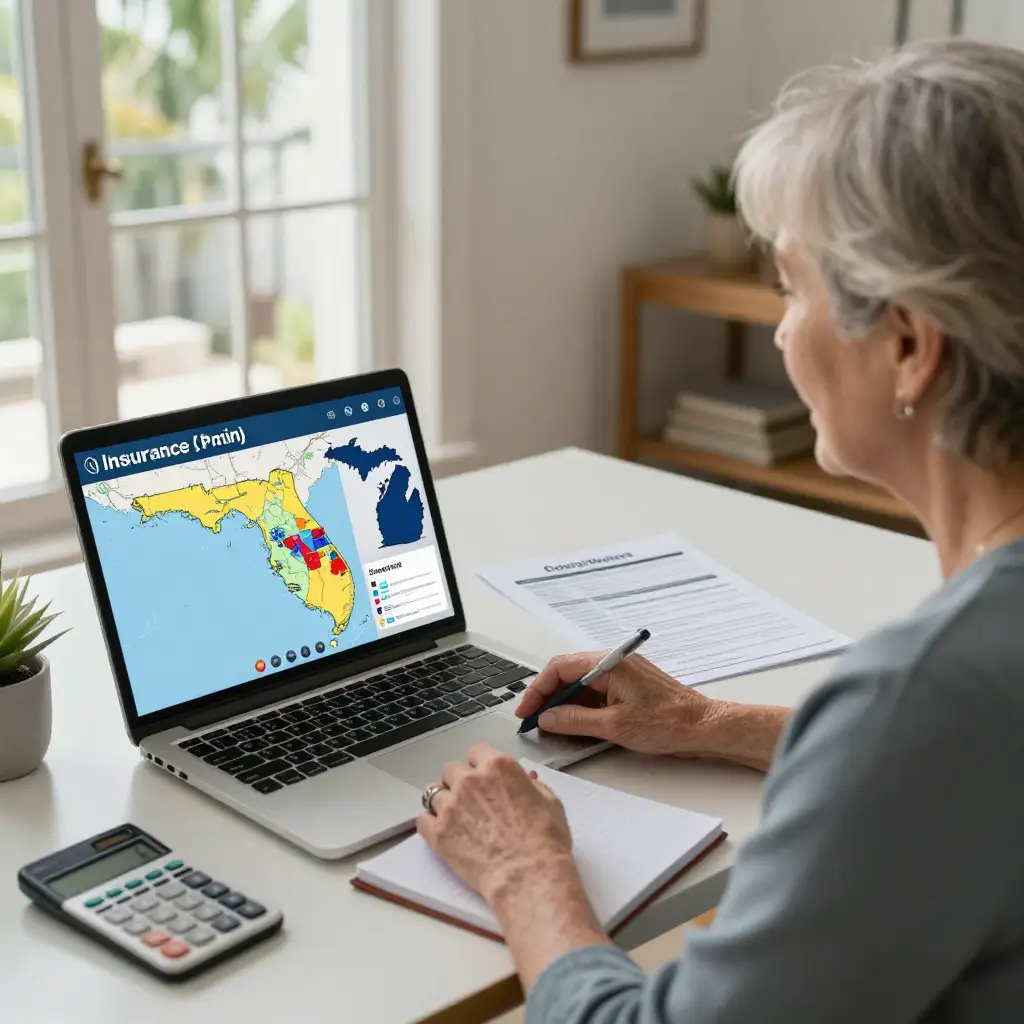
Some carriers specialize in multi-state coverage designed specifically for snowbirds. These policies acknowledge you split time between locations and price accordingly.
The Hartford is probably the most well-known carrier in this space. They partner with AARP and offer snowbird-specific policies that cover vehicles in multiple states at rates better than maintaining separate policies.
Safeco has snowbird programs. So do some smaller regional carriers particularly those operating in Florida and popular snowbird origin states like Michigan, New York and Ohio.
These policies work by designating a primary state and secondary state. The primary state rating applies for the portion of the year you’re there. The secondary state rates apply when you’re in that location. The premium reflects the blended risk of both places.
You still maintain continuous coverage but the insurance company accounts for the split-time reality. This typically costs less than two full separate policies but more than a single-state policy with seasonal suspension.
Multi-state policies also simplify claims. If you have an accident in Michigan your Florida-based snowbird policy covers it. You’re not dealing with coordination between two separate insurance companies.
The catch is not all carriers offer true multi-state policies and those that do may not operate in every state combination. If you winter in Florida and summer in Wisconsin you might find options. If you split between Florida and Montana your choices narrow considerably.
The mileage angle
Snowbirds typically drive way less than year-round residents because they’re maintaining two separate living situations. All your driving is local errands and nearby activities. You’re not commuting to work, you’re not doing cross-state trips regularly.
Most snowbirds I’ve talked to log under 8,000 miles annually. Some are under 5,000. That qualifies you for substantial low mileage discounts regardless of which coverage structure you choose.
Make sure your insurance company knows your accurate annual mileage. Don’t estimate, actually track it. The difference between 8,000 miles and 12,000 miles might be another 10-15% in premium savings.
Pay-per-mile insurance programs can work exceptionally well for snowbirds. Metromile and Nationwide SmartMiles charge a low base rate plus pennies per mile. If you’re genuinely driving under 6,000 miles yearly these programs often beat traditional coverage by 40-50%.
The challenge with pay-per-mile is verification. You need to provide regular odometer readings or use a telematics device. Some snowbirds don’t want that level of monitoring, but the savings can be substantial enough to make it worthwhile. For detailed comparisons, checking out low mileage insurance programs for retired drivers shows how pay-per-mile stacks up against traditional low mileage discounts.
Registration and licensing complexity
Where you register your vehicles matters for insurance. If you maintain Michigan registration on one car and Florida registration on the other you’ll need Michigan-compliant coverage on the Michigan vehicle and Florida-compliant coverage on the Florida vehicle.
Many snowbirds simplify by registering both vehicles in their primary residence state. If Florida is your domicile register both cars there. Then you only need one insurance policy covering both vehicles under Florida law.
Some states make this difficult. Michigan for example charges higher registration fees for out-of-state owners. You might pay $150 to register in Florida versus $400 in Michigan. Those fees add up over time.
Driver’s licenses should match your primary residence. If you claim Florida residency but hold a Michigan driver’s license that creates inconsistency that could cause problems. Get your license from your domicile state and keep it current.
Address everything consistently. Your driver’s license, vehicle registrations, insurance policy, voter registration and tax filings should all show the same primary address. Inconsistency raises red flags that can lead to denied claims or residency audits.
What my parents actually do
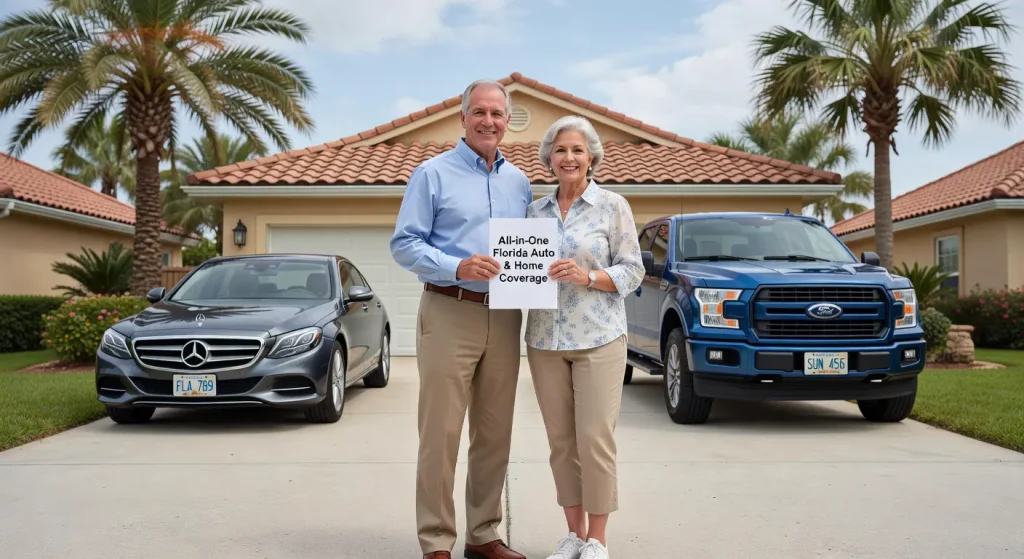
After trying seasonal suspension and researching multi-state policies my parents settled on a simpler approach. They registered both vehicles in Florida where they claim residency. They have one Florida auto insurance policy covering both cars.
When they drive to Michigan for the summer both cars technically remain Florida-registered and Florida-insured. Their policy covers them anywhere in the United States so driving in Michigan is fine. They’re not breaking any laws and they’re fully covered.
They do carry higher liability limits than Florida minimums to ensure they meet Michigan’s requirements too. Florida minimum is 10/20/10 but they carry 100/300/100 which exceeds both states’ legal requirements.
Their annual mileage on both vehicles combined is about 7,500 miles. They qualified for low mileage discounts bringing their total premium to about $2,100 yearly. They also get AARP discounts and mature driver course discounts stacked on top.
This approach works because Florida allows you to maintain Florida registration even if you’re physically out of state for extended periods as long as Florida remains your legal domicile. Michigan recognizes out-of-state insurance as long as it meets Michigan’s minimum coverage requirements.
The key is being honest with the insurance company. They know my parents spend summers in Michigan. The insurance company has their Michigan address on file as a secondary location. Everything is transparent and documented so there’s no risk of coverage denial based on misrepresentation.
Hurricane considerations
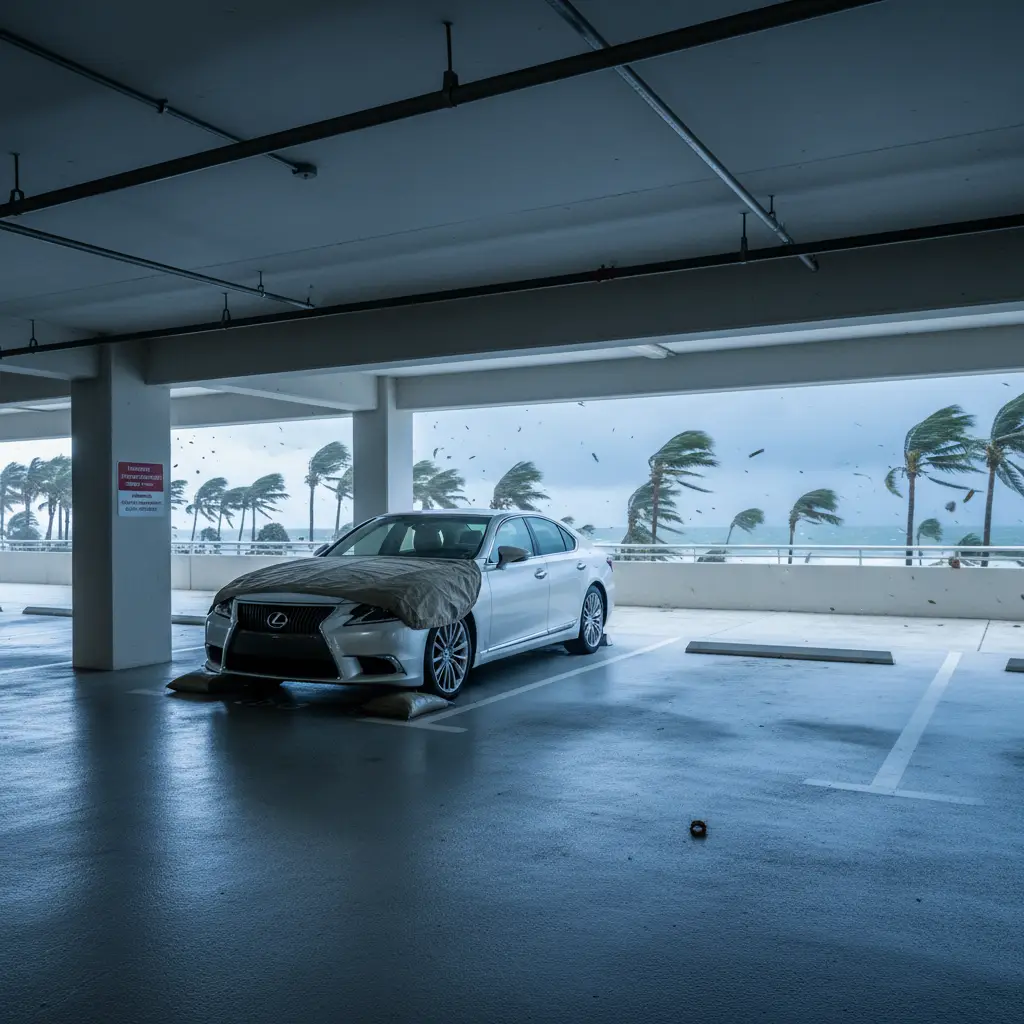
Florida-based snowbirds face an interesting timing challenge around hurricane season which runs June through November. Many snowbirds are up north during peak hurricane months which creates vehicle exposure.
If you leave a car parked in Florida during hurricane season you want comprehensive coverage on it even if you’re not there driving it. Wind and flood damage can total a vehicle and comprehensive protects you from that loss.
Some snowbirds pull their Florida vehicle north for the summer specifically to avoid hurricane risk. Then they have both cars in Michigan from May to October. This eliminates the parked-vehicle-in-hurricane-zone concern but creates different insurance questions.
Another approach is storing your Florida vehicle in a secure garage rather than just a carport or outdoor parking. Some insurance companies offer better rates for garaged vehicles especially during hurricane season.
My parents keep their Florida car in their condo garage year-round. They’ve never had hurricane damage but they maintain full comprehensive coverage because the risk is real. The premium for comprehensive alone is maybe $300 annually which seems reasonable to protect a $15,000 vehicle from storm damage.
Common mistakes snowbirds make
The biggest mistake is maintaining two completely separate insurance policies year-round. I see this constantly. People have Michigan insurance on their Michigan car and Florida insurance on their Florida car both running 12 months. Total waste because you’re never using both simultaneously.
Another error is dropping all coverage during off-season to avoid premiums. This creates gaps that spike your rates when you reactivate. Plus, if something happens to the parked vehicle you have zero protection. Comprehensive at minimum should stay in place.
Misrepresenting your situation to save money is dangerous. Claiming you only drive in Florida when you’re actually spending summers in Michigan can void your coverage. Insurance companies investigate claims and if they find you lied about material facts they’ll deny everything.
Failing to update addresses and residency documentation leads to problems. If your insurance lists Florida as your address but you’re registered to vote in Michigan and you file Michigan state taxes you’ve created contradictions that could cause claim denials.
Not reviewing coverage annually means missing out on new discounts or better rates. The snowbird insurance market is competitive and new options emerge regularly. What made sense three years ago might not be the best deal today. Understanding comprehensive senior driver auto insurance tips in Florida includes regularly reviewing your coverage structure to ensure it still fits your snowbird lifestyle.
Making your decision
Start by deciding which state is truly your primary residence. Consider taxes, cost of living, insurance rates and where you want your legal domicile. For most people Florida makes financial sense because of no state income tax.
Once you’ve established Florida residency register both vehicles there if possible. Get Florida plates and a Florida driver’s license. This simplifies insurance dramatically.
Call multiple insurance companies and specifically tell them you’re a Florida-based snowbird who spends summers in another state. Ask what programs they offer. Request quotes for single Florida policies, seasonal suspension options and multi-state programs. Compare total annual costs.
Calculate your actual annual mileage across both vehicles. Use that to qualify for low mileage discounts which often save more than complex snowbird coverage structures.
Stack senior discounts aggressively. AARP membership, mature driver courses, retirement status, bundling. These discounts work with any coverage structure and can cut premiums by 30-40%.
Document everything. Keep records of when you’re in each state, where your vehicles are located, your mileage and your insurance conversations. If questions arise later you’ll have proof of your situation.
Review annually before your policy renews. Your snowbird patterns might change. Maybe you’re spending more or less time in Florida than before. Coverage should adapt to your actual situation not what it was three years ago.
The snowbird lifestyle is fantastic, but it does create insurance complexity. Taking time to understand your options and structure coverage properly saves significant money while ensuring you’re protected in both locations. For snowbirds also evaluating whether to adjust coverage levels on older vehicles, learning about when seniors should drop collision coverage provides guidance on optimizing protection while managing costs during retirement.
Stay covered, stay safe, and happy driving.