EV maintenance tools every owner should have (2025 guide)
Electric vehicles require far less routine servicing than gasoline cars, yet they are not maintenance-free. Tire wear, brake systems, battery health, and software diagnostics still need periodic attention, especially for owners who plan to keep their vehicles beyond the warranty period. As outlined in Electric Vehicles (EV) Reviews & Trends: The 2025 Guide for U.S. Drivers, long-term reliability and low operating cost depend not only on vehicle design, but also on how well owners monitor and maintain key components.
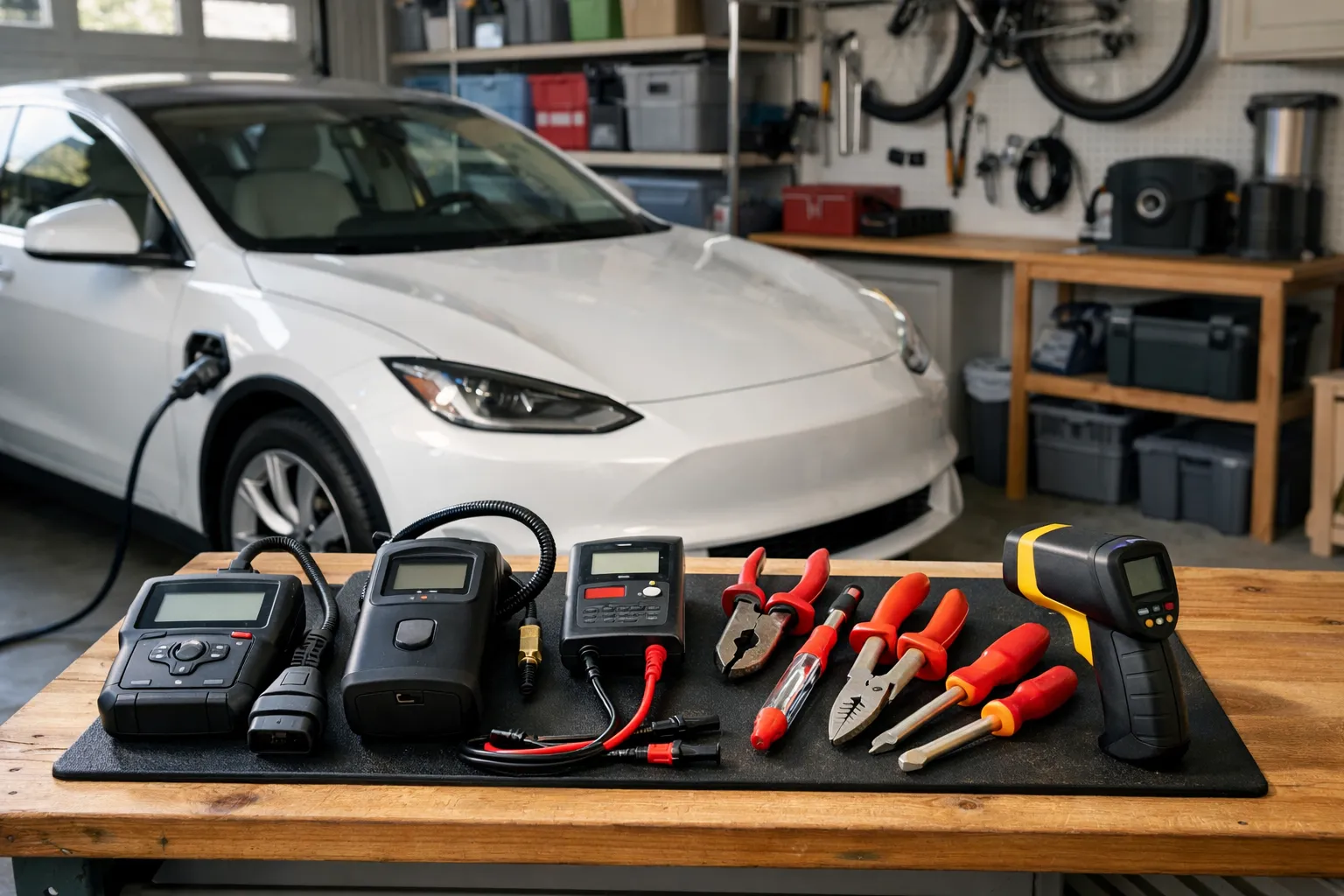
In 2025, a growing ecosystem of affordable diagnostic and maintenance tools allows EV owners to track battery condition, check charging performance, and handle minor service tasks without visiting a dealership for every inspection. These tools improve safety, reduce downtime, and help identify problems early before they become expensive repairs.
This guide reviews the most useful EV maintenance tools for U.S. owners, explaining what each one does, when it is needed, and how it contributes to long-term vehicle health.
Why ev-specific tools matter
Electric vehicles differ fundamentally from internal-combustion cars. Instead of monitoring engine oil pressure and exhaust systems, EV owners must focus on:
- Battery state of health
- Charging efficiency and connector condition
- Tire wear and alignment under higher curb weight
- Cooling system operation
- Software and sensor diagnostics
Modern onboard systems provide basic alerts, but dedicated tools allow deeper insight and more precise troubleshooting, particularly for drivers who travel frequently or own their vehicles long-term.
Essential diagnostic and maintenance tools
OBD2 scanner with ev compatibility
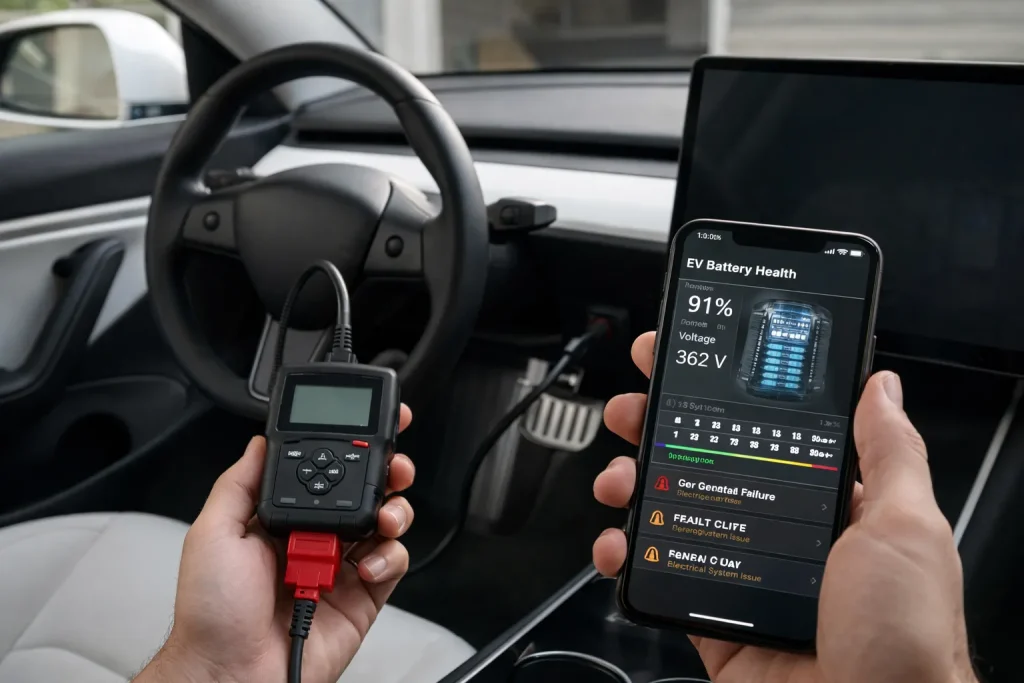
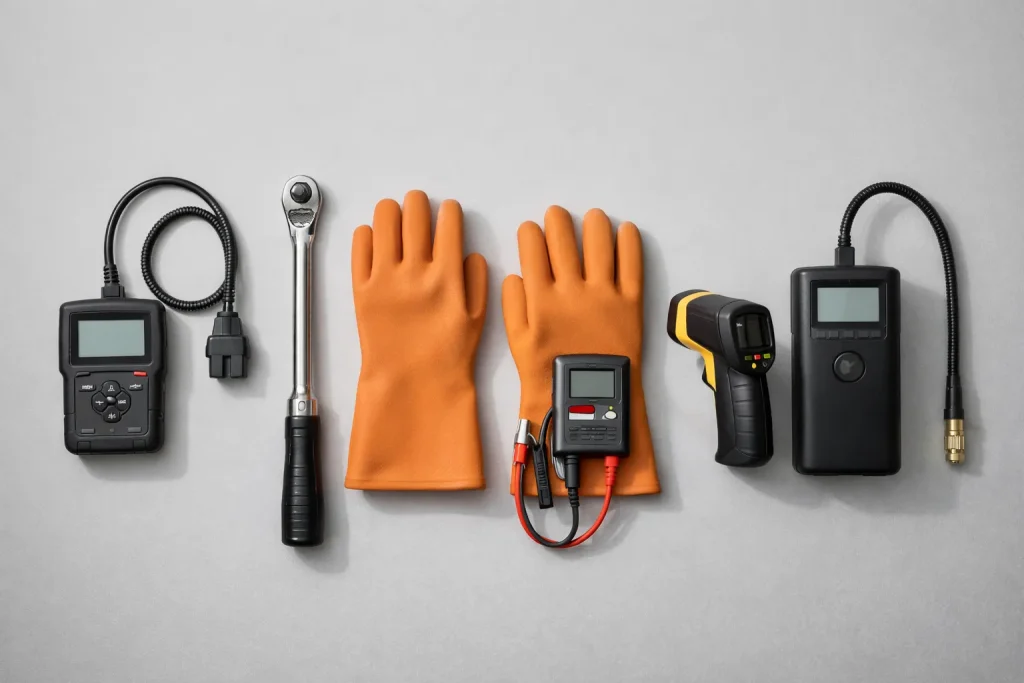
An EV-compatible OBD2 scanner connects to the vehicle’s diagnostic port and reads data from the battery management system, inverter, and thermal controls. Advanced models display:
- State of charge and state of health
- Cell temperature balance
- Charging faults and error codes
- DC fast-charging performance metrics
For owners buying or selling used EVs, this tool is especially valuable for verifying battery condition beyond the basic dashboard indicators.
Tire inflator and digital pressure gauge
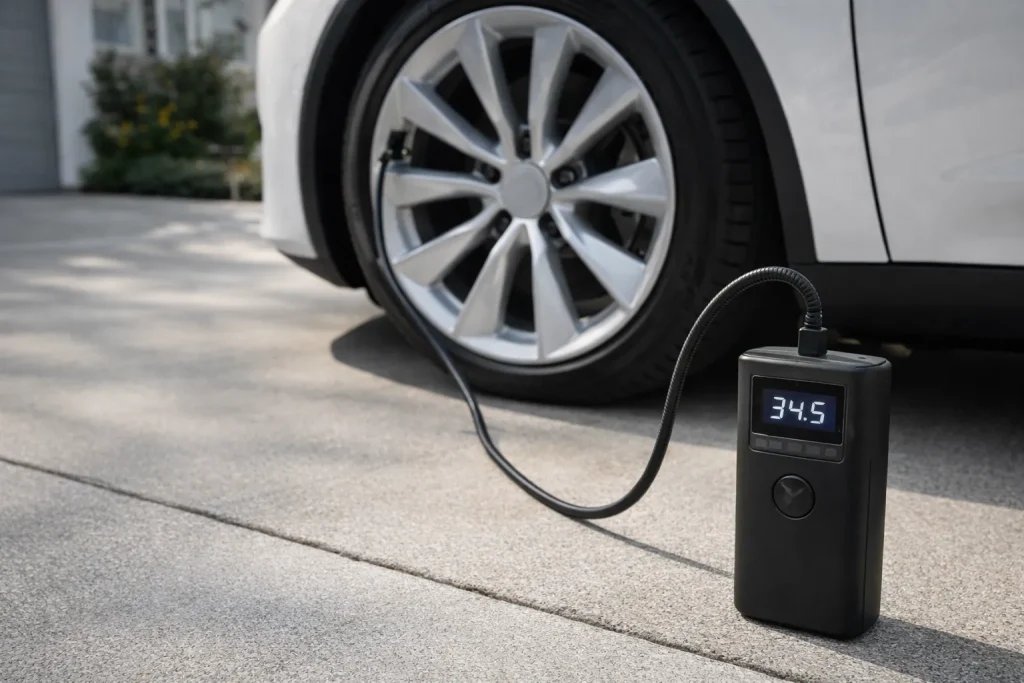
Because EVs are heavier and rely heavily on regenerative braking, tire condition has a direct impact on range and safety. A high-quality portable inflator with a digital gauge allows owners to:
- Maintain correct pressure for optimal efficiency
- Detect slow leaks early
- Adjust pressure for seasonal temperature changes
Proper inflation can improve range by several percent and extend tire life.
Battery tester for the 12-volt system
While the high-voltage traction battery is the main focus, most EVs still rely on a conventional 12-volt battery to power control systems and accessories. A compact battery tester helps identify weak auxiliary batteries before they cause startup or software issues.
Torque wrench and insulated hand tools
For basic tasks such as wheel removal, cabin filter replacement, and accessory installation, properly rated hand tools ensure correct torque and electrical safety. Insulated tools are recommended when working near high-voltage components, even for minor inspections.
Thermal camera or infrared thermometer
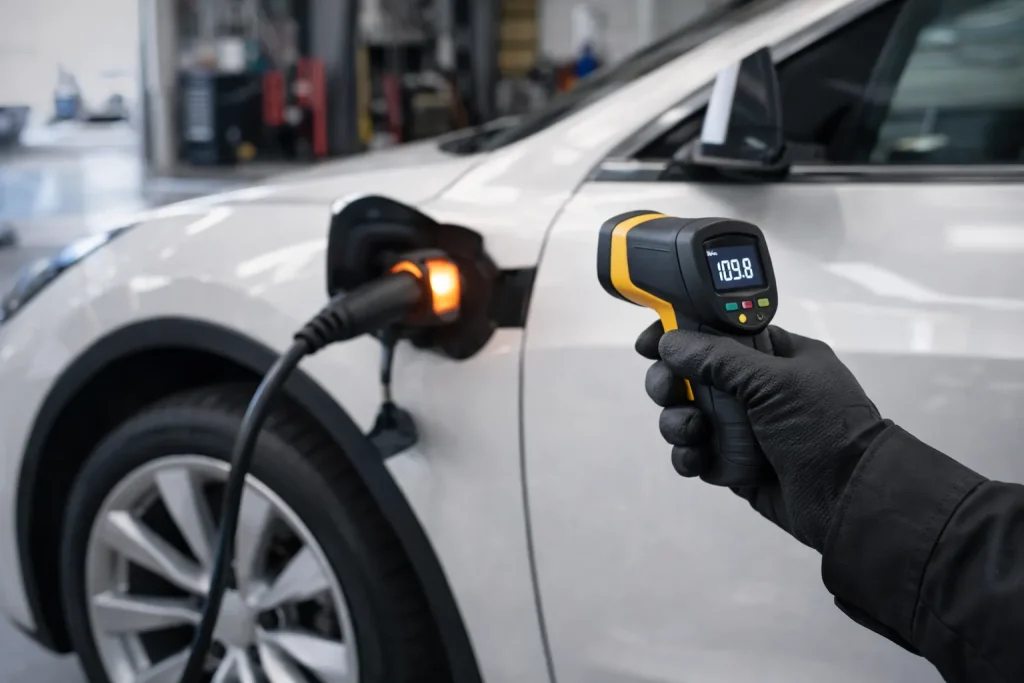
Temperature monitoring helps detect overheating connectors, charging cables, and cooling system irregularities. An infrared thermometer can quickly identify abnormal heat buildup during charging sessions, which may indicate poor contact or internal resistance issues.
Mid-article links to neighboring satellites
Battery condition is the most important long-term variable in EV ownership. Degradation rates, warranty coverage, and realistic replacement costs are analyzed in EV battery warranty & replacement cost comparison by brand (2025), which explains how diagnostic tools help verify remaining capacity and detect early faults.
Routine maintenance cost is also strongly influenced by tire wear, brake longevity, and cooling system service intervals. A full ownership-cost analysis is available in EV maintenance cost vs gas cars in the u.s. (5-year ownership study, 2025), showing how preventive monitoring with basic tools reduces both service frequency and unexpected repair expenses.
Monitoring charging equipment
Owners who charge at home or use portable equipment should periodically inspect:
- Connector pins for corrosion or debris
- Cable insulation for wear
- Outlet temperature during high-amperage charging
Simple plug-in power meters and thermal sensors can reveal voltage drops or overheating that may affect charging efficiency and long-term battery health.
Software and app-based tools
Many EV manufacturers and third-party developers provide mobile apps that display:
- Charging history and energy consumption
- Battery temperature and preconditioning status
- Firmware update notifications
- Diagnostic alerts and maintenance reminders
When paired with physical diagnostic tools, these apps create a comprehensive monitoring system that supports predictive maintenance rather than reactive repair.
Cost versus benefit
Most of the tools described cost between $30 and $300, yet they can prevent repairs costing thousands of dollars. Early detection of battery imbalance, cooling issues, or charging faults allows owners to seek warranty service before serious degradation occurs. Accurate tire pressure monitoring alone can save hundreds of dollars over the life of a vehicle through improved efficiency and reduced wear.
Conclusion
In 2025, electric vehicle ownership is supported by a mature and affordable set of maintenance and diagnostic tools. EV-compatible OBD2 scanners, tire inflators, battery testers, and thermal monitors give owners greater control over battery health, charging performance, and overall reliability.
When viewed within the broader framework of Electric Vehicles (EV) Reviews & Trends: The 2025 Guide for U.S. Drivers, these tools form an essential part of long-term ownership strategy. By combining proper home charging, informed use of public networks, and regular condition monitoring with the right equipment, U.S. drivers can maximize vehicle lifespan, minimize unexpected costs, and maintain optimal performance throughout the life of their electric vehicles.