essential used car buying guide for smart shoppers
Buying a used car can save you thousands compared to purchasing new, but the process demands careful attention to avoid costly mistakes. Between navigating confusing financing terms, spotting hidden mechanical problems, and negotiating with seasoned sellers, first-time buyers often feel overwhelmed. The good news is that armed with the right knowledge and systematic approach, anyone can confidently purchase a reliable pre-owned vehicle that fits their budget and needs.
I’ve been through this process more times than I can count, both for myself and helping friends and family. Each experience taught me something valuable about what works and what leads to regret. The difference between a smart purchase and an expensive nightmare usually comes down to preparation and patience rather than luck.
This guide walks you through every critical step of the used car buying process. You’ll learn how to set a realistic budget that accounts for hidden costs, research vehicle history to avoid problem cars, perform thorough mechanical inspections, execute effective test drives, negotiate confidently for the best price, and complete all necessary paperwork correctly. Whether you’re buying from a dealer or private seller, these principles apply universally and will help you make an informed decision.
The used car market offers incredible value when you know where to look and what to avoid. Vehicles depreciate most steeply in their first three years, meaning you can find nearly-new cars at significant discounts. However, this market also contains vehicles with hidden damage, odometer fraud, and deferred maintenance that sellers hope you won’t discover until after the sale. Your goal is to separate the gems from the problems by following a systematic evaluation process.
setting your budget and understanding total ownership costs
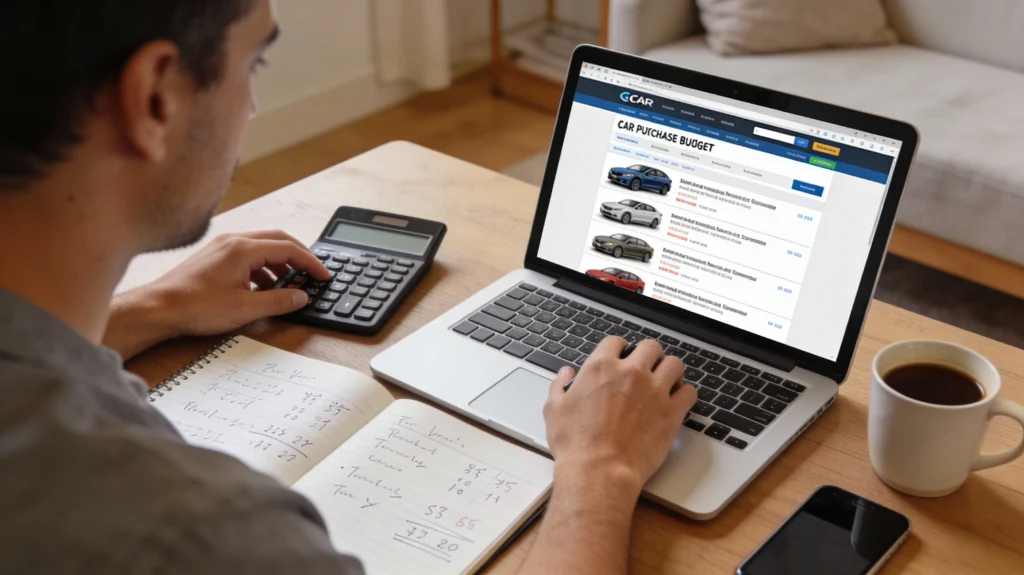
Most buyers make the mistake of focusing solely on the purchase price without considering the full financial picture. A car that seems affordable at twelve thousand dollars can quickly strain your finances once you factor in insurance, fuel, maintenance, repairs, and registration fees. Smart budget planning begins weeks before you start shopping and continues throughout the ownership period.
Start by calculating your maximum monthly payment based on your income and existing obligations. Financial experts recommend keeping total transportation costs below 15 to 20 percent of your gross monthly income. This includes the loan payment, insurance, fuel, and average maintenance expenses. If you earn 4,000 per month, you should aim to keep all car-related costs under 600 to 800 dollars monthly.
monthly cost breakdown
Understanding where your money goes helps you budget realistically. Here’s what typical used car ownership costs look like:
| Cost type | What it includes | Typical range (USD/month) | Notes |
|---|---|---|---|
| Loan payment | Principal + interest on used car loan | 200–400 | Depends on price, rate, and term |
| Insurance | Liability + collision/comp depending on car | 80–200 | Varies by age, record, location, vehicle |
| Fuel | Gas based on mpg and annual mileage | 120–250 | Higher for low-mpg cars and long commutes |
| Maintenance | Oil, filters, rotations, small repairs | 50–150 | Older/high-mileage cars need more |
| Registration/fees | Annual state fees, inspections | 10–30 | Monthly average of yearly costs |
| Repair reserve | For unexpected repairs | 50–100 | Prevents budget shocks |
Insurance costs vary dramatically based on the vehicle you choose, your age, driving record, and location. Get insurance quotes on specific models you’re considering before making purchase decisions. A sporty coupe that fits your budget might cost 200 dollars more per month to insure than a practical sedan, completely changing the affordability equation.
Fuel costs deserve careful consideration especially if you have a long commute. The difference between a fuel-efficient car and a gas guzzler adds up quickly over time:
| Average mpg | Annual miles | Gas price | Monthly fuel cost (approx.) |
|---|---|---|---|
| 20 mpg | 15,000 | 3.50 | ≈ 219 USD |
| 30 mpg | 15,000 | 3.50 | ≈ 146 USD |
| 35 mpg | 15,000 | 3.50 | ≈ 125 USD |
A vehicle averaging 20 mpg costs roughly 150 dollars more per month in fuel than one averaging 30 mpg if you drive 15,000 miles annually with gas at 3.50 per gallon. Over five years that’s 9,000 dollars in additional fuel expenses.
Maintenance and repair reserves are essential but frequently overlooked. Set aside 100 to 150 dollars monthly for routine maintenance like oil changes, tire rotations, and brake services. Older vehicles with higher mileage need larger reserves because major components like transmissions, water pumps, and timing belts wear out predictably. A six-year-old car with 80,000 miles will need more maintenance than a three-year-old with 35,000 miles.
Down payment size affects both your monthly payment and total interest paid over the loan term. Aim for at least 10 to 20 percent down to reduce the amount you finance. Larger down payments also help you avoid negative equity situations where you owe more than the car’s value. This matters if you need to sell or trade the vehicle before paying off the loan.
Registration, taxes, and dealer fees add up quickly at purchase time. These costs vary by state but typically range from 500 to 2,000 dollars depending on the vehicle’s value and your location. Budget for these expenses separately from your down payment to avoid unpleasant surprises at the dealership.
Understanding how to set a realistic budget for used car purchases prevents you from overextending financially and ensures you can comfortably afford the vehicle long-term. The most reliable car becomes a burden if the total ownership costs strain your finances month after month.
checking vehicle history and documentation
Every used car carries a history that significantly impacts its value and future reliability. Accidents, flood damage, title problems, and odometer fraud can turn an attractive deal into an expensive nightmare. Vehicle history reports from services like Carfax and AutoCheck provide critical information that sellers often fail to disclose voluntarily.
I learned this lesson after buying what appeared to be a pristine sedan only to discover three months later that it had been in two unreported accidents. The recurring alignment issues and strange noises suddenly made sense. A forty dollar history report would have revealed these problems before I handed over my money.
Start by obtaining the vehicle identification number from the seller and running reports through both Carfax and AutoCheck. Each service pulls data from different sources and occasionally one catches details the other misses. The cost of running both reports is insignificant compared to buying a problem vehicle.
carfax vs autoCheck comparison
| Feature | Carfax | AutoCheck |
|---|---|---|
| Main strength | Service and dealer records | Auction and title data |
| Typical cost | ~40 USD/single report | Similar, bundles often cheaper |
| Accident reporting | Strong | Strong |
| Auction history | Sometimes limited | Often more detailed |
| Score / rating system | Carfax History Impact | AutoCheck Score |
| Free from dealers? | Often provided | Less common but possible |
The ownership history section reveals how many people have owned the car and where it was registered. Multiple owners in a short timeframe raises red flags about potential problems that caused people to sell quickly. Vehicles that stayed in one state their entire life typically have less wear than cars that moved between regions with different climates and road conditions.
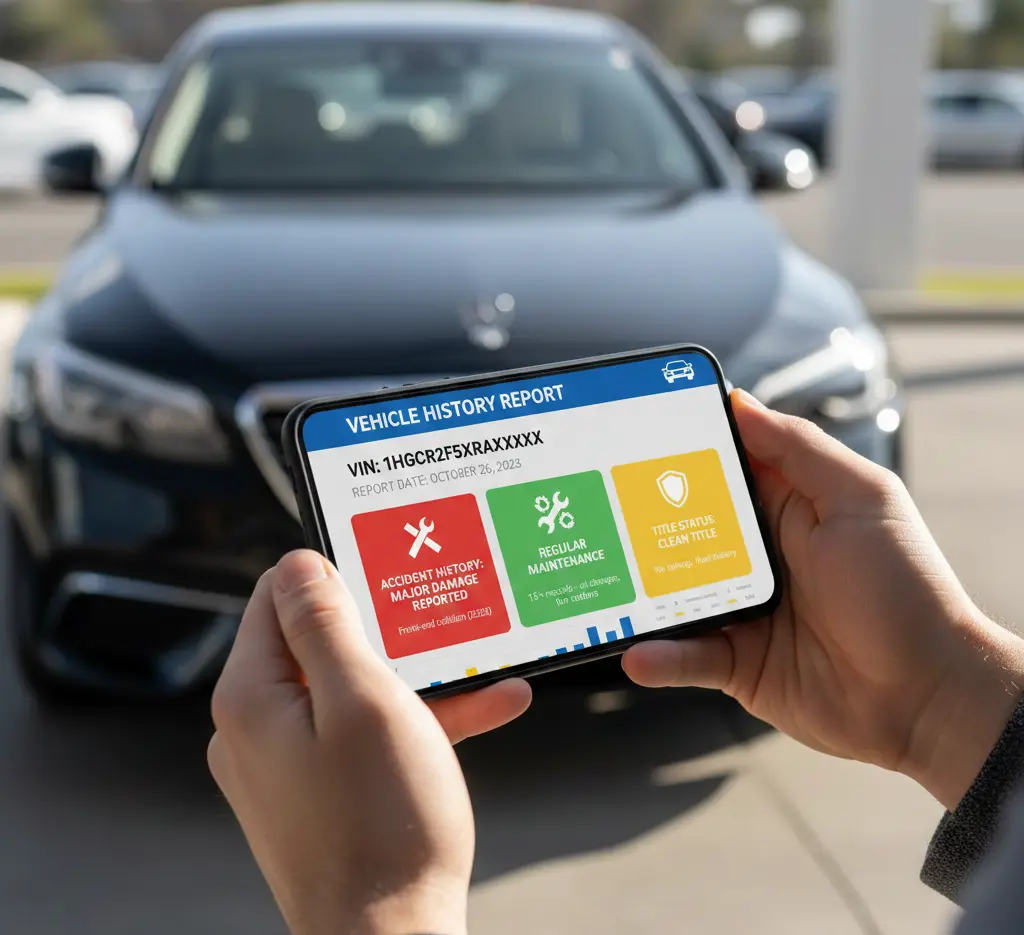
Title status deserves your closest attention. Clean titles indicate no major damage or insurance claims that resulted in total loss declarations. Salvage, rebuilt, or branded titles mean the vehicle sustained severe damage at some point. Insurance companies declare vehicles total losses when repair costs exceed a certain percentage of the car’s value, typically 70 to 80 percent depending on the state.
red flags in vehicle history reports
| Red flag type | What it may mean |
|---|---|
| Salvage / rebuilt title | Severe past damage, total loss |
| Flood / water damage | High risk for rust and electrical failures |
| Lemon buyback | Recurring unfixable problems |
| Odometer inconsistency | Possible mileage rollback |
| Multiple accidents | Higher chance of structural issues |
| Many owners in short time | Possible chronic issues or owner dissatisfaction |
Flood damage titles are particularly concerning because water destroys electronics and creates rust problems that appear years later. Hurricane-affected vehicles from coastal areas often get sold in other states after superficial cleanup. Check where the car was registered and cross-reference those locations with major flood events during the vehicle’s lifetime.
Accident reports show the severity and frequency of collisions. Not all accidents appear in these databases because minor incidents paid out of pocket never get reported. However, any accident involving insurance claims or police reports should show up. Look for patterns like multiple accidents in short periods or severe collisions that suggest frame damage.
The service and maintenance records section indicates whether previous owners maintained the vehicle properly. Regular oil changes at appropriate intervals, transmission services, and timing belt replacements suggest responsible ownership. Large gaps between service records or complete absence of maintenance history should concern you.
Odometer readings tracked over time help detect fraud. The mileage should increase consistently with realistic increments between service visits. Any decrease in reported mileage or suspicious jumps indicate tampering. Modern digital odometers are harder to roll back than old mechanical ones but fraud still happens.
Some reports include information about rental or fleet vehicle history. Rental cars endure hard driving and minimal maintenance because users have no stake in the vehicle’s longevity. Fleet vehicles vary in quality depending on the company but generally experience more wear than privately owned cars.
Lemon law buybacks appear in vehicle history reports when manufacturers repurchase vehicles with recurring unfixable problems. These titles vary by state but always indicate serious defects that persisted despite multiple repair attempts. The same problems often return even after extensive repairs.
Compare the seller’s claims against the history report carefully. If they insist the car was never in an accident but the report shows two collisions, they’re either lying or uninformed. Either scenario should make you walk away or demand significant price reductions to account for the damage.
Understanding how to check and interpret vehicle history reports protects you from hidden problems and gives you negotiating leverage when issues appear in the documentation. Even clean reports don’t guarantee perfect vehicles but they eliminate the worst examples from consideration.
performing a thorough mechanical inspection
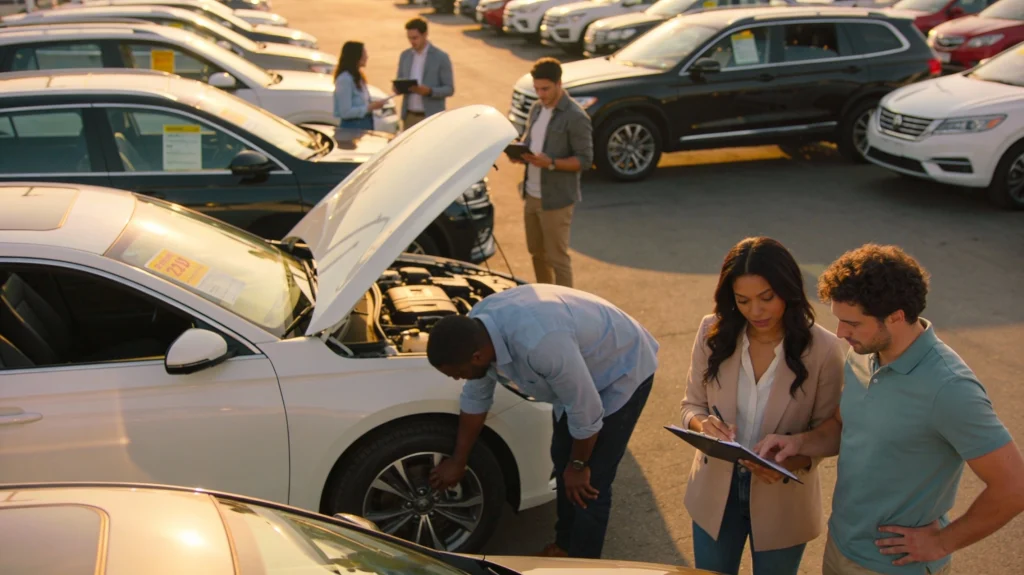
Vehicle history reports reveal documented problems but mechanical inspections catch issues that never made it into official records. A systematic evaluation of the engine, transmission, suspension, brakes, and electrical systems separates reliable vehicles from money pits waiting to drain your bank account. You don’t need to be a mechanic to spot many red flags during a careful inspection.
essential inspection checklist
| Area | What to check | Red flags |
|---|---|---|
| Exterior/body | Panel gaps, paint match, rust | Uneven gaps, different shades, bubbling paint |
| Tires | Tread depth, even wear, matching brand | Inner/outer wear, mismatched tires |
| Engine bay | Leaks, fluid levels, belt/hoses condition | Fresh oil leaks, milky oil, cracked hoses |
| Interior | Electronics, seats, smells, water stains | Non-working features, musty odor, wet carpet |
| Underbody | Frame rails, exhaust, major rust | Flaking rust, patched exhaust, bent components |
| Test drive | Start-up, shifts, braking, noises, vibrations | Hard shifting, pulling on brake, steering play |
The exterior walk-around should happen first in good lighting conditions. Look at body panels from different angles to spot paint mismatches or texture differences that indicate accident repairs. Sellers often claim cars were never wrecked but mismatched paint tells the truth. Run your hand along panel edges to feel for the rough texture that spray paint leaves behind compared to factory finishes.

Check the gaps between doors, fenders, and hoods. These spaces should be consistent all around the vehicle. Uneven gaps suggest the car was in a collision and either poorly repaired or suffered frame damage. I once found a Honda with perfect gaps on one side but spacing wide enough to fit my finger on the other side. The seller’s story about never being in an accident fell apart when I pointed this out.
Tire condition reveals alignment and suspension problems. Uneven wear patterns where inner edges are more worn than outer edges indicate alignment issues that cost money to fix. Check that all four tires match in brand and tread depth. Mismatched tires suggest the owner cut corners on maintenance or the car went through tires unusually fast due to mechanical problems.
Pop the hood and inspect for oil leaks around the valve cover gasket, oil pan, and engine block. Some grime is normal on older vehicles but fresh oil pooling anywhere signals active leaks. Pull the oil dipstick and examine the oil color and consistency. Amber or light brown oil is normal while milky or frothy oil indicates coolant mixing with oil from a blown head gasket.
Check all fluid levels including brake fluid, power steering fluid, coolant, and windshield washer fluid. Low levels suggest either leaks or neglectful maintenance. Open the coolant reservoir when the engine is cold and look for rust or brown sludge that indicates poor cooling system maintenance.
Battery terminals with heavy corrosion suggest an old battery nearing failure. Replacement costs only 100 to 200 dollars but factor it into your negotiations if the battery appears original and the car is several years old. Inspect all belts and hoses for cracks or fraying. A serpentine belt costs maybe thirty dollars but if it snaps while driving it can cause major engine damage.
Inside the vehicle, test every electrical component. Power windows, locks, mirrors, and seats should operate smoothly. These components fail frequently and repairs add up fast. I’ve seen power window motor replacements cost 300 dollars at repair shops. Turn the key to accessory position and watch dashboard warning lights. The check engine, ABS, and airbag lights should illuminate briefly then turn off when you start the engine.
Test the air conditioning and heating systems thoroughly. AC repairs easily run 500 to 1000 dollars depending on what failed. Make sure air flows from all vents and switches between defrost, face, and feet settings work properly. Look under floor mats for water stains or musty odors that indicate leaks or flood damage.
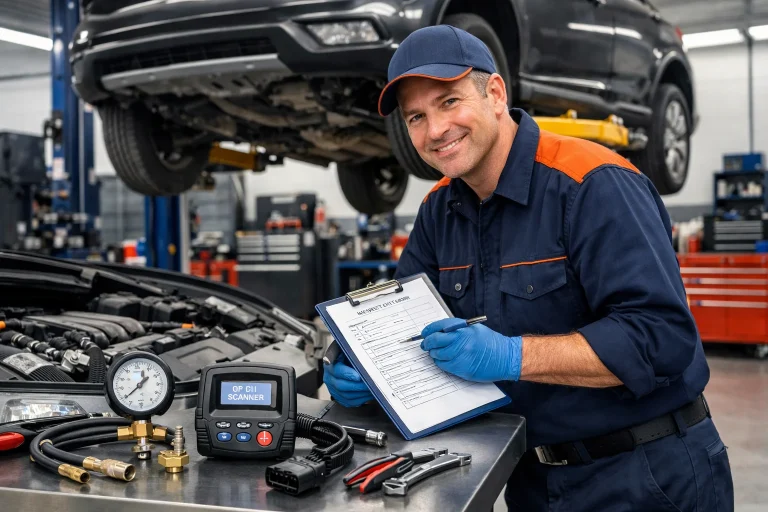
Never skip the professional pre-purchase inspection regardless of how good the car looks. Mechanics catch problems that buyers miss and the 100 to 200 dollar cost provides massive value. If sellers refuse to let you take the car to a mechanic, that’s a huge red flag indicating they’re hiding problems.
Learning what to inspect when buying a used car through a comprehensive mechanical checklist prevents you from buying vehicles with expensive hidden problems and gives you negotiating leverage when you find issues during your evaluation.
mastering the test drive process
The test drive represents your best opportunity to evaluate how a vehicle actually performs under real-world conditions. Many buyers rush through this critical step or focus on superficial impressions rather than systematic evaluation. A proper test drive takes at least 20 to 30 minutes and covers various driving scenarios from cold starts to highway speeds.
test drive stage-by-stage checklist
| Stage | What you do | What to listen/feel for |
|---|---|---|
| Cold start | Start engine after it sat for hours | Hard start, rough idle, ticking/knocking |
| City driving | Low–medium speeds, turns, bumps | Suspension clunks, steering looseness |
| Acceleration | Strong throttle, gear changes | Slipping, delayed shifts, engine hesitation |
| Braking | Medium to hard stops from higher speed | Pulling, pulsation, squealing/grinding |
| Highway | 60–70 mph, lane changes | Vibrations, wind noise, tracking straight |
| Parking/idle | Let it idle, check leaks, engage reverse | Overheating, leaks under car, harsh engagement |
Always insist on a cold start if possible. Sellers sometimes warm up problematic engines before you arrive to hide issues like rough idling or hard starting. A cold engine reveals the truth about its condition. The vehicle should start quickly with one or two cranks. Excessive cranking or rough running when cold suggests problems with the fuel system, spark plugs, or compression.
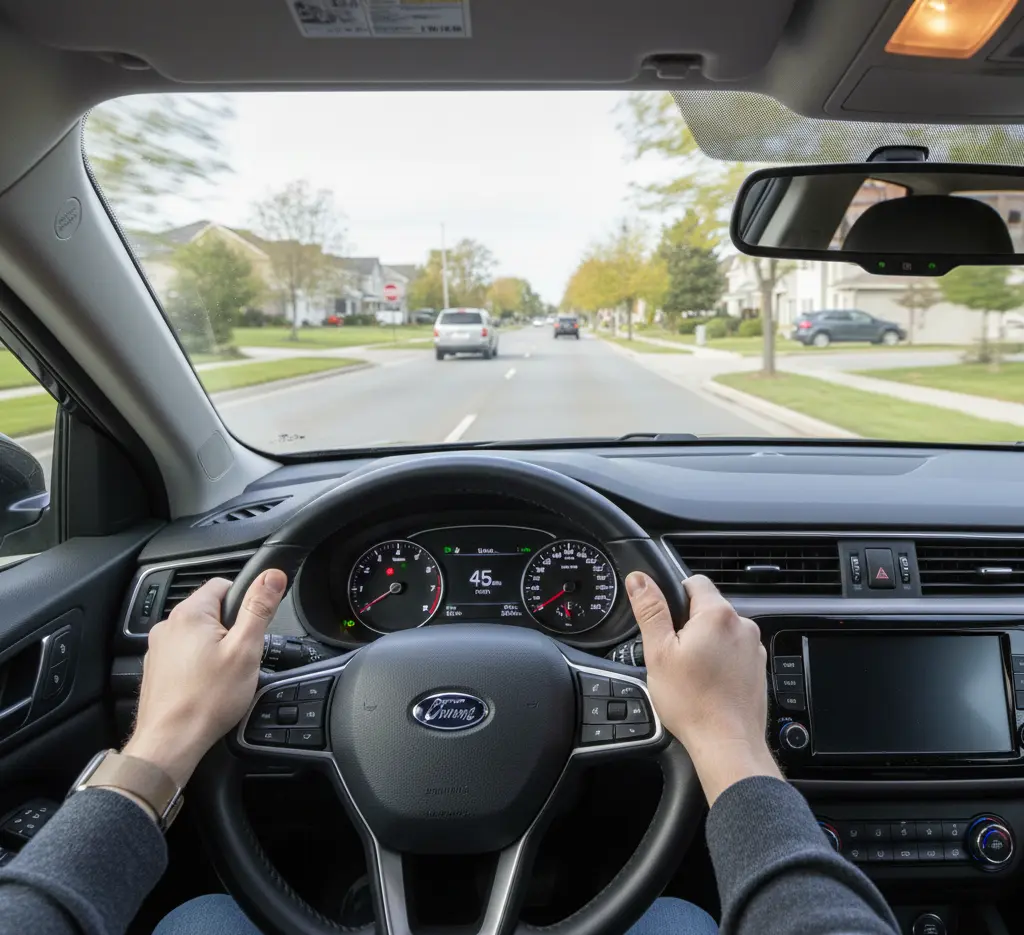
Let the engine idle for a few minutes before driving. The idle should be steady without surging, stumbling, or hunting for the right RPM. Watch the temperature gauge to ensure the engine warms up normally and doesn’t overheat. Listen carefully for any unusual noises like knocking, ticking louder than normal, or grinding sounds that indicate internal engine problems.
Start driving gently to get a feel for the vehicle’s basic characteristics. Pay attention to how the steering feels. It should be responsive without excessive play or looseness. The car should track straight without pulling to either side when you briefly let go of the wheel on a flat straight road.
Test the transmission thoroughly by accelerating firmly from a stop. Automatic transmissions should shift smoothly through all gears without hesitation, slipping, or hard shifts that jolt the vehicle. If the transmission seems to hunt between gears or delays before engaging, those are warning signs of problems that cost thousands to repair.
For manual transmissions, shift through all gears including reverse. The clutch should engage smoothly with a clear friction point. If the clutch engages very high or very low in the pedal travel, it might be worn and need replacement soon. Grinding when shifting even with proper clutch operation indicates synchronizer problems.
Find a safe area to test the brakes hard from highway speed. The pedals should feel firm and progressive without pulsating or vibrating. Pulsating brake pedals indicate warped rotors that need replacement. The car should stop in a straight line without pulling to either side. Any pulling suggests brake problems, alignment issues, or suspension damage.
Drive over rough roads and bumps at various speeds. The suspension should absorb impacts without excessive bouncing or harsh crashes. Clunking noises over bumps point to worn suspension components like struts, shocks, control arm bushings, or sway bar links. These repairs aren’t terribly expensive individually but they add up when multiple components need replacement.
Test the steering at different speeds. At low speeds it should turn easily without binding or grinding noises. At highway speeds it should feel stable and require only minor corrections. Wandering or excessive corrections needed to maintain a straight line suggest alignment problems, worn steering components, or bad tires.
Get the vehicle up to at least 65 mph if traffic and conditions allow. Some vibrations and noises only appear at highway speeds. The car should feel stable and quiet with minimal wind noise. Vibrations that start around 60 mph often indicate wheels that need balancing or tires with internal damage.
Test all climate control functions during the drive. The air conditioning should blow cold air within a minute or two. Heating should warm up as the engine reaches operating temperature. Make sure air flows properly from all vents and that switching between defrost, face level, and feet works correctly. AC repairs are expensive so confirm everything functions properly.
Try the cruise control if equipped. It should engage smoothly and maintain set speeds without hunting or surging. Deactivating cruise control by tapping the brakes should work instantly. These systems rarely fail but when they do the repairs can be costly.Test the turn signals, windshield wipers, and headlights during your drive. All lights should illuminate properly including high beams, fog lights if equipped, and brake lights. Wipers should clear the windshield effectively without streaking or chattering. These seem like minor details but they indicate overall vehicle care and maintenance.
Pay attention to unusual smells during the test drive. Burning oil smells suggest leaks dripping onto hot exhaust components. Sweet smells indicate coolant leaks. Burning clutch smells on manual transmissions mean either the clutch is worn or the previous driver rode it excessively.
Park the car and let it idle again for a few minutes. Check underneath for any fluids dripping. A little water condensation from the AC is normal but oil, coolant, or transmission fluid indicates leaks. Note where the car was parked before your test drive and check that spot for fresh fluid stains.
Don’t let sellers rush you through the test drive. Take your time and evaluate everything systematically. If they pressure you to hurry up or seem anxious about extended test drives, that’s a red flag. Honest sellers understand that buyers need confidence in such a major purchase.
Following an essential test drive checklist ensures you don’t miss critical warning signs that only reveal themselves when the vehicle is moving and operating under load.
negotiating the best purchase price
Negotiation separates smart buyers who save thousands from those who pay inflated prices. Most people feel uncomfortable negotiating but remember that sellers expect it and build room into their asking prices. Armed with research, inspection findings, and patience, you can confidently work toward a fair deal that respects your budget.
Start your preparation weeks before contacting sellers by researching fair market values through Kelley Blue Book, Edmunds, and NADA Guides. Input the exact year, trim level, mileage, and condition to get accurate baseline numbers. These values give you objective data to counter sellers who claim their prices are firm based on nothing but wishful thinking.
proven negotiation tactics
| Tactic | How to use it | Why it works |
|---|---|---|
| Market research | Bring comps from KBB, listings | Anchors price in reality |
| Pre-approved financing | Show you can pay right away | Makes you a serious buyer |
| Start lower than asking | Offer 15–20% below (with data) | Creates room to meet in middle |
| Leverage defects | Deduct repair estimates from offer | Ties price to real costs |
| Silence after offer | Stay quiet after stating your number | Pressures seller to fill the silence |
| Walk-away power | Be ready to leave at your max price | Shifts power balance in your favor |
Study local listings on Facebook Marketplace, Craigslist, and AutoTrader to understand what similar vehicles actually sell for in your area. Asking prices mean little compared to completed sales. Save screenshots of comparable vehicles priced lower than your target car. When sellers insist their price is reasonable, showing them cheaper alternatives undermines their position immediately.

Understanding the difference between dealer and private party negotiations matters. Dealerships have larger profit margins and more room to negotiate but they also have overhead costs. Private sellers typically price closer to actual value but often feel more motivated to sell, especially if they already bought replacement vehicles.
Get pre-approved financing before shopping so you can negotiate the vehicle price separately from payment terms. Pre-approval also establishes you as a serious buyer rather than someone casually browsing. Sellers waste less of your time when they know you’re ready to complete a purchase immediately.
Timing your purchase strategically provides leverage. Dealers face monthly sales quotas that make them more flexible at month end. Winter months see slower sales for convertibles and sports cars. Holiday weekends trigger dealer sales events where managers authorize deeper discounts. Private sellers become more motivated after listings sit unsold for 30 days.
Make your initial offer 15 to 20 percent below asking for private sellers and 20 to 25 percent below for dealers. This creates room for back-and-forth negotiation while anchoring discussions at lower prices. Base your offer on comparable sales data rather than arbitrary percentages. Data-driven offers are much harder for sellers to dismiss than lowballs with no justification.
I once offered 8,500 for a Civic listed at 11,000. The seller initially laughed until I showed screenshots of three similar Civics that sold for 8,800 to 9,200 within two weeks. He accepted 9,100 after realizing his price was out of line with the market.
Every flaw you discover during inspection becomes a negotiating chip. Calculate repair costs for worn tires, needed brake work, small dents, and mechanical issues. Subtract these costs from your offer and explain your reasoning. Sellers often price vehicles as if they have perfect condition but documented problems justify lower offers.
Major issues like engine problems or transmission trouble give you massive leverage. Get written repair estimates from mechanics and present them during negotiations. A car needing a 2,500 transmission repair isn’t worth the same as one in perfect mechanical condition regardless of what the seller claims.
Expect counteroffers and don’t immediately accept them even if they seem reasonable. Counter their counter to demonstrate you’re serious about getting the best price. Each negotiation round should move in smaller increments. If you started at 8,000 and they countered at 10,500 on an 11,000 listing, your next offer might be 8,800 rather than jumping to 9,500.
Know your walk-away price before negotiations begin. This is the maximum you’ll pay based on research and budget constraints. When sellers won’t come down to your number, be prepared to leave. Walking away sometimes brings them around within 48 hours when they realize you were serious.I’ve left probably a dozen negotiations where we couldn’t agree on price. About half those sellers called back accepting my last offer. The other half sold to someone else which means those deals weren’t meant for me. Better to keep searching than overpay and regret it for years.
Use silence as a negotiating tool. After making an offer, stop talking and wait for the seller to respond. People get uncomfortable with silence and often fill it by talking themselves into accepting your offer or revealing their true bottom line. Count to five in your head before responding to counteroffers.
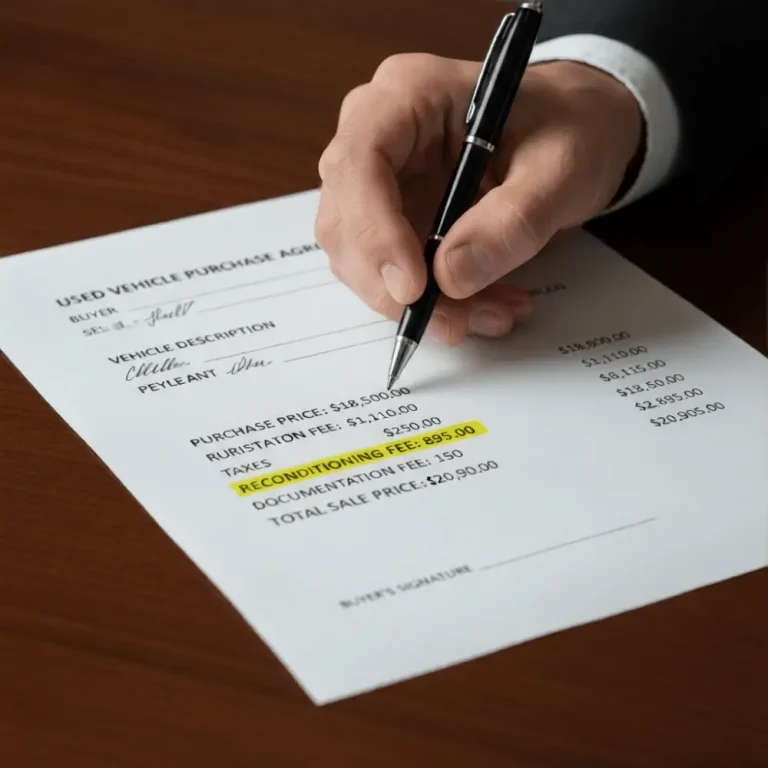
Watch for dealers adding fees after you’ve negotiated the car price. Documentation fees, dealer prep charges, and market adjustments are often negotiable or removable. Ask for an out-the-door price including everything except taxes and registration to avoid last-minute surprises.
Private sellers sometimes get cold feet between agreeing on price and completing paperwork. Lock in deals quickly by offering to meet the same day or next day with cash or certified funds. Never agree to price increases after shaking hands. That’s bad faith dealing and you should walk away immediately.Stay calm and treat negotiations as business transactions rather than personal conflicts. Getting emotional or aggressive rarely produces better results. Present facts, remain pleasant, and stick to your research even when discussions get tense.
Mastering proven negotiation strategies helps you secure fair prices while building confidence for future vehicle purchases. The skills you develop negotiating cars transfer to many other areas where deals get made.
finalizing the purchase and completing paperwork
The paperwork and finalization process represents your last opportunity to catch problems before taking ownership. Many buyers relax after agreeing on price and rush through documentation without reading carefully. This mistake leads to surprise fees, incorrect information, and legal complications that could have been easily avoided.
Start by reviewing the bill of sale thoroughly before signing anything. This document should clearly state the agreed-upon purchase price, vehicle identification number, year, make, model, odometer reading, and date of sale. Verify every detail matches what you negotiated and inspected. Any discrepancies need correction before you sign.
common dealer fees breakdown
| Fee type | Typical name on contract | Typical range (USD) | Notes |
|---|---|---|---|
| Doc fee | Documentation / processing fee | 100–500+ | Sometimes negotiable |
| Dealer prep | Dealer prep / reconditioning | 0–400 | Ask what it really covers |
| Registration | Title, plates, registration | 100–400 | Varies by state |
| Taxes | Sales tax | % of sale price | Depends on state rate |
| Add-ons | Warranty, gap, protection packs | 300–2,000+ | Often high margin, usually optional |
Private party transactions require simpler paperwork than dealer purchases but accuracy matters just as much. Many states provide standard bill of sale forms online that include all necessary information. Use these official forms rather than handwritten notes to ensure legal compliance and protect both parties.
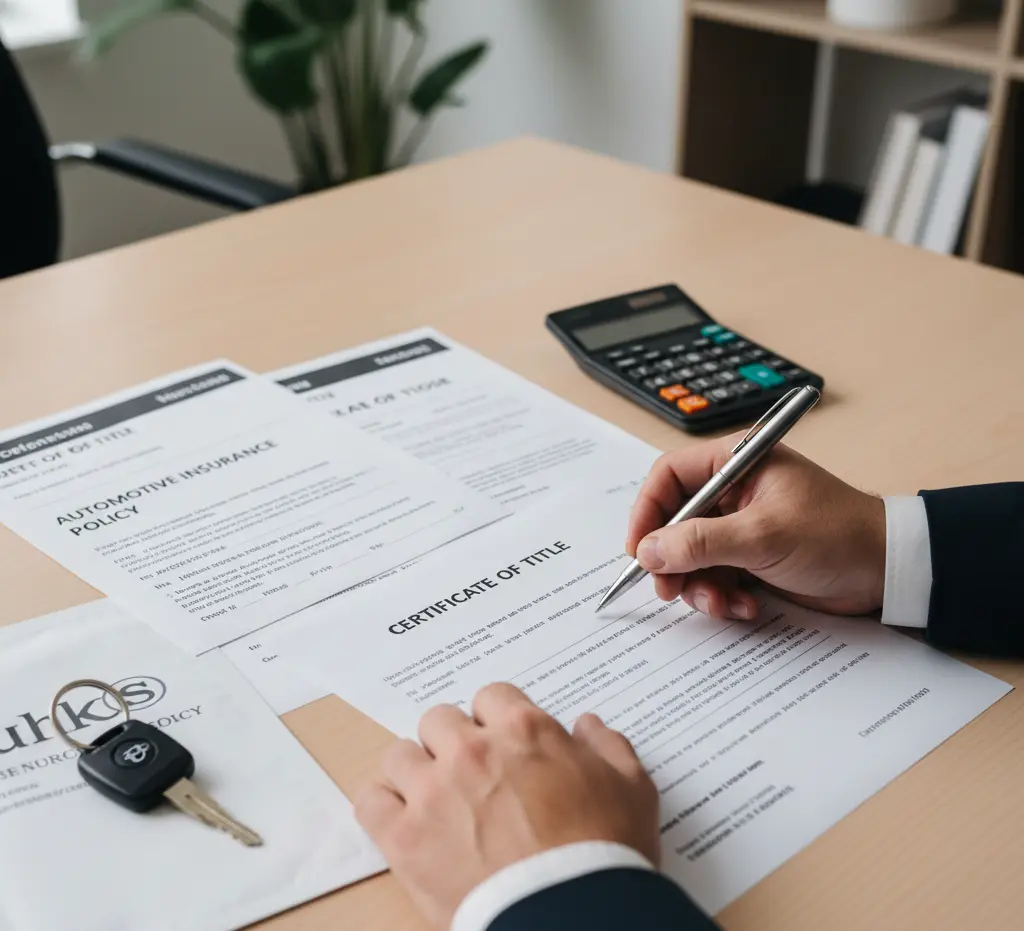
The title transfer process varies by state but generally requires the seller to sign the title over to you. Check that the seller’s name on the title matches their identification. If someone else’s name appears on the title, that person must be present to sign or provide proper authorization. Never accept a title that doesn’t match the seller’s identity.
Look for any liens listed on the title. If a bank or lender holds a lien, the seller must pay off that loan and obtain a clear title before legally transferring ownership to you. Some sellers claim they’ll pay off the lien with your money but this creates risk. Insist on seeing a clear title before handing over payment.
Verify the odometer reading on the title matches the actual vehicle mileage. Federal law requires accurate odometer disclosure during ownership transfers. Significant discrepancies between the title odometer statement and the actual reading could indicate fraud. This is your last chance to catch odometer tampering before it becomes your problem.
Dealer purchases involve more complex paperwork including purchase agreements, financing contracts if applicable, warranty documents, and various state-required disclosures. Read every page carefully even though finance managers rush you through the process. Take your time and ask questions about anything unclear.
Watch for add-on products like extended warranties, gap insurance, paint protection, and fabric protection that dealers push during the finance office meeting. These products carry huge profit margins and get rolled into your loan where you pay interest on them for years. Decline anything you didn’t specifically agree to purchase.
Gap insurance is actually useful if you’re financing 90 percent or more of the vehicle’s value because it covers the difference between what you owe and the car’s value if totaled. However, buy gap insurance from your auto insurance company rather than the dealer because it costs significantly less.
Review the final purchase price breakdown line by line. Confirm the vehicle price matches what you negotiated. Check that sales tax is calculated correctly based on your state’s rate. Question any fees that seem excessive or weren’t discussed during negotiations.
Documentation fees typically range from 200 to 500 dollars depending on the state and dealer. Some dealers charge more but these fees are often negotiable. Dealer prep fees for cleaning and inspection should be minimal on used vehicles since they’re not coming from the factory.
Get copies of all signed documents before leaving. You’ll need the bill of sale, title, purchase agreement, and any warranty documents for registration and future reference. Keep these papers in a safe place because replacing lost titles involves bureaucratic hassles and fees.
post-purchase action items
| Step | Why it matters |
|---|---|
| Activate insurance | Legal requirement before driving |
| Register the vehicle | Avoid tickets and legal problems |
| Change oil and filters | Baseline maintenance, protects engine |
| Check all fluids | Catch neglected systems early |
| Store documents safely | Needed for resale, claims, and records |
Insurance activation must happen before you drive away. Most states require proof of insurance for registration. Contact your insurance company as soon as you know which vehicle you’re buying and provide the VIN to add it to your policy. Get the insurance ID card sent to your phone or email immediately.
Registration requirements vary significantly by state. Some states allow you to drive on dealer plates temporarily while others require immediate registration. Understand your state’s rules and deadlines to avoid fines or legal problems. Budget for registration fees, taxes, and any required inspections when planning your purchase.
Temporary tags or permits might be necessary if you’re buying from a private seller and need time to complete registration. Most states offer temporary permits valid for 30 to 60 days. Get these permits before driving the vehicle on public roads to avoid tickets.
Schedule immediate post-purchase maintenance even if the seller claims everything is current. Change the oil, inspect all fluids, and check tire pressures within the first week of ownership. This baseline maintenance ensures you start with a known good condition and helps you catch any deferred maintenance the seller neglected.
Keep all maintenance records going forward. Document every oil change, repair, and service in a notebook or digital file. These records prove proper maintenance if you sell the vehicle later and help you track recurring problems that might indicate bigger issues.
Consider purchasing an extended warranty or vehicle service contract if the car is outside manufacturer warranty coverage. These contracts vary dramatically in quality and coverage so research carefully before buying. Some provide excellent protection while others include so many exclusions they’re practically worthless.Transfer or cancel any existing warranty coverage from the previous owner if applicable. Some manufacturer warranties transfer to new owners while others don’t. Extended warranties purchased separately might or might not transfer depending on the contract terms.
Understanding proper paperwork and registration procedures prevents legal complications and ensures smooth ownership transfer. Taking time to verify every document protects you from fraud and mistakes that create headaches for months.
Buying a used car successfully requires patience, research, and systematic evaluation rather than luck or intuition. The process might seem overwhelming at first but breaking it into manageable steps makes it approachable for anyone willing to invest the time. Each phase from budget planning through paperwork completion builds on the previous one to create a comprehensive approach that minimizes risk and maximizes value.
The most common mistake buyers make is rushing through the process because they need a car immediately or fall in love with a particular vehicle. Emotional decisions and time pressure consistently lead to overpaying for cars with hidden problems. Take your time and walk away from any deal that doesn’t feel right. The perfect car for your situation exists somewhere and finding it requires patience.
Remember that sellers have more experience than most buyers. Dealers negotiate vehicles daily while private sellers have had weeks to prepare their pitch and pricing strategy. Level the playing field by doing homework, bringing research to negotiations, and never being afraid to walk away. The person who needs the deal less has all the power.
Pre-purchase inspections by professional mechanics provide the best insurance against expensive surprises. The 100 to 200 dollar cost seems negligible compared to discovering a 3,000 transmission problem after purchase. Even if you’re mechanically knowledgeable, a second opinion from an experienced technician catches things you might miss.
Trust your instincts when something feels wrong about a deal. If the price seems too good to be true, the seller rushes you through inspections, or the vehicle history has unexplained gaps, those are warning signs worth heeding. Plenty of other cars exist and walking away from one suspicious deal protects you from potential disasters.
The used car market constantly changes with seasonal variations, economic conditions, and inventory fluctuations. What seemed like a great deal six months ago might be overpriced today. Stay flexible with your requirements and be willing to adjust your search based on what the market offers at any given time.Consider expanding your search radius beyond your immediate area. Sometimes driving a few hours to inspect a vehicle in another city yields better options than what’s available locally. Just factor travel costs into your total budget and make sure the vehicle is worth the trip before committing to a long drive.
Building relationships with mechanics, insurance agents, and financing sources before you need them streamlines the buying process. Having a trusted mechanic ready to perform pre-purchase inspections and an insurance agent who can quickly add vehicles to your policy saves time and stress when you find the right car.
Learn from each vehicle purchase whether it turns out well or poorly. Keep notes about what worked, what you’d do differently, and lessons learned for next time. These experiences make you a smarter buyer for future purchases and help you advise friends and family through their own car buying journeys.
The automotive market rewards informed buyers who do their homework and follow systematic evaluation processes. You don’t need to be a mechanic or negotiation expert to get good deals on reliable vehicles. You just need to be willing to invest time in research, remain patient during the search, and walk away from anything that doesn’t meet your standards.

Start your journey with confidence knowing that the preparation and knowledge you’ve gained through this guide put you ahead of most buyers. Take it one step at a time, stay focused on your budget and requirements, and don’t let anyone pressure you into decisions you’re not comfortable making. Before you even contact sellers, revisit how to inspect a used car thoroughly so you can evaluate potential purchases with confidence and catch problems that others miss.
The right vehicle at the right price exists for your situation. Finding it requires patience and discipline but the satisfaction of driving away in a reliable car you bought intelligently makes the effort worthwhile. Good luck with your search and remember that every successful used car purchase starts with a buyer who took the time to learn the process and follow it systematically.