
emotional car buying: 7 proven ways to stay objective
Emotional car buying can turn a reasonable used car search into an expensive mistake. A used car can look perfect when you’re already attached to it, and that is exactly when overpaying and skipping checks becomes easy. The goal is not to kill your excitement, but to avoid emotional buying mistakes by putting a simple process in front of your feelings.
A used car can look perfect when you are already attached to it. The color feels right. The exhaust note sounds healthy. The seller seems honest. That is exactly when expensive mistakes happen. When you lean on a complete used car buying guide, you stop chasing a feeling and you start following a process.
the moment emotion takes over
Emotional car buying is not just excitement. It can be fear too. Fear of missing a deal. Fear that prices will rise next week. Fear that your current car will fail tomorrow. Dealers and private sellers both benefit when you feel rushed.
Watch for these signals in yourself:
- You start defending the car before you have facts.
- You skip steps because “it’s probably fine.”
- You accept vague answers to specific questions.
- You stop comparing it to other options.
If you notice any of those, pause. You are not weak. You are human. The point is to notice the shift early enough to correct it.
common emotional traps (and the fix for each)
Some emotional buying mistakes show up again and again. The good news is that each one has a simple counter move that keeps you objective.
Trap: Falling in love with the first clean example
Fix: Force yourself to shortlist at least three comparable cars before you negotiate. Even if the first one still wins, the act of comparing breaks the emotional tunnel vision.
Trap: Fear of missing out
Fix: Set a rule that you never leave a deposit the same day you first see a car, unless you already completed your checklist and pricing research. A 24‑hour cooling period kills most bad impulses.
Trap: The “nice seller” effect
Fix: Treat friendliness as neutral. Ask the same questions and verify the same items whether the seller is warm, cold, or awkward. Emotional car buying loves to confuse a pleasant interaction with a safe deal.
Trap: Payment comfort
Fix: Focus on the out‑the‑door total and the total loan cost. A comfortable monthly payment can hide a bad deal, a long term, or a high APR.
Trap: Ignoring small red flags
Fix: Write them down. If you cannot explain them with evidence, assume they will cost money. A short note on each issue keeps emotion from erasing problems later.

create a simple objectivity score
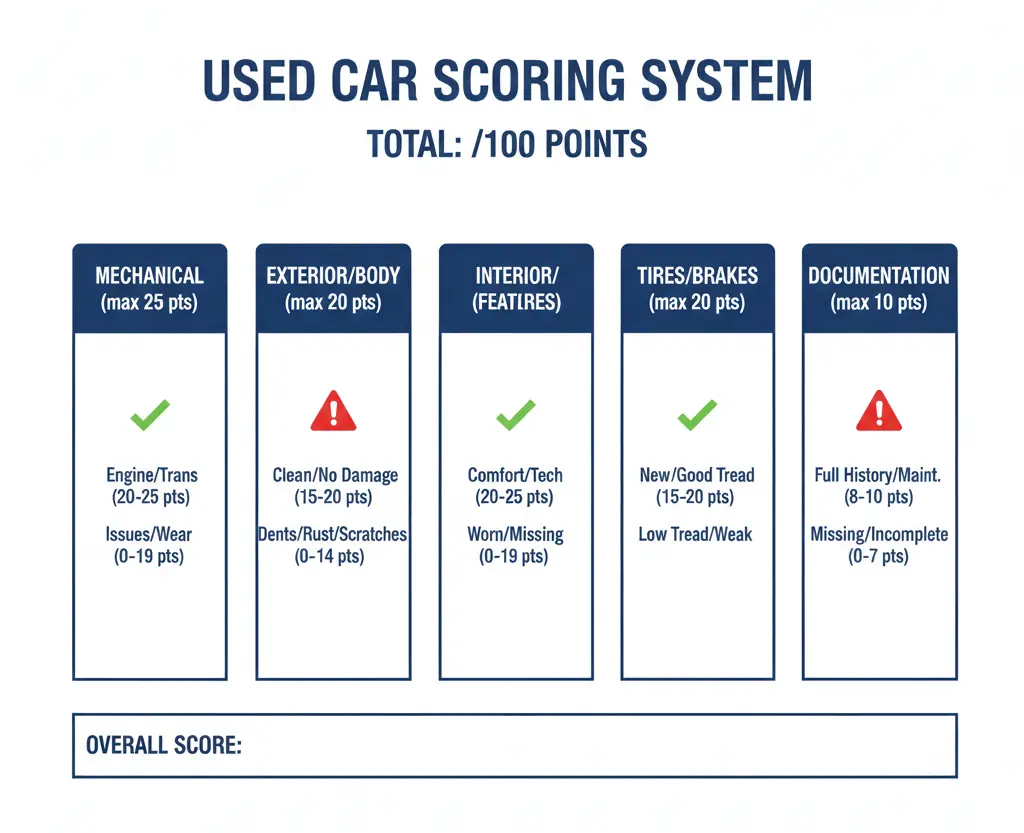
Systems remove drama from emotional car buying. Give every car a score out of 100. If it does not hit your threshold, you do not buy it, no matter how good it feels in the moment.
Use five buckets:
- Price vs comps: 25 points
- History and paperwork: 20 points
- Condition from inspection: 25 points
- Test drive behavior: 20 points
- Ownership fit (needs, fuel, insurance): 10 points
This works because you can love the car and still see the score. The score keeps you honest and makes it easier to walk away from emotional buying mistakes.
quick scoring table
| Bucket | What to check | Scoring idea |
|---|---|---|
| Price vs comps | Similar trims and mileage | 25 if fair, 10 if high, 0 if crazy |
| History and paperwork | Clean title, consistent records | 20 if clean, 5 if gaps, 0 if weird |
| Inspection | Tires, fluids, leaks, lights | 25 if solid, 10 if mixed, 0 if risky |
| Test drive | Brakes, steering, shifting | 20 if smooth, 8 if doubts, 0 if scary |
| Fit | Budget, space, use case | 10 if perfect, 5 if ok, 0 if wrong |
You do not need perfect numbers. You just need to use the same scoring system on every car so emotion does not quietly rewrite the rules for the one you like most.
use scripts so you do not improvise under pressure
The worst time to invent questions is when someone is waiting for your answer. Short scripts keep you calm and stop emotional car buying from taking over the conversation.
Price script:
“I’m comparing similar listings. What is the out‑the‑door price with an itemized breakdown of taxes and fees?”
History script:
“Do you have maintenance records, and can you confirm there are no liens on the title?”
Inspection script:
“I will do a full walkaround and I will scan it. If anything looks off, I will get a pre‑purchase inspection.”
These lines are polite. They also signal that you are not an easy target and that you are following a process, not a feeling.
red flags that emotion tries to excuse
Emotion makes you rationalize. Treat these as hard stops until proven otherwise, no matter how good the car looks:
- Seller refuses an independent inspection.
- Title story is unclear.
- VIN details do not match paperwork.
- New paint with no clear explanation.
- Warning lights, even if they claim it is “just a sensor.”
- Transmission hesitation, overheating signs, brake pulsation, or steering pull on the test drive.
You do not need to accuse anyone. You just need to protect your money and avoid turning emotional car buying into an expensive lesson.
make time your advantage and finish strong
Sellers use speed. You use time. Time lets you compare, verify, and cool off so your decisions stay objective.
A clean routine that slows the moment:
- Do your walkaround and interior check.
- Take notes, not just photos.
- Leave the car. Yes, leave.
- Review your notes at home.
- Compare to at least two alternatives.
- Decide the next day.
If the deal disappears overnight, it was not your deal. Any offer that only exists if you act right now is designed to trigger emotional buying mistakes.
Objectivity is not cold. It is protection. It keeps you from paying extra for a story, a vibe, or a rush. If you want to avoid the money‑side traps that push people into bad deals, the next step is learning how to spot hidden fees in used car deals before you sign. Shortlist multiple cars, score them the same way, and slow the timeline so your brain can catch up with your excitement. When you do that, you buy a used car like a confident adult.