Complete used car buying guide: inspection, maintenance & smart shopping
Buying a used car in the US market feels like navigating a minefield blindfolded. With over 550,000 monthly searches for “used cars near me” and “used car sales,” American buyers are actively seeking reliable guidance on how to buy a used car without getting burned. You’re risking thousands of dollars on a pre-owned vehicle with unknown history, potential hidden damage, and wear patterns that might not surface until weeks after purchase.
The used car market offers incredible value when you know what to check when buying a used car. Depreciation hits new vehicles hardest in the first three years. A three-year-old certified pre-owned car with 36,000 miles often costs 40% to 50% less than new while delivering years of reliable service. However this value only materializes when you buy the right vehicle and avoid problem cars disguised as deals.This comprehensive used car buying guide walks through everything you need before, during, and after purchasing a used vehicle. We’ll cover inspection techniques that reveal hidden problems, how to check used car history to expose undisclosed damage, negotiation strategies that save thousands, maintenance schedules preventing breakdowns, common used car problems by brand, and used car financing options protecting your budget.
Whether you’re visiting used car dealers near me or shopping private sellers, looking at compact sedans or full-size trucks, investing $5,000 or $25,000, the fundamentals remain constant. Thorough evaluation protects you from costly mistakes. Informed negotiation ensures fair pricing. Proper maintenance preserves your investment. Understanding these elements transforms used car buying from gambling into calculated decision making.
Pre-purchase used car inspection checklist
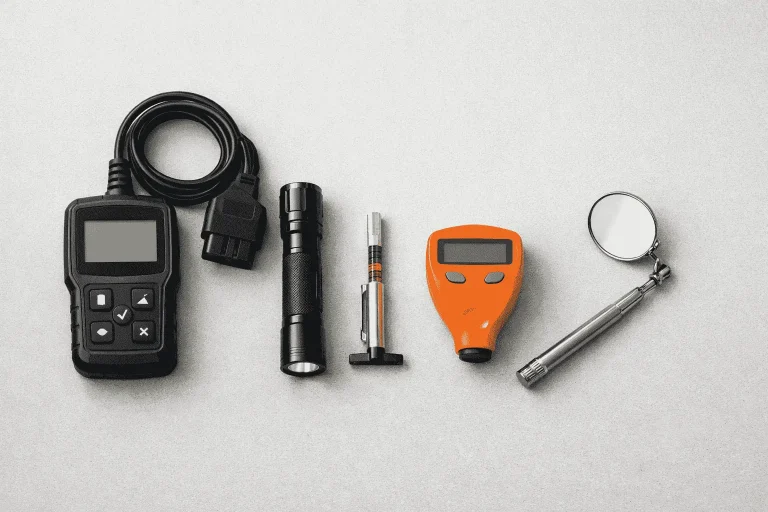
Before visiting used car dealers near me or private sellers, understanding what to check when buying a used car protects your investment. Walking around looking at paint and tires barely scratches the surface of proper evaluation. This used car inspection checklist requires systematic examination of mechanical systems, structural components, and electronic functions determining whether a vehicle will serve you reliably or drain your bank account through endless repairs.
The exterior inspection reveals collision damage and repair quality through careful observation. Walk completely around the used car from 10 feet away checking if it sits level or sags in one corner suggesting suspension problems. Look at panel gaps between doors, hood, fenders, and trunk. Factory assembly creates consistent gaps measuring 3 to 5 millimeters. Uneven gaps indicate collision damage or poor repair work.
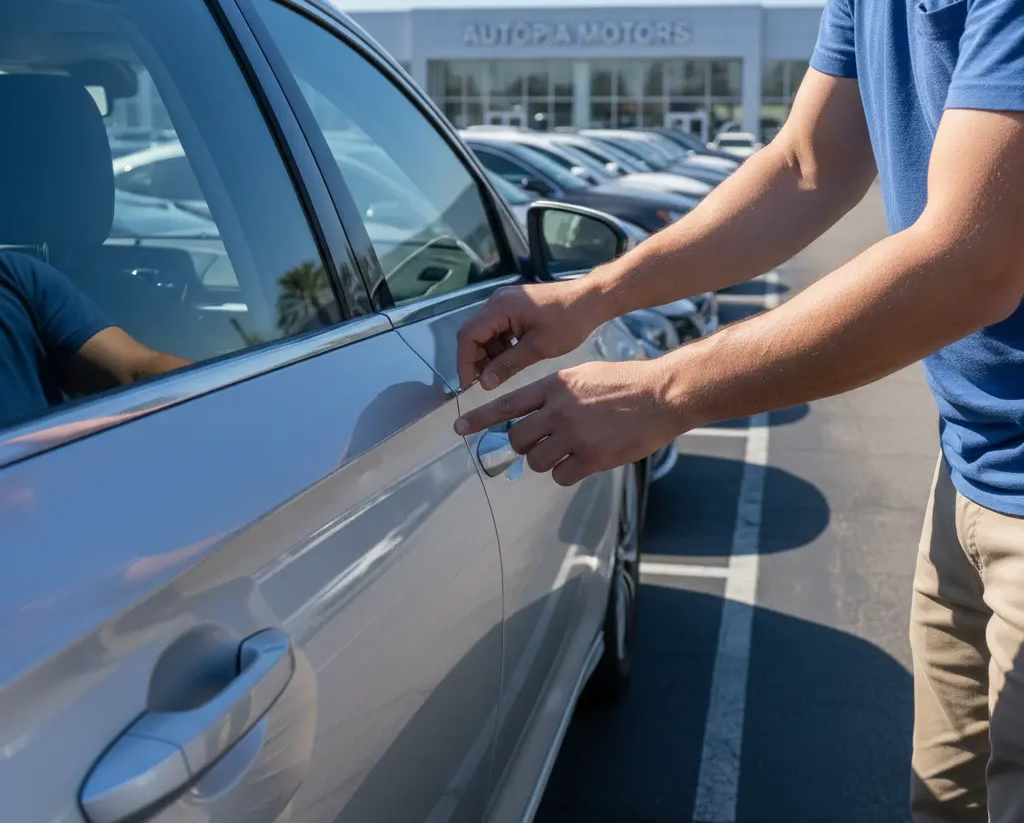
Paint condition tells important stories about pre-owned vehicle history. Run your hands along body panels feeling for ripples or rough spots indicating body filler hiding damage. Check for color variations between panels under natural sunlight. Repaints often show subtle color differences invisible in showroom lighting. Inspect door jambs and under the hood for overspray on rubber seals or unpainted components confirming repair work.
Under the hood: critical fluid inspection
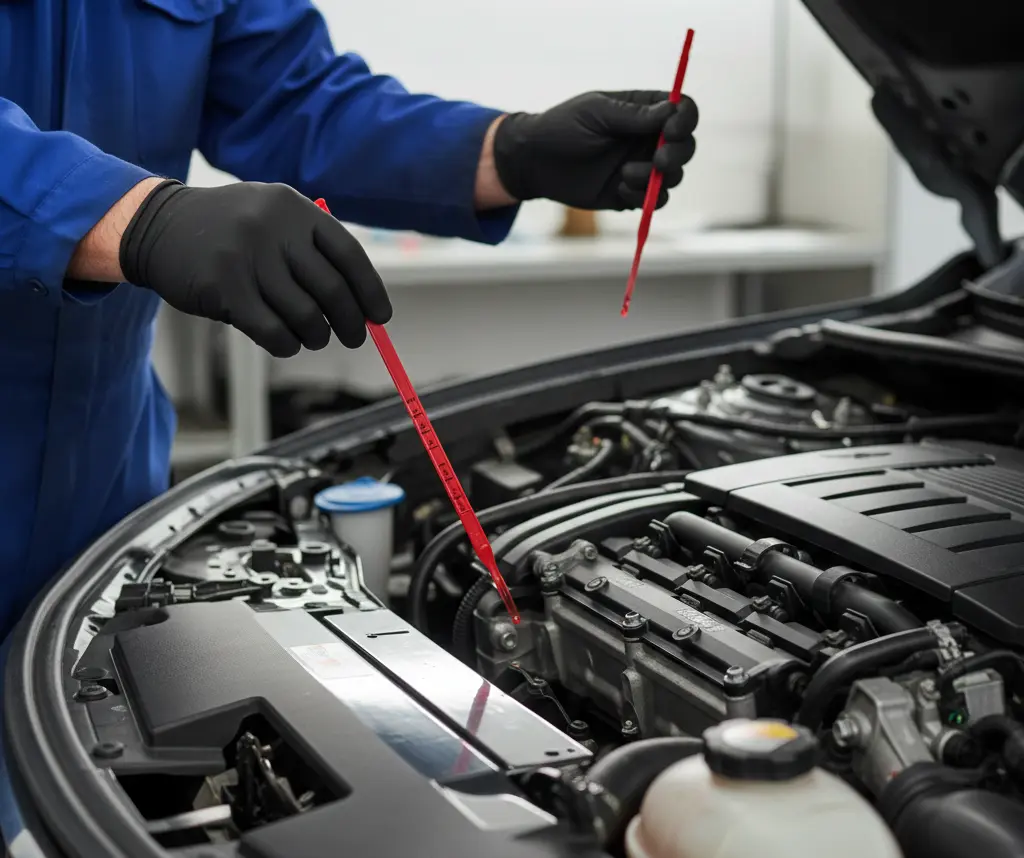
Under the hood examination starts with fluid condition assessment revealing maintenance history and potential problems. This used car inspection checklist component identifies issues before they become expensive failures.
| Fluid Type | Healthy Condition | Warning Signs | Repair Cost |
|---|---|---|---|
| Engine Oil | Amber or light brown | Milky (coolant mix) | $1,500-$3,000 |
| Coolant | Bright green/orange/pink | Rusty brown | $100-$150 flush |
| Brake Fluid | Clear or light amber | Dark brown/black | $80-$120 service |
| Transmission | Bright red/pink | Dark, burnt smell, metal particles | $2,000-$7,000 |
| Power Steering | Red or amber | Dark, burnt smell | $200-$500 |
Check belts and hoses for cracks, fraying, or soft spots when inspecting used cars. A serpentine belt costs $50 to replace but snapping while driving damages the alternator, water pump, and power steering pump. Those repairs exceed $800. Look for oil leaks around valve covers, oil pan, and rear main seal. Small seepage might be acceptable on high-mileage engines but active dripping indicates failing gaskets.
Test drive evaluation
The test drive reveals problems static inspection can’t detect when learning how to buy a used car properly. Start the engine cold if possible listening for ticking, knocking, or grinding during startup. The engine should idle smoothly without surging. Shift through all gears checking for smooth engagement in automatics or clean shifting without grinding in manuals. Any hesitation, slipping, or harsh shifting signals transmission problems requiring $2,000 to $7,000 in repairs.

Test brakes in a safe location immediately. The pedal should feel firm not spongy. Braking should pull straight without veering left or right. Listen for grinding or squealing indicating worn components. Accelerate moderately feeling for smooth power delivery without hesitation or surging during this used car inspection.
Drive on rough pavement listening for suspension noises like clunks or rattles. These sounds indicate worn ball joints, tie rod ends, or control arm bushings needing replacement. Test steering response noting any excessive play, vibration, or unusual feedback. Get the vehicle to highway speed checking for vibrations suggesting wheel balance or alignment problems.
Professional mechanical inspection benefits
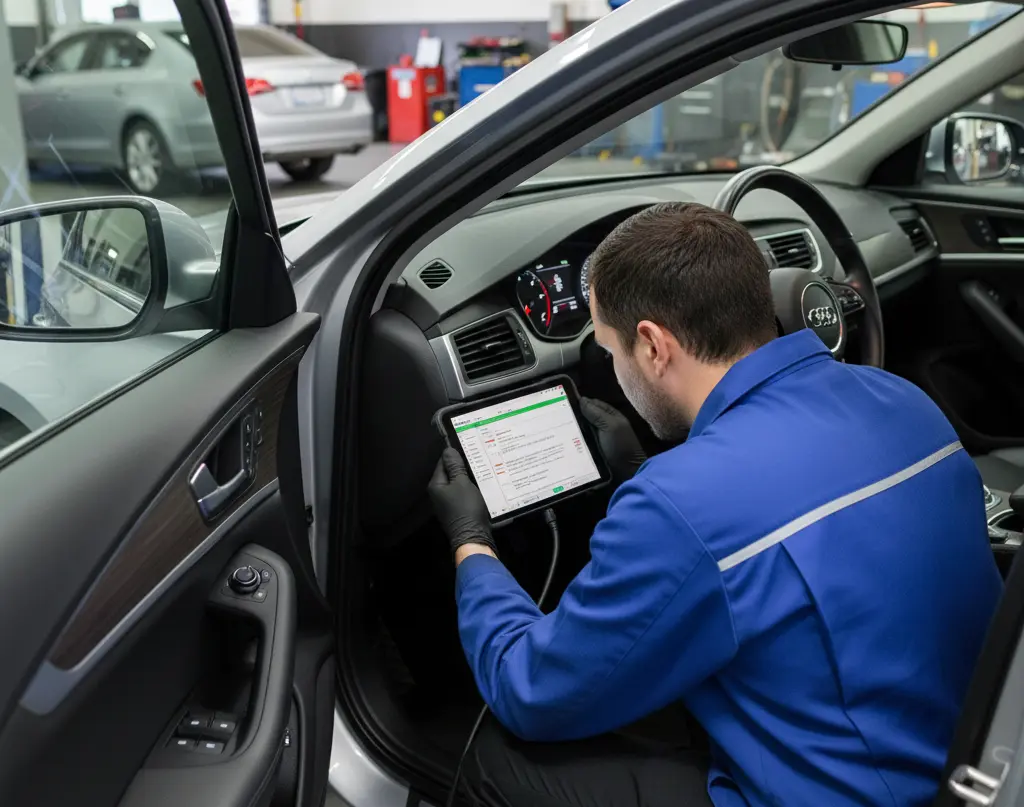
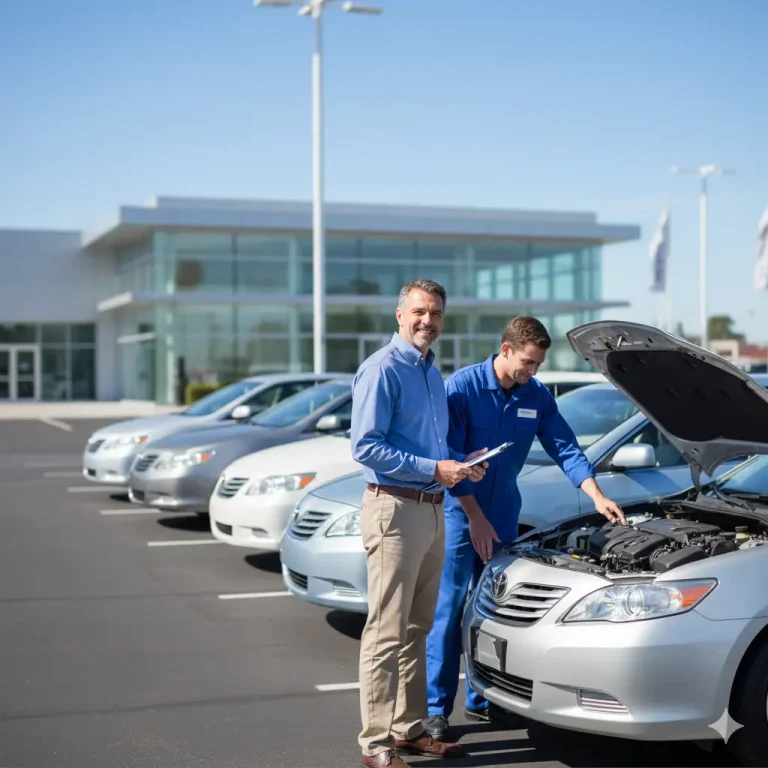
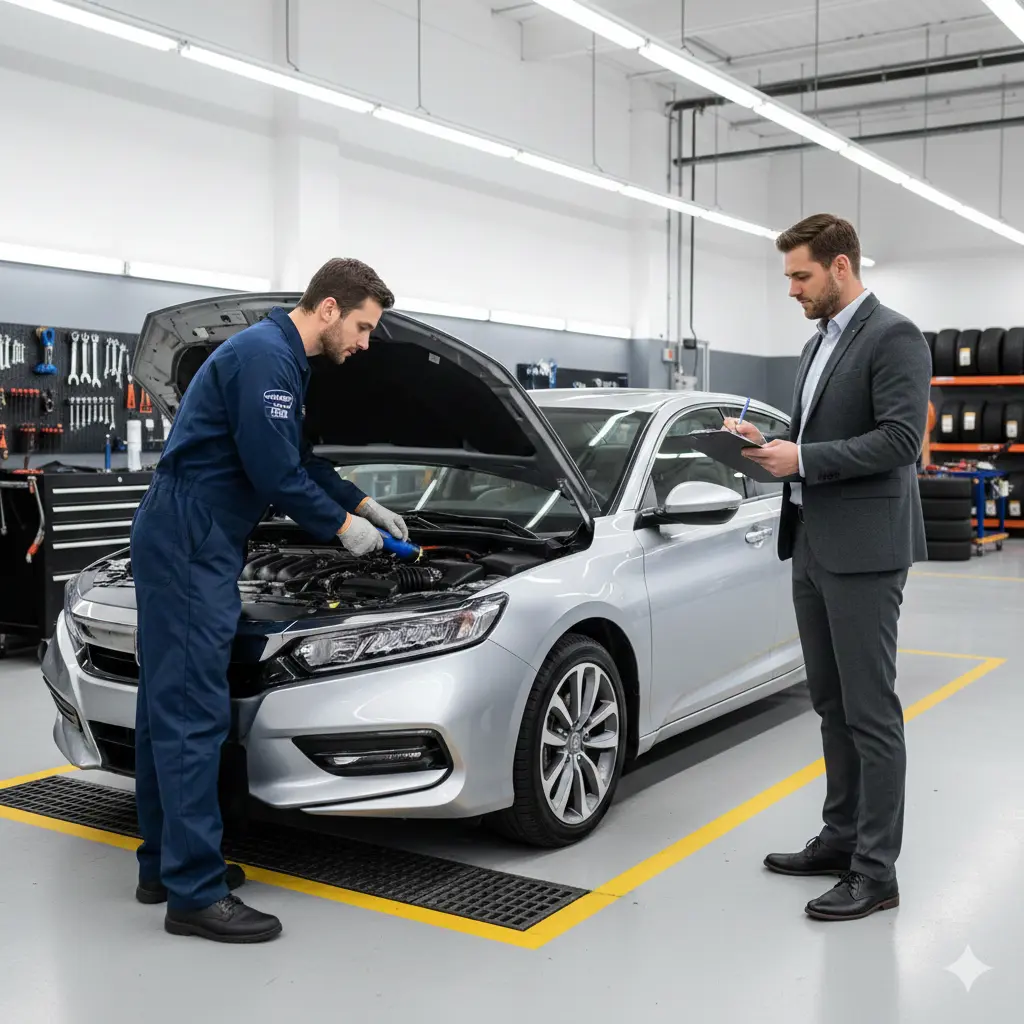
Professional mechanics bring specialized tools and experience revealing issues invisible to average buyers during used car inspection. They perform compression tests measuring cylinder pressure to assess internal engine health. Leak-down tests pinpoint exactly where compression escapes identifying valve, ring, or head gasket problems. These tests provide definitive answers about engine condition that visual inspection can’t match.
Understanding what mechanics check during pre-purchase inspections helps you ask informed questions and interpret inspection results. The $100 to $200 inspection cost is cheap insurance against buying a $5,000 problem disguised as a $15,000 car when shopping used cars near me.
How to check used car history and vehicle reports
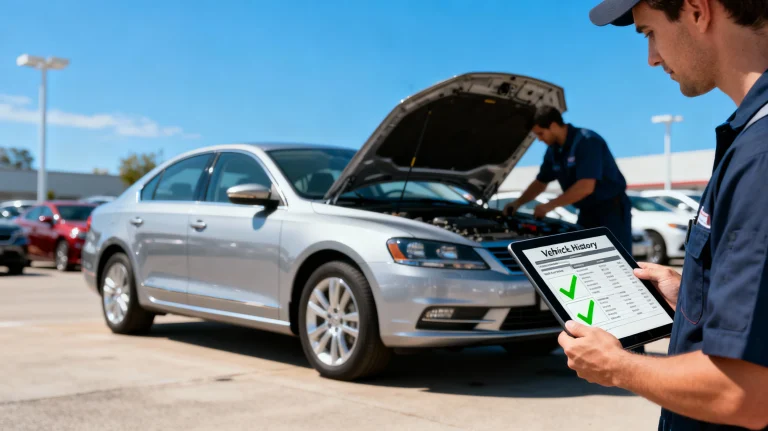
Learning how to check used car history free or through paid services like Carfax protects against flood damaged cars, salvage titles, and odometer fraud. Vehicle history reports provide crucial documentation revealing prior accidents, ownership patterns, and maintenance records sellers often hide. However they’re not foolproof and I’ve learned to use them as starting points rather than final answers.
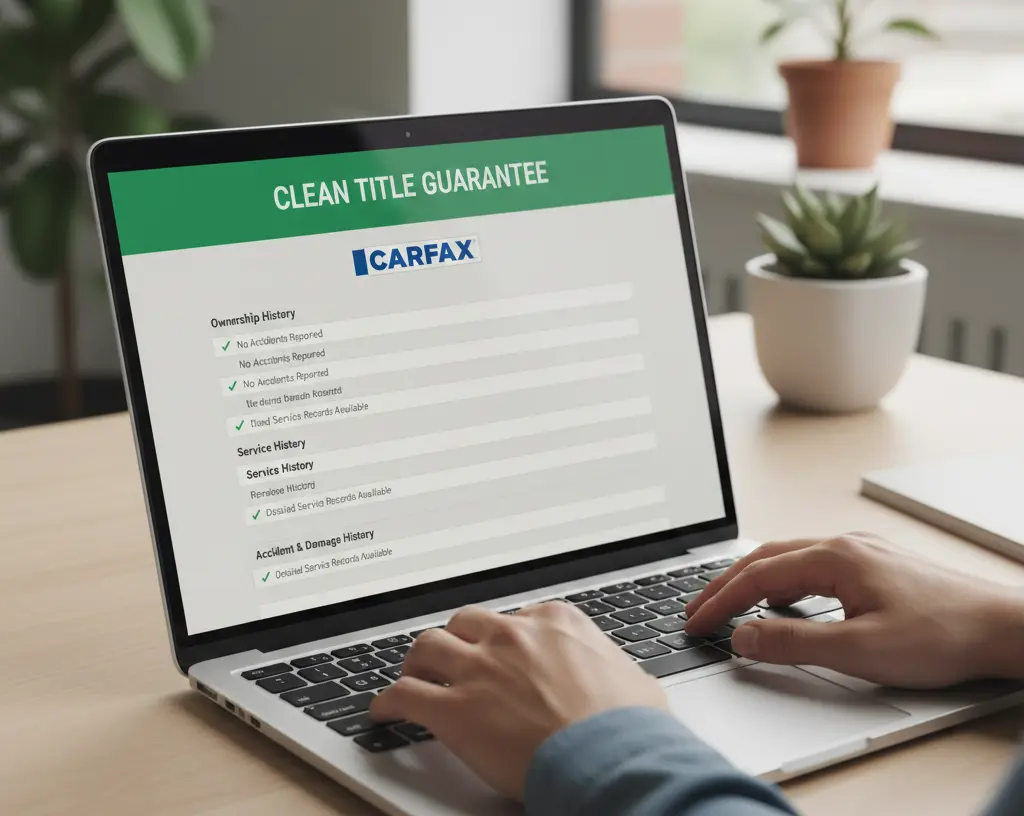
Carfax and AutoCheck compile data from insurance claims, police reports, repair shops, and state title agencies revealing accidents, flood damage, odometer discrepancies, and ownership history. However they only contain information actually reported to their databases when checking used car history.
A clean history report doesn’t guarantee the pre-owned vehicle wasn’t damaged. It means no one reported damage to the databases these companies access. Private repairs paid out of pocket won’t appear. Minor accidents handled without police reports stay invisible. Flood damage in vehicles where owners skipped insurance claims remains hidden.
Reading vehicle history reports effectively
I always run both Carfax and AutoCheck reports because they sometimes contain different information when I check used car history. One might show an accident the other missed or vice versa. The $40 to $50 total cost for both reports is minimal insurance against expensive mistakes when buying used cars. Many dealerships provide free Carfax reports but I still verify with AutoCheck for complete coverage.
Focus on specific red flags beyond just accident and flood indicators in used car sales. Multiple owners in short time periods suggest problems that caused rapid resale. Someone who keeps a car six months then sells it likely discovered issues they didn’t want to fix. Three or four owners in two years screams run away.
Title transfers between states especially from flood-prone areas to dry regions raise suspicion. After major hurricanes flooded vehicles migrate from coastal disaster zones to inland states where buyers don’t think to check for water damage. A car titled in Louisiana after Hurricane Ida then transferred to Colorado deserves extra scrutiny.
Gaps in service records might indicate periods where the used car wasn’t drivable. A vehicle with regular maintenance every 5,000 miles then nothing for two years suggests major problems kept it off the road. When service records resume check what repairs were performed during that first visit back.
Critical title and ownership warnings
Odometer discrepancies appear when reported mileage decreases between records or shows impossible increases. A car reporting 85,000 miles in January then 82,000 miles in March indicates odometer tampering. Similarly a jump from 95,000 to 145,000 miles in six months suggests the odometer was rolled back then corrected.

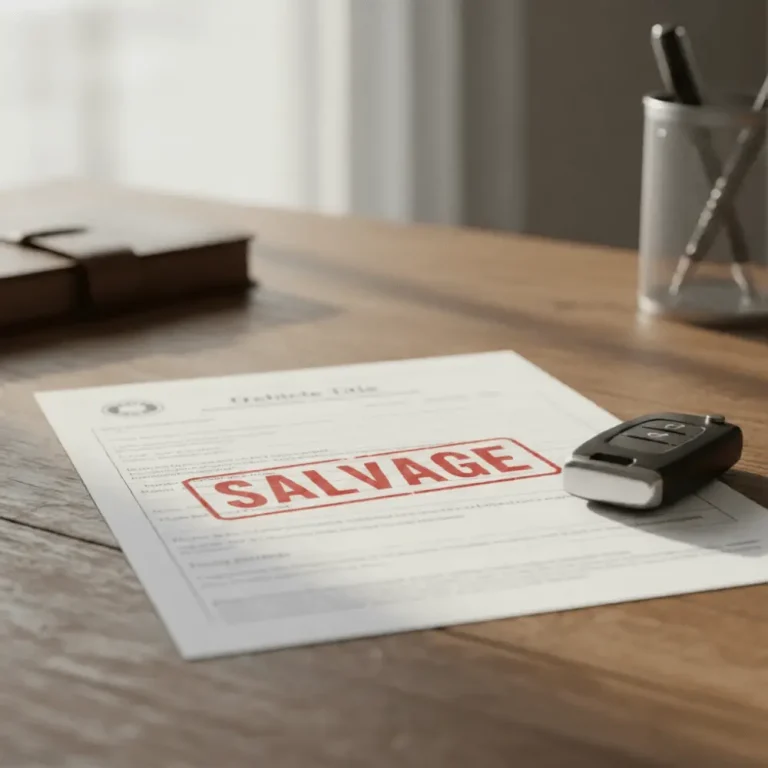
Salvage, rebuilt, or flood titles appearing in history mean automatic rejection regardless of current condition when shopping used cars near me. These designations indicate severe damage usually totaling the vehicle. Even professionally rebuilt salvage cars have compromised safety systems, difficult-to-diagnose electrical problems, and dramatically reduced resale value.
Lemon law buybacks also appear in vehicle histories. Manufacturers repurchase vehicles with unfixable defects then resell them at auction with lemon titles. These cars had serious problems the manufacturer couldn’t resolve. Walking away is the only sensible choice.
The number and type of previous owners tells a story too. Rental car history means dozens of drivers who didn’t maintain or care for the vehicle. Fleet vehicles accumulate high mileage quickly often with minimal maintenance. Former police cars endure extreme duty cycles despite regular service.
Service records within the history show maintenance patterns valuable for used car buying. Regular oil changes every 5,000 miles indicate careful ownership. Major repairs like transmission replacement actually add value when properly documented showing the vehicle received necessary work. Missing service records don’t necessarily mean poor maintenance but they create uncertainty you can use during negotiations.
Accident severity matters as much as whether accidents occurred. Minor parking lot damage properly repaired doesn’t significantly impact value or safety. Major front-end collisions requiring frame straightening and airbag replacement compromise structural integrity even with quality repairs. The history report should indicate accident severity helping you assess real impact.
Understanding manufacturer-specific problems helps you interpret history reports more effectively. Knowing that 1999 to 2004 Honda transmissions fail frequently makes you scrutinize any transmission-related repairs in the history. A 2008 Camry showing oil consumption complaints matches Toyota’s known piston ring issues. Recognizing common problems by brand helps you connect history report dots others miss.
Use history reports to guide physical inspection of used cars too. A disclosed accident prompts detailed paint and frame examination. Prior flood designation demands thorough electrical testing and interior moisture checks. The report raises questions your inspection answers.
How to negotiate used car price: proven strategies
Mastering how to negotiate used car price separates smart buyers who save thousands from those who overpay. I’ve watched people accept asking prices without question then complain later about paying too much. The used car market isn’t like buying groceries with fixed prices. Every transaction involves negotiation whether explicit or implied through your willingness to walk away.
Research establishes your negotiation foundation when learning how to buy a used car. Before contacting sellers check pricing on similar vehicles using Kelley Blue Book, Edmunds, and local classified listings. A 2018 Honda Accord EX with 65,000 miles might list for $18,500 but if three comparable examples in used car sales sell for $16,800 you’ve got leverage. Document these comparisons with screenshots or printouts to show sellers during negotiations.
Timing and market conditions
Market conditions affect pricing power in used car buying. Convertibles sell for premium prices in spring and summer but dealers discount them in fall and winter. Four-wheel drive trucks command higher prices before winter in northern states. Shopping off-season gives you negotiation advantage. I bought a Jeep Wrangler in February for $2,400 less than comparable models sold for the previous October.
Timing within the month matters too when visiting used car dealers near me. Dealerships face monthly sales quotas and finance managers need to hit lending targets. Shopping the last three days of the month when salespeople need deals to meet quotas increases your negotiating power. They’d rather discount a vehicle than miss quota bonuses.
Start negotiations below your target price leaving room for compromise. If you’re willing to pay $15,000 for a used car offer $13,500 initially. The seller will counter higher and you’ll likely settle near your actual target. Starting at your maximum leaves no negotiation room and you’ll probably overpay.
Effective negotiation tactics
Never reveal your maximum budget to sellers during used car buying. Sales tactics focus on monthly payment affordability rather than total price. They’ll structure financing to hit your payment target while inflating the purchase price or extending loan terms. Negotiate the purchase price first completely separate from financing discussions.
Use inspection findings as negotiation ammunition when shopping used cars. Discovering worn brake pads needing $400 replacement justifies reducing your offer by that amount. Finding evidence of minor unreported collision damage gives you leverage to demand significant discounts or walk away entirely. Document problems with photos strengthening your negotiating position.
The willingness to walk away is your most powerful negotiation tool. Sellers sense desperation and refuse to budge on price when they know you’ll buy regardless. I’ve walked away from deals three times only to have sellers call back hours or days later accepting my offer. Sometimes they don’t call back and that’s fine because other vehicles exist.
Private seller vs dealership negotiations
| Negotiation Factor | Private Seller | Dealership |
|---|---|---|
| Emotional Attachment | High (easier to negotiate) | Low (professional) |
| Dealer Fees | None | $500-$1,500 |
| Extended Warranties | Not available | Available (overpriced) |
| Financing Options | Cash/outside lender only | Multiple options |
| Trade-In | Not possible | Possible (usually lowball) |
| Average Savings Potential | $1,000-$2,000 higher | More fees but convenience |
Private party negotiations differ from dealer transactions in used car sales. Private sellers have emotional attachments to their vehicles and often overprice them based on memories rather than market value. They’re also more willing to negotiate since they’re not professional salespeople. Cash purchases from private sellers eliminate dealer fees saving $300 to $800.
Dealer negotiations involve more complexity when buying used cars. The advertised price is never final. Expect dealer fees, documentation charges, and other add-ons increasing the total by $500 to $1,500. Question every fee and refuse to pay unreasonable charges. Legitimate fees include titling and registration but not “market adjustment” or “dealer prep” charges on pre-owned vehicles.
Extended warranties and add-on products generate massive dealer profits. They’ll push paint protection, fabric treatment, tire warranties, and service contracts. Decline these during initial negotiations focusing only on vehicle price. You can always add extended warranty coverage later but you can’t renegotiate the purchase price after signing.
Trade-in and financing leverage
Trade-in negotiations require separate attention in used car buying. Dealers lowball trade values then inflate them during negotiations making you feel like you got a deal while maintaining their profit margin. Get trade-in offers from multiple dealers and CarMax establishing true market value. Consider selling privately often netting $1,000 to $2,000 more than dealer trade-in offers.
Financing negotiations happen after agreeing on purchase price. Dealers mark up interest rates earning additional profit on loans. Get pre-approved through your bank or credit union establishing your baseline rate. If dealer financing beats your pre-approval by 0.5% or more take it. Otherwise use your outside financing.

Pre-approval also establishes your budget and prevents overspending when shopping used cars near me. Walking into negotiations with a $20,000 pre-approval letter keeps you focused on vehicles in that price range. Without pre-approval sales pressure pushes you toward more expensive vehicles claiming slightly higher payments are manageable.
Master these negotiation fundamentals and you’ll consistently save thousands on used vehicle purchases. Combining market research, inspection findings, proper timing, and willingness to walk away creates negotiating power sellers can’t overcome. Learning how to negotiate used car prices effectively transforms an intimidating process into a strategic advantage putting money back in your pocket.
Essential used car maintenance schedule
Establishing a used car maintenance schedule immediately after purchase prevents the common used car problems that cost thousands in repairs. Unlike new cars with factory-fresh components, pre-owned vehicles require careful attention to fluid changes, belt replacements, and system inspections based on mileage rather than age alone. This maintenance checklist differs significantly from new car schedules because used vehicles need attention addressing deferred service and establishing known baselines.
The First 30 days: critical used car maintenance
The moment you drive your used car home the clock starts ticking on essential first-month tasks. I learned this after buying a 2014 Mazda3 that seemed perfectly maintained. Two weeks in the check engine light appeared. Turns out the previous owner had recently cleared codes without fixing the underlying oxygen sensor problem.
Start with complete fluid flush and replacement even if the seller claims everything was just serviced when buying a used car. You don’t know the quality of fluids used or whether service actually happened. Fresh oil, coolant, brake fluid, and transmission fluid give you a known baseline and peace of mind for your pre-owned vehicle.
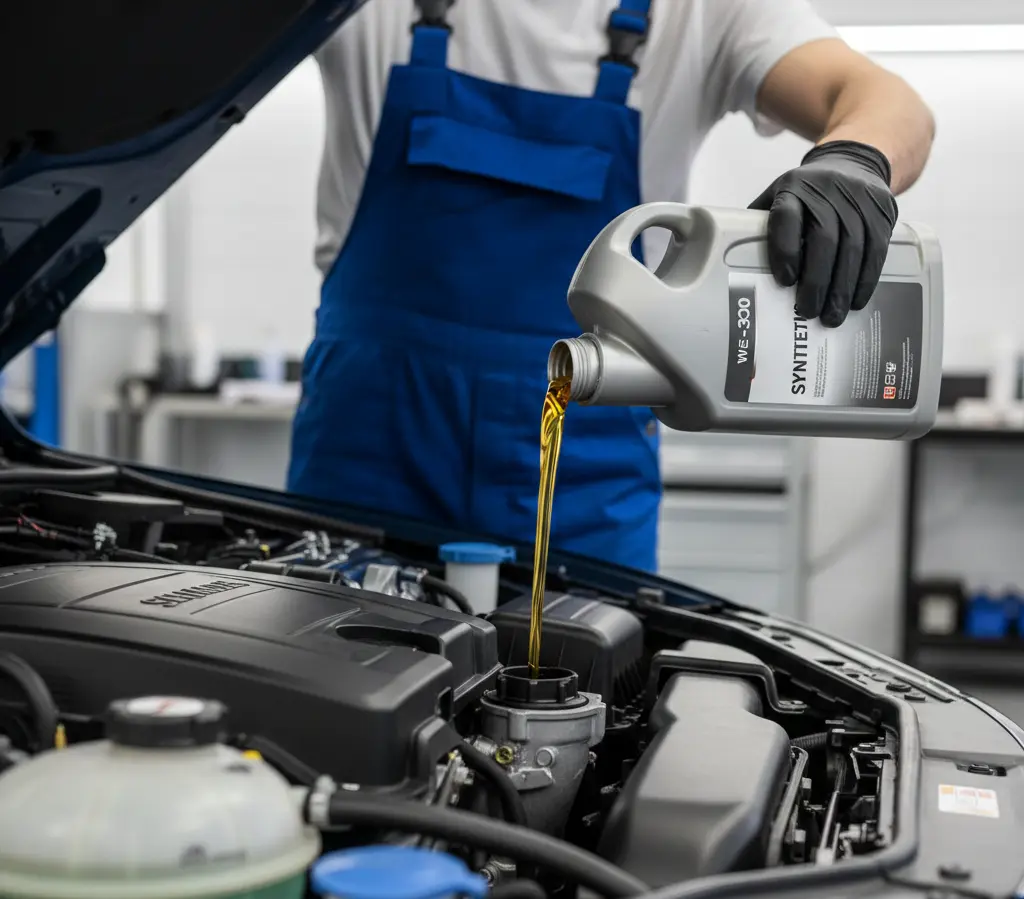
Engine oil and filter changes cost $50 to $120 depending on oil type. I always use synthetic in used cars because superior protection outweighs the modest cost difference. Synthetic oil handles heat better, flows in cold temperatures, and extends drain intervals to 7,500 miles versus 3,000 to 5,000 for conventional oil.
Coolant flushes run $100 to $150 and prevent expensive overheating damage in used vehicles. Old coolant loses corrosion inhibitors allowing rust to form inside the engine and radiator. This rust clogs passages and damages water pumps. Transmission fluid service depends on transmission type. Manual transmissions need simple fluid changes costing $80 to $120. Automatics benefit from full flush services ranging from $150 to $250.
Replace cabin and engine air filters during the first month of used car ownership. These cheap components dramatically affect air quality and engine performance. Cabin filters cost $15 to $40 and take five minutes to install yourself. Engine air filters run $20 to $50 with equally simple installation. Dirty air filters reduce fuel economy and engine power.
Battery testing takes minutes at most auto parts stores and they’ll do it free. Batteries last four to six years so if yours tests weak replace it proactively rather than getting stranded. A new battery costs $100 to $200 installed. That’s cheap insurance against no-start situations in parking lots or worse yet on road trips.
Ongoing used car maintenance schedule
Tire rotation should happen every 5,000 to 7,000 miles extending tire life by 25% on your pre-owned vehicle. Most shops charge $20 to $50 for rotation or you can do it yourself with a jack and jack stands. While rotating tires inspect brake pads and rotors through wheel spokes. Catching worn brakes early prevents rotor damage saving $200 to $400 per axle.
Serpentine belts typically last 60,000 to 100,000 miles. If your used car shows no service records for belt replacement and has over 60,000 miles replace it preventively. Belt replacement costs $100 to $200 including labor. A snapped belt leaves you stranded and can damage the water pump, alternator, or power steering pump. Those repairs quickly exceed $800.
Spark plugs in most vehicles last 60,000 to 100,000 miles depending on type. Standard copper plugs need replacement every 30,000 miles. Platinum or iridium plugs last 60,000 to 100,000 miles. Spark plug replacement costs $150 to $300 for four-cylinder engines or $250 to $500 for V6 and V8 engines. Worn spark plugs reduce fuel economy, cause misfires, and can damage catalytic converters.
Complete used car maintenance cost breakdown
| Maintenance Item | Frequency | Cost Range | Why It Matters |
|---|---|---|---|
| Engine Oil Change (Synthetic) | 7,500 miles | $70-$120 | Engine protection, longevity |
| Tire Rotation | 5,000-7,000 miles | $20-$50 | Extends tire life 25% |
| Brake Inspection | Every oil change | Free-$50 | Prevents rotor damage |
| Air Filters (cabin + engine) | First 30 days, then yearly | $35-$90 | Air quality, fuel economy |
| Coolant Flush | 2-5 years | $100-$150 | Prevents overheating |
| Transmission Fluid | 30,000-60,000 miles | $150-$250 | Prevents $2,000+ repairs |
| Serpentine Belt | 60,000-100,000 miles | $100-$200 | Prevents breakdown |
| Spark Plugs | 60,000-100,000 miles | $150-$500 | Fuel economy, performance |
| Timing Belt | 60,000-105,000 miles | $500-$1,500 | Prevents engine destruction |
| Battery Replacement | 4-6 years | $100-$200 | Prevents no-start issues |
| Wheel Alignment | Annually | $75-$150 | Tire wear, handling |
Brake inspections should happen every oil change or at minimum twice yearly on used cars. Brake pads last 30,000 to 70,000 miles depending on driving style. Front brake pad and rotor replacement costs $300 to $600. Rear brake service runs $250 to $500. Catching worn pads early prevents rotor damage and saves money.
Annual used car maintenance tasks
Annual maintenance tasks follow calendar schedules regardless of mileage on pre-owned vehicles. Coolant system inspection includes checking hoses, clamps, radiator condition, and coolant strength. Coolant should be replaced every two to five years depending on type. Traditional green coolant needs changing every two years. Extended life coolants last five years.
Battery terminals accumulate corrosion reducing electrical connection quality in used vehicles. Cleaning terminals takes 10 minutes with a wire brush and baking soda solution. This free maintenance prevents no-start situations and extends battery life. I clean battery terminals every spring and fall taking five minutes to avoid potential problems.
Wheel alignment should be checked annually or whenever you hit significant potholes when maintaining your used car. Misalignment causes uneven tire wear and poor handling. Alignment service costs $75 to $150 and extends tire life significantly. I check alignment whenever I buy new tires ensuring maximum tread life.
Mileage-based service intervals
Certain maintenance follows mileage milestones regardless of time on pre-owned vehicles. At 60,000 miles most used cars need significant service including spark plugs in some engines, transmission fluid service, differential fluid changes in all-wheel drive and four-wheel drive vehicles, and transfer case fluid service. Budget $600 to $1,200 for comprehensive 60,000 mile service.

Timing belts in interference engines require replacement every 60,000 to 105,000 miles depending on manufacturer specifications. This critical service costs $500 to $1,500 but prevents catastrophic engine damage. If a timing belt breaks in an interference engine pistons hit open valves causing thousands in repair costs. Many newer vehicles use timing chains that don’t require replacement but older cars with timing belts need this service religiously.
Differential and transfer case fluid changes matter in trucks, SUVs, and all-wheel drive vehicles. These services cost $100 to $200 each and prevent expensive gear damage. Most manufacturers recommend service every 30,000 to 60,000 miles.
Creating your personal used car maintenance plan
Every used car needs a customized maintenance plan based on mileage, age, and known issues with that specific make and model. I create a spreadsheet tracking every service with date, mileage, cost, and notes about anything unusual discovered.
This record becomes invaluable when diagnosing problems or selling the vehicle. Buyers pay premium prices for well-documented maintenance history on used cars. I’ve sold three pre-owned vehicles for 15% to 20% above market value simply because I had meticulous service records.
Set calendar reminders for time-based maintenance and mileage milestones for distance-based service. Most modern cars have maintenance reminder systems but these don’t account for preventive replacement of aging components in used vehicles.
Budget consistently for maintenance. I transfer $150 monthly to a dedicated car maintenance fund. This covers routine service and builds a reserve for unexpected repairs. When major service comes due the money is already set aside rather than causing financial stress.
Understanding maintenance schedules prevents expensive surprises but sometimes problems develop despite perfect care. Recognizing warning signs of transmission problems early gives you time to address issues before complete failure in your used car.
Common used car problems and red flags to avoid
Recognizing common used car problems before purchase protects you from expensive surprises and helps you budget appropriately for anticipated repairs. Every automotive brand has unique reliability patterns and common failure points that emerge as vehicles age. Some problems are minor annoyances while others indicate catastrophic failures waiting to happen when buying a used car.
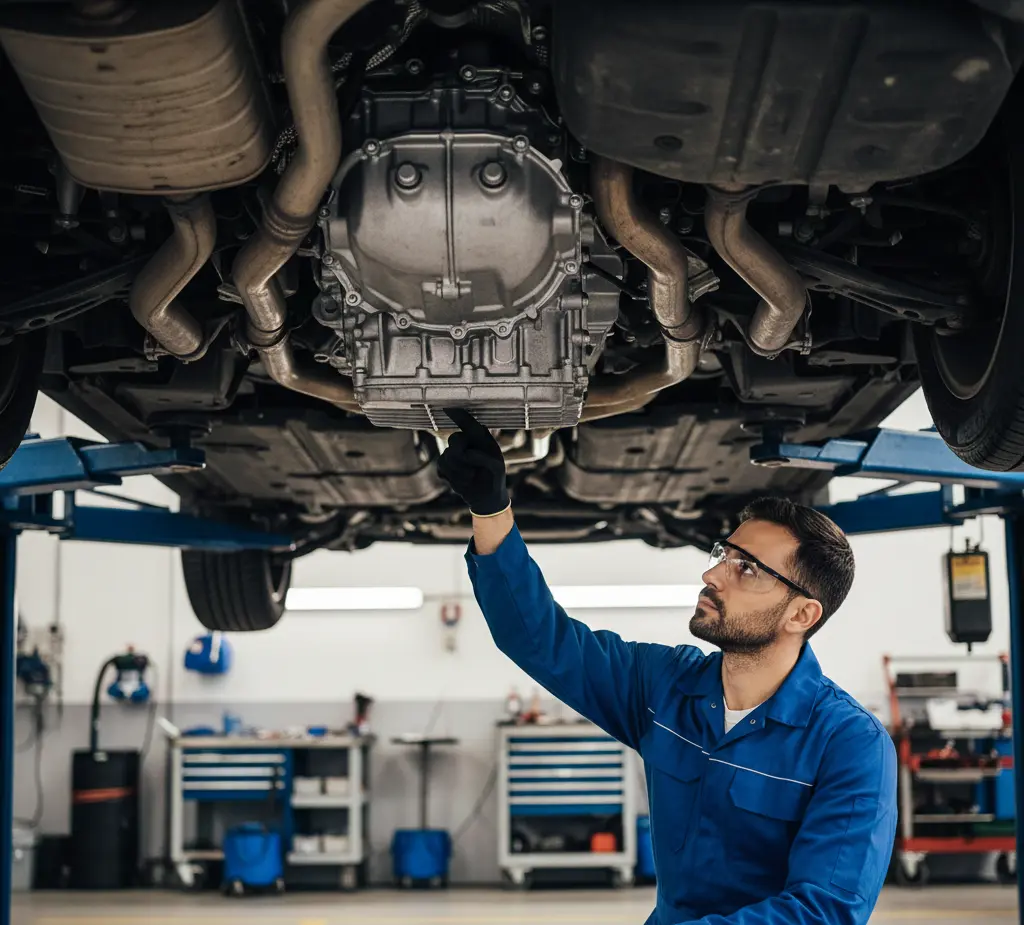
Transmission issues rank among the most expensive repairs facing used car owners. Rebuilding or replacing a transmission costs $2,000 to $7,000 depending on the vehicle. Understanding these common used car problems helps you ask targeted questions during inspections and avoid models with known catastrophic failures affecting pre-owned vehicles.
Brand-specific used car problems
| Brand | Model Years | Common Problem | Affected Models | Repair Cost |
|---|---|---|---|---|
| Honda | 1999-2004 | Transmission failure | Accord, Civic, Odyssey, Pilot | $3,000-$4,500 |
| Honda | 2008-2012 | Excessive oil consumption | Accord V6, Pilot, Odyssey (3.5L) | Ongoing oil costs |
| Honda | 2015-2017 | CVT juddering/hesitation | Civic CVT | $1,500-$3,000 |
| Toyota | 2007-2009 | Oil consumption (piston rings) | Camry 2.4L | $4,000-$5,000 |
| Toyota | 2009-2013 | Oil consumption (piston rings) | Corolla 2.4L | $4,000-$5,000 |
| Toyota | 2005-2010 | Severe frame rust | Tacoma, Tundra | Often unrepairable |
| Ford | 2004-2008 | Spark plug ejection | F-150 5.4L Triton V8 | $800+ |
| Ford | 2012-2016 | PowerShift transmission | Focus, Fiesta | $2,000-$4,000 |
| Ford | 2003-2007 | 6.0L PowerStroke diesel issues | Super Duty trucks | $4,000+ |
| Chevrolet | 2014-2019 | Cylinder deactivation failure | Silverado, Sierra 5.3L V8 | $800-$1,500 |
| Chevrolet | 2011-2015 | Coolant leaks, turbo failure | Cruze 1.4L turbo | $1,500-$3,000 |
| Chevrolet | 2010-2017 | Timing chain stretch | Equinox, Terrain | $2,000-$3,000 |
Honda transmission and engine issues
Honda models from 1999 to 2004 suffer notorious automatic transmission failures in Accords, Civics, Odysseys, and Pilots. These transmissions often fail completely between 80,000 and 120,000 miles. The problem stems from inadequate transmission fluid cooling and weak internal components. If you’re considering a Honda from this era when shopping used cars near me budget for transmission replacement or walk away entirely.
Certain Honda V6 engines from 2008 to 2012 also burn oil excessively. The Accord V6, Pilot, and Odyssey with 3.5 liter engines can consume a quart every 1,000 miles. Honda claims this falls within “normal” operating parameters but I disagree. Constant oil top-ups get expensive and running low risks catastrophic engine damage. Always check maintenance records for excessive oil purchases between changes when considering these pre-owned vehicles.
Toyota oil consumption and frame rust
Toyota built a reputation on reliability that’s mostly deserved in used car sales. However the 2007 to 2009 Camrys and 2009 to 2013 Corollas with 2.4 liter four-cylinder engines burn oil excessively. Toyota faced class action lawsuits over this and extended warranties to 10 years or 150,000 miles on affected vehicles.
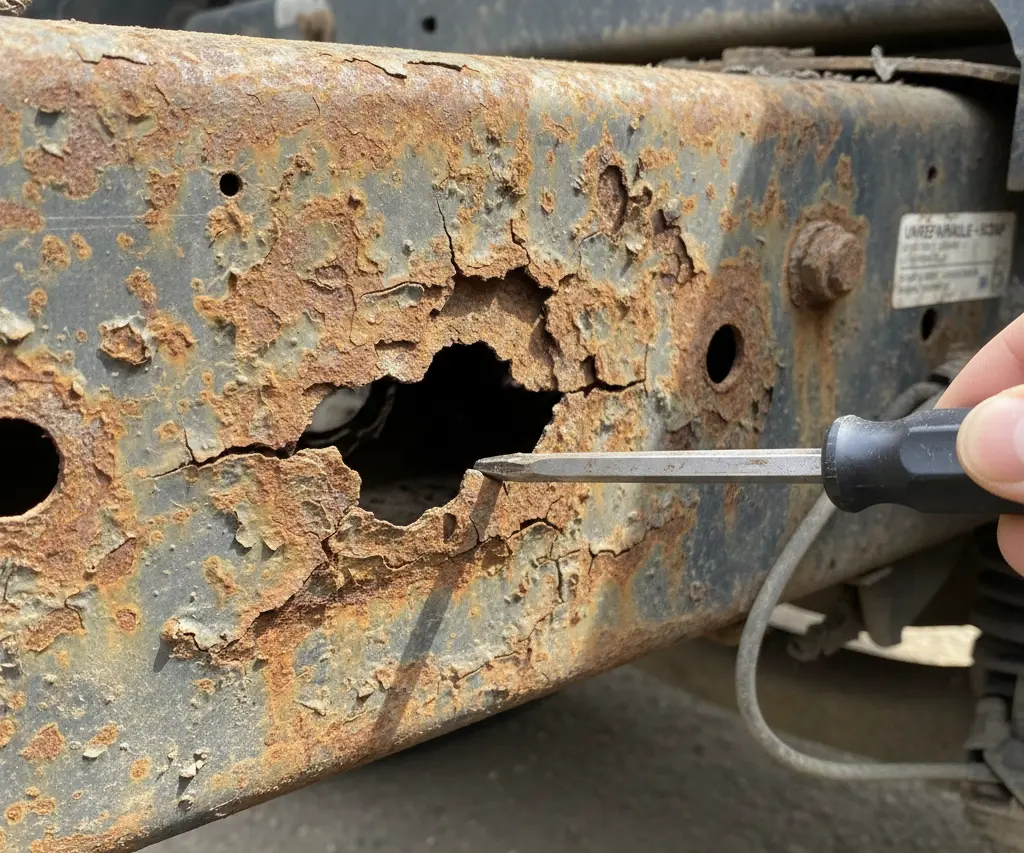
Tacoma and Tundra trucks from 2005 to 2010 suffer from severe frame rust in salt belt states creating major used car problems. This isn’t surface rust but structural frame perforation that makes trucks unsafe and often unrepairable. If you’re buying a used Tacoma or Tundra from northern states get under it with a flashlight. Poke the frame with a screwdriver. If it punches through the metal walk away immediately.
Ford and chevrolet common issues
Ford’s PowerShift dual-clutch transmission used in 2012 to 2016 Focus and Fiesta models is notoriously problematic in used car sales. Shuddering, slipping, and premature clutch wear plague these vehicles despite numerous software updates and extended warranties.
Chevy Silverado and GMC Sierra trucks from 2014 to 2019 with 5.3 liter V8 engines experience cylinder deactivation problems. This fuel-saving technology fails causing rough idle, check engine lights, and excessive oil consumption. The fix costs $800 to $1,500.
Understanding common problems specific to Honda, Toyota, Ford, and Chevrolet helps you ask targeted questions during inspections and avoid models with known catastrophic failures affecting pre-owned vehicles in the American used car market.
Best used car financing and insurance options
Understanding used car financing options saves thousands over your loan term while appropriate insurance coverage protects your investment without overpaying for unnecessary protection. Financing a used vehicle requires different strategies than buying new because interest rates run higher on pre-owned vehicles as lenders consider them riskier investments.
Banks vs credit unions vs dealer financing
Banks and credit unions typically offer better rates than dealer financing on used vehicles. Your local credit union might quote 4.5% on a four-year used car loan while the dealer offers 7.9% on the same vehicle. That difference costs you $1,200 in extra interest on a $20,000 loan. Always get pre-approved through your bank or credit union before visiting used car dealers near me.
Pre-approval establishes your budget and strengthens your negotiating position when shopping used cars. Walking into a dealership with a pre-approval letter for $18,000 at 5.2% gives you leverage. The dealer knows you have outside financing and must beat that rate to earn your loan business.
Buy here pay here dealerships cater to buyers with poor credit but charge significantly higher interest rates often exceeding 18% to 24%. Only consider buy here pay here options as a last resort after exhausting traditional lenders and credit unions for your used car financing.
Credit score impact on used car financing
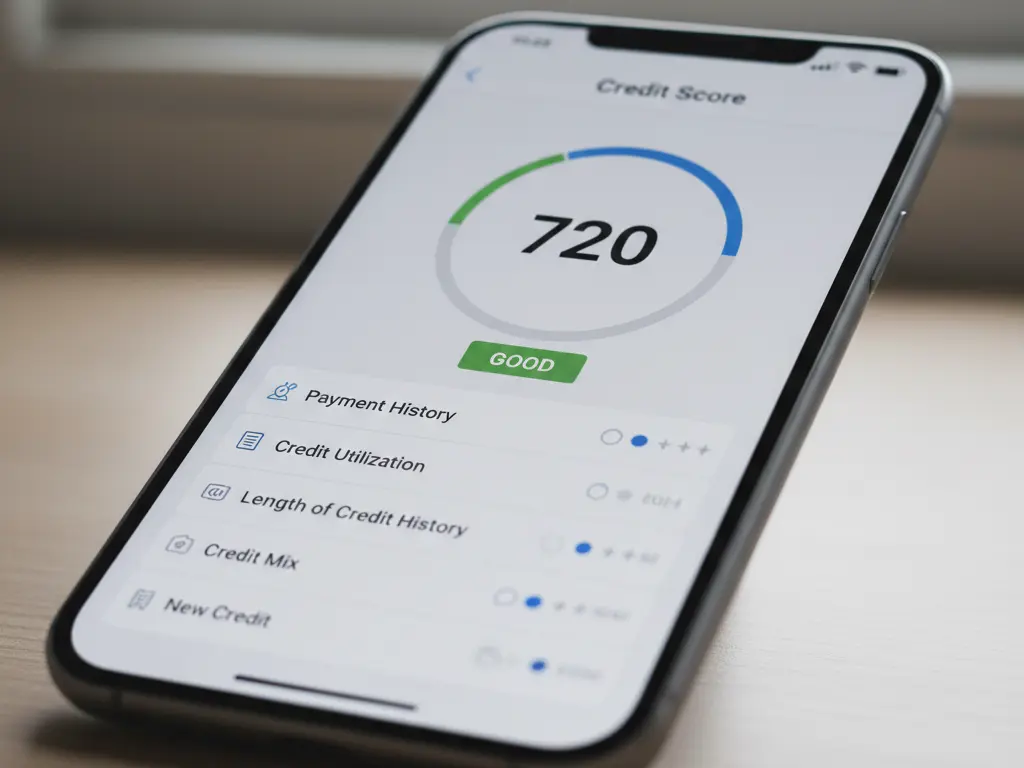
Your credit score dramatically impacts interest rates available for used car financing options. Understanding how your score affects rates helps you plan strategically and potentially delay purchase to improve your credit first.
| Credit Score Range | Rating | Typical Interest Rate | Impact on $20,000 Loan (4 years) |
|---|---|---|---|
| 740+ | Excellent | Below 4% | ~$430/month, $640 total interest |
| 670-739 | Good | 5%-7% | $460-$480/month, $1,000-$1,500 interest |
| 580-669 | Fair | 10%-15% | $510-$560/month, $2,400-$4,800 interest |
| Below 580 | Poor | 18%+ | $600+/month, $8,000+ interest |
Improving your credit score before shopping for used cars saves significant money. Paying down credit card balances, disputing credit report errors, and avoiding new credit inquiries for three months before applying can boost your score 20 to 50 points. That improvement might drop your interest rate from 8% to 6% saving $600 on a $20,000 loan.
Insurance coverage for pre-owned vehicles
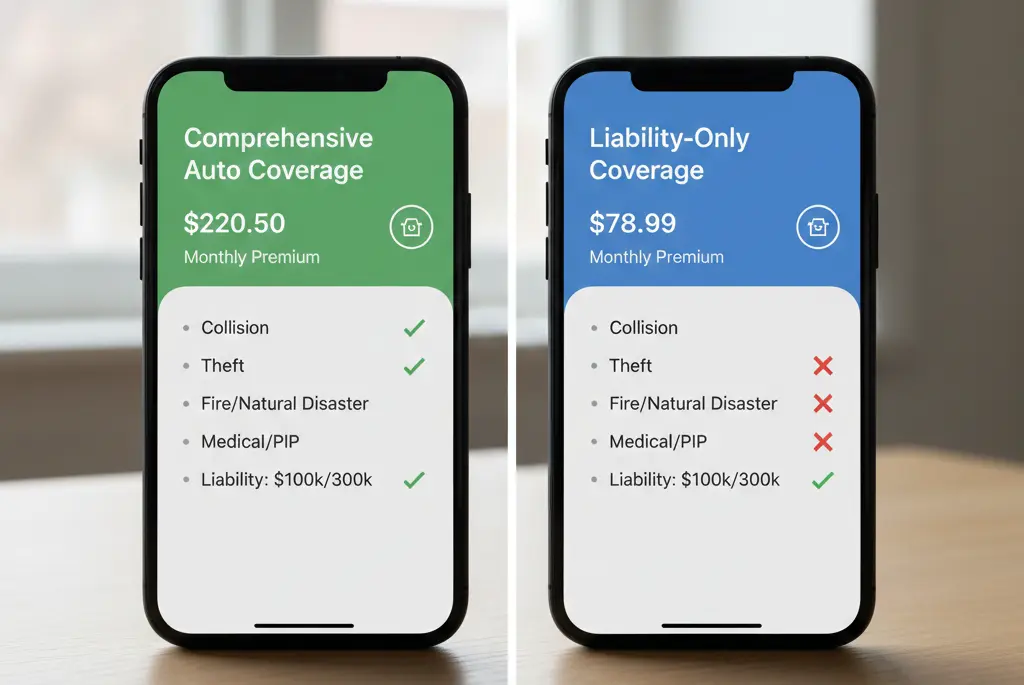
Insurance costs vary dramatically based on vehicle age, value, and coverage levels when insuring used cars. Comprehensive and collision coverage make sense on newer pre-owned vehicles worth $15,000 or more. However on older used cars worth $5,000 or less the annual premium for full coverage often exceeds the vehicle’s value making liability-only coverage more sensible.
Gap insurance protects you if the vehicle is totaled and you owe more than it’s worth when financing used cars. Gap coverage costs $400 to $700 through dealers but only $20 to $40 annually through your auto insurance company. Always buy gap insurance through your insurer not the dealer.
Certified pre-owned programs from manufacturers provide factory-backed warranties and thorough inspections on used car sales. These vehicles cost $1,500 to $3,000 more than non-certified equivalents but include warranties covering major components for one to three years.
Shopping insurance quotes from multiple companies saves hundreds annually on used car insurance. I saved $640 annually by switching from a national brand to a regional insurer offering identical coverage limits. Get quotes from at least four companies before choosing.
Understanding your financing options and securing appropriate insurance coverage completes the financial planning necessary for smart used car ownership in today’s competitive market.
Conclusion
Buying a used car successfully requires knowledge, patience, and systematic evaluation throughout the entire process. The difference between finding an excellent pre-owned vehicle and making an expensive mistake comes down to how thoroughly you research, inspect, and negotiate before committing your money to any used car purchase.
Start with comprehensive vehicle history reports identifying disclosed accidents, flood damage, and ownership patterns when shopping used cars near me. Use these reports to guide physical inspection targeting specific concerns the history raises. Check paint consistency, panel gaps, fluid condition, and tire wear patterns. Listen for unusual noises during test drives. Test every electrical component and all mechanical systems methodically.
Don’t skip professional pre-purchase inspection on vehicles you’re seriously considering for used car buying. The $150 to $200 cost is minimal insurance against discovering $4,000 in needed repairs after purchase. Mechanics find problems average buyers miss using specialized tools and decades of experience with pre-owned vehicles.
Negotiate confidently armed with market research and inspection findings. Know what comparable used cars sell for in your area. Start below your target price leaving room for compromise. Use discovered problems as leverage to reduce the purchase price or walk away from vehicles with serious issues. Never reveal your maximum budget and always be willing to walk away from any deal.
Secure financing before shopping establishing your budget and getting competitive rates for your used car loan. Compare offers from banks, credit unions, and dealers choosing the lowest rate. Understand how loan terms affect total interest paid. Put down at least 10% to 20% building immediate equity and reducing monthly payments.
After your used car purchase establish a proactive maintenance schedule addressing fluids, filters, belts, and other wear items based on mileage and age. Regular maintenance prevents expensive breakdowns and preserves long-term reliability. Budget $1,500 to $2,500 for first-year maintenance catching up on deferred service and establishing known baselines.

The American used car market offers tremendous value when you know what to look for and how to evaluate pre-owned vehicles properly. A well-chosen used car provides years of reliable transportation at a fraction of new car costs. However this value only materializes when you invest time in thorough evaluation before purchase rather than rushing into deals.
Taking the time to master pre-purchase inspection techniques and systematic evaluation methods transforms used car buying from gambling into calculated decision making. The knowledge you’ve gained through this comprehensive used car buying guide protects you from common mistakes and positions you to find excellent vehicles at fair prices. Now go find your next car with confidence knowing you have the tools and understanding to make smart choices in today’s competitive market.