Common used car problems by brand: honda, toyota, ford, chevrolet
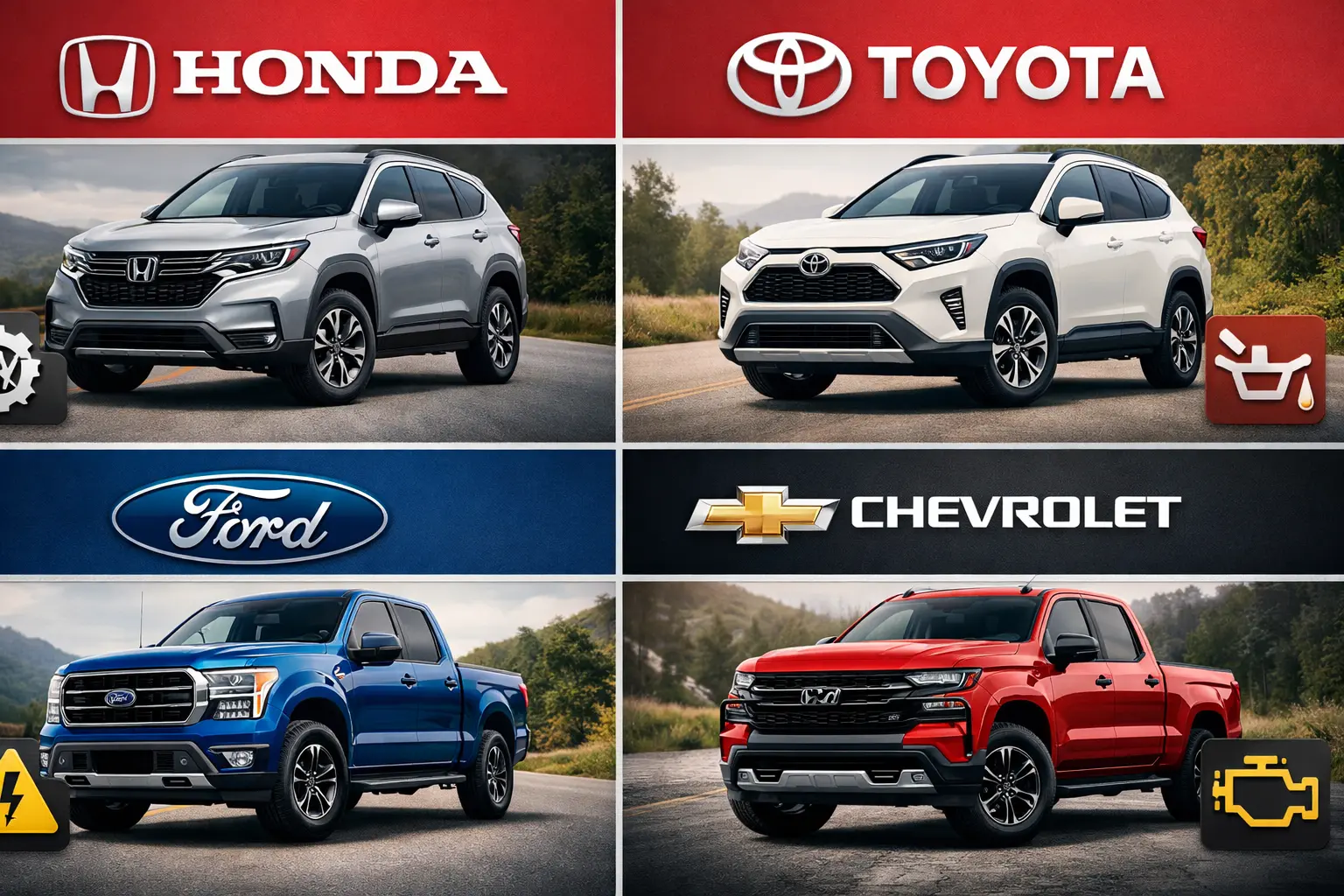
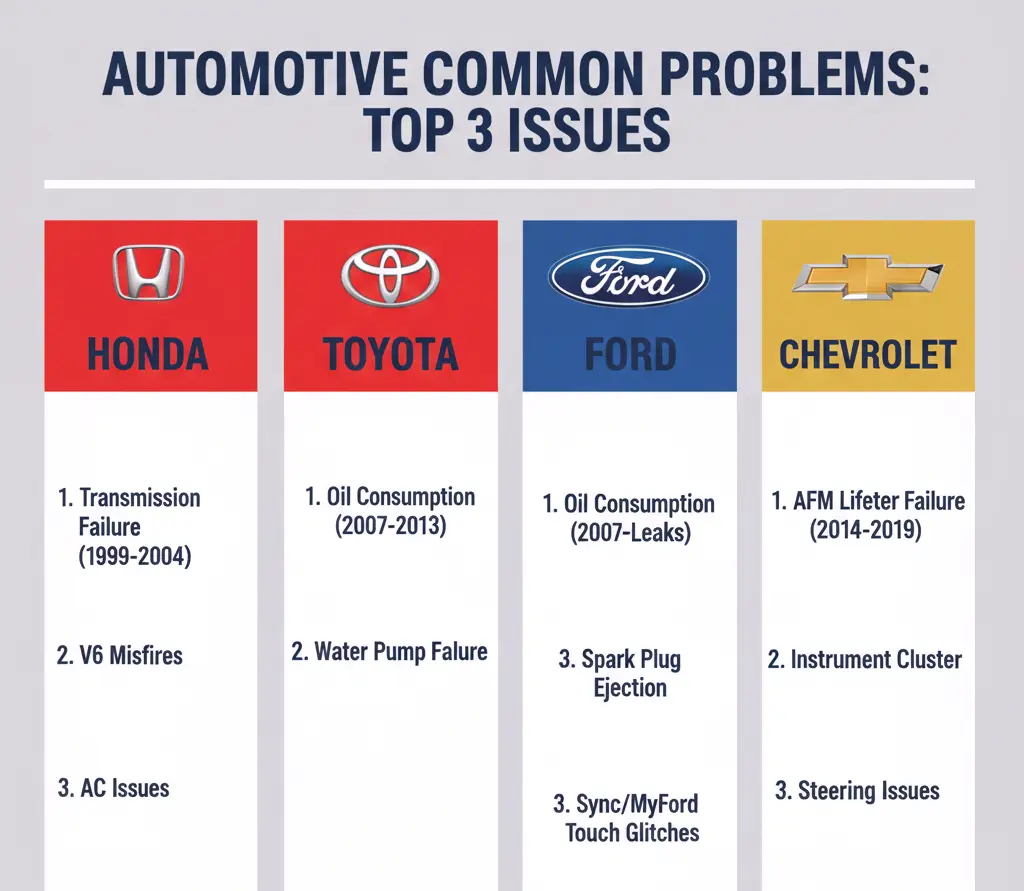
Every automotive brand has unique reliability patterns and common failure points that emerge as vehicles age. Honda models often face transmission issues in specific years, while certain Toyota engines develop oil consumption problems. Ford trucks may show electrical gremlins, and Chevrolet vehicles sometimes struggle with premature brake wear. Recognizing these brand-specific vulnerabilities is essential when following a complete pre-owned vehicle checklist during your search. Understanding manufacturer tendencies helps you ask targeted questions during inspections, negotiate pricing based on known issues, and budget appropriately for anticipated repairs after purchase.
honda: the transmission trouble years
I’ve always respected Honda for reliability but they had a dark period between 1999 and 2004. The automatic transmissions in Accords, Civics, Odysseys, and Pilots from these years fail at alarming rates. We’re talking complete transmission failure between 80,000 and 120,000 miles in many cases.
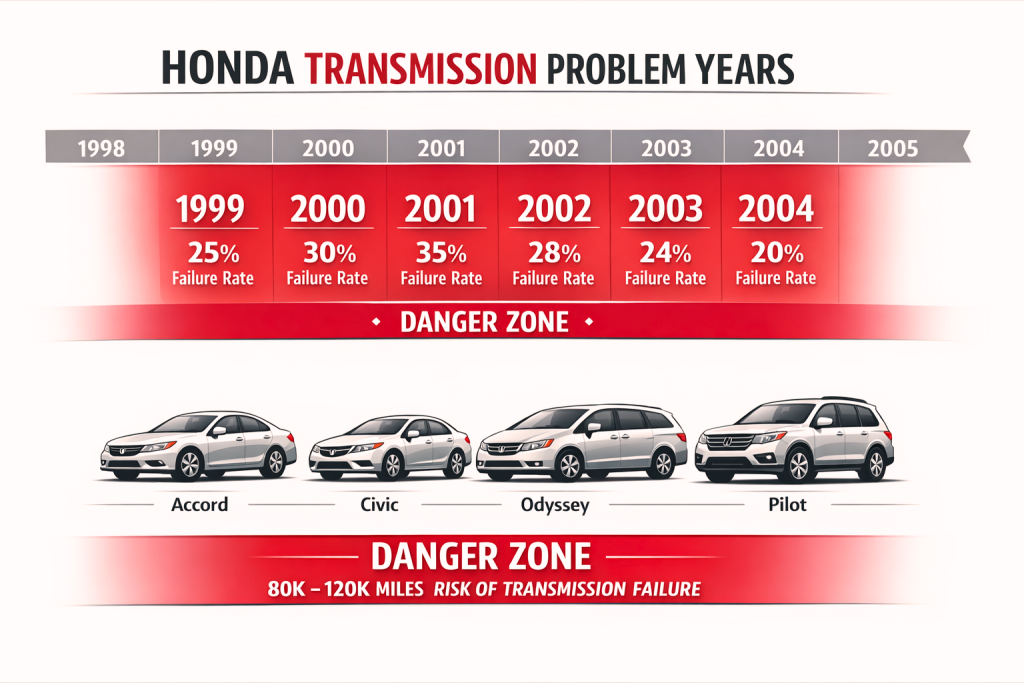
The problem stems from inadequate transmission fluid cooling and weak internal components. Honda issued extended warranties on some models but many vehicles now exceed those coverage periods. If you’re looking at a Honda from this era budget $3,000 to $4,500 for a replacement transmission or walk away entirely.
Later models improved significantly but the 2015-2017 Civics with CVT transmissions show some juddering and hesitation issues. These don’t typically result in complete failure but they’re annoying and sometimes covered under Honda’s extended warranty programs.
Certain Honda V6 engines from 2008-2012 burn oil excessively. The Accord V6, Pilot, and Odyssey with 3.5L engines can consume a quart of oil every 1,000 miles. Honda claims this falls within “normal” operating parameters but I disagree. Constant oil top-ups get expensive and running low risks engine damage.
Paint peeling on hoods and roofs plagued 2006-2009 Civics. This isn’t mechanical but it destroys resale value. Honda issued a Technical Service Bulletin but many affected owners missed the limited repair window. Check the roof and hood carefully under good lighting when inspecting these model years.
toyota: oil consumption and frame rust
Toyota built a reputation on reliability that’s mostly deserved. However the 2007-2009 Camrys and 2009-2013 Corollas with 2.4L four-cylinder engines burn oil like my first car burned through teenage stupidity. Toyota faced class action lawsuits over this and extended warranties to 10 years or 150,000 miles on affected vehicles.
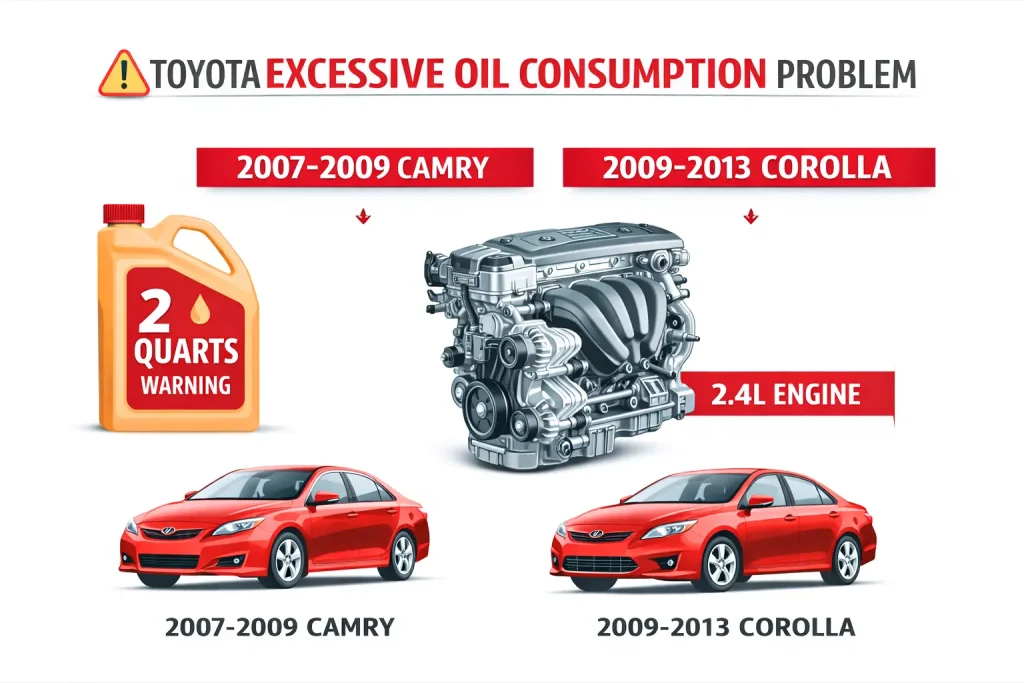
The problem involves piston rings that don’t seal properly. Some owners report adding two quarts between oil changes. Toyota’s fix involves engine disassembly to replace pistons and rings. That’s a $4,000 to $5,000 repair if you’re outside warranty coverage.
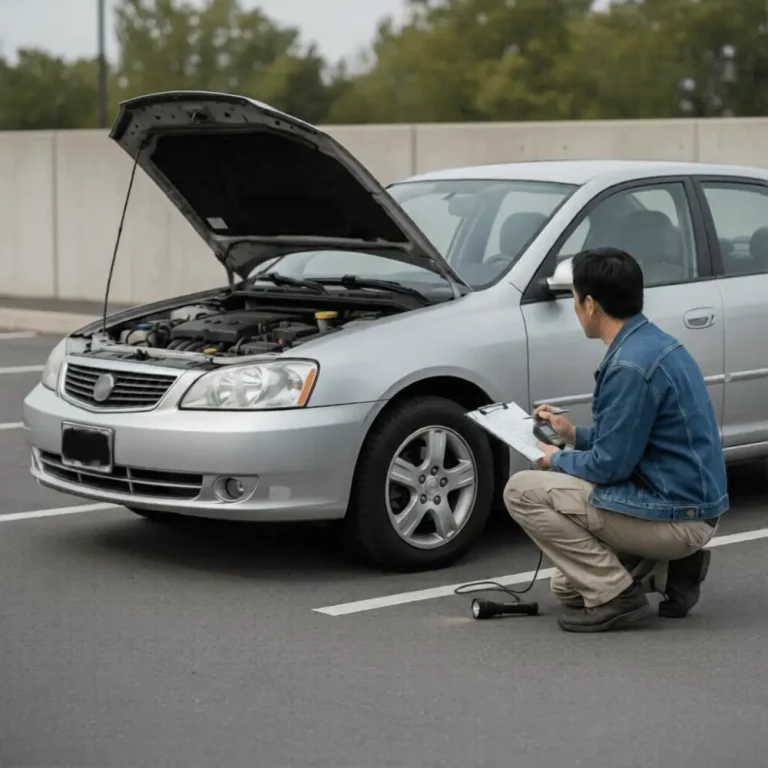
Tacoma and Tundra trucks from 2005-2010 suffer from severe frame rust in salt belt states. This isn’t surface rust. We’re talking structural frame perforation that makes trucks unsafe and often unrepairable. Toyota recalled millions of trucks and offered frame replacements but the program ended years ago.If you’re buying a used Tacoma or Tundra from northern states get under it with a flashlight or better yet put it on a lift. Poke the frame with a screwdriver. If it punches through the metal walk away immediately. These trucks command premium prices but a rusty frame makes them worthless.
The 2010-2019 4Runner and GX460 models occasionally experience secondary air injection pump failures. This emissions component costs $1,200 to replace and triggers check engine lights. Not critical for driving but required to pass emissions testing in many states.
ford: electrical issues and transmission woes
Ford trucks are workhorses but they come with quirks you need to understand. The 2004-2008 F-150s with 5.4L Triton V8 engines have spark plug ejection problems. The threads in the cylinder heads strip and spark plugs literally shoot out of the engine. Ford redesigned the plugs in later years but the damaged threads still cause issues.
Those same engines also have spark plugs that break during removal. The two-piece design means the ceramic portion separates from the metal base requiring special extraction tools. What should be a $200 spark plug change becomes a $800 nightmare if plugs break.
Ford’s PowerShift dual-clutch transmission used in 2012-2016 Focus and Fiesta models is notoriously problematic. Shuddering, slipping, and premature clutch wear plague these vehicles. Ford extended warranties and issued numerous software updates but the fundamental design remains flawed. Multiple friends have complained about these transmissions and Ford faced class action lawsuits over them.The 6.0L PowerStroke diesel engine in 2003-2007 Super Duty trucks earned a terrible reputation for head gasket failures, EGR cooler problems, and oil cooler issues. Repairs easily exceed $4,000. Diesel enthusiasts prefer the earlier 7.3L or later 6.7L PowerStroke engines. The 6.0L PowerStroke requires extensive modifications to achieve reliability.
Explorer models from 2011-2019 show some issues with water pump failures that can damage the engine if not caught early. The water pump is internal and requires significant labor to replace. Budget $1,200 to $1,500 for this repair.
chevrolet: engine and electrical gremlins
Chevy Silverado and GMC Sierra trucks from 2014-2019 with 5.3L V8 engines experience cylinder deactivation problems. This fuel-saving technology shuts down half the cylinders during light load conditions but the system fails causing rough idle, check engine lights, and excessive oil consumption.
The fix involves replacing the Active Fuel Management components or completely disabling the system. Many owners opt for aftermarket solutions that permanently disable cylinder deactivation. This costs $800 to $1,500 depending on the approach.
The 2007-2014 Silverado and Tahoe models suffer from common electrical issues including gauge cluster failures, power window switches that stop working, and radio displays that go blank. These aren’t safety critical but they’re annoying and sometimes expensive to fix.
Chevy Cruze models from 2011-2015 have multiple issues including coolant leaks, turbocharger failures, and transmission problems. The 1.4L turbocharged engine shows coolant system weaknesses that can lead to overheating. Water pumps fail prematurely and coolant pipes crack. I’ve seen several Cruze owners dealing with repeated coolant system repairs.
The Equinox and Terrain models from 2010-2017 experience timing chain stretch issues that cause rattling noises on startup and can lead to catastrophic engine failure if ignored. Replacing the timing chain costs $2,000 to $3,000. Listen carefully for rattling during cold starts when test driving these vehicles.
Chevy Volt battery degradation becomes noticeable in 2011-2013 models. Electric range decreases from the original 35-40 miles to 25-30 miles as the battery ages. Replacement batteries cost $3,000 to $8,000 depending on whether you buy new, refurbished, or used units.
using brand knowledge strategically
Understanding these brand-specific issues transforms how you shop for used vehicles. When you find a 2015 Civic with a CVT transmission you know to test drive it extensively listening for juddering. You ask the seller about any warranty claims or repairs related to transmission hesitation.
That 2008 Camry with 110,000 miles might look perfect but you specifically ask about oil consumption. You check maintenance records for excessive oil purchases between changes. You might even do an oil consumption test before buying.
Shopping for a used Silverado means budgeting extra for potential Active Fuel Management repairs or planning to disable the system entirely. You listen carefully for lifter noise and rough idle during the test drive.This knowledge also guides which model years to target or avoid. A 2005 Honda Accord becomes less attractive than a 2006 model that falls outside the worst transmission years. A 2010 Tacoma from Arizona interests you more than the same truck from Michigan because frame rust won’t be an issue.
Brand research doesn’t mean avoiding all affected vehicles. Sometimes you find a great deal on a problematic model year that already had the common issue repaired under warranty. You just need to verify the repair with documentation and understand what you’re buying.
I use this information during negotiations too. Finding a 2012 Focus with the PowerShift transmission gives you leverage to negotiate a lower price because you know the transmission history. The seller might not disclose problems but your knowledge protects you.
Every used car carries some risk but understanding manufacturer-specific problems helps you make informed decisions. You enter negotiations from a position of knowledge rather than ignorance. You budget appropriately for likely repairs. Most importantly you avoid catastrophic mistakes like buying a rust-bucket Tacoma or a Cruze with a failing coolant system.
After identifying potential brand issues the next step involves creating a post-purchase maintenance schedule that addresses these known weak points before they become expensive failures.