California uninsured and underinsured motorist Coverage explained
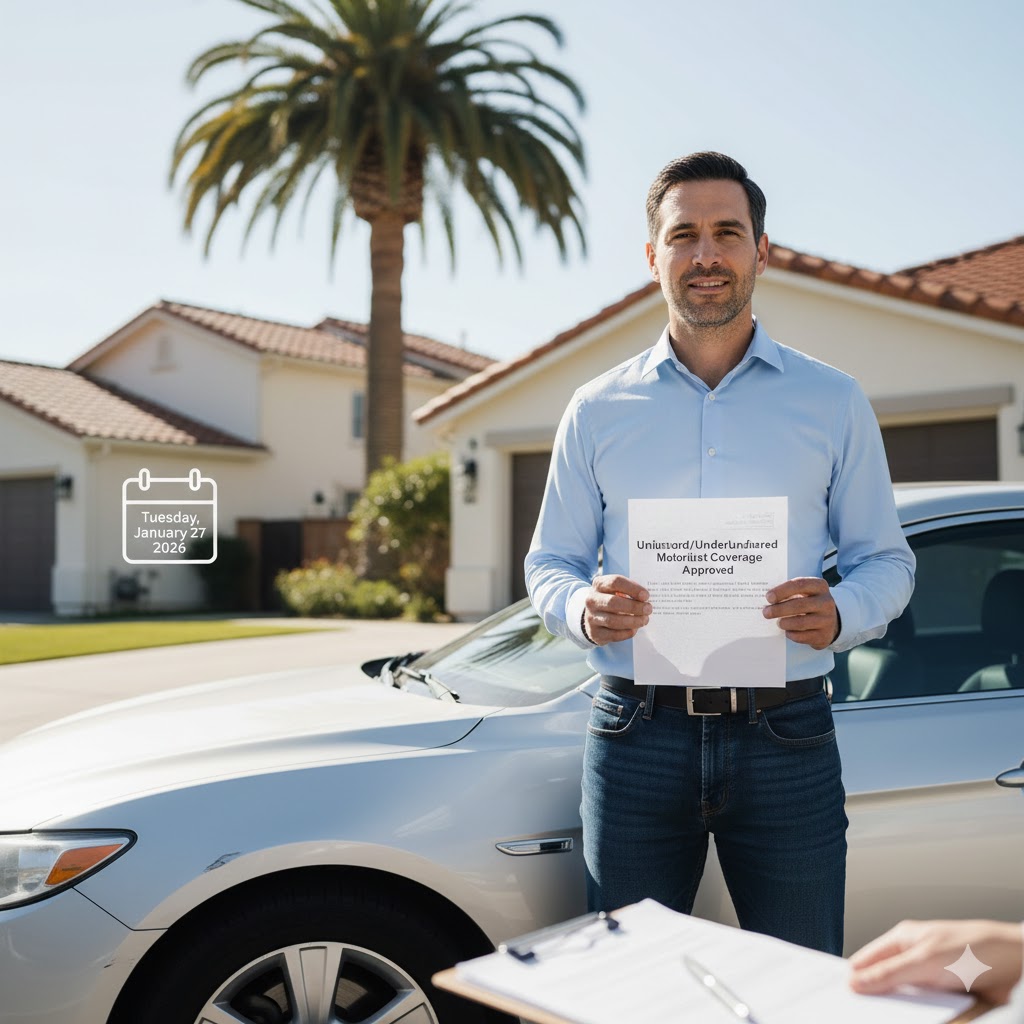
Despite mandatory auto insurance laws, a significant number of drivers on California roads remain uninsured or underinsured. For drivers who follow the law and carry at least minimum coverage, this creates a hidden but serious risk: being hit by someone who cannot fully pay for the damage they cause.
In California, uninsured and underinsured motorist coverage exists to protect drivers from this exact situation. Yet many policyholders decline it, misunderstand how it works, or assume minimum liability insurance is enough. After an accident, these assumptions often lead to devastating financial consequences.
This article provides a complete explanation of uninsured and underinsured motorist coverage in California, including what it covers, how it works after accidents, legal requirements, cost considerations, and why this coverage is one of the most important additions to any California auto insurance policy.
What is uninsured motorist coverage?
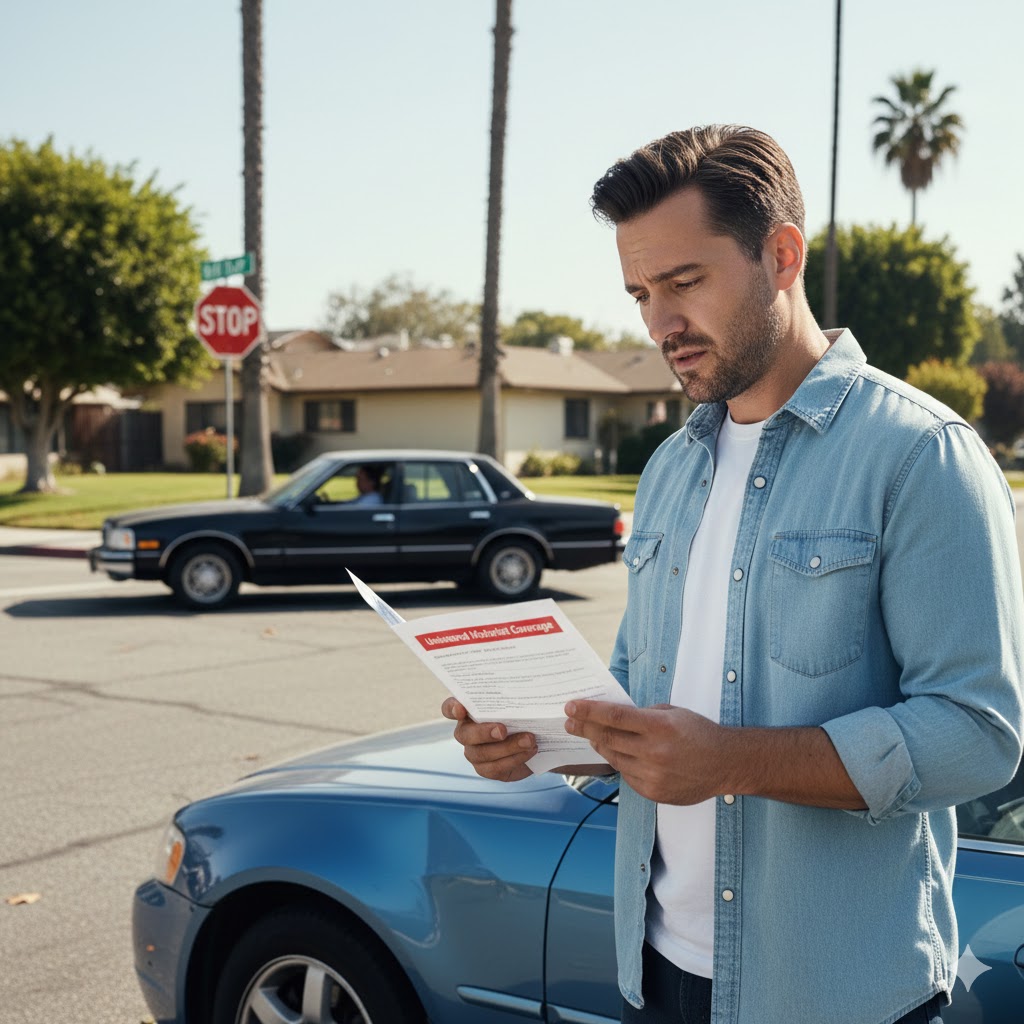
Uninsured motorist (UM) coverage protects you when you are injured by a driver who has no auto insurance at all.
Common uninsured motorist ccenarios
Uninsured motorist coverage applies when:
- You are hit by a driver with no insurance
- You are injured in a hit-and-run accident
- The at-fault driver cannot be identified
Without UM coverage, you are often left to pay medical expenses and losses yourself.
What is underinsured motorist coverage?
Underinsured motorist (UIM) coverage applies when the at-fault driver has insurance, but not enough to cover your damages.
Why underinsured motorists are common
California’s minimum liability limits are low:
- $15,000 per person bodily injury
- $30,000 per accident bodily injury
Serious injuries can exceed these limits quickly, leaving victims undercompensated.
Are UM and UIM coverage required in California?
Uninsured and underinsured motorist coverage is not mandatory, but California law requires insurers to offer it.
Drivers may reject this coverage in writing, but doing so transfers the financial risk to the policyholder.
What uninsured and underinsured motorist coverage pays for
UM/UIM coverage is primarily injury-focused.
Covered expenses include
- Medical bills
- Hospitalization and rehabilitation
- Lost wages
- Pain and suffering
- Funeral expenses (in fatal accidents)
This coverage does not usually pay for vehicle damage unless special provisions apply.
Does UM/UIM coverage pay for car repairs?
In California:
- Bodily injury UM/UIM covers injuries only
- Property damage UM coverage may be offered separately and is limited
Property damage UM coverage typically:
- Has a low coverage limit
- Does not apply in all situations
- Does not replace collision coverage
Drivers seeking vehicle repair protection still need collision coverage.
How UM/UIM coverage works after an accident
Step 1: Establish fault
You must prove:
- The other driver was at fault
- The driver was uninsured or underinsured
Step 2: File a claim with your own insurer
Unlike liability claims, UM/UIM claims are filed with your own insurance company.
Step 3: Damages are evaluated
Your insurer evaluates:
- Medical documentation
- Lost income
- Injury severity
- Available coverage from the at-fault driver
Your policy pays the difference, up to your UM/UIM limits.
How UM/UIM limits work in California
UM/UIM limits typically mirror your liability limits unless you choose lower amounts.
Example
If you carry:
- $100,000 liability bodily injury
- $100,000 UM/UIM bodily injury
Your policy can pay up to $100,000 for injuries caused by an uninsured or underinsured driver.
Higher limits provide significantly more protection.
Hit-and-run accidents and UM coverage
Hit-and-run accidents are one of the most important reasons to carry UM coverage.
In California:
- Hit-and-run drivers are treated as uninsured
- UM coverage may apply even without identifying the driver
- Prompt reporting is critical
Without UM coverage, hit-and-run victims often receive no compensation.
UM/UIM coverage vs minimum liability insurance
Minimum liability insurance:
- Protects other people from you
- Does not protect you from uninsured drivers
UM/UIM coverage:
- Protects you and your passengers
- Fills the largest gap in minimum coverage policies
This makes UM/UIM one of the most valuable additions to minimum policies.
Cost of uninsured and underinsured motorist coverage
UM/UIM coverage is typically inexpensive relative to the protection it provides.
Cost factors
Pricing depends on:
- Coverage limits
- Driving history
- Location
- Vehicle use
For many drivers, UM/UIM adds only a small amount to monthly premiums.
Why UM/UIM coverage is especially important in California
California has:
- Dense traffic
- High accident frequency
- Significant uninsured driver rates
- Low minimum liability limits
These factors make UM/UIM coverage disproportionately valuable.
Common myths about uninsured motorist coverage
Myth: I Have health insurance, so i don’t need UM
False. UM covers lost wages, pain and suffering, and more.
Myth: UM Is only for high-risk drivers
False. Uninsured drivers affect everyone.
Myth: UM claims raise my premium automatically
False. UM claims are generally not treated like at-fault accidents.
UM/UIM coverage and lawsuits
UM/UIM coverage reduces the need for lawsuits.
Without coverage:
- Victims may sue uninsured drivers
- Recovery is often limited or impossible
UM/UIM provides faster, more reliable compensation.
When UM/UIM coverage Is most critical
UM/UIM is especially important if:
- You carry minimum liability coverage
- You commute frequently
- You drive in urban areas
- You transport passengers regularly
- You have limited savings to cover medical costs
How to choose the right UM/UIM limits
Drivers should consider:
- Medical cost exposure
- Income replacement needs
- Risk tolerance
- Existing coverage gaps
Most experts recommend matching UM/UIM limits to liability limits whenever possible.
UM/UIM coverage and stacking
California generally does not allow stacking UM/UIM limits across multiple vehicles on the same policy. Each policy’s limits apply independently.
Understanding this prevents unrealistic expectations after accidents.
Common mistakes drivers make with UM/UIM coverage
- Rejecting coverage to save money
- Choosing very low limits
- Assuming collision coverage replaces UM
- Failing to report hit-and-run accidents promptly
These mistakes often surface only after serious accidents.
Uninsured and underinsured motorist coverage is one of the most misunderstood yet most valuable protections available to California drivers. While not required by law, it fills the most dangerous gap left by minimum auto insurance coverage: protection against drivers who cannot fully pay for the harm they cause.
In a state with high traffic density, frequent accidents, and low minimum liability limits, UM/UIM coverage provides peace of mind that minimum insurance simply cannot offer. For many drivers, it is the difference between financial recovery and long-term hardship after an accident.
In California, uninsured motorist coverage is not an extra it is essential protection.