Brake pad types explained: ceramic vs semi-metallic vs organic
Choosing the right brake pads is a critical decision that directly affects braking performance, comfort, and long-term maintenance costs. While all brake pads serve the same basic purpose, the materials used in their construction determine how they behave under heat, pressure, and everyday driving conditions.
Understanding brake pad materials helps drivers make informed choices that align with safety needs and real-world usage, not just price.
To fully understand how pad selection fits into overall brake safety, it is important to first review how brake inspection and pad replacement affect safety.
Why brake pad material matters
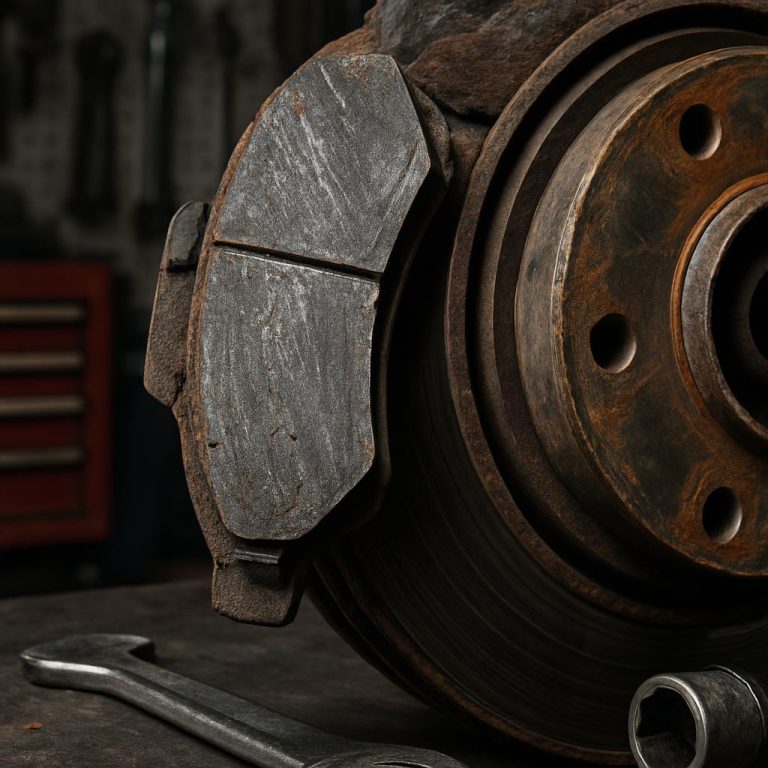
Brake pads slow a vehicle by creating friction against the brake rotors. The material used controls how that friction is generated, how heat is dissipated, and how consistently the brakes perform.
Pad material influences stopping distance, pedal feel, brake noise, dust buildup, and rotor wear. A brake pad that works well for daily commuting may perform poorly under heavy loads or repeated hard braking.
Choosing the correct material improves braking reliability and reduces the risk of premature wear.
Ceramic brake pads explained
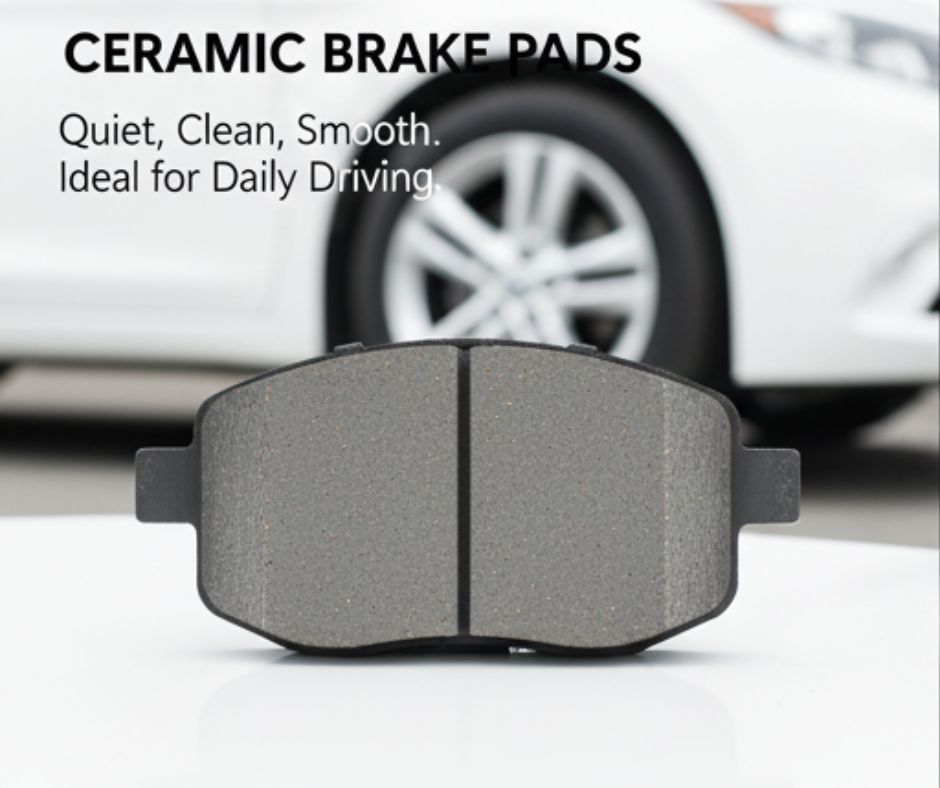
Ceramic brake pads are widely used in modern passenger vehicles. They are made from a dense ceramic compound mixed with fine copper fibers, designed for stable and predictable braking in everyday conditions.
Ceramic pads are known for quiet operation and low brake dust. They produce minimal noise and leave wheels cleaner compared to other pad types. They also provide smooth braking response and are gentle on brake rotors.
These pads perform best in normal city and highway driving. However, they are typically more expensive and may not handle extreme heat as well as semi-metallic pads under heavy towing or aggressive driving.
Ceramic brake pads are a strong choice for daily drivers who prioritize comfort, cleanliness, and long service life.
Semi-metallic brake pads explained
Semi-metallic brake pads contain metal fibers such as steel, iron, and copper combined with friction materials. This composition allows them to handle higher temperatures and heavier braking loads.
These pads offer strong stopping power and perform well in demanding conditions, including towing, mountainous driving, and frequent hard braking. They are commonly used in trucks, SUVs, and performance-oriented vehicles.
The trade-offs include increased brake noise and higher dust production. Semi-metallic pads can also accelerate rotor wear due to their abrasive nature.
Drivers who regularly push their braking systems benefit most from semi-metallic pads, especially when safety under load is the priority.
Organic brake pads explained
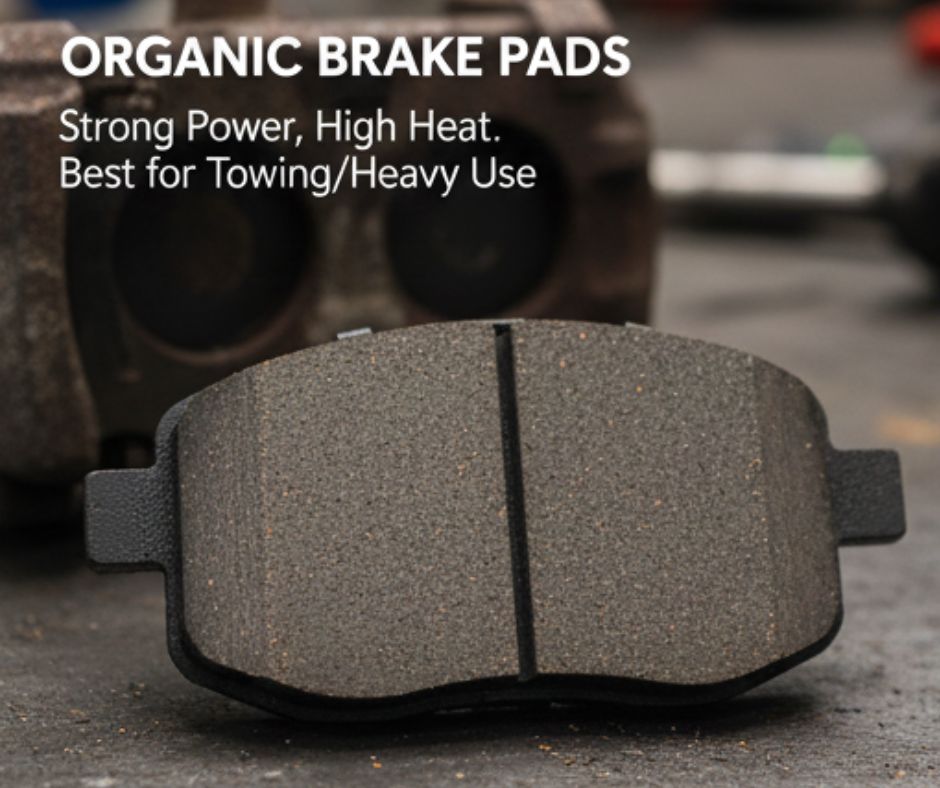
Organic brake pads are made from materials such as rubber, resin, carbon, and glass fibers. They are softer than ceramic and semi-metallic pads and are often found on older vehicles.
Organic pads provide smooth, quiet braking and are generally affordable. They are gentle on rotors but wear faster and struggle with heat buildup.
Because of their shorter lifespan and lower heat resistance, organic pads are best suited for light-duty driving and low-mileage use.
Which brake pad type is best for daily driving
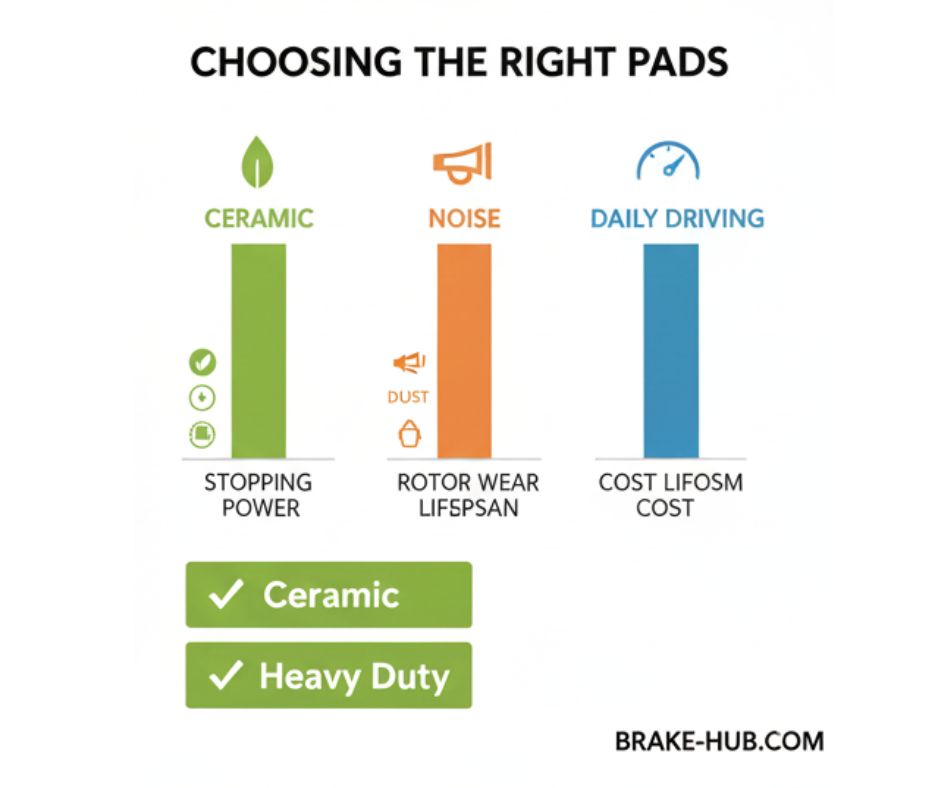
For most drivers, ceramic brake pads offer the best balance of performance, comfort, and durability. They provide consistent stopping power, minimal noise, and low dust in typical driving conditions.
To determine the right replacement timing once pad material is selected, it helps to understand when brake pads should be replaced based on wear and driving habits.
Which brake pad type is best for heavy use or towing
Vehicles that regularly carry heavy loads or tow trailers place greater stress on their braking systems. In these cases, semi-metallic brake pads are often the better option due to their heat resistance and durability.
Because installation quality matters more with heavier-duty pads, drivers should also consider DIY vs professional brake service when choosing semi-metallic options.
How brake pad choice affects replacement cost
Brake pad material directly impacts long-term maintenance cost. Organic pads are cheaper upfront but require more frequent replacement. Ceramic pads cost more initially but often last longer and reduce rotor wear.
Semi-metallic pads may increase rotor replacement frequency due to their abrasive properties. When evaluating value, it is important to consider average brake pad replacement costs in the U.S., not just pad price.
Common mistakes when choosing brake pads
A common mistake is choosing pads based only on price. The cheapest option may not match the vehicle’s braking demands, leading to faster wear or reduced safety.
Another mistake is ignoring driving conditions. Climate, terrain, vehicle weight, and driving style all influence which pad material performs best.
Matching brake pad type to real-world usage is essential for safe and reliable braking.
Final thoughts on choosing the right brake pads
Brake pad material plays a major role in braking performance, comfort, and long-term cost. Ceramic, semi-metallic, and organic brake pads each serve specific purposes depending on how a vehicle is driven.
Ceramic pads are ideal for everyday driving. Semi-metallic pads perform better under heavy use. Organic pads remain suitable for light-duty applications.
Choosing the right material improves safety, reduces maintenance issues, and ensures consistent braking performance.
For a complete overview of inspection, replacement, and safety considerations, refer back to reliable brake pad options for everyday driving.