Best used suvs under $20,000$20,000 in 2026: top picks that make sense
Used suv shopping under $20,000 feels simple until you start comparing mileage, trim levels, and repair history. I like to begin with a shortlist, then confirm the boring details that decide whether a deal stays a deal. A solid baseline for that process is a complete used car buying guide that covers the same fundamentals across any body style. Once you have that mindset, choosing the right suv becomes less stressful and a lot more predictable.
What $20,000 buys in 2026
In most US markets, $20,000 puts you in the sweet spot for compact and midsize suvs from about 2016 to 2021, depending on mileage and region. If you live in a high-demand area, expect either higher mileage or an older model year. If you shop a few hours outside major cities, you often find cleaner examples with better service records.
Your target should be a vehicle with consistent maintenance, a clean title, and no obvious shortcuts taken by the previous owner. Low miles are nice, but I would rather buy a well-maintained suv with 90,000 miles than a neglected one with 55,000.
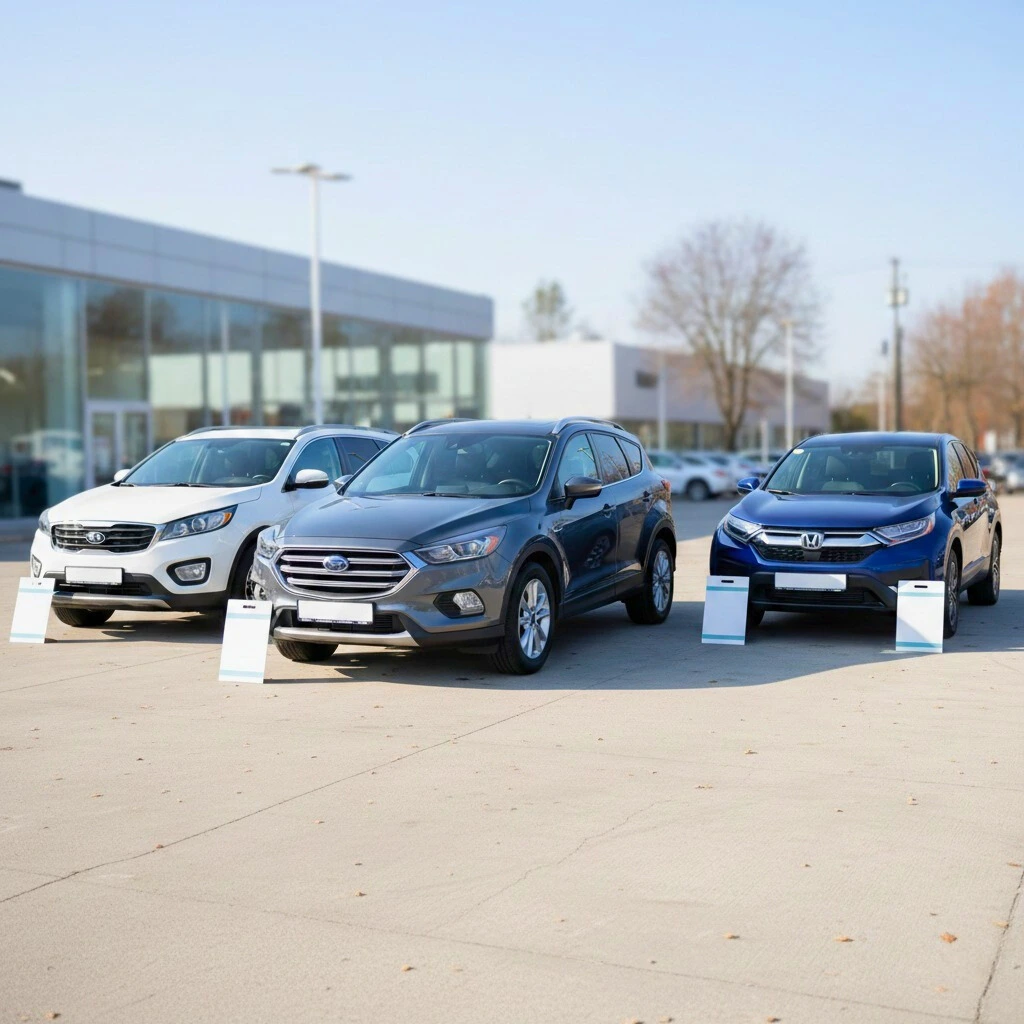
Quick shortlist: the safest bets under $20,000
These models tend to balance reliability, parts availability, and resale value. That matters because an suv can hide wear in tires, brakes, suspension, and AWD components.
- Honda cr-v (2016–2019)
- Toyota rav4 (2016–2018, sometimes 2019 with higher miles)
- Mazda cx-5 (2017–2020)
- Subaru forester (2017–2019, with careful inspection)
- Hyundai tucson (2019–2021, check warranty transfer rules)
- Kia sportage (2019–2021, same note on warranty and service history)
If you need more space, three-row options under $20,000 exist, but they usually come with higher miles and higher running costs. You can still win, you just need to inspect more carefully.
Best compact suvs: daily comfort, low drama
Honda cr-v
The cr-v is hard to beat for interior space, visibility, and low ownership headaches. Look for smooth shifting, even tire wear, and quiet suspension over rough pavement. On a test drive, pay attention to how it accelerates from a stop and how it behaves during light braking. If it feels jumpy or uneven, it may need maintenance that the seller did not disclose.
Toyota rav4
Rav4 prices stay stubborn because buyers trust them. Under $20,000, you might land a higher-mileage example, but the long-term math can still work if the service record is clean. Check for signs of neglected fluids and listen for wind noise that can hint at past body repairs.
Mazda cx-5
If you want something that feels more planted and less floaty, the cx-5 is a great choice. It tends to be reliable and it has a higher-quality interior than many rivals at this price. Make sure the brakes feel firm and consistent. Uneven braking can point to warped rotors or worn suspension parts.
Best for snow and rough roads: AWD choices that deserve a careful look
Subaru forester
Foresters are popular for good reasons, especially in snowy states. The tradeoff is that buyers sometimes assume “AWD” means “maintenance-proof.” It does not. Check for smooth steering, no shuddering on tight turns, and no whining noises at highway speed. Ask about differential fluid service and tire matching. AWD systems can get unhappy when tire sizes are mixed.
Toyota rav4 AWD and Honda cr-v AWD
These AWD systems are usually set-and-forget for most drivers, but they still need basic care. Look underneath for leaks and check that the drivetrain feels smooth during low-speed parking lot turns.
Best for families who want space without a huge bill
If you need a rear seat that fits two car seats comfortably plus a sane cargo area, compact and midsize suvs are still the best value. I would take a clean cr-v or rav4 over a cheap three-row with mystery history most days of the week.
If you truly need three rows under $20,000, shop carefully and accept that you may be buying an older vehicle. Common candidates include the toyota highlander (older years, higher miles) and honda pilot (older years, higher miles). In this price band, condition matters more than the badge.
Best for fuel costs: hybrid suvs under $20,000
Hybrid suvs can be a smart play if you drive a lot in traffic. The Toyota rav4 hybrid and Honda cr-v hybrid are often above $20,000 in 2026 unless mileage is high. The Toyota highlander hybrid can appear under $20,000 in older model years, but you need to verify battery health and cooling system maintenance.
When you test drive a hybrid, pay attention to smooth transitions between gas and electric power. Jerky changes can be normal in some models, but it can also signal neglected maintenance or software issues that require dealer-level tools.
Red flags that matter more on suvs
Suvs put more stress on tires, brakes, and suspension, especially when owners drive fast over potholes or tow without admitting it. These are the warning signs I take seriously:
- Uneven tire wear, which can mean alignment issues or worn suspension
- Clunking over bumps, which often points to control arms, sway bar links, or struts
- Vibration at highway speed, which can be tires, wheels, or driveline components
- Evidence of cheap replacement tires on an AWD suv, which can lead to drivetrain wear
- A “fresh undercoating” look without a clear reason, which can hide corrosion
One simple real-world example. If an AWD suv has three matching tires and one different brand, walk away or budget for a full set immediately. Matching tire circumference is not a suggestion on many AWD systems.
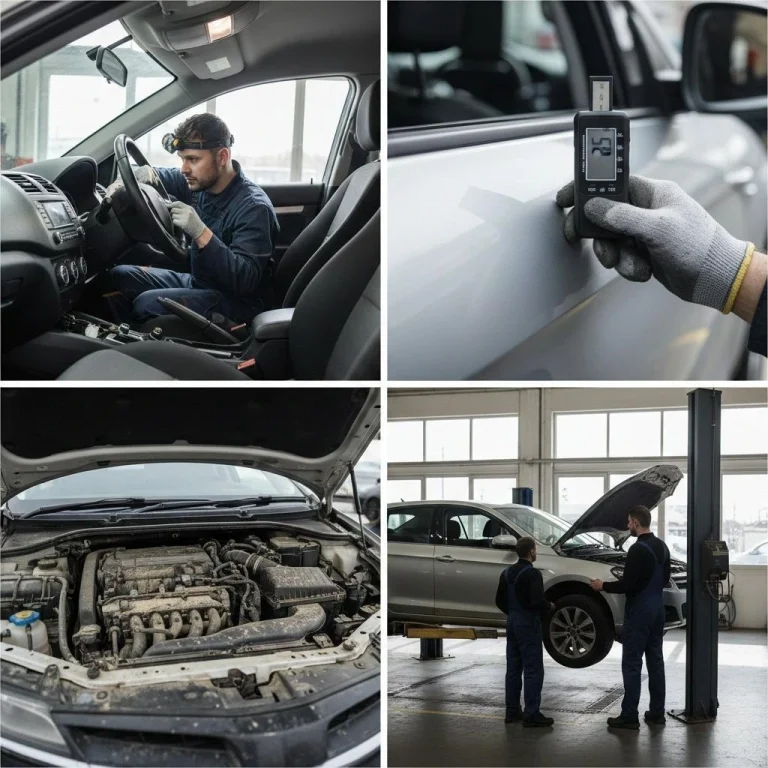
Used suv inspection: what I check before money changes hands
A good inspection does not require fancy tools, but it does require patience. I do a walk-around, then a cabin check, then a test drive with a few specific moments where problems show up.
Walk-around
- Check panel gaps and paint reflections for signs of bodywork
- Look at headlight clarity and windshield condition
- Inspect tire tread depth and wear pattern across all four tires
- Look under the vehicle for wet spots and torn boots near axles
Under the hood
- Check oil level and color, and look for sludge
- Inspect coolant level and color, and look for crust around hoses
- Look for battery corrosion and messy wiring that suggests aftermarket hacks
Inside the cabin
- Confirm every window switch works
- Test heat and AC, then check for mildew smells
- Fold seats and confirm latches and rails move smoothly
Test drive routine
- Start cold if possible and listen for rattles or ticking
- Drive at low speed in a parking lot with full steering lock both directions
- Brake from 45 to 0 in a safe area and feel for pulsation
- Do a short highway run and listen for humming that changes with speed
- Park and check for new leaks
If anything feels “off” but you cannot describe it, trust that feeling. The best used vehicles feel boring in a good way.
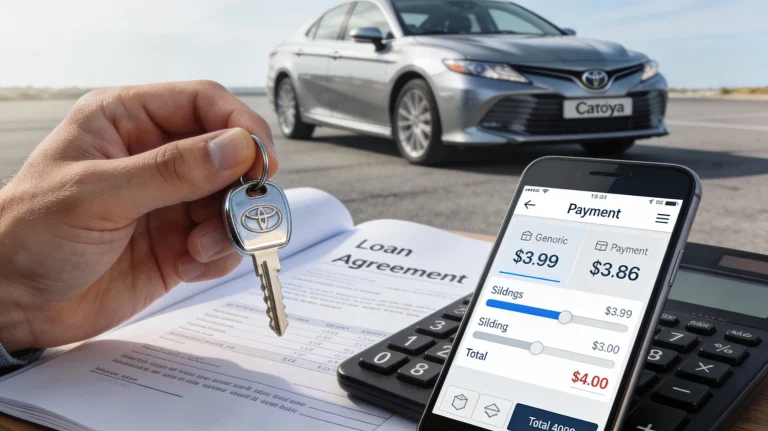
Negotiation and budgeting: keep it calm and math-driven
Used suv prices still vary a lot by region. I prefer to negotiate using facts, not pressure. Bring a list of comparable listings, then adjust for tires, brakes, and overdue maintenance.
Budget for the first 90 days
- Tires can run $600 to $1,200 depending on size
- Brakes can run $300 to $900 depending on axle and parts
- A full fluid refresh can cost $200 to $600
- A pre-purchase inspection is usually the cheapest “repair” you will buy
If a seller will not allow a pre-purchase inspection, that is information. It does not always mean the vehicle is bad, but it means the risk is higher and the price should reflect it.
Closing thoughts and the next smart step
The best used suvs under $20,000 in 2026 are not the newest or the flashiest. They are the ones with consistent maintenance, clean records, and no hidden drivetrain surprises. If you narrow down to two or three models and then shop for condition, you end up with a vehicle that feels good every time you start it.
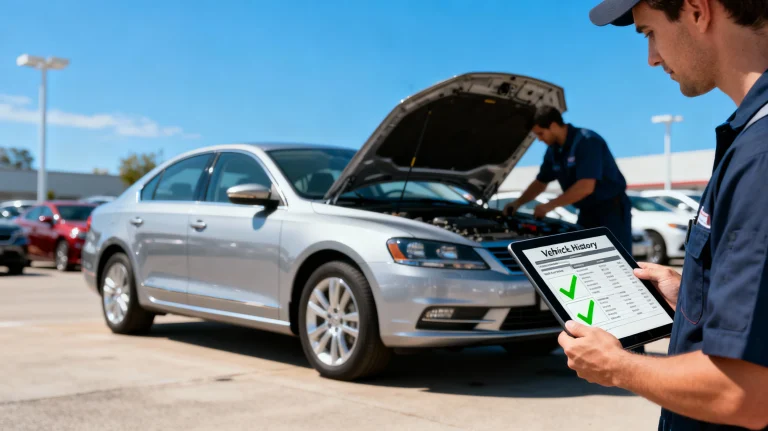
Before you commit, spend ten minutes with the vehicle history report basics so you can spot title issues, accident patterns, and mileage inconsistencies that do not show up on a quick walk-around.