Best Cars with Adaptive Cruise Control 2026 (How It Works and What to Look For)
Adaptive cruise control (ACC) is one of the most useful driver‑assistance features for long highway trips, automatically keeping your speed and distance to the car ahead. In 2026, ACC is offered on a wide range of vehicles from affordable compact cars and crossovers to luxury sedans and EVs, and on many models it’s now standard equipment on mid‑ or high‑level trims.
How adaptive cruise control works
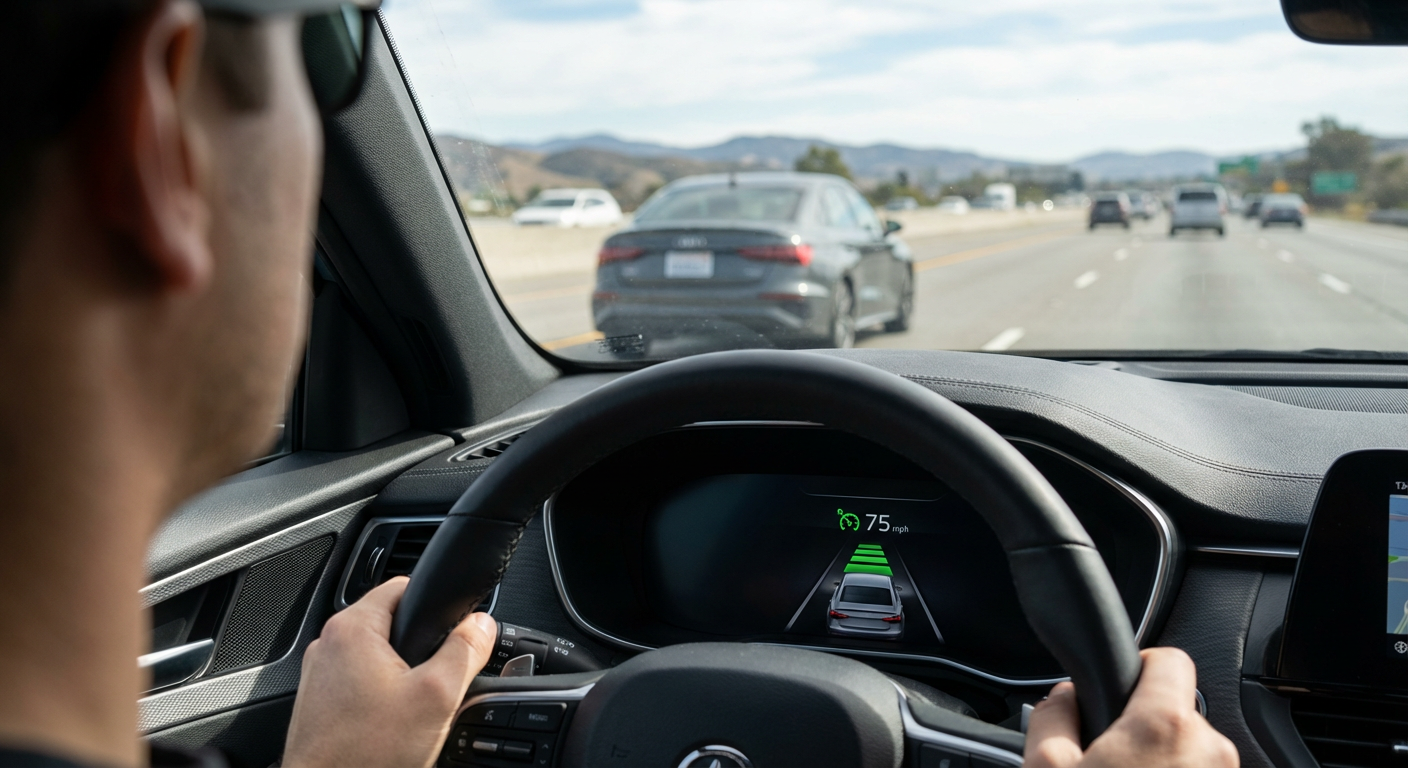
Adaptive cruise control builds on traditional cruise control by using radar and/or camera sensors to monitor traffic ahead.
Key functions:
- You set a target speed and select a following distance.
- ACC automatically slows the car when it detects a slower vehicle ahead, using engine braking and sometimes the brakes.
- If traffic clears, it accelerates back up to your set speed.
- Many modern systems can bring the vehicle all the way to a stop and then resume when traffic moves again.
Manufacturers implement ACC slightly differently, but the goal is the same: reduce the need for constant manual throttle and brake inputs in traffic while maintaining a safe gap.
Why adaptive cruise control is a must‑have safety feature
ACC is not just about comfort; it can also improve safety and reduce fatigue.
Benefits include:
- Helps maintain a consistent safe following distance, reducing tailgating and rear‑end collision risk.
- Reduces driver workload in stop‑and‑go traffic and long highway runs, which can cut down on fatigue‑related errors.
- Often integrates with other ADAS features such as lane‑keeping assist, traffic‑jam assist and intelligent speed assistance, providing smoother overall support.
Because of these combined comfort and safety benefits, many 2026 safety guides list ACC among the top features to prioritize when choosing a new or late‑model used car.
Read more :Advanced driver assistance systems explained
Types of cars that commonly offer ACC in 2026
Lists of the “best vehicles with adaptive cruise control” for 2026 show that ACC is widely available across many segments.
Examples of vehicle types that frequently include ACC (standard or optional):
- Compact and midsize cars: 2026 Toyota Camry, Honda Civic and similar models offer ACC as part of standard safety suites on many trims.
- Compact and midsize SUVs: Crossovers like Hyundai Palisade, Nissan Rogue, Subaru Impreza/Outback and many others are commonly sold with ACC in 2026.
- EVs and hybrids: Cars such as Nissan Leaf and various electric crossovers often include ACC as part of their tech packages.
- Luxury sedans and SUVs: Brands like BMW, Audi, Lexus and others integrate advanced ACC with lane‑centering and route‑aware speed control.
Buyers should still confirm whether ACC is standard or part of an optional package for the specific trim they are considering.

Limitations and how to use ACC safely
Even the best adaptive cruise systems have limits, so you must stay engaged.
Important points:
- ACC may not detect stopped vehicles or cut‑ins reliably in all situations, especially in sharp curves, heavy rain, fog or snow.
- It is designed for appropriate conditions (usually highways); you should be ready to brake or steer at any time.
- You remain legally responsible for control of the vehicle; ACC is a Level 1 or Level 2 driver‑assist feature, not autonomous driving.
For best results, drivers should treat ACC as a helpful assistant that can reduce workload, not as an excuse to stop paying attention to the road.
Read more :Best car safety features 2026