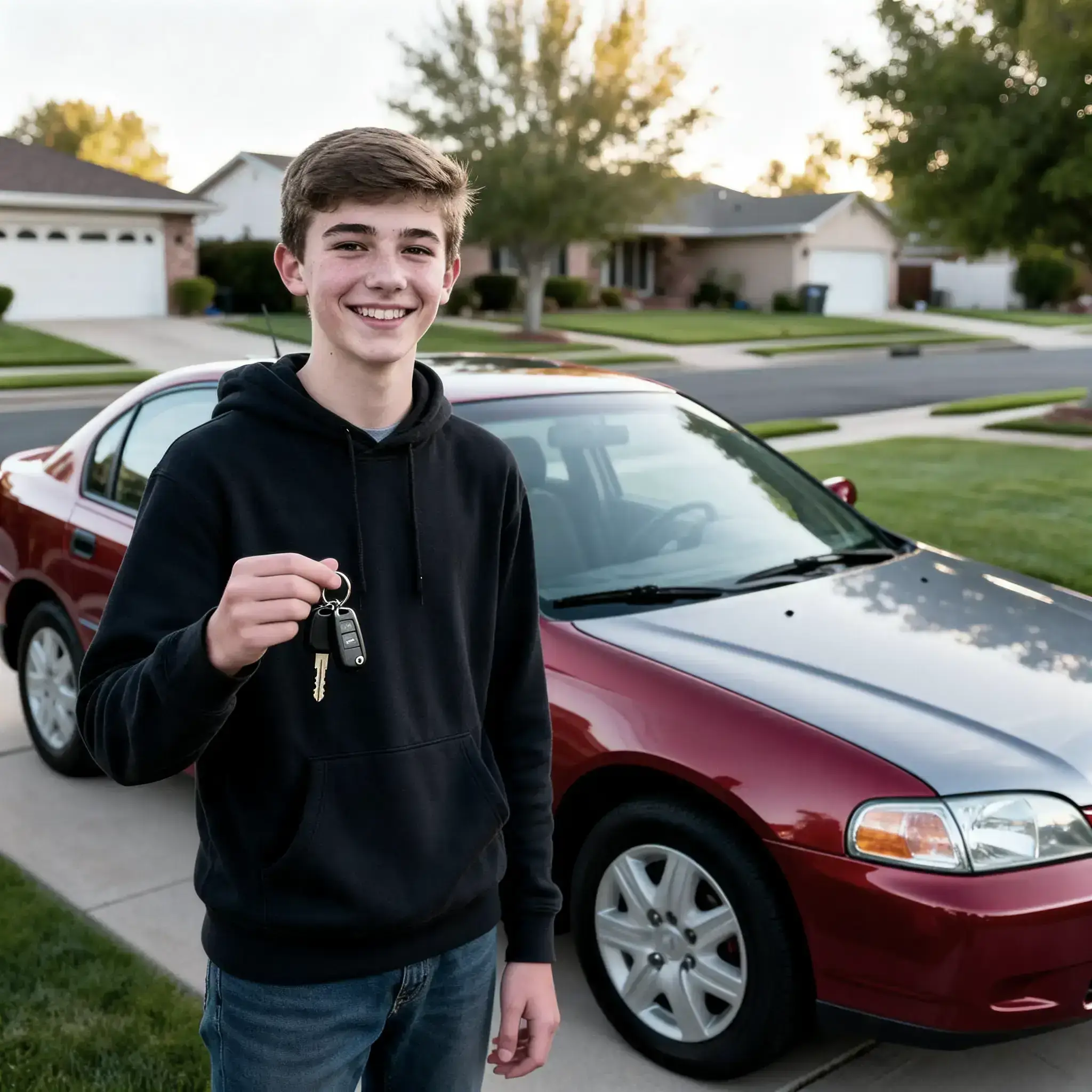
Best cars for teenagers to insure in California
My cousin bought her son a used Dodge Charger for his 17th birthday. She thought she got a great deal at $12,000. Then the insurance quote came back at $650 a month and she nearly fainted. Six months later she traded it for a Honda Civic, and her premium dropped to $310. Same coverage, same kid, different car.
The vehicle you choose for your teen is probably the biggest factor in what you’ll pay for insurance. I’ve seen identical twins with identical driving records pay $300 difference in monthly premiums because one drove a Subaru and the other drove a BMW.
Insurance companies have mountains of data on every car. They know which ones teenage drivers crash most often, which get stolen, which cost a fortune to fix after a fender bender. Sports cars are budget killers. Safe sedans with decent crash ratings save you real money every month.
Why your teen’s car choice hits your wallet hard
A Mustang seems fun for a first car until you see what insurers think of teen boys driving 300-horsepower muscle cars. The crash rates are terrible and your premium shows it.
Luxury cars cost more because parts are expensive. Replacing a headlight on a Honda runs maybe $150. Same job on a Mercedes hits $600. Those repair costs translate directly into higher premiums.
Theft matters too. Honda Accords get stolen constantly in California. More theft risk means higher rates. Cars with solid anti-theft systems and lower theft stats get better treatment from insurers.
Here’s where it gets interesting though. Safety features actually save you money. Automatic emergency braking, lane warnings, blind spot monitors, good crash scores can knock 10-20% off your bill. Modern safety tech pays for itself pretty quickly.
The cars that won’t destroy your budget
I pulled quotes for 30 different vehicles last month. Same teen profile, same coverage, various California locations. Some patterns emerged pretty clearly.

- The Honda Civic keeps winning. Insurance runs $285-340 monthly for most teen drivers. It’s not exciting but excellent safety scores and cheap repairs keep costs down. A 2017 or 2018 with under 60,000 miles hits the sweet spot.
- Toyota Camry lands right behind at $290-350 monthly. Reputation for running forever matters to insurance companies. Fewer breakdowns mean fewer claims. Strong crash scores help. Look for 2015-2019 models with the newer safety systems.
- Subaru Outback runs $295-360 monthly. All-wheel drive and Subaru’s safety obsession appeal to parents. Insurers like the injury rates in Outback crashes. Practical and safe without breaking your budget.
- Mazda3 surprises people at $300-365 monthly. More fun to drive than a Corolla but insurance treats it like a regular sedan. Good tech even in older models. Repair costs stay reasonable. Not everyone thinks of Mazda but it’s worth a look.
- Honda CR-V costs $305-370 monthly. SUVs usually run higher than sedans but the CR-V bucks that trend. Great safety marks, low theft numbers, Honda reliability. The cargo space helps when your teen hauls gear around.
- Toyota Corolla mirrors the Civic at $285-345 monthly. Smaller engine than the Camry drops rates slightly. Boring but bulletproof. Your teen might complain but your wallet won’t.
- Hyundai Elantra offers value at $295-355 monthly. Hyundai really stepped up their safety game after 2017. Advanced driver assistance on newer models qualifies for decent discounts. Costs less used than Honda or Toyota with similar insurance rates.
- Kia Forte basically matches the Elantra at $300-360 monthly. Same guts, similar features, comparable rates. That 10-year warranty transfers to second owners which is nice backup.
- Ford Escape runs $315-380 monthly. Higher than the CR-V but still manageable for an SUV. Solid crash ratings and available all-wheel drive. Decent room for stuff.
- Chevy Malibu lands at $305-370 monthly. People sleep on American sedans but the Malibu packs good safety features with low insurance costs. Used models from 2016-2020 have modern tech at bargain prices.
- VW Jetta costs $310-375 monthly. German engineering without the luxury price tag. Good safety marks and fun enough that your teen won’t hate driving it. Parts run a bit more than Japanese brands but insurance treats it like a standard sedan.
- Nissan Sentra averages $295-360 monthly. Similar territory to Corolla and Civic. Watch out for CVT transmission issues in some years but insurers rate them well.
- Subaru Impreza runs $300-365 monthly. All-wheel drive like the Outback but smaller and cheaper to insure. Subaru safety reputation helps. Skip the WRX version which costs double.
- Honda Accord hits $310-380 monthly. More than the Civic because it’s bigger with more power. Still reasonable for a midsize sedan. Great reliability and safety. Comfortable if your teen drives distance.
- Toyota RAV4 runs $320-390 monthly. Higher end of this list but reasonable for a popular SUV. Strong safety and Toyota dependability. Holds value well if your teen upgrades later.
Cars that’ll wreck your insurance budget
Sports cars are complete nightmares. Mustang, Camaro, Challenger, 370Z, anything marketed as performance will hit $500-800 monthly for a teen. The numbers don’t lie and insurers know exactly what happens when teenagers get their hands on fast cars.
Luxury brands murder your budget. BMW, Mercedes, Audi, Lexus cost 40-60% more to insure than comparable Hondas or Toyotas even for older models. Expensive parts, higher theft, astronomical repairs.
Pickup trucks surprise people. F-150, Silverado, RAM 1500 all run $400-550 monthly for teen coverage. High rollover risk, powerful engines, lots of teen truck accidents in the data.
Small cars with weak crash ratings are false economy. Old Kia Rios or Nissan Versas might be cheap to buy but they lack safety features and don’t protect passengers well. Insurance reflects that injury risk.
Anything turbocharged or with a V8 costs more. More power equals higher premiums every time. Four-cylinder Accord costs way less than V6 Accord even though it’s the same car otherwise.
Getting the age right
Brand new isn’t always smart. New cars need full coverage with low deductibles if you’re financing. That drives costs up fast. Three to five-year-old hits a good balance.
Cars from 2019-2021 have modern safety like automatic braking and lane assist. Those features get you discounts. But the depreciation already happened so you can adjust coverage or raise deductibles without worrying about being underwater.
Really old cars from 2010 or earlier miss out on safety tech. You save on purchase price but lose insurance discounts. Parts get harder to find which can drive repair costs up.
I like 2017-2020 for teen cars. New enough for good safety and reliability. Old enough to be affordable without requiring expensive comprehensive coverage.
Safety ratings actually matter
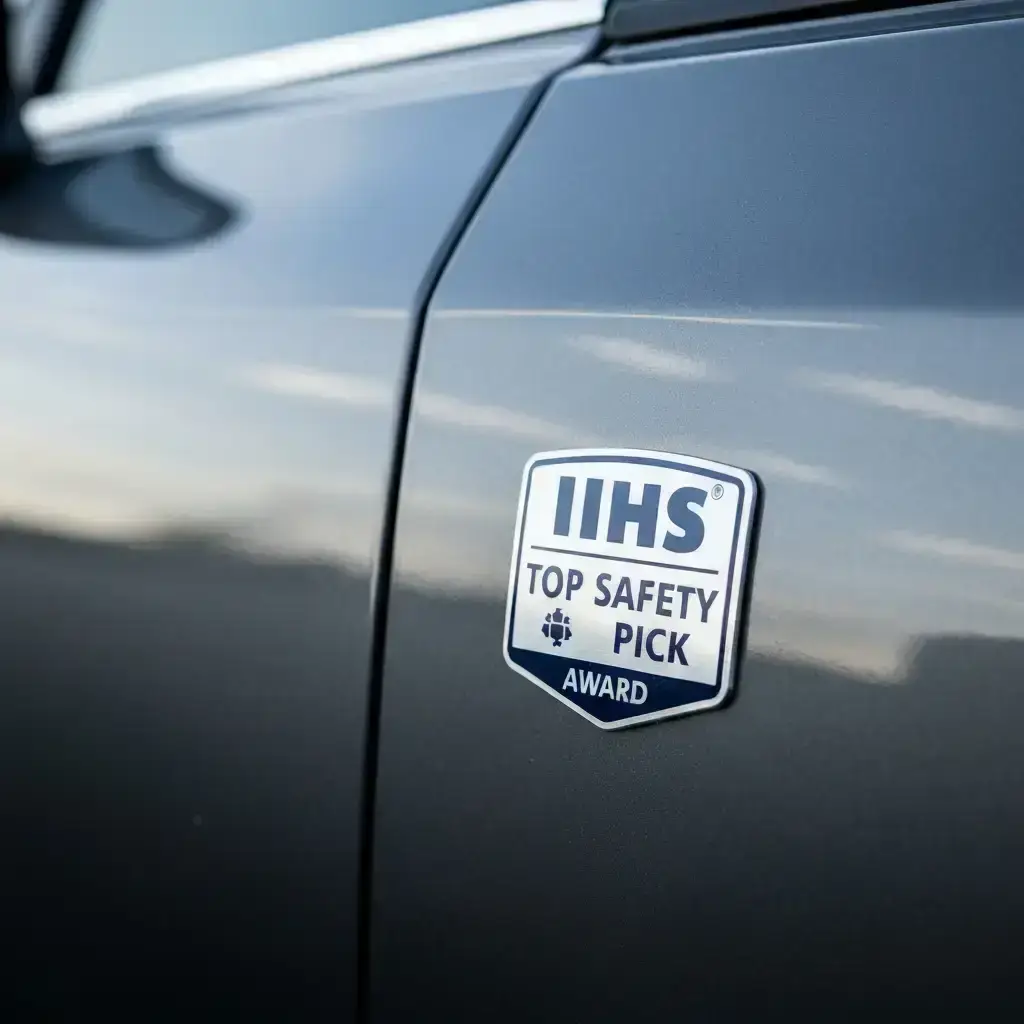
Five-star NHTSA ratings or IIHS Top Safety Pick awards get you 10-15% discounts. That’s real money just for picking a car that protects your kid better in a crash.
Check ratings before buying. IIHS website has everything. Look for Good across the board. Acceptable or Marginal in any category means that car doesn’t protect as well.
Frontal crashes matter most statistically. That’s the common serious accident type for teen drivers. Side impact and rollover count too but prioritize frontal protection.
Advanced driver assistance gets extra discounts. Automatic emergency braking prevents accidents. Lane warnings help distracted drivers stay in their lane. Blind spot monitoring prevents merge crashes.
Knowing all auto insurance options for teens in California means understanding how vehicle choice and safety features work together for affordable premiums and actual protection.
What real quotes look like
I grabbed actual numbers for a 17-year-old guy in LA with good student discount and driver’s ed done. Same coverage across the board.
2018 Honda Civic came back at $315 with State Farm. 2019 Camry hit $330 with State Farm. 2017 Outback ran $345 with Geico. 2020 Mazda3 landed at $350 with Progressive. 2016 CR-V cost $355 with State Farm.
Then compare sports and luxury. 2019 Mustang quoted $680 with Progressive. 2018 BMW 328i hit $595 with Geico. 2017 Charger ran $625 with State Farm.
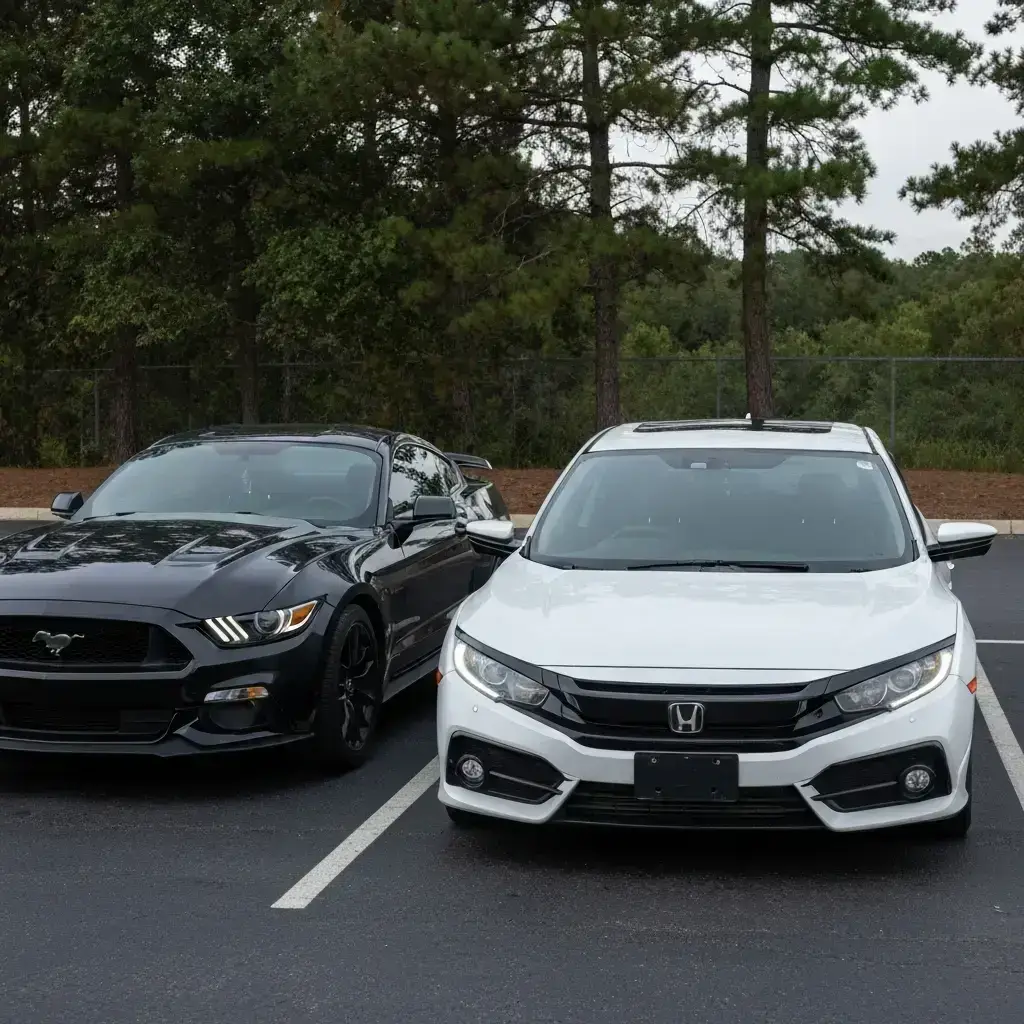
Choosing Civic over Mustang saves $365 every month. That’s $4,380 yearly. Over three years until rates drop at 20 you’re looking at $13,140 in savings just from picking the right car.
Used makes more sense
First cars get beat up. Parking lot dings, minor accidents, spilled food. Better to learn on a $15,000 used car than a $30,000 new one.
Insurance costs less on used because you can adjust coverage. Drop collision if it’s only worth $8,000. Raise deductibles to $1,500 or $2,000. Saves 20-30% on premiums.
Used cars have known histories. You can research which years have problems and which run forever. A 2018 Civic with 50,000 miles proved itself. A 2025 model is unknown.
Depreciation hurts less. New cars lose 20-30% driving off the lot. Three year old already took that hit. When your teen trades it four years later you lose less money.
Sweet spot is three to five years old with 30,000-60,000 miles. Still has life left, has modern safety, costs half of new. Perfect for a first car.
Best years by model
Honda Civic 2016-2019 are ideal. Redesign in 2016 added modern safety. Skip 2006-2011 with higher theft.
Toyota Camry 2015-2020 all work well. 2018 refresh added more safety tech. Avoid 2007-2009 with transmission issues.
Subaru Outback 2015-2019 hit the mark. Eyesight became standard. Skip 2010-2014 lacking driver assistance.
Mazda3 2017-2020 are best. Major safety improvements over earlier models. Avoid 2010-2013 with weaker crash scores.
Honda CR-V 2017-2020 have great features. Honda Sensing went standard. Skip 2007-2011 lacking collision avoidance.
Electric cars for teens
Used Leaf’s or Bolts seem eco-friendly, but insurance tells another story. EVs cost 15-25% more to insure than gas equivalents. Battery concerns drive up comprehensive. Limited repair networks mean higher labor. Specialized training adds expense.
Tesla for teen drivers is brutal. Expect $600-900 monthly. Performance plus high repairs plus theft makes them some of the worst to insure especially for teenagers.
Hybrids like Prius fall in between. Slightly higher than pure gas but not EV expensive. Fuel savings might offset insurance but run the numbers first.
Making your choice
Start with safety ratings. Only look at five-star crash ratings and Top Safety Pick winners. That cuts out dangerous options immediately.
Get real quotes before buying. Pull actual numbers with your teen listed for every car you’re considering. Differences will surprise you and might change your mind.
Think total ownership cost. Purchase plus insurance plus maintenance plus fuel. That 2015 BMW might match a 2018 Civic on price but insurance and repairs add thousands yearly.
Let your teen have input within limits. They can pick Civic or Corolla but Mustang isn’t on the table. Give them ownership of the decision inside your budget.
Consider longevity. This car needs to last through college or first job. Focus on reliability and reasonable repairs. Breaking down 200 miles away during spring break teaches wrong lessons.
Teen Driver Safety Programs and Their Insurance Benefits start with the right vehicle. Make a smart pick now and save thousands in premiums while keeping your teen safer.
Stay covered, stay safe, and happy driving.