Best Car Safety Features 2026: Complete Guide to Modern Safety Tech
Safety tech in 2026 goes far beyond airbags and ABS; many new cars now include advanced driver‑assistance systems (ADAS) that can automatically brake, steer and monitor your attention. Understanding the best car safety features helps you choose vehicles that protect you better today and stay up to date with future safety standards.
Core active safety features you should look for
Active safety features help prevent crashes before they happen. The most important systems to look for in 2026 include:
- Automatic Emergency Braking (AEB): Detects potential collisions and can apply the brakes automatically to reduce speed or avoid impact.
- Forward Collision Warning (FCW): Warns you when you are closing in too fast on a vehicle or obstacle ahead.
- Blind Spot Monitoring (BSM): Alerts you if a vehicle is in your blind spot when changing lanes.
- Rear Cross‑Traffic Alert: Warns of vehicles approaching from the side while you are reversing out of a parking space.
- Rear Automatic Braking: Can brake the car when reversing toward obstacles or pedestrians.
These features are increasingly standard or widely available on mainstream cars, small SUVs and pickups in 2026.
Lane keeping, adaptive cruise and semi‑assisted driving
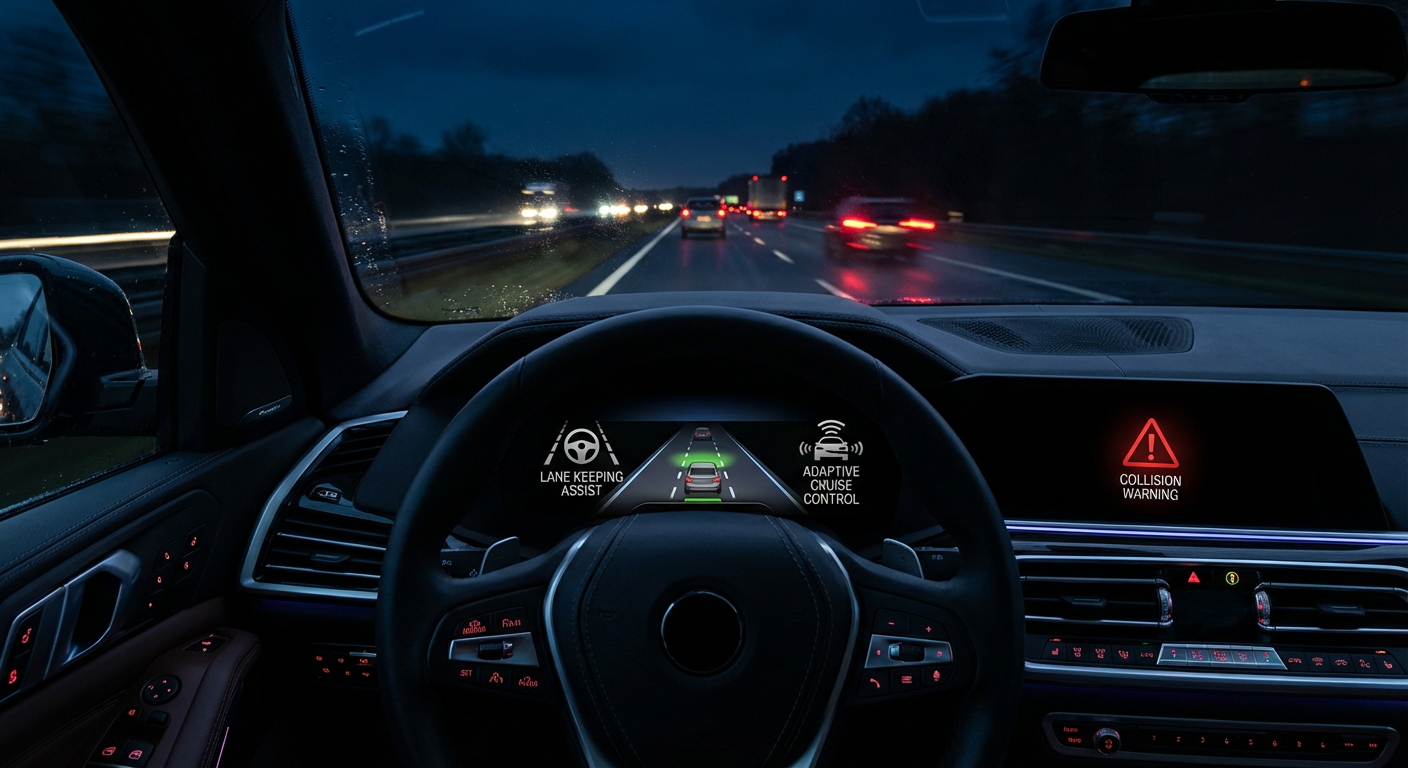
Lane and cruise systems reduce fatigue and help keep the car in a safe position on the road.
Key technologies:
- Lane Departure Warning (LDW): Alerts you when you drift over lane markings without signaling.
- Lane Keeping Assist (LKA) / Lane Centering: Gently steers the car to help keep it within its lane.
- Adaptive Cruise Control (ACC): Maintains a set speed and distance to the car ahead, often handling stop‑and‑go traffic.
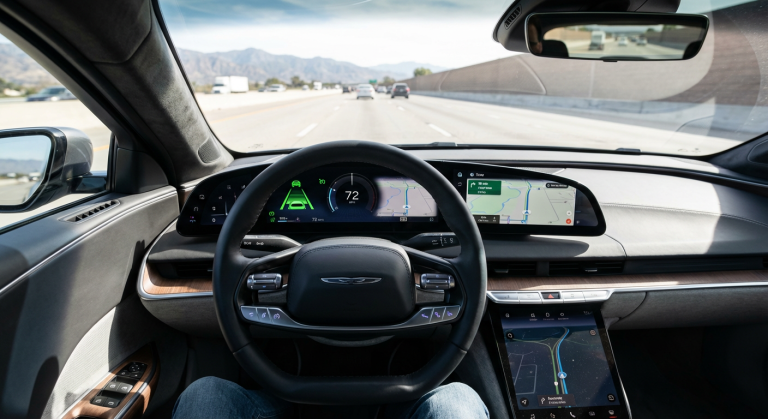
Some systems combine lane‑centering and adaptive cruise for limited hands‑off driving on mapped highways, as seen in technologies like ProPILOT Assist 2.1, Super Cruise or similar branded systems. These are still driver‑assist features, not full self‑driving, and you must remain alert and ready to take over.
Cameras, parking aids and 360‑degree views
Low‑speed crashes in parking lots and driveways are common, so modern camera and parking systems are key safety upgrades.
Useful features include:
- Backup camera (rearview camera): Now standard on all new light vehicles in the U.S., it helps you see obstacles and pedestrians behind the car.
- Parking sensors: Ultrasonic sensors front and rear warn you when you are getting too close to objects.
- 360‑degree / Around‑view cameras: Combine multiple cameras to give a bird’s‑eye view around the car for easier parking and tight maneuvers.
- Enhanced front “invisible hood” or curb‑view cameras: Show the area directly in front of the bumper so you can avoid curbs, posts and children in tight spaces.
These tools reduce stress in tight parking and help prevent low‑speed collisions with other cars, walls or pedestrians.
Passive safety: structure, airbags and crash ratings
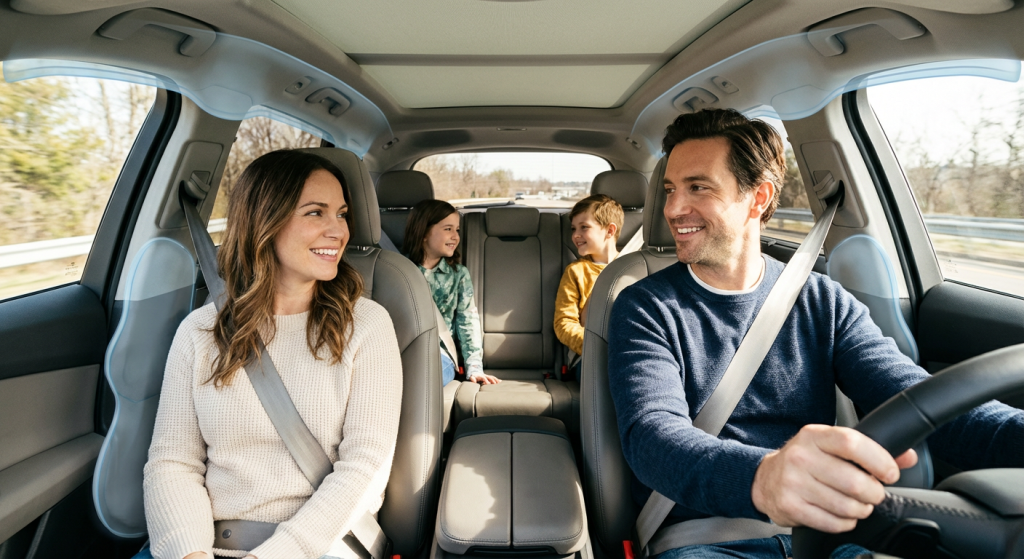
Passive safety features protect you when a crash actually happens.
Important aspects to consider:
- Strong crash structure and crumple zones rated well by organizations like NHTSA (5‑Star Ratings) and IIHS (Top Safety Pick).
- Airbag coverage: Front, side, curtain and sometimes center airbags to protect occupants in multiple impact directions.
- Seatbelts with pre‑tensioners and load limiters: Help manage forces on the body in a crash.
Top‑rated 2026 vehicles such as Volvo XC90, Tesla Model S, Toyota RAV4, Mazda CX‑50 and several premium EVs combine high crash‑test scores with strong active safety suites, making them stand out for overall protection.
Next‑generation features: driver monitoring and emergency response
Safety protocols for 2026 place more emphasis on driver monitoring and post‑crash safety.
Key developments:
- Driver Monitoring Systems (DMS): Cameras and sensors watch for drowsiness, distraction or impairment and alert the driver or adjust assistance levels.
- Emergency stop assist: If the driver becomes unresponsive, the car can slow down, turn on hazard lights and stop safely, sometimes automatically calling emergency services.
- eCall / automatic emergency call: Automatically notifies emergency responders after a serious crash, sending location and sometimes vehicle data.