
Auto insurance options for teens in California
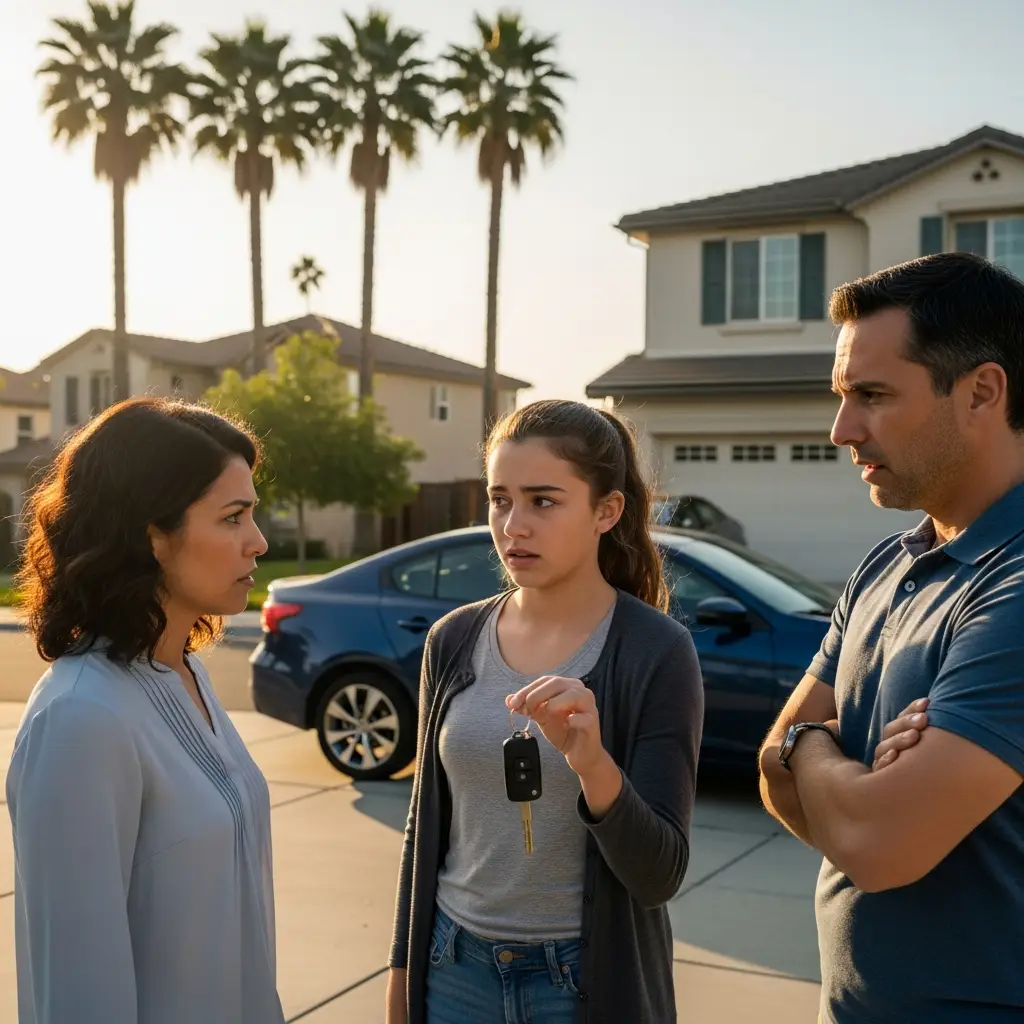
My sister called me last Tuesday in full panic mode. Her daughter had just passed her driving test, and the insurance quote came back at $540 a month. She couldn’t believe adding one 16-year-old to her policy would almost triple her premium. Welcome to the world of insuring teenage drivers in California.
Teen car insurance is expensive and there’s no way around that basic truth. Insurance companies see drivers aged 16-19 as their highest-risk customers because the data backs it up. New drivers crash more often, make poor decisions behind the wheel and lack the experience to handle emergency situations.
But expensive doesn’t mean you’re helpless. California families have more options than they realize for managing teen insurance costs. The right combination of carrier selection, vehicle choice, discount stacking and understanding state laws can cut premiums by 30-50% compared to just accepting the first quote you get.
I’ve spent the last three years helping friends and family navigate teen insurance after going through it with my nephew. Some families pay $250 monthly for solid coverage. Others pay $650 for basically the same protection. The difference comes down to knowing what options exist and being strategic about how you approach the whole process.
Finding the cheapest car insurance for teenage drivers

Not all insurance companies treat teen drivers equally. Some carriers specialize in high-risk drivers and charge accordingly. Others have better underwriting for young drivers and offer more competitive rates.
State Farm consistently comes out on top for California teen insurance. Their average monthly cost for adding a teen runs around $285 which is almost half what some competitors charge. They’re generous with good student discounts and their local agent network actually helps during claims instead of making everything harder.
Geico runs close behind at $310 monthly on average. Their online platform makes managing your policy easy and they offer decent telematics programs that reward safe driving. USAA destroys everyone on price if you qualify but membership is limited to military families and veterans at just $245 monthly.
Progressive averages $340 monthly but their Snapshot program deserves attention. It tracks actual driving behavior and safe teens can save up to 30%. The app provides useful feedback on hard braking and phone usage that helps teens improve their driving beyond just the discount.
The carrier that works best for one family might not be ideal for another. Your own driving record affects your teen’s rate. Your location matters. Getting quotes from at least three companies when adding your teen gives you real comparison data instead of guessing.
Rate differences between carriers can be massive. I’ve seen identical coverage for the same teen driver quoted at $320 with one company and $575 with another. That’s $3,060 yearly from one afternoon of comparison shopping. Don’t assume your current carrier offers the best teen rates just because they’re cheapest for you personally. Exploring the cheapest car insurance options for teens in California often reveals significant savings opportunities with carriers you hadn’t considered.
Adding your teen to your insurance policy

You’re legally required to add your teen to your policy the day they get their learner’s permit in California. Not when they get their provisional license. The moment that permit is issued.
Some parents try to delay this thinking they’ll save money. Bad idea. If your teen crashes during practice driving and they weren’t listed on your policy the claim gets denied and your entire policy could be cancelled. You become personally liable for all damages with no coverage to protect you.
Most insurance companies don’t actually charge extra during the learner’s permit phase as long as a licensed adult always accompanies your teen. The real rate increase hits when they get their provisional license and can drive solo.
Calling your insurance company takes about 15 minutes if you have everything ready. You’ll need your teen’s permit or license number, social security number, and driver’s education completion certificate if they’ve finished the course. Having recent report cards handy helps too since many agents can apply good student discounts right away.
The agent runs a new quote with your teen added. This is where you need to push back. Ask about every possible discount. Good student, driver’s education, defensive driving, multi-car bundling, telematics programs. Lazy agents won’t mention these unless you specifically ask.
I watched my neighbor save $185 monthly just by questioning the initial quote and asking what discounts were available. The agent came back with four additional discounts that dropped the premium from $565 to $380. Same coverage, just discounts the agent should have mentioned upfront but didn’t.
Your premium will increase substantially when adding a teen. Expect it to double or triple. A 16-year-old costs more to insure than an 18-year-old. Boys cost more than girls until around age 25. The specific vehicle your teen drives most often matters enormously. Assign them to your oldest, safest, most boring car.
Review your updated policy documents when they arrive. Make sure your teen is listed correctly and all promised discounts actually appear. I’ve caught billing errors three times where discussed discounts weren’t applied. The whole process of adding a teenage driver to your car insurance policy gets smoother when you understand exactly what information you need and which questions to ask your agent.
Maximizing insurance discounts for teen drivers

The good student discount is probably the easiest money you’ll ever save on teen insurance. Most carriers knock off 15-25% if your teen maintains a B average or 3.0 GPA. On a $400 monthly premium that’s $60-100 back in your pocket every month.
You need proof though. Submit report cards or transcripts every semester. The discount typically applies through college as long as your teen remains a full-time student under 25. That’s four to six years of savings from maintaining decent grades.
Driver’s education discounts run 10-15% with most companies. California requires this for anyone under 17.5 anyway so you’re completing it regardless. Make sure the course is DMV-approved. Keep the completion certificate forever because insurers want to see it.
Defensive driving courses add another 5-10% discount and they stack with driver’s education. These teach advanced safety techniques beyond basic driver training. The courses cost $20-50 and take 4-8 hours. If you’re saving $300 annually the course pays for itself immediately.
Telematics programs offer the biggest potential savings at 20-30% but they require your teen to drive safely while being monitored. Progressive Snapshot, State Farm Drive Safe & Save and Allstate Drivewise all track driving behavior through smartphone apps.
My nephew uses Snapshot and his driving improved dramatically once he saw concrete data on his habits. The constant feedback reinforces good habits beyond just the insurance discount.
Multi-car discounts apply when you insure multiple vehicles with the same company saving 10-25% on your total premium. Bundling different insurance types with one company saves 15-25% on auto coverage. Away-at-school discounts save 20-40% if your teen attends college more than 100 miles from home without taking a car.
Stacking multiple discounts is where real savings happen. Good student plus driver’s education plus telematics plus multi-car plus bundling can cut your base rate by 40-60%. That transforms a $550 monthly premium into $275. Same exact coverage, half the price.
Insurance agents won’t volunteer discount information unless you ask directly. Call your company and say “what discounts do I currently have and what other discounts might I qualify for?” Make them list every option. Finding car insurance discounts for teen drivers that match your situation maximizes savings.
Choosing the right vehicle for your teen
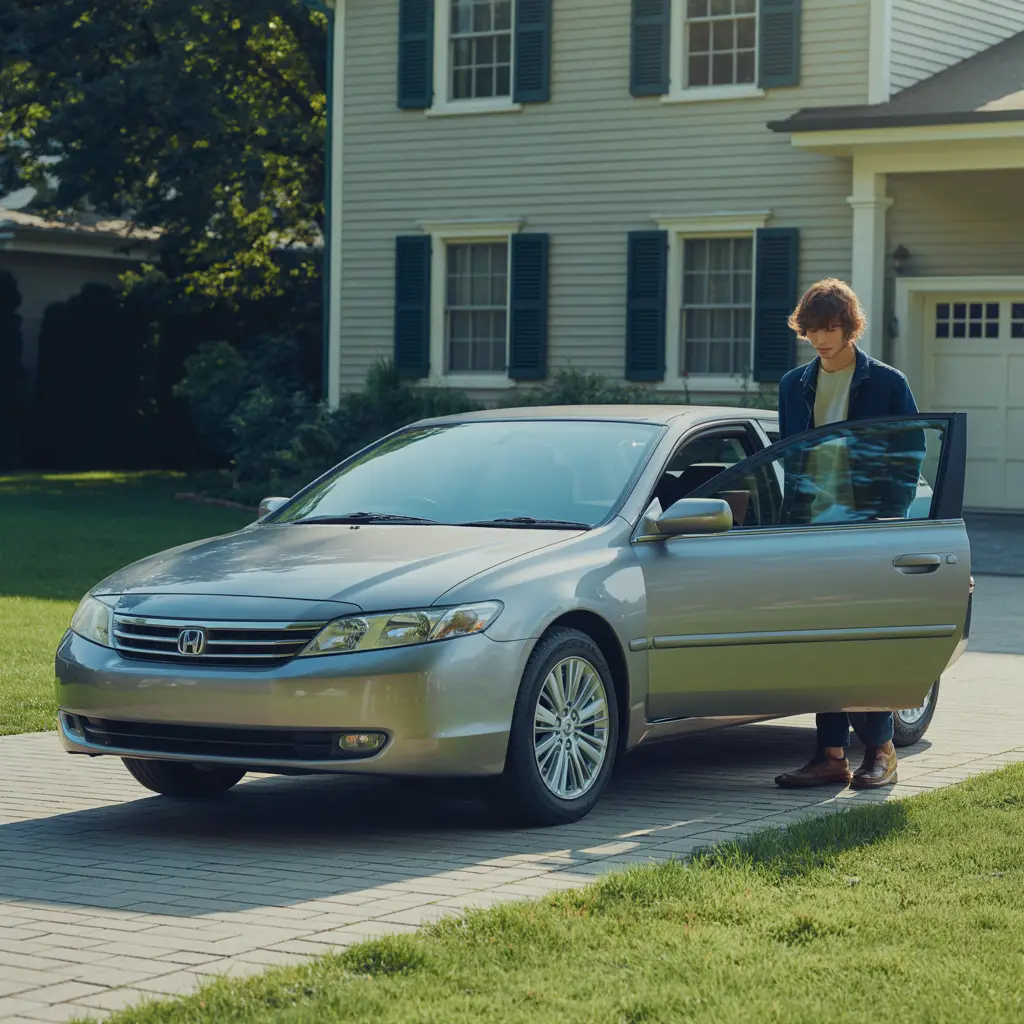
My cousin bought her son a used Dodge Charger for his 17th birthday. She found it for $12,000 and thought she scored a deal. The insurance quote came back at $650 monthly. Six months later she traded it for a Honda Civic and her premium dropped to $310. Identical coverage, same kid, different car.
The vehicle you choose for your teen might be the single biggest factor affecting insurance costs after age and driving record. Insurance companies have decades of data on every make and model. They know exactly which cars teenage drivers crash most often.
Sports cars are insurance nightmares. Mustangs, Camaros, Challengers will run $500-800 monthly to insure for a teen. Luxury brands like BMW, Mercedes and Audi come with luxury premiums. Even older models cost 40-60% more to insure than comparable Hondas or Toyotas.
Safe reliable sedans with good crash ratings save money every month. The Honda Civic consistently ranks as one of the cheapest vehicles to insure for teen drivers at $285-340 monthly. The Toyota Camry comes in close behind at $290-350 monthly. Subaru Outback averages $295-360 monthly for teen coverage.
The Mazda3 is an underrated option at $300-365 monthly. Honda CR-V runs $305-370 monthly. Pickup trucks surprise people with their costs at $400-550 monthly for teen coverage due to high rollover risk and powerful engines.
Vehicle age matters but newer isn’t always better. Cars from 2017-2020 hit a sweet spot with modern safety features like automatic emergency braking that qualify for discounts but enough depreciation that you can adjust coverage levels.
Safety ratings translate directly into insurance discounts. Five-star NHTSA crash ratings or IIHS Top Safety Pick awards can knock 10-15% off your premium. Automatic emergency braking, lane departure warning and blind spot monitoring qualify for additional discounts.
I pulled actual quotes for a 17-year-old male in Los Angeles. A 2018 Honda Civic quoted $315 monthly. Compare that to a 2019 Ford Mustang at $680. Choosing a Civic over a Mustang saves $365 every month. That’s $4,380 annually.
Used vehicles make more sense for teen drivers. First cars get dinged up from parking lot scrapes. Better to learn on a $15,000 used car than a $30,000 new one. The sweet spot is three to five years old with 30,000-60,000 miles. Still has modern safety features and costs half what it did new.
Understanding which vehicles cost significantly less to insure for teenage drivers in California helps you make smart choices that protect both your teen and your wallet long-term.
Investing in teen driver safety programs
My brother enrolled his daughter in a weekend defensive driving course last summer. Cost him $45 and four hours on a Saturday. His insurance dropped $38 monthly. Over a year that’s $456 saved from a $45 investment and his daughter genuinely drives better now too.
California requires driver education for anyone under 17.5 before getting a license. Thirty hours of classroom instruction covering traffic laws and vehicle operation. You’re doing this anyway so you might as well get the 10-15% insurance discount.
Behind-the-wheel training with professional instructors adds value beyond basic classroom education. California requires six hours minimum. These sessions teach practical skills like parking and freeway merging. Insurance companies offer additional discounts of 5-10% for professional training.
Defensive driving courses go beyond basic requirements teaching advanced accident avoidance techniques. Programs from National Safety Council or AAA typically qualify. Most courses run 4-8 hours and cost $20-50 online. The insurance benefit usually lands around 5-10% discount.
Teen-specific programs like Street Survival target scenarios teens actually face. It’s a full-day hands-on course where your teen drives through emergency situations. Costs $95-125 and insurance companies specifically recognize it with 10-15% premium reductions.
Telematics programs teach through constant feedback. The apps show exactly what hurts scores. Hard braking, late-night driving, phone use. My nephew improved dramatically seeing concrete data on his habits.
Stacking programs strategically maximizes savings. Complete driver education for 10-15% off. Add behind-the-wheel training for another 5-10%. Take defensive driving for another 5-10%. Add telematics and total savings can hit 40-50%.
The real value isn’t just cheaper insurance. Proper training makes teens genuinely safer drivers. Studies show teens completing defensive driving have 30-40% fewer accidents in their first three years. One serious accident can erase years of discount savings. Finding teen driving courses and programs that offer both real skills and insurance discounts creates benefits all around.
Understanding California teen driver laws

My friend’s son got pulled over three weeks after getting his provisional license. He had two friends in the car at 11 PM. The cop cited him for passenger restrictions and curfew violations. $300 in fines plus his insurance jumped 25% even though he hadn’t caused an accident.
California has strict graduated licensing laws that directly affect insurance costs. Teens can get a learner’s permit at 15.5 after completing driver education. With a permit your teen can only drive with a licensed California driver who’s at least 25 in the passenger seat.
You’re required to add your teen to your policy once they get the permit. Most companies don’t charge extra during the permit phase but you must report it. If your teen crashes during practice and they weren’t listed the claim gets denied.
At 16 your teen can apply for a provisional license with serious restrictions. The passenger rule first. For the first 12 months your teen cannot transport passengers under 20 unless a licensed driver 25 or older is in the vehicle. Only exception is immediate family members.
Second restriction is curfew. Teens with provisional licenses cannot drive between 11 PM and 5 AM unless accompanied by a licensed driver 25 or older. The curfew stays in effect the entire provisional period until age 18.
Insurance companies know about provisional restrictions. Violations add points to driving records even without accidents. Rate increases from passenger or curfew violations typically run 15-30%. That increase usually lasts three years. On a $350 monthly premium a 20% increase costs you an extra $2,520 over three years.
California requires minimum liability coverage of 15/30/5. These minimums are dangerously low for teen drivers. Your teen rear-ends someone needing surgery. Medical bills hit $50,000. Your policy covers $15,000. You’re personally liable for the remaining $35,000.
I strongly recommend at least 100/300/50 coverage for teen drivers. The premium difference between minimum coverage and adequate coverage is usually just $40-80 monthly. Cheap compared to financial ruin from an underinsured accident.
Cell phone use is completely prohibited for drivers under 18. Zero tolerance. Distracted driving citations raise rates 15-25%. Zero tolerance for alcohol too. BAC limit for drivers under 21 is 0.01%. First offense means one-year license suspension.
Speeding is the most common teen violation. Insurance rates jump 20-40% after a speeding ticket. Traffic school prevents points from appearing on your driving record for eligible violations. Costs $50-150 but saves way more in avoided insurance increases.
The choices your teen makes during their provisional license period affect insurance costs for years. A clean record from 16-18 sets them up for good rates into their twenties. Understanding how California provisional license requirements and insurance rules work together helps parents guide teens through this critical period.
Making teen insurance work for your family
Adding a teenage driver to your California insurance policy will never be cheap but it doesn’t have to destroy your budget. The difference between families paying $250 monthly and families paying $650 monthly comes down to knowledge and strategy.
Start by shopping around when you add your teen. Get quotes from at least three carriers because rates vary wildly. Choose the right vehicle from the beginning. A Honda Civic or Toyota Camry costs half what a Mustang or BMW costs to insure. That decision alone can save you $300-400 monthly.
Stack every available discount aggressively. Good student, driver’s education, defensive driving, telematics programs, multi-car bundling. Combining discounts can cut your base rate by 40-60%. Invest in proper training beyond minimum requirements. These programs save money through discounts but more importantly they make your teen a genuinely safer driver.
Understand California’s provisional license laws and make sure your teen follows them. Passenger restrictions and curfew violations raise insurance rates even without accidents. Monitor your policy regularly and shop around annually.
My sister who panicked over that $540 initial quote ended up paying $295 monthly after switching carriers, enrolling her daughter in Street Survival, submitting good student documentation and assigning her to the Civic. Same coverage, almost half the price, just from doing the work to understand her options.
For families just starting this journey, exploring how to add a teenage driver to your insurance policy the right way from day one prevents costly mistakes and sets you up for the best possible rates from the beginning.
Stay covered, stay safe, and happy driving.