Advanced Driver Assistance Systems (ADAS) Explained 2026
Advanced Driver Assistance Systems (ADAS) are technologies that help the driver see better, react faster and avoid crashes, without fully taking over driving. In 2026, many new cars and even mid‑range trims offer ADAS features like automatic emergency braking, lane keeping assist and adaptive cruise control as standard or popular options.
What is ADAS and how does it work?
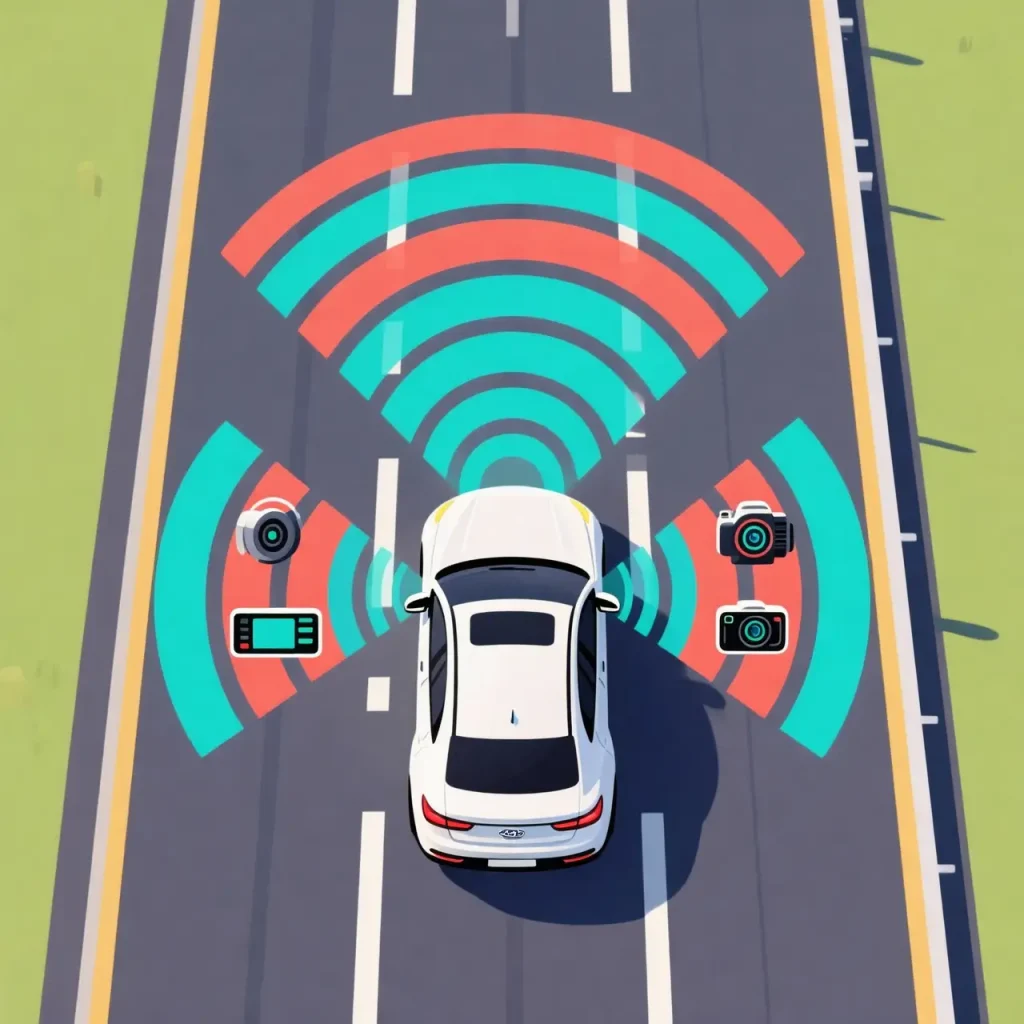
ADAS is an umbrella term for electronic systems that assist the driver in driving and parking tasks. These systems use cameras, radar, ultrasonic sensors and sometimes LiDAR, combined with software and AI, to monitor the vehicle’s surroundings and driver behavior in real time.
By processing this data, ADAS can:
- Warn the driver of hazards (warnings only).
- Actively intervene with braking, steering or acceleration if needed.
- Reduce fatigue by automating repetitive tasks like speed and distance control.
Main types of ADAS features
Most ADAS functions fall into three broad groups.
- “Second pair of eyes” – awareness features
- “Helping hand” – active assist features
- “Safety net” – emergency systems
Together, these features increase your awareness, help you control the car and step in if something goes wrong.
Read more : Best car safety features 2026
Examples of key ADAS features
Some of the most important individual ADAS functions include:
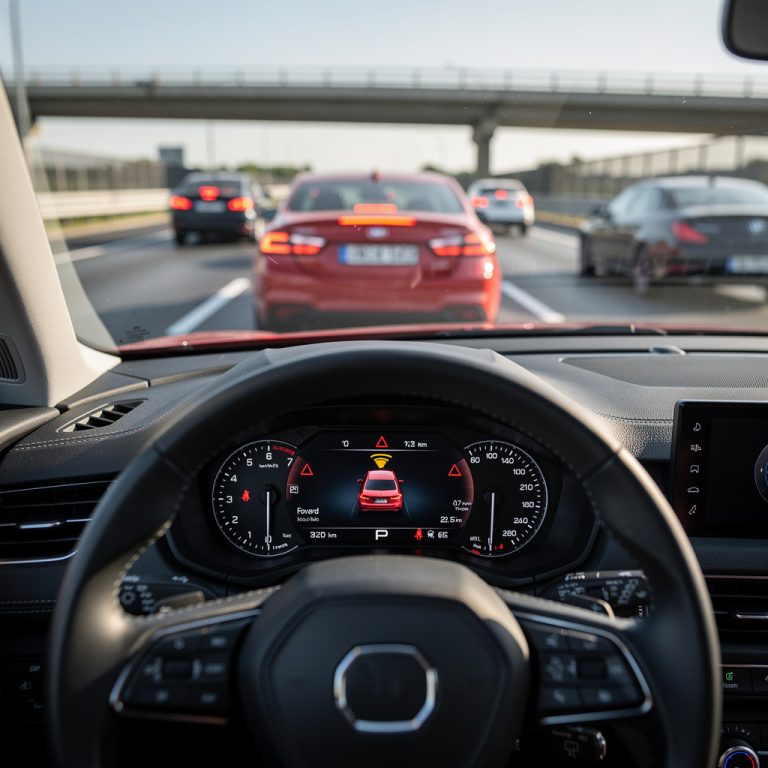
- Automatic Emergency Braking (AEB): Detects possible collisions and applies the brakes if you do not react in time.
- Lane Keep Assist / Lane Keeping Assist: Uses cameras to see lane markings; gently steers or nudges the wheel if you drift without signaling.
- Blind Spot Detection / Monitoring: Uses radar to watch blind spots and warns you when a vehicle is alongside.
- Adaptive Cruise Control (ACC): Maintains a set speed and distance from the car ahead, adjusting automatically with traffic.
- Traffic Sign Recognition and Intelligent Speed Assistance: Reads speed‑limit signs, displays them and can advise or limit speed accordingly.
- Driver Monitoring Systems: Camera‑based systems that watch for drowsiness or distraction and issue alerts.
These features are becoming widely available in mainstream brands, not just luxury cars.
ADAS and the SAE levels of driving automation
ADAS is related to—but not the same as—self‑driving. The SAE defines six levels of driving automation, from 0 to 5:
- Level 0 – No automation: Driver does everything, though warning systems like blind spot warning may exist.
- Level 1 – Driver assistance: One automated function, such as either lane‑keeping or adaptive cruise.
- Level 2 – Partial automation: Car can control steering and speed together (for example, lane‑centering + ACC), but driver must supervise at all times.
Most ADAS systems in 2026 are Level 1 or Level 2; they assist but do not replace the driver. Levels 3–5 involve conditional, high or full automation and are still rare or limited to specific pilots and routes.
Limitations and how to use ADAS safely
ADAS is a powerful tool, but it has limitations.
- Sensors can be affected by bad weather, poor lane markings, dirty cameras or unusual road layouts.
- Systems are designed for specific conditions (their operational design domain), such as highways only or certain speed ranges.
- Over‑reliance can lead to complacency; the driver must stay alert and be ready to take over at any time.
The safest way to benefit from ADAS is to treat it as backup and support, not as a replacement for your attention or driving skills.
Read more : Collision avoidance technology