
charging infrastructure guide for budget ev owners
Understanding charging infrastructure is essential for maximizing the value and convenience of your affordable electric vehicle. While home charging offers the lowest per-mile costs—often under $2 for a full charge—installation expenses and public charging fees vary significantly across regions. Budget EV owners must navigate different charging networks, connector types, and pricing structures to minimize costs while maintaining range confidence.
From Level 1 outlets requiring no installation to DC fast charging for road trips, each option presents distinct trade-offs between speed, convenience, and expense. Smart charging strategies can dramatically reduce your total ownership costs, making budget-friendly electric cars even more economical for daily transportation needs. Whether you’re already familiar with the complete guide to electric vehicles or just starting your research, mastering charging infrastructure separates successful EV owners from those who struggle.
level 1 charging: the free option
Every EV includes a basic charging cable that plugs into standard 120-volt household outlets. This Level 1 charging requires zero installation cost and works anywhere you find an outlet. The catch is speed.
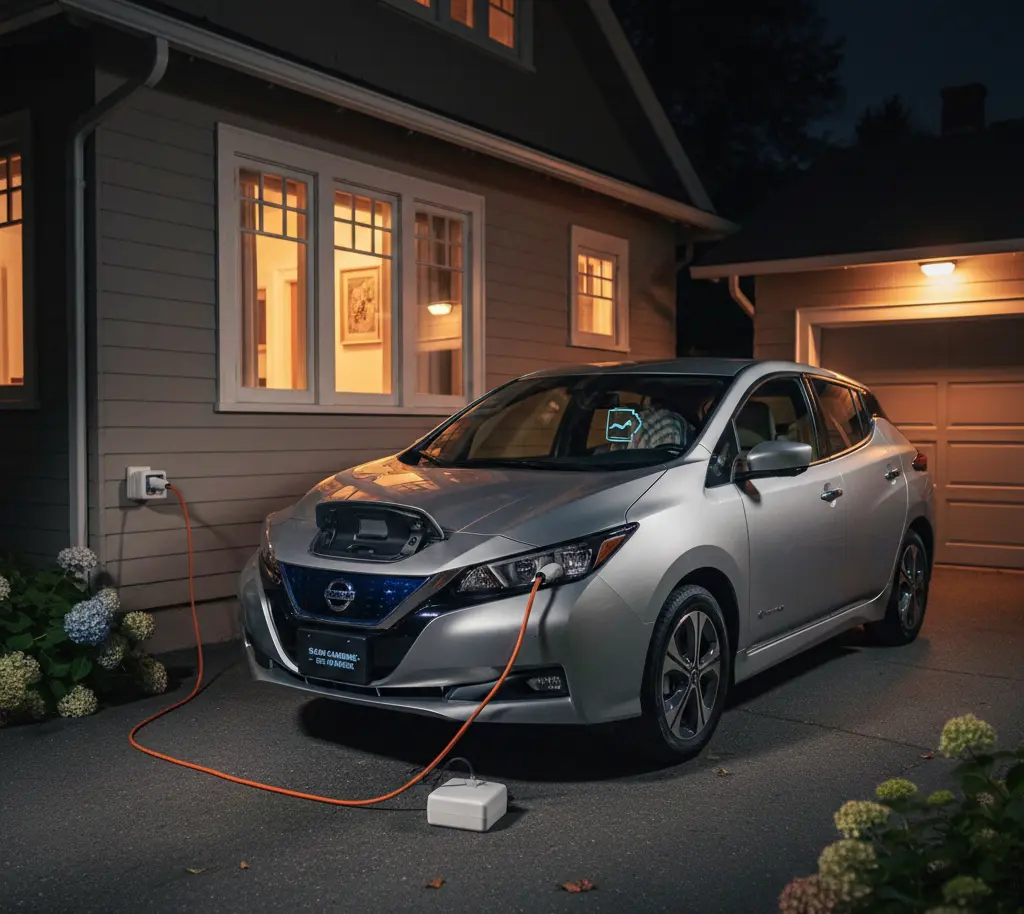
Level 1 charging adds roughly 3-5 miles of range per hour. That sounds painfully slow until you do the math for typical usage. If you drive 30 miles daily and plug in for 10 hours overnight, you’re adding 30-50 miles of range. For many commuters, this completely covers daily needs without spending a dollar on installation.
The limitations become clear when you drive more or can’t plug in consistently. Drive 60 miles daily and Level 1 only replaces half your usage. You’ll slowly drain your battery over time. Miss a few nights of charging and you’re scrambling to find public chargers.
I’ve talked to several Leaf owners who used nothing but Level 1 charging for years. They had short commutes, reliable access to an outlet, and never took the car on road trips. For that specific use case, Level 1 works perfectly and costs nothing beyond slightly higher electricity bills.
The connector is a standard J1772 plug on one end and a regular three-prong outlet on the other. No special wiring required. Maximum draw is typically 12 amps at 120 volts, or about 1.4 kW. This won’t overload household circuits designed for 15-20 amp loads.
Weather affects charging speed minimally with Level 1. Cold temperatures slow all charging somewhat, but the difference between summer and winter Level 1 speeds is negligible compared to battery range impact from cold weather driving.
level 2 charging: the sweet spot
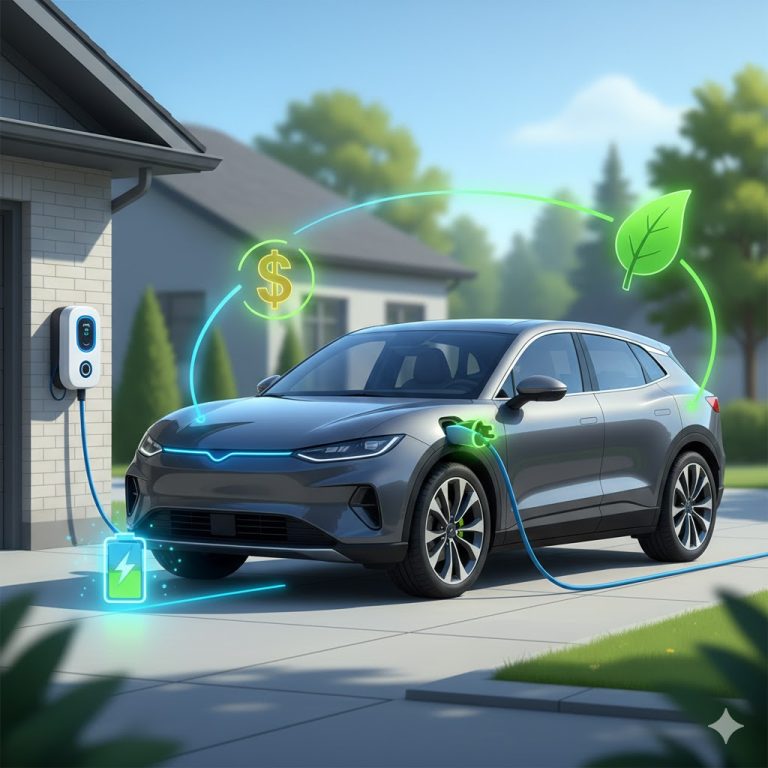
Most EV owners eventually install Level 2 charging at home. This 240-volt charging adds 20-30 miles of range per hour, making it practical for daily use regardless of driving patterns.
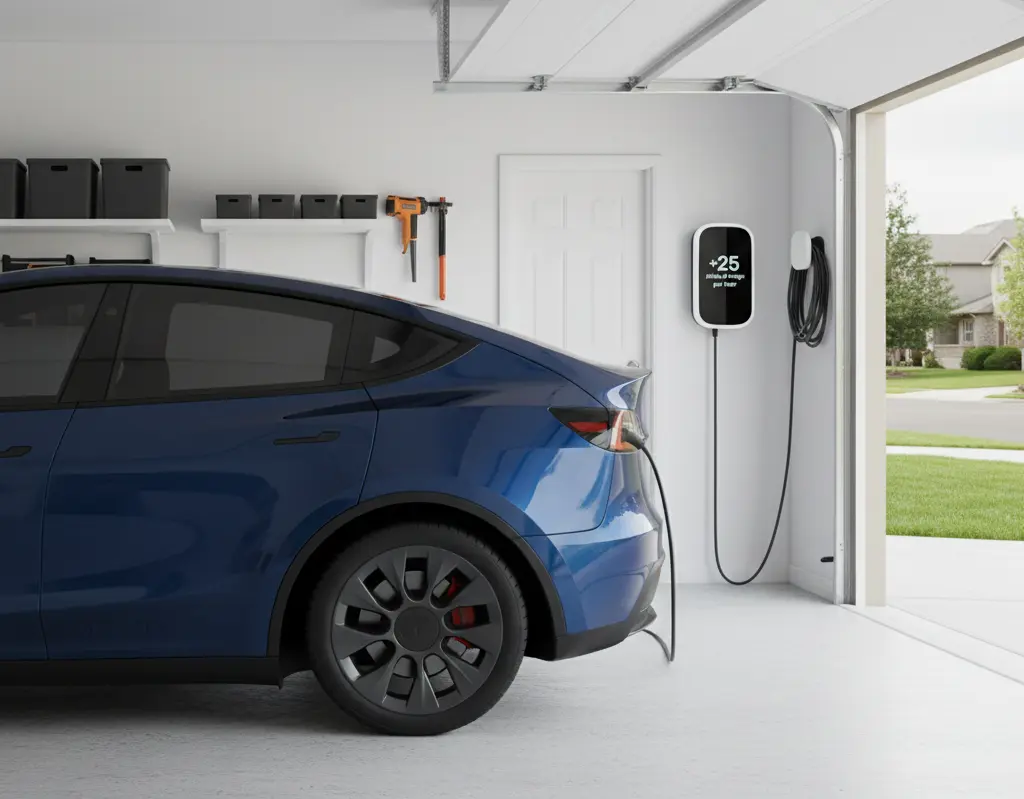
Installation costs vary dramatically based on your electrical panel location and capacity. If your garage has a 240-volt outlet nearby for a dryer or other appliance, installation might cost $300-$500 for a dedicated circuit and charger. If your panel is across the house and needs upgrades, expect $1,500-$3,000.
I recommend getting three quotes from licensed electricians before committing. Prices vary wildly. One electrician quoted me $2,400 for an installation another did for $800. The work was identical. Shopping around saves real money.
Charger units range from $300 budget models to $900 smart chargers with WiFi connectivity and scheduling features. Budget chargers work fine if you don’t need remote monitoring or utility time-of-use optimization. Smart chargers provide convenience but aren’t essential.
Hardwired installations permanently connect the charger to your electrical system. Plug-in models use a NEMA 14-50 outlet, similar to RV connections. Plug-in offers flexibility to take the charger with you if you move. Hardwired looks cleaner and avoids potential outlet wear issues.
Charging speed depends on both the charger’s output and your vehicle’s onboard charger capacity. A 7.2 kW charger paired with a vehicle that only accepts 6.6 kW will charge at 6.6 kW. The vehicle’s limitation becomes the bottleneck. Most budget EVs accept 6.6-7.2 kW, making 32-amp Level 2 chargers the optimal choice.
Utility rebates often offset installation costs. Many electric companies contribute $250-$500 toward Level 2 charger installation. Some require using pre-approved electricians or specific charger models. Check with your utility before purchasing equipment to ensure you qualify for available programs.
dc fast charging networks
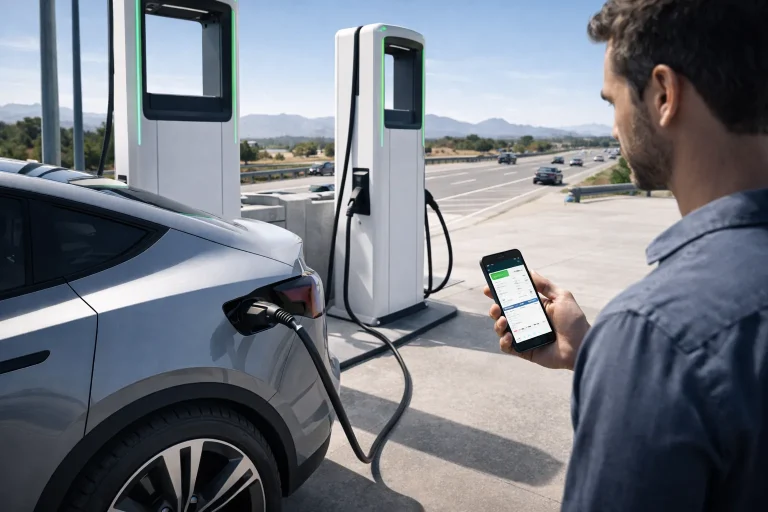
Fast charging uses DC power to bypass your vehicle’s onboard charger and feed electricity directly to the battery. This enables adding 100-200 miles of range in 20-30 minutes. It’s essential for road trips but too expensive for regular use.
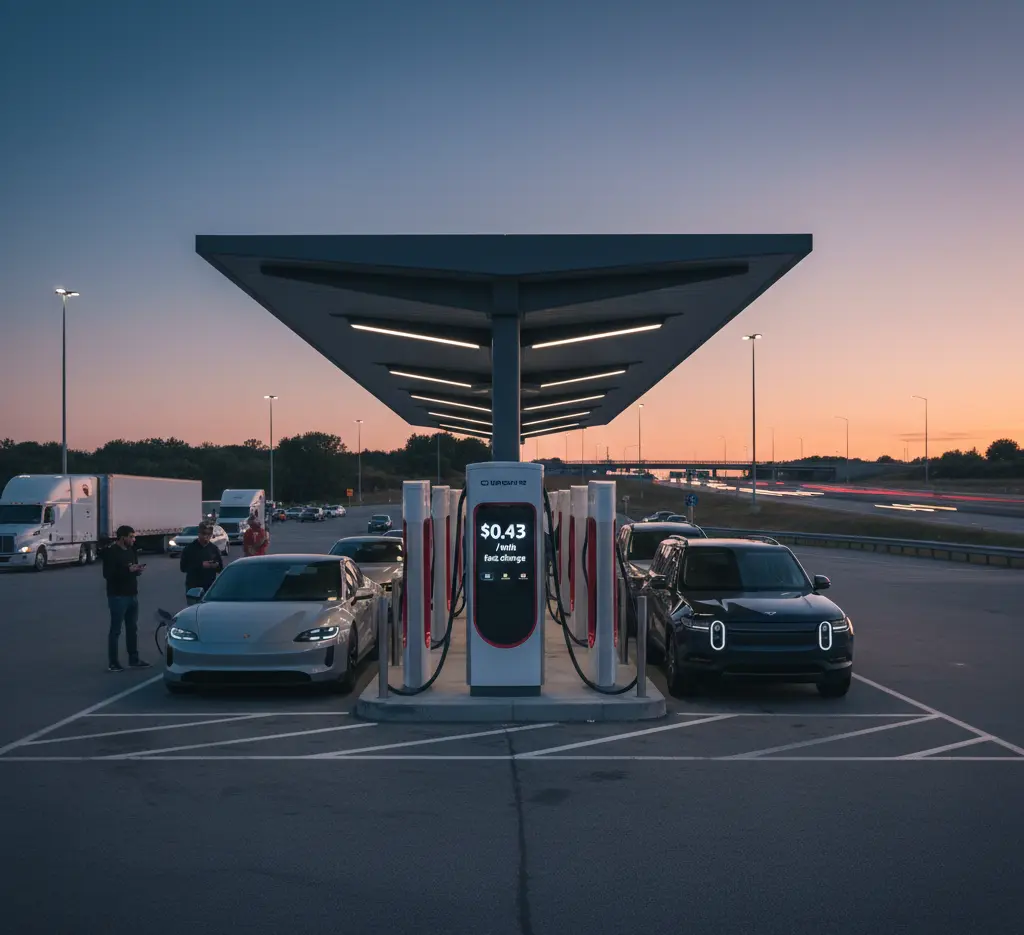
Three main networks dominate the US market. Tesla Superchargers offer the most extensive coverage with over 17,000 stations. Electrify America operates about 800 stations with multiple chargers per location. EVgo runs approximately 850 stations focused on urban areas and highways.
Pricing varies by network and location. Electrify America charges $0.43-$0.48 per kWh in most markets. EVgo ranges from $0.34-$0.44 per kWh. Tesla Superchargers cost $0.25-$0.50 per kWh depending on location and time of day. Some stations charge per minute instead of per kWh, which penalizes slower-charging vehicles.
Membership programs reduce costs for frequent users. Electrify America offers Pass+ for $4 monthly, lowering per-kWh costs by $0.08-$0.12. EVgo has similar programs. If you fast charge twice monthly, memberships typically pay for themselves.
Charging speed depends on your vehicle’s maximum intake rate and the charger’s output. Budget EVs typically accept 50-100 kW maximum. A Nissan Leaf charges at 50 kW while a Chevy Bolt handles 55 kW. Newer vehicles like the Hyundai Ioniq 5 accept up to 350 kW, though budget options rarely reach these speeds.
Battery percentage affects charging speed dramatically. Most EVs charge fastest from 10-80% state of charge. Speed slows considerably above 80% to protect battery longevity. Plan road trip charging stops around this pattern rather than charging to 100% each time.
Temperature impacts fast charging significantly. Cold batteries accept charge more slowly, sometimes at half the normal rate. Many EVs precondition batteries when you navigate to a fast charger, warming them to optimal temperature before arrival. This feature saves substantial time on winter road trips.
public level 2 networks
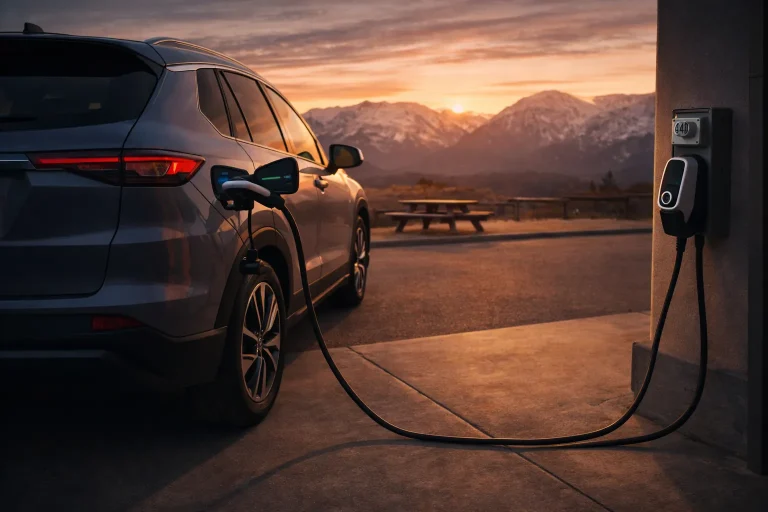
Thousands of Level 2 public chargers exist at shopping centers, parking garages, hotels, and workplaces. These fill gaps when home charging isn’t available or you need a top-up while running errands.
ChargePoint operates the largest network with over 30,000 stations. Pricing varies since individual property owners set rates. Some are free, others charge $1-$3 per hour or $0.20-$0.30 per kWh. The ChargePoint app shows pricing before you plug in.
Blink manages about 3,000 stations with similar variable pricing. Free charging is less common on Blink networks than ChargePoint. Expect to pay for most sessions.
Many shopping centers and grocery stores offer free Level 2 charging to attract customers. Whole Foods, Target, and some Walmart locations have free chargers. You’re expected to shop while charging, but there’s no enforcement mechanism beyond time limits.
Workplace charging is expanding rapidly. Some employers offer free charging as a perk. Others charge nominal fees to cover electricity costs. If your workplace offers charging, take advantage since you’re parked there anyway. Free workplace charging can eliminate most home charging needs.
Hotels increasingly advertise EV charging as an amenity. Availability varies from valet-only charging to guest-accessible chargers. Call ahead to verify before booking if charging access matters for your stay. Some hotels charge fees while others include it with your room rate.
cost comparison: home vs public charging
Understanding real costs helps you develop the most economical charging strategy for your situation.
Home Level 2 charging at $0.14 per kWh costs about $10 to fully charge a 70 kWh battery, providing roughly 250 miles of range. That’s $0.04 per mile. With time-of-use rates at $0.08 per kWh overnight, costs drop to $0.023 per mile.
Public Level 2 charging at $2 per hour for a 6 kW charger costs roughly $0.10-$0.12 per mile depending on your vehicle’s efficiency. Still cheaper than gas, but 2-3 times more expensive than home charging. Use public Level 2 opportunistically, not as your primary source.
DC fast charging at $0.43 per kWh costs about $30 for a full charge on a 70 kWh battery. That’s $0.12 per mile, or about 3 times home charging costs. Fast charging makes sense for road trips and emergencies, not daily use.
Compare this to gasoline at $3.50 per gallon in a 30 mpg car costing $0.117 per mile. Home charging beats gas prices substantially. Fast charging roughly matches gas costs, eliminating the cost advantage but maintaining convenience and emissions benefits.
Running the numbers for a typical year with 12,000 miles: Home charging costs $480-$560. Mix of 75% home and 25% public Level 2 costs $800-$900. Heavy fast charging at 50% of miles costs $1,000-$1,200. Your charging mix directly impacts annual costs.
apartment and condo charging solutions
Not owning a single-family home complicates EV charging but doesn’t make it impossible. Creative solutions exist for renters and condo owners.
Some apartment complexes now include EV charging as an amenity. Ask before signing a lease if charging access matters. Newer luxury complexes are more likely to offer this than older or budget properties.
Workplace charging becomes more critical without home access. If your employer offers charging, even paid charging, it provides a reliable solution. Charging 5 days per week at work can cover most weekly driving needs.
Portable Level 2 chargers let you create temporary charging solutions. If you have access to a 240-volt outlet in a parking area, even shared laundry rooms, a portable charger provides Level 2 speeds without permanent installation. Get landlord permission first to avoid lease violations.
Some condo associations allow individual unit owners to install chargers at their parking spots. You’ll need board approval and will likely need to fund installation yourself. The charger becomes a building improvement that stays when you move. Factor this into your decision.
Public charging near your home becomes essential without private parking charging access. Living near a grocery store with free Level 2 charging or a reliable fast charging station makes EV ownership more practical. Scout nearby options before committing to an EV purchase.
charging etiquette and best practices
Shared charging infrastructure requires courtesy to work well for everyone. Following basic etiquette prevents conflicts and ensures access for all.
Don’t occupy chargers longer than necessary. Unplug once your charge completes rather than leaving your car connected for hours. Some networks charge idle fees after charging finishes to discourage this behavior. These fees can exceed charging costs if you ignore them.
Respect time limits at free public chargers. If a sign says 2-hour limit, honor it. Free chargers rely on turnover to serve multiple users. Overstaying limits ruins the amenity for everyone.
Park only in EV charging spots when actively charging. Using charging spots as convenient parking without charging frustrates actual EV owners needing access. This practice, called ICE-ing when done by gas cars, is increasingly illegal in many jurisdictions.
Report broken chargers through network apps. Reporting helps operators prioritize repairs and informs other users to avoid wasting time at non-functional stations. Take 30 seconds to report problems rather than just driving away annoyed.
Share chargers during fast charging stops. If you’re at 80% and someone else arrives needing a charge, consider unplugging early. The charging speed above 80% is slow anyway. This courtesy builds community goodwill.
planning road trips
Long-distance travel requires planning with EVs in ways gas cars don’t. The infrastructure exists for most routes but you need to know how to use it.
Apps like PlugShare and A Better Route Planner help plan charging stops. Enter your starting point, destination, and vehicle model. The app calculates optimal charging stops based on your vehicle’s range and charging speed. Following these plans eliminates guesswork and range anxiety.
Build buffer into your planning. Don’t plan routes requiring 95% of your battery capacity. Real-world conditions rarely match EPA range estimates. Wind, temperature, speed, and terrain all affect range. Plan for 70-80% of rated range to avoid stress.
Identify backup charging options along your route. If your planned stop is broken or occupied, knowing the next available charger prevents panic. Redundancy matters more than optimizing for the fastest route.
Allow extra time for charging stops. Fast charging adds 30-45 minutes to trips versus gas stops. Factor this into your travel schedule rather than trying to match gas car timing. Use charging time for meals or breaks rather than viewing it as wasted time.
Consider overnight charging at hotels. If your trip includes an overnight stay, hotel charging lets you start each day with a full battery. This reduces reliance on fast charging during driving hours.
future-proofing your charging setup
The charging landscape continues evolving. Making smart choices now prepares you for changes ahead.
Install higher amperage circuits than your current needs require. A 50-amp circuit supports future vehicles with faster onboard chargers even if your current EV only uses 32 amps. The incremental cost during initial installation is minimal compared to upgrading later.
Choose chargers with updateable firmware. Smart chargers receive software updates that add features and improve compatibility. Budget chargers without connectivity can’t adapt to changing standards.
Consider V2G (vehicle-to-grid) capable chargers if available in your area. These bidirectional chargers let your EV supply power back to the grid or your home during outages. The technology is emerging but shows promise for reducing ownership costs through energy arbitrage.
Monitor industry standards evolution. The North American Charging Standard (NACS), Tesla’s connector, is becoming the industry standard. Many manufacturers are adopting it for 2025+ models. Your charging infrastructure should accommodate this shift.
Stay informed about utility program changes. Time-of-use rates, demand charges, and incentive programs evolve regularly. Adapting your charging habits to new program structures maximizes savings.
making charging work on a budget
Smart charging strategies minimize costs while providing reliable access to electricity.
Maximize home charging even with Level 1. The free installation and low electricity costs make home charging your most economical option. Structure your life to plug in overnight whenever possible.
Take advantage of free public charging opportunistically. If you regularly shop at stores offering free Level 2 charging, plug in during your shopping trips. The occasional free top-up reduces home charging needs.
Avoid fast charging except for trips. The 3x cost premium makes frequent fast charging expensive. Reserve fast charging for situations where speed matters rather than routine use.
Negotiate workplace charging access. If your employer doesn’t offer charging, propose installing chargers with employee cost-sharing. Even paid workplace charging often costs less than public alternatives.
Time your charging to off-peak rates. Most utilities offer lower overnight rates between 9 PM and 7 AM. Shifting all charging to these hours can cut your electricity costs by 40-60%. Smart chargers automate this scheduling.
Understanding charging infrastructure thoroughly removes one of the biggest barriers to EV ownership. The initial learning curve feels steep but becomes second nature within weeks. For buyers exploring options like finding affordable used electric vehicles, knowing how to minimize charging costs makes budget EVs even more economical over their lifetime. The infrastructure exists to support EV ownership across the country if you know how to use it effectively.