federal tax credits and state incentives for affordable evs
The sticker price on an electric vehicle tells only part of the story. I’ve watched too many potential buyers walk away from EVs because they only looked at the MSRP without understanding how incentives work. The reality is that federal tax credits, state rebates, and utility programs can slice thousands off your effective purchase price.
These incentives exist to accelerate EV adoption and reduce transportation emissions. Politicians can debate the merits all day, but for individual buyers, the question is simple: how much money can you save? The answer varies dramatically based on where you live, which vehicle you buy, and how you structure the purchase.
Navigating the incentive landscape requires some homework. Rules change frequently. Eligibility requirements trip up buyers who don’t read the fine print. But the potential savings make it worthwhile to understand what’s available. Whether you’re already familiar with the complete guide to electric vehicles or just starting your research, maximizing incentives should be a key part of your purchase strategy.
the federal ev tax credit explained
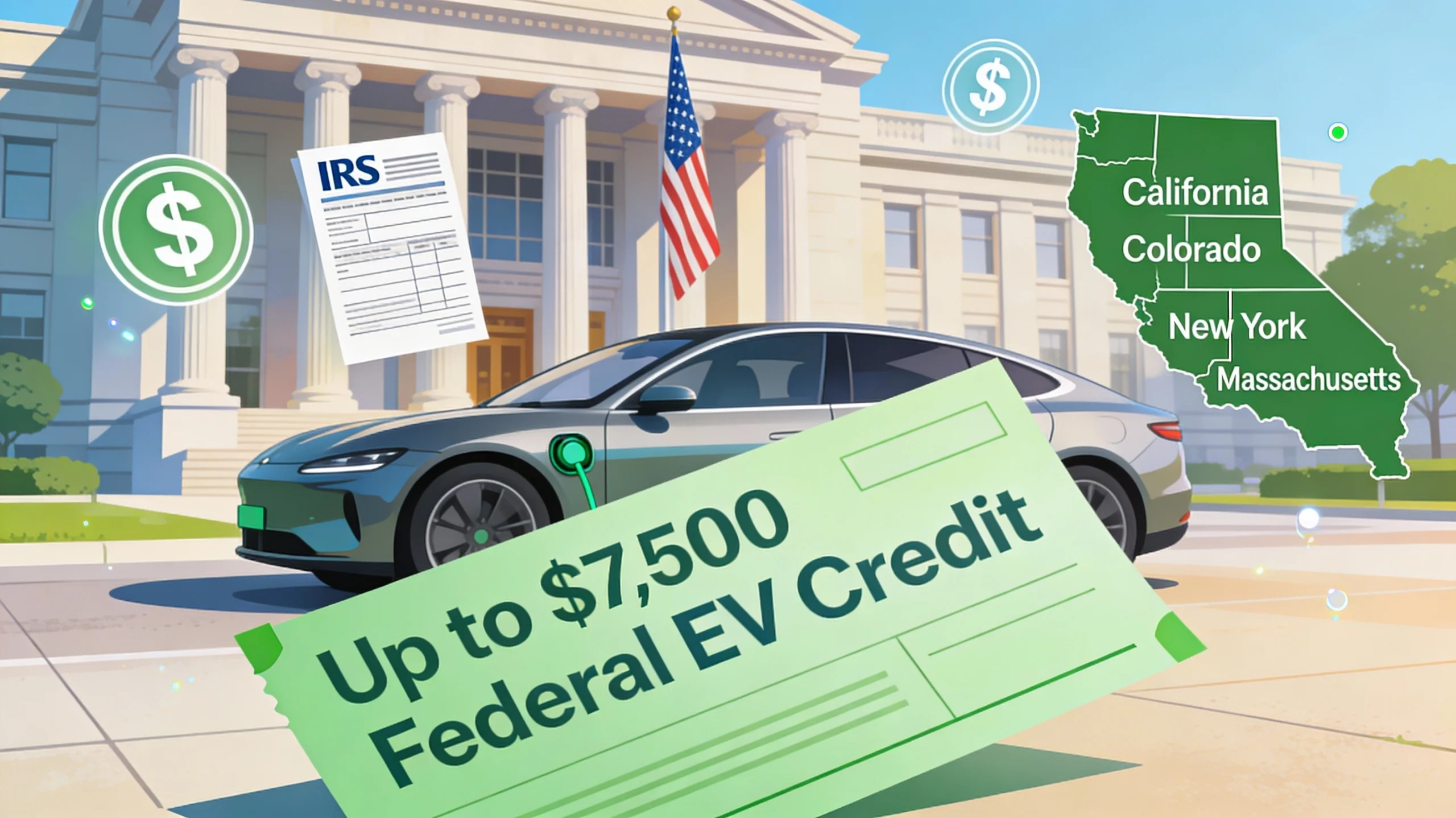
The federal government offers up to $7,500 in tax credits for qualifying new electric vehicles. This isn’t a rebate that puts cash in your pocket at purchase time. It’s a credit that reduces your federal income tax liability when you file your return.
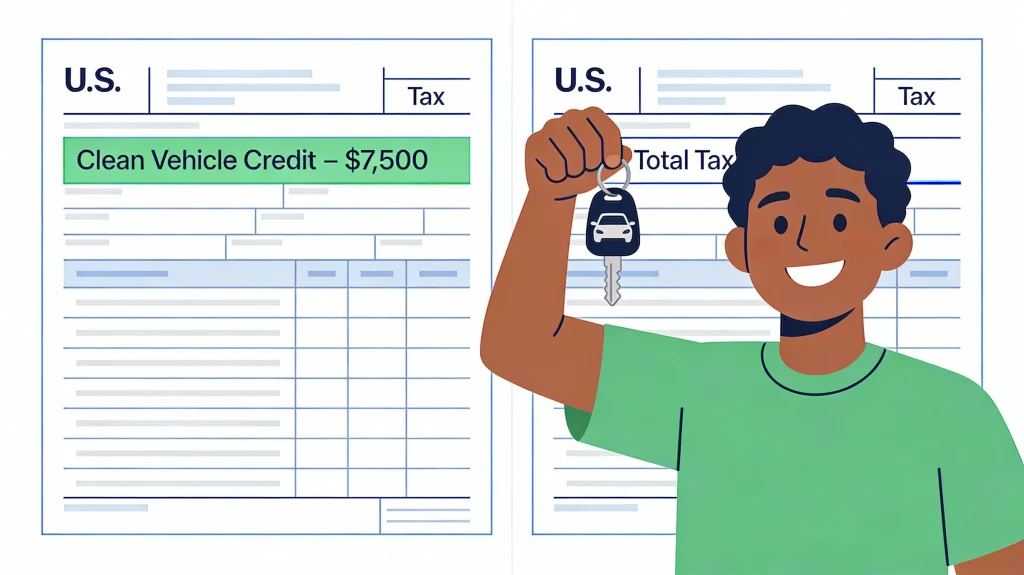
Understanding this distinction matters. If your total federal tax liability for the year is only $5,000, you can only claim $5,000 of the credit. The remaining $2,500 doesn’t roll over to future years or come back as a refund. You need sufficient tax liability to capture the full benefit.
The credit amount depends on battery size. Vehicles with at least 7 kWh of capacity qualify for a base credit of $2,500. Each additional kWh adds another amount until reaching the maximum $7,500. Most modern EVs with meaningful range easily hit this maximum.
Income limits took effect in 2023 and continue to apply. Single filers with modified adjusted gross income above $150,000 don’t qualify. The limit is $225,000 for heads of household and $300,000 for joint filers. These thresholds apply to the year you take delivery, not when you order the vehicle.
Vehicle price caps also restrict eligibility. Sedans must cost under $55,000. SUVs, trucks, and vans get a higher $80,000 threshold. These limits apply to the MSRP, not your negotiated price. A $56,000 sedan doesn’t qualify even if you negotiate it down to $54,000.
north american assembly requirements
One of the most significant changes to the federal credit involves where vehicles are assembled. Only EVs with final assembly in North America qualify for the full credit. This requirement eliminated many popular models from eligibility overnight.
The IRS maintains an official list of qualifying vehicles on their website. This list updates regularly as manufacturers adjust production and new models launch. Always check the current list before committing to a purchase, even if someone told you a vehicle qualified last month.
Battery component sourcing adds another layer of complexity. Vehicles must meet minimum thresholds for battery components and critical minerals sourced from North America or free trade agreement partners. These requirements phase in over several years, becoming stricter annually.
Some vehicles qualify for partial credits if they meet assembly requirements but fall short on battery sourcing. Others lose eligibility entirely. The Hyundai Ioniq 5 and Ioniq 6, for example, don’t qualify because they’re assembled in South Korea. The VW ID.4 qualifies because it’s built in Tennessee.
Leased vehicles follow different rules. The manufacturer receives the credit on leased EVs, not the consumer. Many manufacturers pass this savings to customers through lower monthly payments. This loophole allows vehicles assembled outside North America to effectively offer the same benefit through lease deals.
state and local incentives
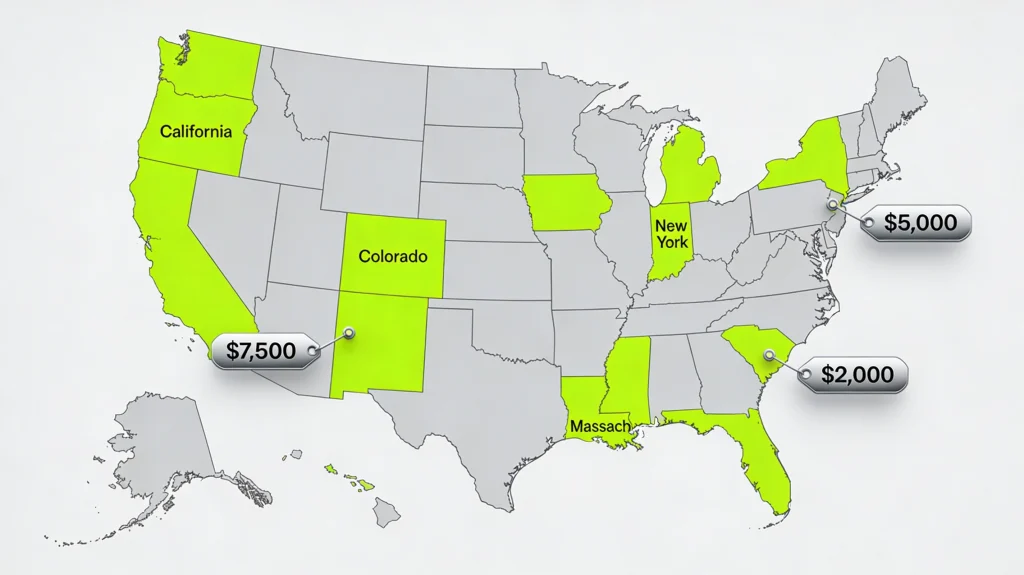
State programs vary wildly in generosity and structure. Some states offer substantial rebates that stack with federal credits. Others provide modest tax credits or exemptions. A few offer nothing at all beyond the federal benefit.
California leads in EV incentives through the Clean Vehicle Rebate Project. Eligible buyers can receive up to $7,500 for new EVs depending on income level. The program prioritizes lower-income buyers with higher rebate amounts. Used EVs also qualify for up to $2,500, making California one of the best states for budget EV shoppers.
Colorado offers $5,000 for new EVs and $2,500 for used EVs purchased from licensed dealers. Income limits apply, with higher rebates available for lower-income residents. The program has been incredibly popular, sometimes running out of funding and requiring budget appropriations.
New York provides up to $2,000 through Drive Clean Rebate. The amount varies based on vehicle MSRP, with lower-priced vehicles receiving higher rebates. The program explicitly aims to make EVs more accessible to middle-class buyers rather than subsidizing luxury purchases.
Massachusetts offers up to $3,500 for battery electric vehicles under $55,000 MSRP. Plug-in hybrids receive smaller rebates. The program has remained consistently funded and relatively easy to navigate compared to some other states.
Several states offer no direct purchase incentives but provide other benefits. Some waive sales tax on EV purchases. Others offer reduced registration fees or free parking at state facilities. These perks add up even without direct rebates.
utility company programs
Many electric utilities offer incentives to encourage EV adoption and manage grid load. These programs often fly under the radar but can provide meaningful savings or ongoing benefits.
Time-of-use electricity rates give EV owners lower rates for overnight charging. The savings can amount to hundreds annually compared to standard rates. Most utilities require installing a separate meter or using smart charging equipment to track EV-specific usage.
Direct rebates for EV purchases exist through some utilities. Pacific Gas & Electric in California offers up to $800 for qualified buyers. Other utilities provide similar programs, though amounts vary. Check with your local utility before purchasing.
Home charging station rebates help offset installation costs. Many utilities contribute $250-$500 toward Level 2 charger purchase and installation. Some require using specific approved electricians or equipment. The programs aim to encourage home charging rather than relying on public infrastructure.
Managed charging programs pay you to let the utility control when your car charges. You plug in when you get home, but the utility delays charging until off-peak hours. Compensation varies from monthly credits to per-session payments. These programs help utilities balance grid load while saving you money.
how to stack incentives
The real magic happens when you combine multiple programs. Federal credits, state rebates, utility incentives, and dealer discounts can collectively cut $10,000 or more from your effective purchase price.
Start by identifying every program you qualify for based on your location and income. Make a spreadsheet listing each incentive, the amount, eligibility requirements, and application process. This organized approach ensures you don’t miss available benefits.
Timing matters for some programs. State rebates often work on a first-come, first-served basis with limited annual funding. Applying early in the fiscal year increases your chances of receiving funds before the budget runs out. Some programs have specific application windows.
Understand whether programs require upfront payment or reimbursement. Federal tax credits come when you file your return, months after purchase. Some state rebates require you to pay full price and then wait for reimbursement. California’s program, by contrast, can be applied at the point of sale through participating dealers.
Keep meticulous records. You’ll need proof of purchase, VIN documentation, delivery dates, and sometimes dealer certification. Missing paperwork can delay or disqualify your applications. Create a folder with copies of everything immediately after purchase.
special programs for low-income buyers
Several programs specifically target low and moderate-income households to make EV ownership more accessible. These often provide higher incentive amounts or additional benefits beyond standard programs.
California’s Clean Cars 4 All allows eligible residents to scrap old vehicles and receive up to $9,500 toward an EV purchase or lease. The program aims to improve air quality by removing high-emission vehicles while providing clean transportation options. Income limits are generous enough to include many middle-class households.
The Connecticut Hydrogen and Electric Automobile Purchase Rebate expands for low and moderate-income residents. While standard rebates are $2,250, eligible households can receive up to $4,500. The program recognizes that upfront costs create bigger barriers for budget-conscious buyers.
Some utilities offer enhanced programs for low-income customers. Discounted installation of home charging equipment, free or reduced-cost charging at public stations, and bonus rebates help overcome financial barriers. These programs vary by region but are worth researching.
Non-profit organizations sometimes provide gap funding or down payment assistance for EV purchases by low-income families. These programs are smaller in scope but can make the difference between affording an EV or sticking with an aging gas car.
commercial and fleet incentives
Business buyers often qualify for additional incentives beyond consumer programs. If you’re self-employed or buying for a small business, these programs can provide substantial benefits.
The federal government offers enhanced deductions for commercial EV purchases. Section 179 allows businesses to deduct the full purchase price of qualifying vehicles up to certain limits. Combined with the $7,500 tax credit, business buyers can see significant tax advantages.
Many states provide special fleet incentives encouraging businesses to electrify delivery vehicles, service fleets, or employee cars. California offers vouchers through the HVIP program for commercial vehicles. Other states have similar programs with varying structures and amounts.
Utilities often provide enhanced incentives for commercial charging infrastructure. Installing charging stations at business locations can qualify for rebates covering a large portion of installation costs. These programs recognize that workplace charging supports broader EV adoption.
application process and timing
Successfully claiming incentives requires following specific procedures. Each program has its own application process, deadlines, and documentation requirements.
For federal tax credits, you’ll file Form 8936 with your tax return. Your dealer should provide necessary documentation including the VIN and certification that the vehicle qualifies. Your tax software will walk you through the process, or your accountant can handle it.
State rebates typically require online applications through program websites. You’ll upload proof of purchase, registration, and sometimes proof of residency or income. Processing times vary from a few weeks to several months. Don’t count on receiving the money immediately.
Some programs require pre-approval before purchase. Connecticut, for example, requires reserving your rebate before buying. Missing this step can disqualify you entirely. Always read program rules carefully before committing to a vehicle purchase.
Keep copies of all submitted applications and supporting documents. Follow up if you don’t receive confirmation within expected timeframes. Program administrators sometimes miss applications or require additional information. Staying proactive ensures you receive your money.
Changes Coming in 2025 and Beyond
Incentive programs evolve constantly. Understanding upcoming changes helps you time your purchase optimally and set realistic expectations.
The federal tax credit transitions to a point-of-sale rebate starting in 2024 for some purchases. Instead of waiting until tax time, qualifying buyers can transfer the credit to dealers and receive an immediate discount. This makes the benefit more accessible and tangible, though not all dealers participate initially.
Battery sourcing requirements become stricter annually through 2029. Vehicles that qualify today might lose eligibility as standards tighten. If you’re considering a specific model, buying sooner rather than later might make sense if there’s risk of losing qualification.
Some state programs face funding uncertainty. Budget pressures or political changes can reduce or eliminate incentives. California’s programs have remained relatively stable, but smaller state programs sometimes get cut. Don’t assume current programs will exist indefinitely.
Used EV incentives are expanding in several states. As more used EVs enter the market at affordable prices, programs increasingly recognize the value of supporting secondhand purchases. This trend makes budget-friendly EV ownership more accessible to middle and lower-income buyers.
making incentives work for your budget
Understanding incentives completely changes the affordability equation for electric vehicles. A $35,000 EV can effectively cost $22,000 after combining federal credits, state rebates, and utility incentives. That puts it squarely in budget territory for many households.
Do your research before shopping. Know which vehicles qualify for maximum benefits in your state. Factor incentives into your budget from the start rather than treating them as a bonus. This approach opens up vehicles that initially seem out of reach.
Consider how timing affects your tax situation. Taking delivery in December versus January can shift which tax year’s income determines your eligibility. If you’re close to income thresholds, strategic timing might preserve your qualification.
Don’t let incentives push you into buying more car than you need. A $45,000 EV with full incentives might cost less than a $35,000 EV with partial incentives, but only if you actually need the features of the more expensive vehicle. Chasing incentives into vehicles beyond your needs defeats the purpose of budget-conscious shopping.
The combination of lower fuel costs, reduced maintenance, and available incentives makes electric vehicles increasingly competitive with gas cars on total cost of ownership. Understanding and maximizing these purchase incentives represents just the first step in the financial equation. The ongoing savings throughout ownership often prove even more significant than the upfront benefits.