Safe Disposal of Used Motor Oil in the United States
Used motor oil is something every driver deals with sooner or later. When you change your oil at home, the job feels simple until you reach the part where you need to get rid of the old oil. Many people pour it in the trash or down the drain because they do not know what to do with it. That creates serious environmental damage and can even lead to fines. I have worked in the automotive field for years and I can tell you that safe disposal is easier than most drivers think. It also supports the routine maintenance steps described in the Auto Maintenance DIY for American Drivers guide, which helps you manage your vehicle responsibly and safely.
Why Proper Disposal Matters
Motor oil picks up metal particles, dirt and chemical residues while it moves through the engine. Once the oil is used, it becomes harmful to soil and water. A single gallon can contaminate a huge amount of fresh water. Many states treat improper disposal as a violation because it threatens public health.
Drivers sometimes feel that their small quantity of oil does not matter. When millions of people think the same way, the damage adds up fast. Recycling centers handle oil in a clean and controlled way. They filter it, treat it and often send it to be reused in industrial settings. This reduces pollution and lowers demand for new oil production. Proper disposal protects the environment, supports recycling programs and keeps your home garage safe.
How to Store Used Oil Before Disposal
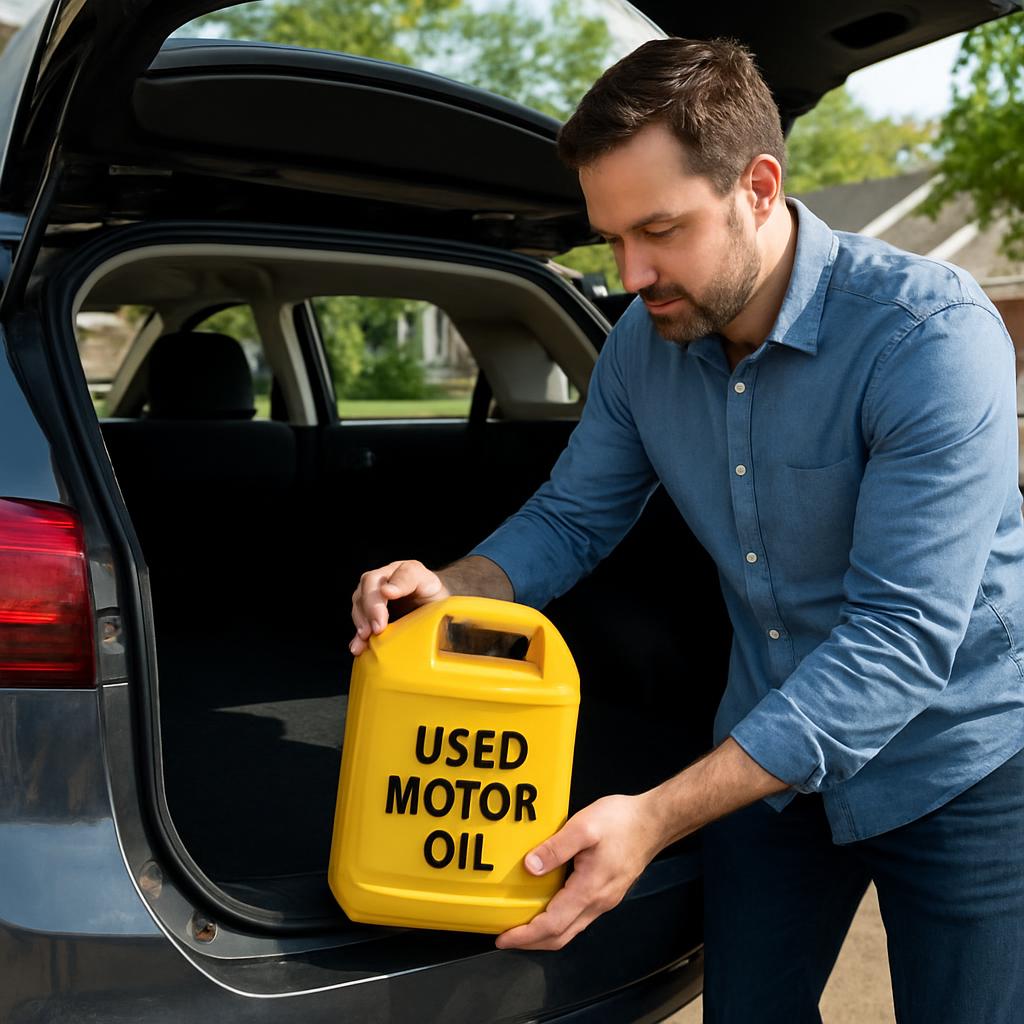
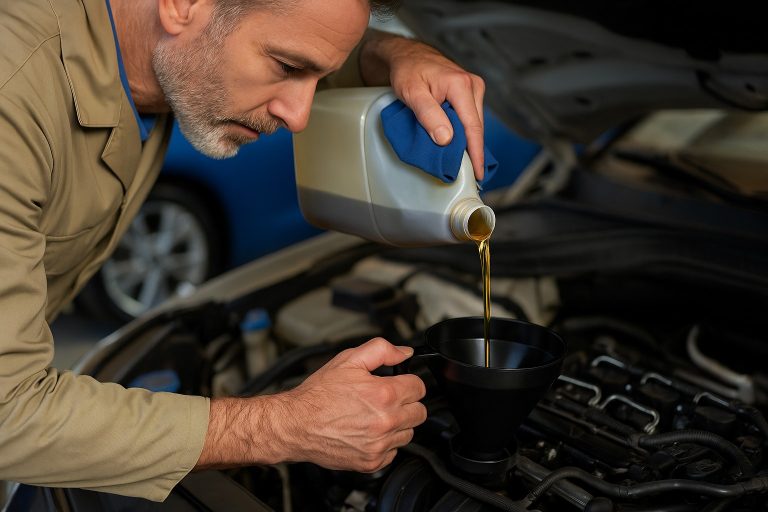
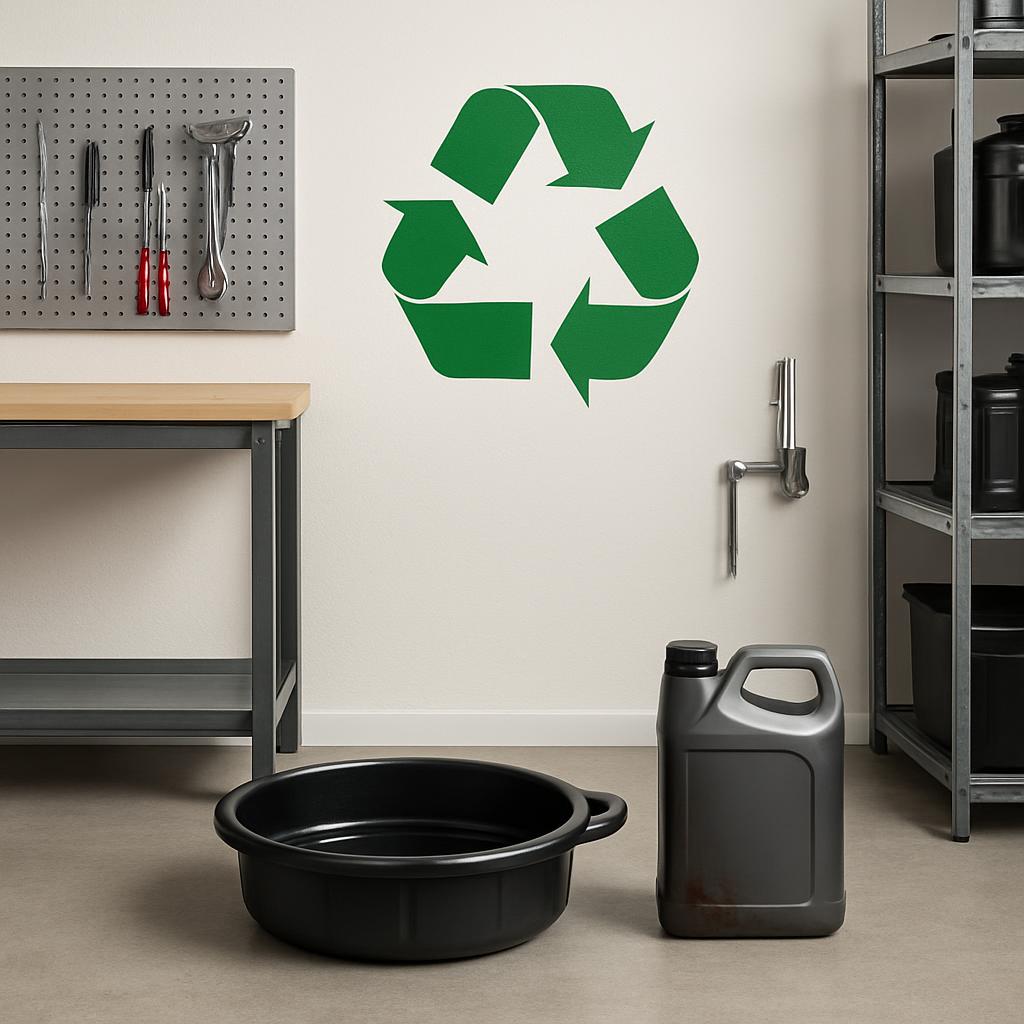
Safe storage is the first step. After your oil change, let the oil drain completely into a clean drain pan. If the pan has a lid, you can transport it directly. If not, transfer the used oil into a strong plastic container. A jug from fresh motor oil works well. Avoid containers that once held chemicals like bleach or cleaners. They can cause reactions with the oil.
Make sure the container has a tight cap. Wipe any spills on the outside. Store the oil upright in a cool area away from kids and pets. Do not mix the oil with antifreeze, gasoline or brake cleaner. Mixed fluids are harder to recycle and some centers refuse them. Keep the oil as pure as possible to make recycling easier.
Where to Take Used Motor Oil in the United States
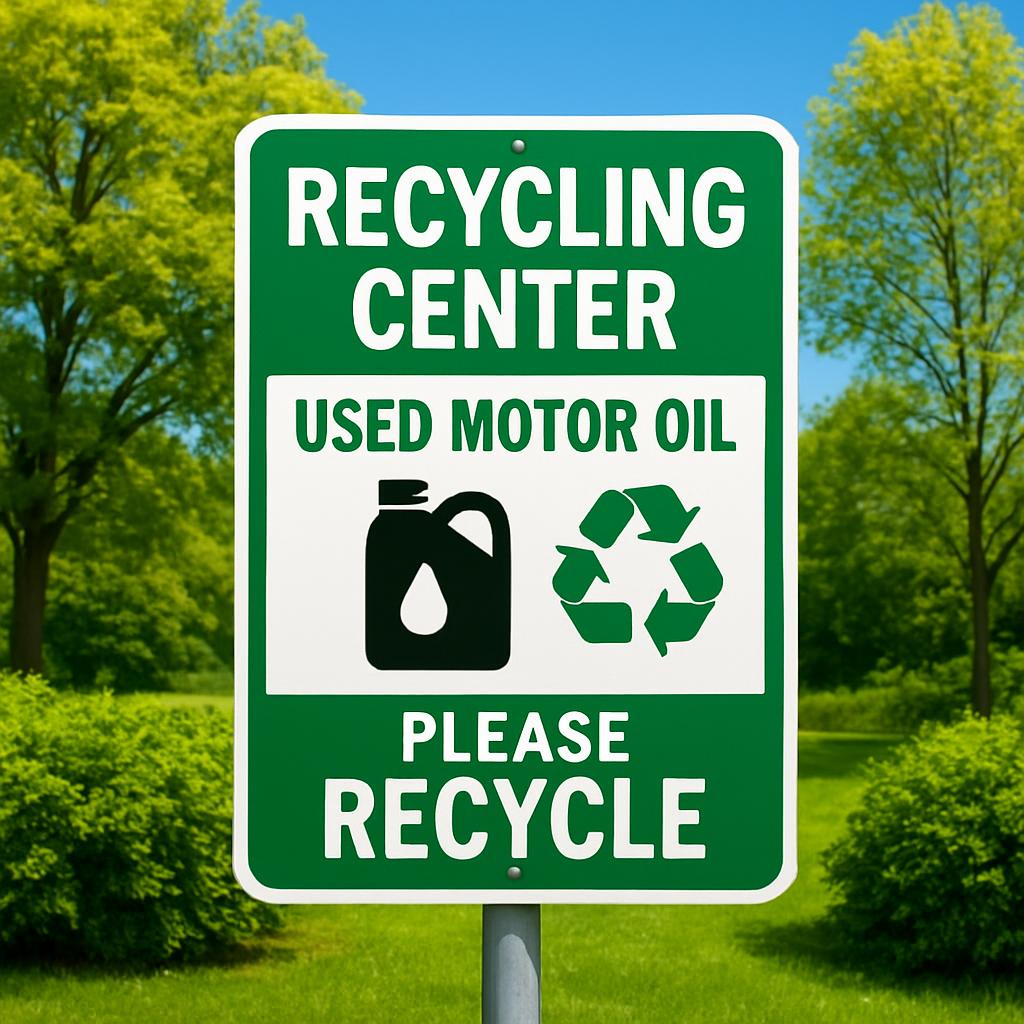
Most Americans live close to at least one recycling location. They are usually easy to find once you know where to look.
Auto Parts Stores
Large chains like AutoZone, O’Reilly and Advance Auto Parts accept used motor oil for free in most states. Many also accept oil filters. The process is simple. Walk in, hand over the used oil and they take care of the rest. There is no need to buy anything.
Municipal Recycling Centers
Many cities and counties run drop off centers for hazardous waste. They usually accept oil, filters, coolant and other automotive fluids. Check the schedule because some centers open only on specific days.
Service Shops and Dealerships
Some shops accept used oil even if they did not perform your oil change. This depends on local rules and the shop’s policy. It is worth asking during your visit for parts or service.
County Household Hazardous Waste Events
Some areas host yearly or seasonal events where residents can drop off oil and other materials. These events help people who do not have a nearby facility.
Whichever option you choose, bring the oil in a secure container and never transport it inside the passenger area. Put it in the trunk to avoid spills.
What About Used Oil Filters
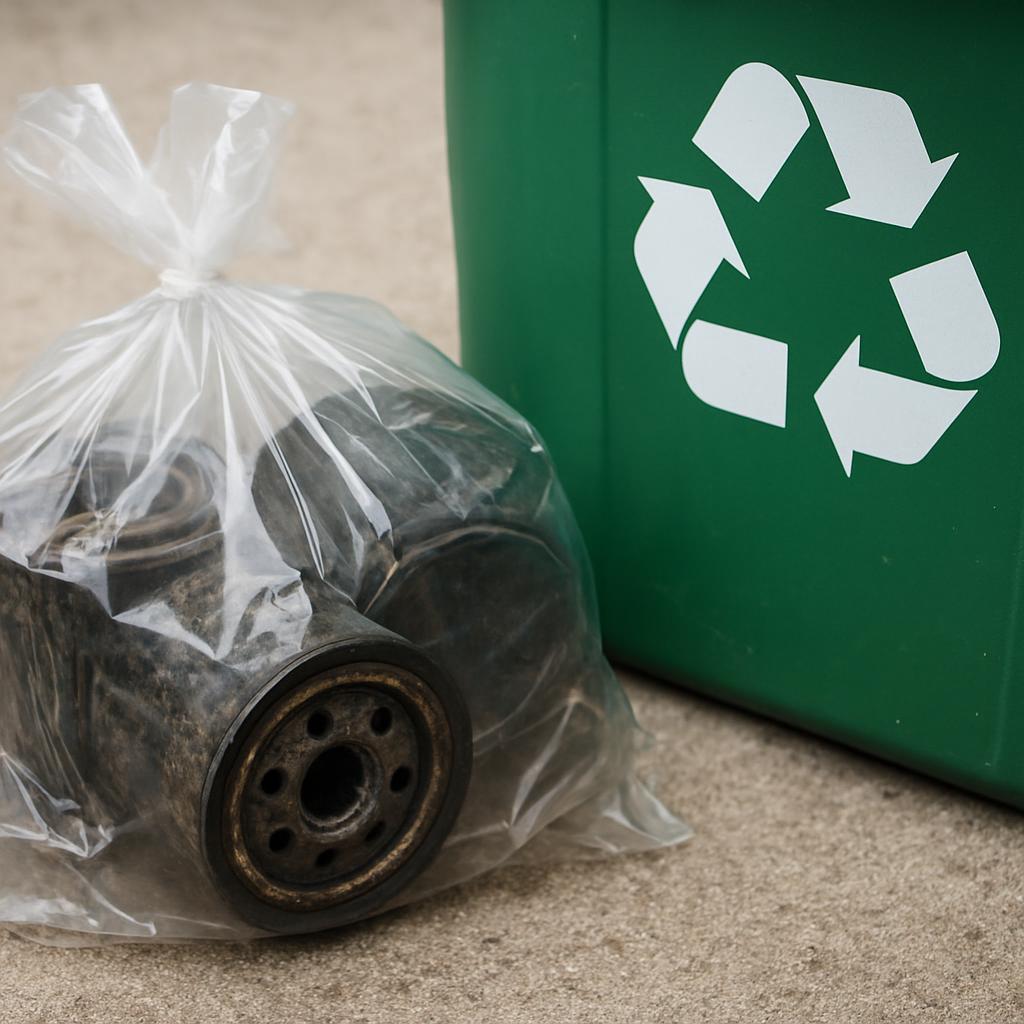
Oil filters also need safe disposal. They hold old oil inside even after draining. Many auto parts stores and recycling centers accept both oil and filters. Before disposal, let the filter drain for several hours into your drain pan. Then place it in a sealed plastic bag. Some states require filters to be recycled as scrap metal. The center will handle that part.
Common Mistakes to Avoid
Drivers make a few common errors when they handle used oil. Avoid these problems and the job stays simple.
Pouring Oil Into the Ground
Soil absorbs oil fast. It spreads into water and stays in the environment for years. Never pour oil outside, even in small amounts.
Throwing Oil in Household Trash
Garbage trucks are not equipped to manage motor oil. Leaks cause contamination and create hazards for workers.
Using Weak Containers
Thin bottles can crack during transport. Always use containers made for oil or strong plastics.
Mixing Oil With Other Fluids
Mixtures are harder to recycle and sometimes rejected. Keep your oil separate from everything else.
Letting Full Containers Sit for Too Long
Used oil is stable but long term storage increases the chance of leaks. Take the oil to a recycling center within a week or two.
Building Responsible Habits as a DIY Car Owner
Changing your own oil gives you a sense of control and connection with your vehicle. Safe disposal is part of that routine. It completes the cycle and keeps your maintenance work in line with environmental rules. Once you follow the process a few times, it becomes second nature. You drain the oil, transfer it into a clean container, drop it off and return to your regular driving routine.
These habits pair well with many of the steps taught in the Auto Maintenance DIY for American Drivers guide because they help you manage your car with confidence and respect for your surroundings.
Conclusion
Proper disposal of used motor oil is a simple habit that protects your community and keeps your DIY maintenance clean and legal. A little preparation and the right drop off location are all you need to make the process smooth. If you want to expand your maintenance skills even more, you can explore my detailed breakdown of common oil change mistakes to avoid, another satellite article that fits well with this one.