California teen driver laws and insurance requirements
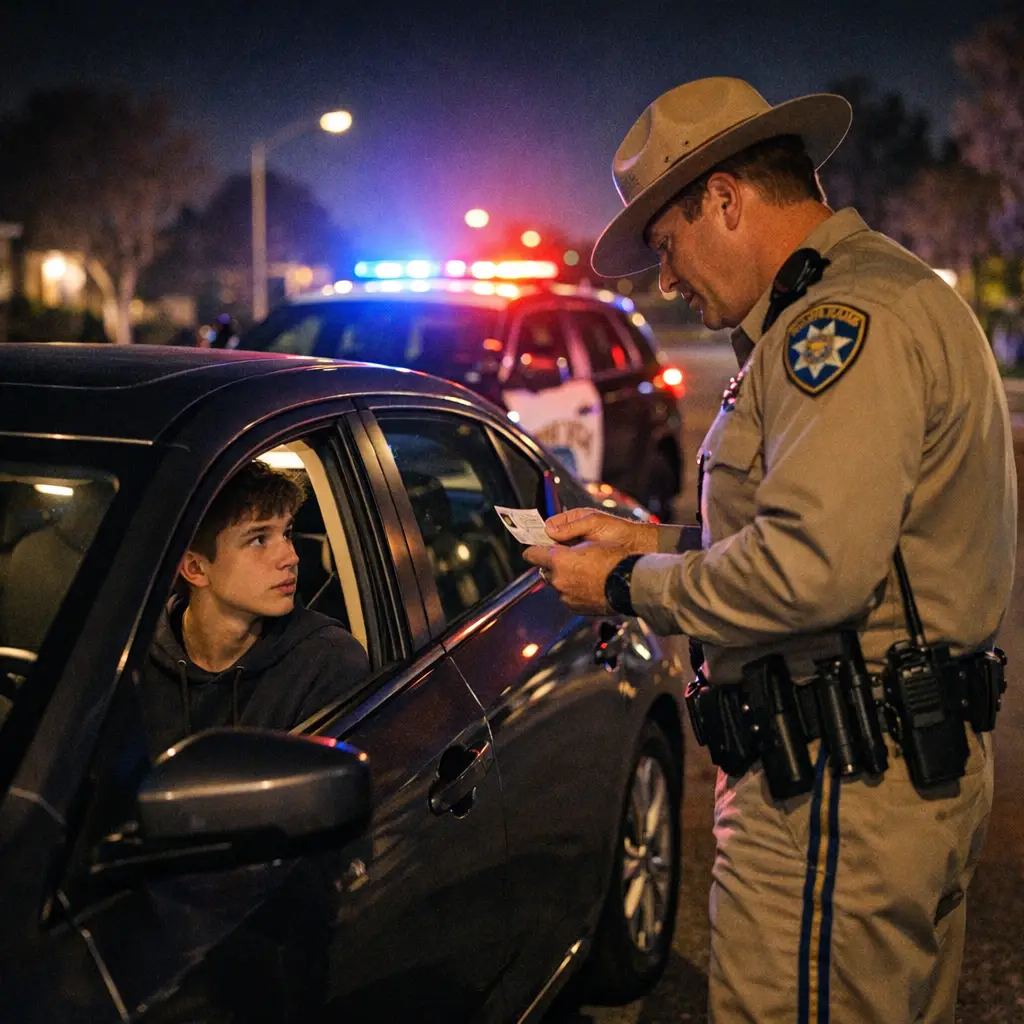
My friend’s son got pulled over three weeks after getting his provisional license. He had two friends in the car at 11 PM driving home from a movie. The cop cited him for violating passenger restrictions and curfew violations. $300 in fines plus his insurance jumped 25% even though he hadn’t caused an accident.
California has some of the strictest graduated licensing laws in the country. Parents think getting their kid a license is the finish line but it’s really just the start of navigating a maze of restrictions that last until age 18. Break these rules and you’re looking at fines, license suspension and insurance rate increases that stick around for years.
The insurance piece ties directly into the legal requirements. Violations show up on driving records. Insurers see them and adjust rates accordingly. Understanding what your teen can and can’t do legally protects both their license and your wallet.
The learner’s permit phase
California teens can get a learner’s permit at 15.5 years old. Before applying they need to complete driver education which we’ve covered before but it’s worth repeating because you can’t skip this step.
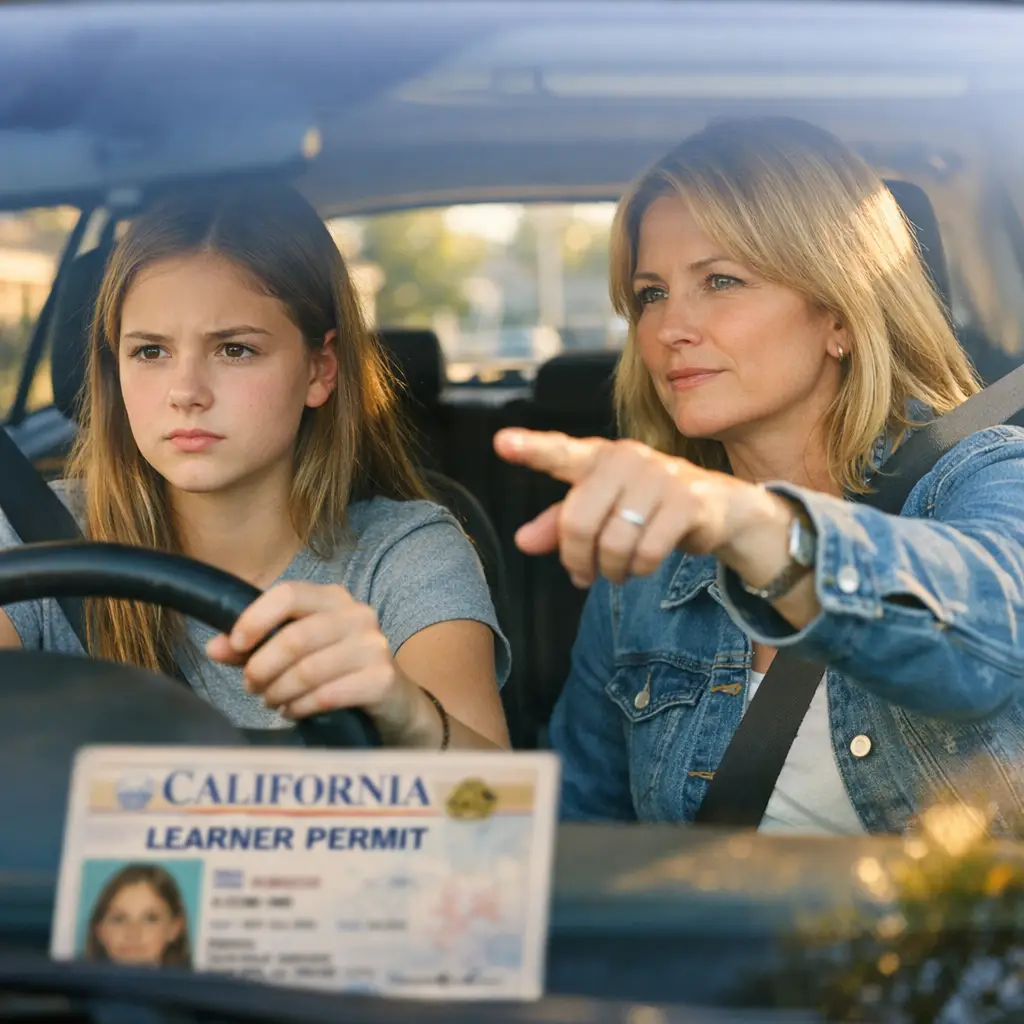
With a learner’s permit your teen can only drive with a licensed California driver who’s at least 25 years old in the passenger seat. That supervisor has to be close enough to take control of the vehicle if needed. Sitting in the back seat doesn’t count.
The permit is valid for 12 months. During that time your teen needs to complete 50 hours of supervised driving practice. Ten of those hours must be at night. You sign off on this in a log that goes to the DMV when they apply for their provisional license.
Insurance-wise you’re required to add your teen to your policy once they get the permit. Most companies don’t charge extra during the permit phase as long as the driving is supervised but you still have to report it. Failing to disclose your teen has a permit can void your coverage if something happens.
I’ve seen parents try to delay adding their permit-holding teen thinking they’ll save money. Bad move. If your teen crashes during practice and they weren’t listed on your policy the claim gets denied. You’re personally liable for all damages. Not worth the risk to save a few months of premiums.
Getting the provisional license
At 16 your teen can apply for a provisional license if they’ve held the permit for at least six months and completed those 50 practice hours. They take a driving test at the DMV. Pass that and they get provisional status.
The provisional license comes with serious restrictions that last until your teen turns 18. These aren’t suggestions. They’re laws with real penalties for violations.
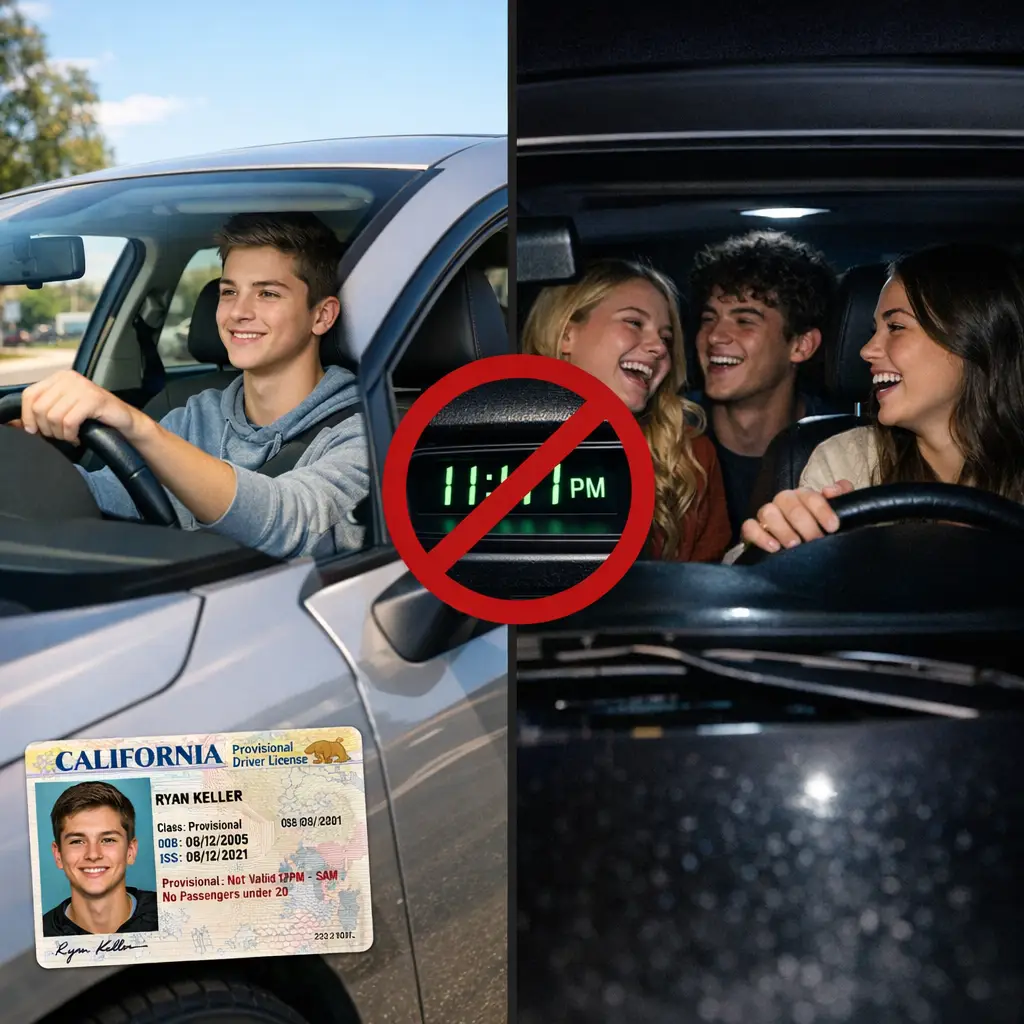
First restriction is the passenger rule. For the first 12 months after getting a provisional license your teen cannot transport passengers under 20 years old unless a licensed driver 25 or older is in the vehicle. The only exception is immediate family members.
So your 16-year-old can drive their younger siblings to school. They cannot drive three friends to the mall. Break this rule and it’s an infraction that goes on their record.
Second restriction is the curfew. Teens with provisional licenses cannot drive between 11 PM and 5 AM unless accompanied by a licensed driver 25 or older. Exceptions exist for work, school activities or medical necessity but you need documentation proving the exception.
My nephew got caught driving home from his restaurant job at 11:30 PM. He had his work schedule on his phone showing his shift ended at 11 PM. The cop still wrote him a ticket because he couldn’t prove a legitimate exception on the spot. Had to fight it later with his employer’s letter. Huge hassle.
After the first 12 months the passenger restriction lifts slightly. Your teen can transport one passenger under 20. After that it’s still one passenger until they turn 18 and get a full license.
The curfew stays in effect the entire provisional period until age 18. No exceptions based on how long they’ve been licensed.
Insurance implications of provisional status
Insurance companies know about provisional license restrictions. Some adjust rates based on compliance. Others just wait for violations to show up then raise premiums.
A passenger violation or curfew violation adds points to your teen’s driving record. Insurance companies check records when policies renew. Those violations signal risky behavior even if no accident occurred.
Rate increases from violations typically run 15-30% depending on the insurer and the specific violation. That increase usually lasts three years. On a $350 monthly premium a 20% increase costs you an extra $2,520 over three years from a single ticket.
Some violations lead to license suspension. If your teen accumulates too many points the DMV suspends their license for 30 days on the first offense. During suspension your insurance doesn’t drop but you’re paying to insure a driver who legally can’t drive. After reinstatement rates often increase because suspension itself is a red flag.
Serious violations can trigger license revocation. Reckless driving, DUI, street racing under provisional license often result in immediate revocation. Then your teen starts the whole licensing process over from scratch. Insurance costs for a teen with a revoked license history are astronomical if you can even find coverage.
Minimum insurance requirements
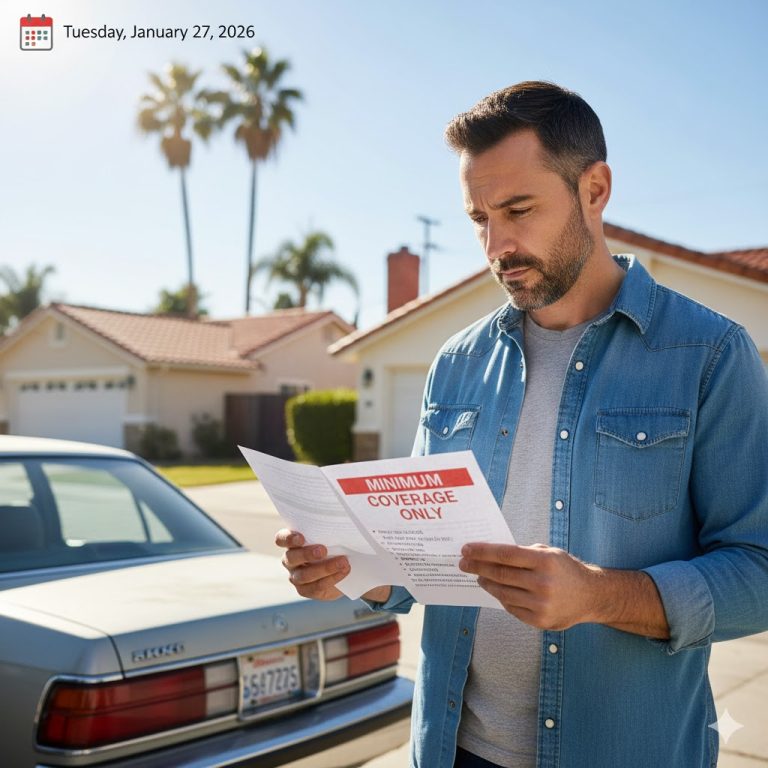
California requires all drivers to carry minimum liability coverage. For teens the requirements are the same as adults, but the reality is those minimums are dangerously low.
State minimum is 15/30/5. That’s $15,000 per person for bodily injury, $30,000 per accident for bodily injury and $5,000 for property damage.
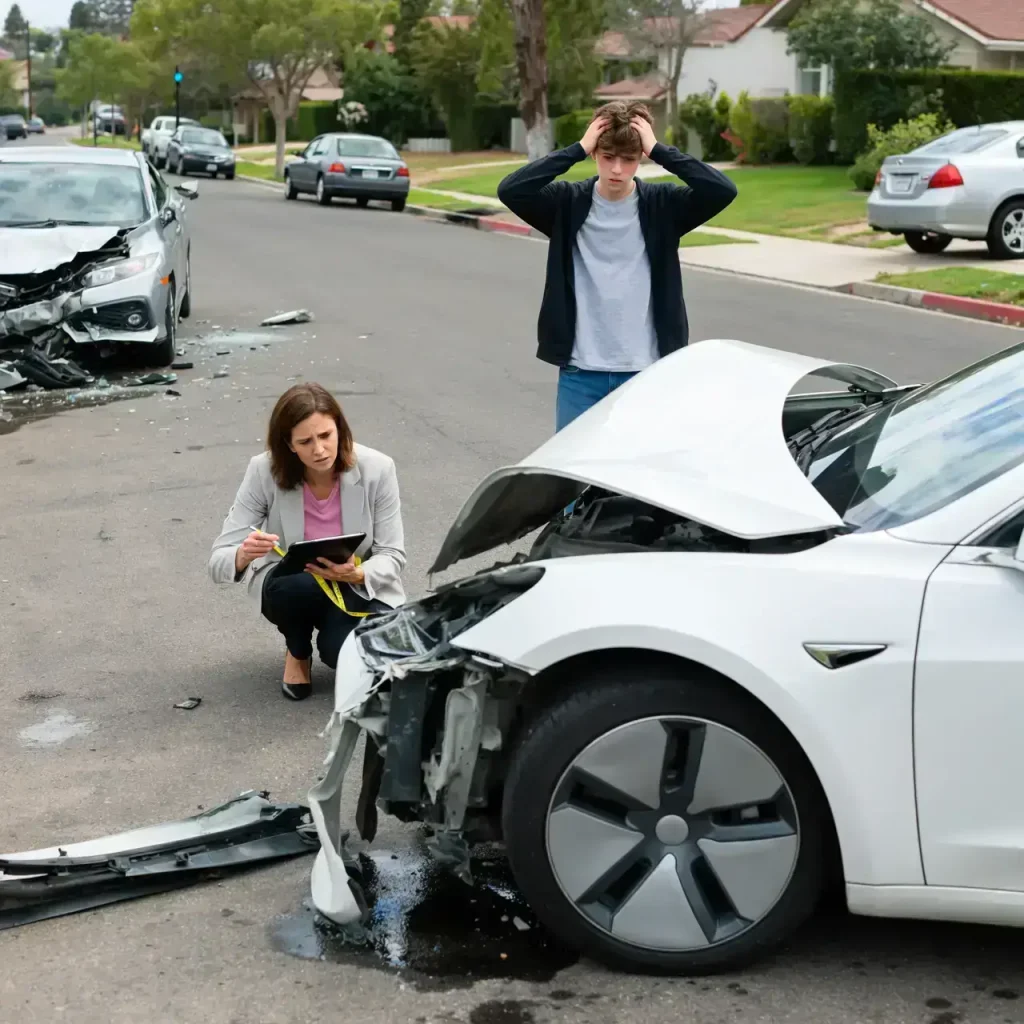
Let me put that in perspective. Your teen rear-ends someone at a red light. The other driver has neck injuries requiring surgery. Medical bills hit $50,000 easily. Your policy covers $15,000. You’re personally liable for the other $35,000.
Or your teen slides on wet pavement and hits a parked Tesla. Repair bill comes in at $18,000. Your policy covers $5,000. You owe $13,000 out of pocket.
I strongly recommend at least 100/300/50 coverage for teen drivers. Preferably 250/500/100 if you can afford it. The premium difference between minimum coverage and actually adequate coverage is usually just $40-80 monthly. Cheap compared to financial ruin from an underinsured accident.
Some parents think minimum coverage saves money. Short-term maybe. Long-term you’re gambling with your family’s financial security. One serious accident with minimum coverage can bankrupt you. Understanding comprehensive auto insurance options for teens in California means looking beyond just the cheapest legal option.
SR-22 and high-risk situations
Most teen drivers never need to worry about SR-22 certificates but it’s worth knowing about in case your teen makes a serious mistake.
SR-22 isn’t actually insurance. It’s a form your insurance company files with the DMV certifying you carry at least minimum coverage. Courts order SR-22 filing after major violations. DUI, reckless driving, driving without insurance, multiple at-fault accidents.
If your teen needs SR-22 your insurance costs skyrocket. Standard carriers often drop you entirely. You end up with high-risk insurers charging 2-3 times normal rates. SR-22 filing itself costs $15-25 but the insurance to back it runs hundreds more monthly.
SR-22 requirements typically last three years. Your insurer must keep the SR-22 on file continuously. Let your policy lapse even one day and the DMV suspends your teen’s license immediately. The three-year clock resets.
I’ve seen one family deal with this after their son got a DUI at 17. Their insurance jumped from $420 monthly to $1,150. That’s an extra $8,760 annually. For three years. Over $26,000 in additional insurance costs from one terrible decision.
The best way to handle SR-22 is to never need it. Follow the rules, don’t drink and drive, don’t race, don’t accumulate violations.
Additional legal requirements
Beyond basic licensing and insurance California has other laws affecting teen drivers specifically.
Cell phone use is completely prohibited for drivers under 18. No handheld calls. No hands-free calls. No texting. No looking at your phone at red lights. Zero tolerance. First offense is $20 fine plus court fees. Subsequent offenses go up.
The fine seems minor but the insurance impact isn’t. A distracted driving citation raises rates 15-25%. Plus, it demonstrates exactly the kind of risky behavior that leads to accidents.
Seatbelt laws apply to everyone, but enforcement is stricter for teens. Every passenger must be properly restrained. Your teen is responsible for making sure everyone buckles up. A passenger without a seatbelt gets your teen cited.
Zero tolerance for alcohol or drugs. BAC limit for drivers under 21 is 0.01%. Basically, any detectable amount results in DUI charges. First offense means one-year license suspension minimum. Good luck finding insurance after that.
What happens when teens turn 18
The provisional restrictions end. Your teen can drive any time, transport any number of passengers, doesn’t need supervision anymore. Full driving privileges finally.
Insurance doesn’t automatically drop though. Rates start declining at 18 but the big decreases come at 19, 21 and 25. By 18 your teen has maybe two years of driving experience. Still higher risk than experienced drivers.
Some parents think their teen should get their own policy at 18. Usually that costs more than keeping them on the family policy. The multi-car discount and bundling savings typically outweigh any benefit from a separate policy.
I’d keep your teen on your policy until they move out permanently or buy their own vehicle. Once they’re financially independent and living separately then a separate policy makes sense.
At 18 your teen can apply for a standard license instead of provisional. This doesn’t change insurance much but removes the stigma and legal restrictions of provisional status.
Common violations and their consequences
Speeding is the most common teen violation. Anything 1-15 mph over the limit is one point. 16+ mph over is two points. Points accumulate and trigger license suspension.
Four points in 12 months gets a six-month suspension. Eight points in 36 months also triggers suspension. That sounds like a lot but violations stack quickly. Two speeding tickets plus a red light violation puts you at five points in one year. Suspension territory.
Insurance rates jump 20-40% after a speeding ticket. The faster over the limit the bigger the increase. A ticket for going 80 in a 65 zone costs more in insurance increases than a ticket for 40 in a 35 zone.
Red light violations carry one point and rate increases of 15-25%. Same with stop sign violations. These are completely preventable. Slow down and stop fully at red lights and stop signs. Simple.
At-fault accidents obviously raise rates the most. Minor accidents with claims under $2,000 might increase rates 20-30%. Major accidents with injuries can double your premium. The increase typically lasts three years.
Some companies offer accident forgiveness but it rarely applies to teen drivers. Usually you need to be claim-free for five years to qualify and most teens haven’t had licenses that long.
How to handle violations
If your teen gets a ticket you have options. Not great options but options.
Attend traffic school. For eligible violations traffic school prevents the point from appearing on your driving record. No point means insurance doesn’t find out about it. Costs $50-150 for the class plus court fees but saves way more in avoided insurance increases.
Traffic school eligibility depends on the violation. Most moving violations qualify. Reckless driving or 25+ mph speeding usually don’t. You can only do traffic school once every 18 months.
Fight the ticket if you think it’s unfair. Show up to court with evidence and a good explanation. Sometimes it works. Often it doesn’t. But trying costs nothing except time.
Pay the ticket and accept the consequences. Points go on record, insurance finds out, rates go up. This is the default if you don’t take action.
Whatever you do don’t ignore a ticket. That leads to license suspension, additional fines and way worse insurance consequences.
Teaching your teen the rules
The provisional restrictions exist to keep teen drivers safer during their highest-risk years. The data shows they work. States with graduated licensing have lower teen accident and fatality rates.
But the rules only work if teens actually follow them. That means you need to teach not just the what but the why.
Explain that the passenger restriction exists because teen crashes increase dramatically with peer passengers. Distraction, showing off, peer pressure all contribute. One passenger is manageable. Three passengers is chaos.
The curfew reflects crash statistics. Fatal teen accidents peak between midnight and 3 AM. Darkness, fatigue, drunk drivers on the road, less supervision. Nothing good happens for teen drivers late at night.
Make consequences clear. “Break the passenger rule and you lose driving privileges for a month.” Or “Get cited for curfew violation and you pay the increased insurance.” Whatever matters to your teen.
Monitor compliance. Check mileage occasionally. Ask where they went and who was with them. Not helicopter parenting just normal supervision. Teens who know parents are paying attention follow rules more consistently.
Most importantly model good driving yourself. Your teen learns more from watching you drive than from any lecture about rules. Follow speed limits, stop at yellows, put your phone down. They’re watching.
The reality of enforcement
Cops know the provisional license laws and they enforce them. A car full of teenagers at midnight is basically asking to get pulled over. Officers check birthdates and license status.
Your teen might think they can talk their way out of violations. Sometimes they get warnings. Other times they get tickets. Don’t count on warnings.
Some areas enforce more strictly than others. College towns near high schools tend to have heavy enforcement during weekend nights. Rural areas might be more lenient. But everywhere in California the laws apply equally.
Your teen’s attitude during traffic stops matters. Polite and respectful teens get warnings more often than argumentative ones. Teach them to pull over safely, turn the car off, keep hands visible, answer questions honestly. Making the officer’s job harder guarantees a ticket.
Long-term impact on insurance
The choices your teen makes during their provisional license period affect insurance costs for years. A clean record from 16-18 sets them up for good rates at 18-25. A record full of violations means expensive insurance well into their twenties.
I’ve watched this play out with my neighbor’s kids. Their daughter drove carefully during her provisional period. One minor speeding ticket that she traffic schooled away. At 19 her insurance on her own policy ran $180 monthly.
Their son accumulated three tickets and one at-fault accident between 16-18. At 19 his insurance quoted $485 monthly. Same family, similar cars, $305 monthly difference entirely from driving record.
Insurance companies have long memories. Those early violations stick around on driving records affecting rates for three to five years. Sometimes longer if they led to license suspension or SR-22 requirements.
Starting your teen off with knowledge of California’s provisional license rules and making sure they follow them keeps insurance affordable. Understanding how California provisional license requirements affect both legal standing and insurance costs helps parents guide their teens through this critical period.
The provisional license phase doesn’t last forever. Your teen will turn 18, restrictions will lift, rates will gradually improve. Getting through those first two years without major violations sets them up for manageable insurance and safer driving long-term. Worth the effort to understand the rules and enforce compliance.
Stay covered, stay safe, and happy driving.