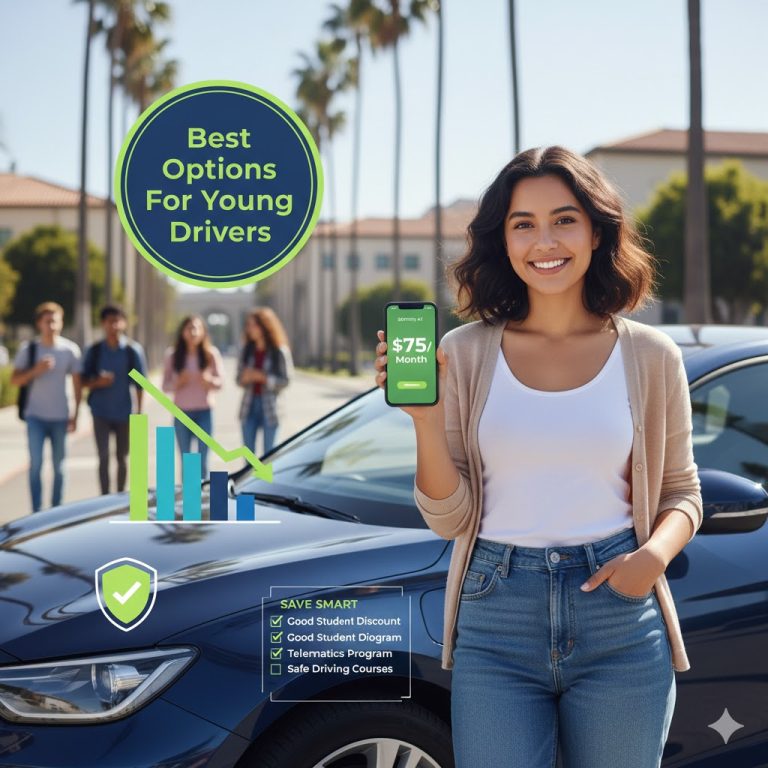

Car insurance discounts for teen drivers in California
I spent three hours on the phone with insurance companies last week helping my neighbor figure out why her teen’s insurance was costing $580 a month. Turns out she was missing four different discounts that would have saved her almost $200 monthly. Her agent never mentioned them. She never asked. That’s $2,400 a year left on the table.
Teen insurance is expensive enough without paying more than you have to. The problem is most parents don’t know what discounts exist or how to actually get them. Insurance companies aren’t going to volunteer this information. You have to know what to ask for.
The good student discounts
This is the easiest money you’ll ever save on teen insurance. Most carriers knock off 15-25% if your teen maintains a B average or 3.0 GPA. Some companies are even more generous. State Farm gives up to 25% off. Geico offers 15%. USAA goes as high as 20%.
You need to submit proof though. A report card or transcript works. Some schools have online portals where you can download official grade reports. Your insurance company needs to see it’s legitimate not just take your word for it.
The discount usually applies as long as your teen is a full-time student under age 25. That means it keeps working through college which is huge. Just remember to resubmit transcripts every semester or year depending on what your insurer requires. Let it lapse and you lose the discount until you provide updated proof.
I’ve seen parents forget to submit new grades and pay full price for six months before realizing the discount dropped off. Set a calendar reminder. Make it part of your routine when report cards come out.
Driver’s education discounts
California requires anyone under 17.5 to complete driver’s education before getting a license. Since you’re doing it anyway you might as well get the insurance discount for it.
Most companies give 10-15% off for completing an approved driver’s education course. The key word is approved. Your insurer has a list of courses that qualify. Random online programs might not count. Check before your teen enrolls.
Traditional classroom courses work. So do most major online programs like DriversEd.com, Aceable and iDriveSafely. Community colleges offer approved courses too and they’re usually cheaper than private driving schools.
You need the certificate of completion. Don’t lose it. Make copies. Some insurance companies want to keep the original. I scan important documents like this and keep digital backups because I’ve lost count of how many times, I’ve needed to reproduce something years later.
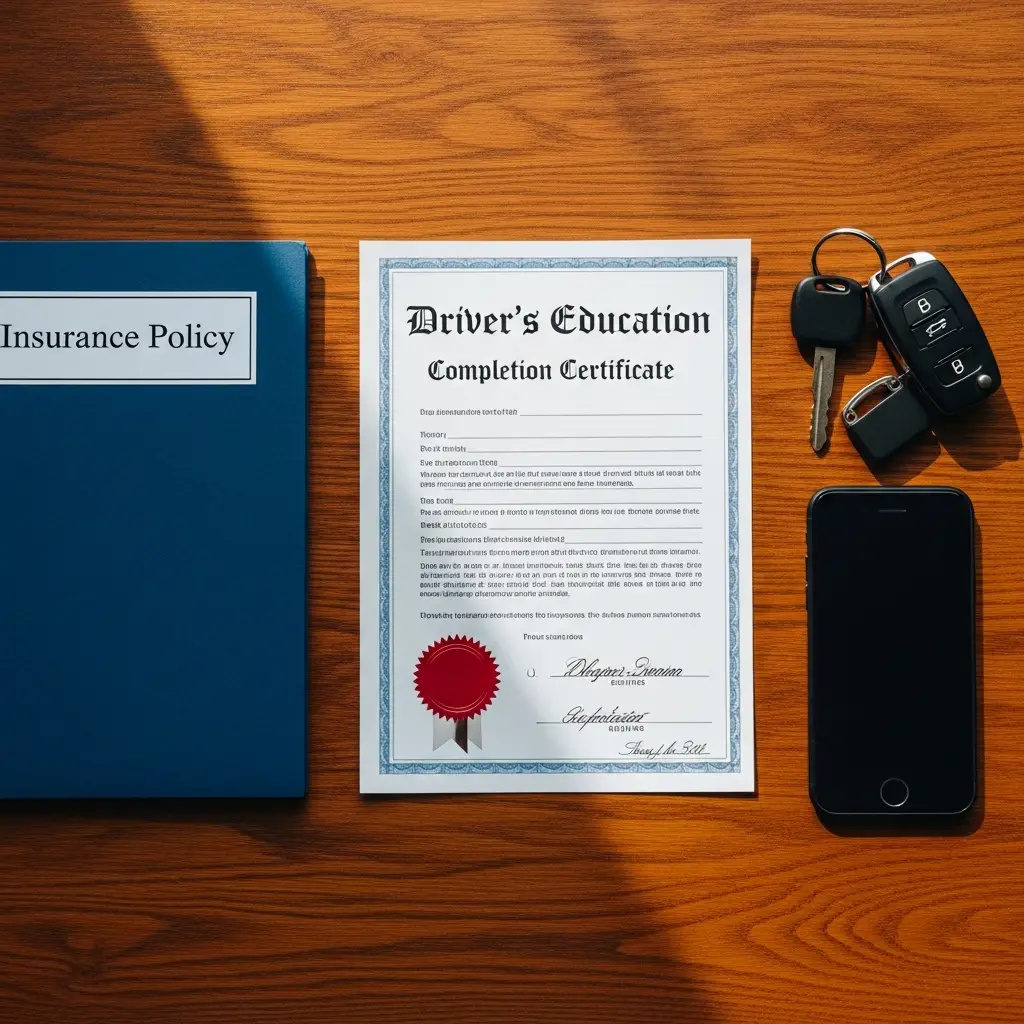
The discount typically lasts as long as your teen is on your policy. Some companies apply it permanently. Others review it annually. Ask your agent how long it stays active.
Defensive driving course discounts
This is different from driver’s education. Defensive driving courses teach advanced safety techniques and many insurers reward completion with additional discounts.
The discount is usually 5-10% which isn’t as big as good student or driver’s ed but it stacks with other discounts. Taking a defensive driving course on top of driver’s education can get you both discounts simultaneously.
Most defensive driving courses run 4-8 hours. Your teen can complete them online in California. The courses cost $20-50 typically. If you’re saving $300 a year on insurance it pays for itself in about a month.
Not all insurers offer this discount for teens. AAA does. Some smaller regional companies do. Ask specifically about defensive driving discounts when you’re shopping for coverage. Understanding all auto insurance options for teens in California means knowing which companies reward safe driving training most generously.
Telematics and dafe driving programs
These programs track your teen’s actual driving behavior through a smartphone app or plug-in device. Drive safely and you save money. Drive recklessly and well you don’t.
Progressive Snapshot is probably the most well-known. It monitors hard braking, rapid acceleration, late-night driving and phone use while driving. Safe drivers can save up to 30%. State Farm offers Drive Safe & Save with similar tracking. Allstate has Drive wise.
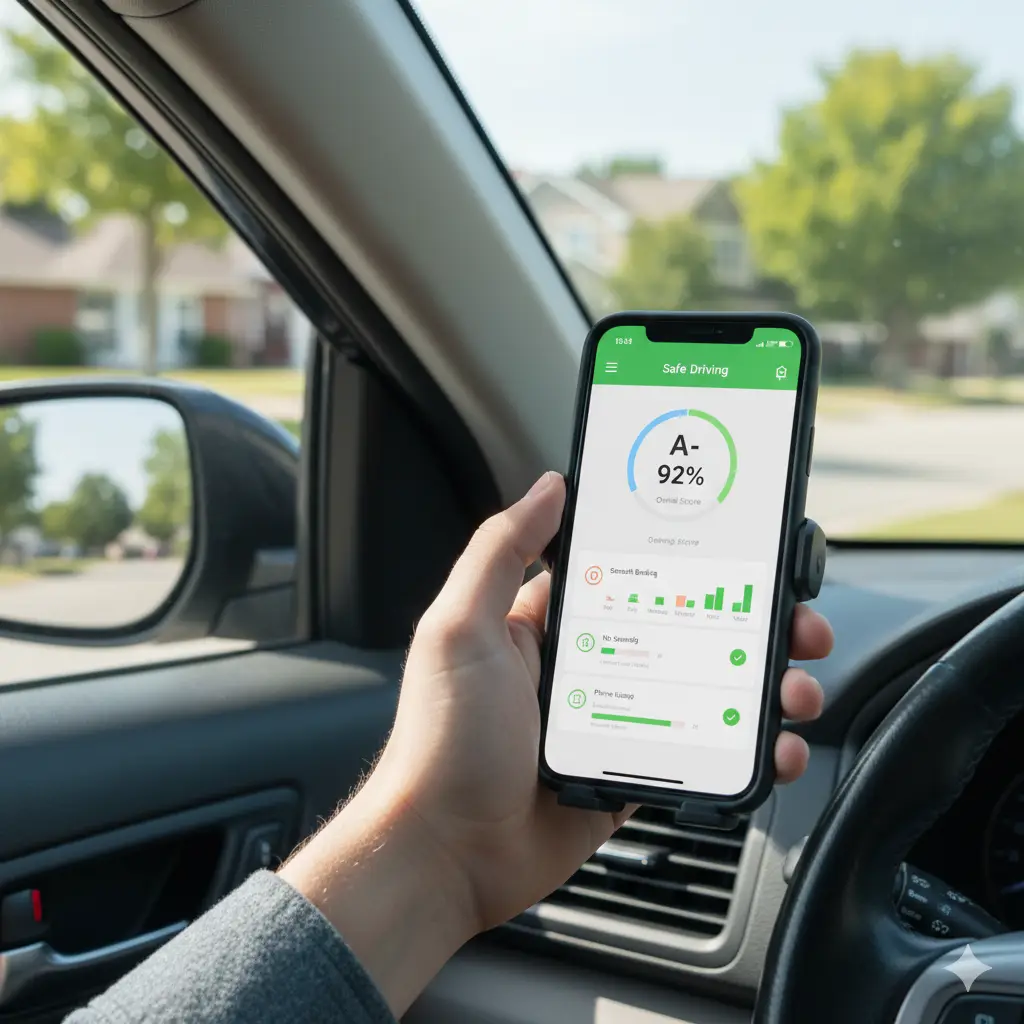
I was skeptical about these programs at first. It feels invasive having your insurance company track every trip. But the discounts are legitimate and frankly most teens drive more carefully when they know they’re being monitored.
The apps show you exactly what’s hurting your score. Hard braking at yellow lights. Driving at 2 AM. Touching your phone while moving. My nephew improved his driving dramatically just from seeing the feedback. His parents were thrilled.
You typically use the app for 90 days to establish your rate. After that your discount gets locked in based on your driving behavior during that period. Some programs keep monitoring and adjust your rate every six months.
The potential 30% savings on teen insurance is massive. If you’re paying $400 monthly that’s $120 back in your pocket every month just for driving safely. Your teen was hopefully planning to drive safely anyway.
Multi-car discounts
If you ensure multiple vehicles with the same company, you get a multi-car discount. This usually runs 10-25% depending on the carrier and how many vehicles you have.
The discount applies to your whole policy not just your teen’s portion. That still saves you money though. If your total premium is $500 monthly and you get 15% off that’s $75 in savings.
You probably already have this discount if you own multiple cars. It kicks in automatically when you insure more than one vehicle. But it’s worth mentioning because some parents consider getting their teen a separate policy thinking it’ll be cheaper. It usually isn’t once you lose the multi-car discount.
Keep all your vehicles on one policy. Keep your teen on that same policy. Bundle everything together. That’s almost always the cheapest approach.
Multi-policy bundling
This is different from multi-car. Multi-policy means having different types of insurance with the same company. Home and auto. Renters and auto. Life and auto.
The discount typically ranges from 15-25% on your auto insurance when you bundle. Some companies offer even better deals. State Farm is aggressive with bundling discounts. So is Allstate.
If you’re shopping for teen insurance anyway consider moving all your insurance to whichever company offers the best bundled rate. Don’t just look at the auto insurance quote in isolation.
I moved my home and auto to the same carrier three years ago. My auto premium dropped 20% immediately just from the bundle discount. Then I added my nephew to the policy and even with his addition my total bill was less than I’d been paying before because of how much the bundling saved.
Away at school discount
If your teen goes to college more than 100 miles from home without taking a car, they can get an away-at-school discount. This usually saves 20-40% on the portion of your premium that covers your teen.
The logic makes sense. If the car stays home and your teen is at college 200 miles away, they’re not driving it most of the year. Less driving means less risk means lower rates.
You need proof of enrollment and proof your teen doesn’t have a vehicle at school. A school registration document usually works. Some companies want a letter from the college confirming your teen lives on campus.
The discount typically applies during the school year. Summer breaks when your teen comes home you pay the full rate again. It recalculates automatically with most insurers.
This saved my sister a fortune when her daughter went to UC Berkeley. The away-at-school discount cut the teen portion of her premium by 35%. That’s over $1,500 a year in savings just for submitting enrollment paperwork.
Vehicle safety feature discounts
Cars with advanced safety features cost less to insure. Anti-lock brakes, airbags, electronic stability control, automatic emergency braking, lane departure warning, blind spot monitoring. All of these can qualify for discounts.
The discounts are usually modest. Maybe 5-10% total for having multiple safety features. But again, it stacks with everything else.
If you’re buying a car for your teen anyway choose one loaded with safety tech. Not only does it actually protect them better in a crash, but you’ll save on insurance every month. Vehicles that cost significantly less to insure for teenage drivers almost always come with strong safety ratings and modern safety features.
Some features matter more than others to insurers. Automatic emergency braking gets you bigger discounts than heated seats. Focus on safety equipment that prevents accidents.
Low mileage discounts
If your teen drives less than 7,500 or 10,000 miles annually you might qualify for a low mileage discount. This usually saves 5-15% depending on the company.
You have to estimate your annual mileage accurately. Some insurers audit this through telematics programs. If you claim 5,000 miles but actually drive 12,000 you could face penalties or rate increases.
Most teens don’t drive that much honestly. School is close. They don’t have long commutes. If your teen only uses the car for weekend social activities and occasional errands low mileage discounts make sense.
Track the odometer for a few months to get a realistic estimate. Multiply by 12 to project annual mileage. Be honest with your insurer. The savings aren’t worth the risk of providing false information.
How to stack multiple discounts
Here’s where it gets interesting. You don’t just get one discount. You can combine most of them together.
Good student discount plus driver’s education plus safe driving program plus multi-car plus bundling. Stack all five and you’re looking at 40-60% off your base rate. That transforms unaffordable insurance into something manageable.

Not every discount works with every other discount. Some companies cap total discounts at 40% or 50%. But even with caps you should pursue every discount you qualify for.
My neighbor’s $580 monthly premium that I mentioned earlier dropped to $385 after we applied four discounts she was missing. Good student saved her $87. Driver’s education another $58. Bundling her home and auto saved $95. Raising her deductible from $500 to $1,000 cut another $45. Same exact coverage. $195 less per month.
Discounts most people forget
There are some obscure discounts that almost nobody knows about but can save you money.
Paperless billing discounts. Some companies give you $5-10 off monthly just for going paperless. It’s tiny but it’s free money for clicking a button.
Paid-in-full discounts. If you pay your entire six-month or annual premium upfront instead of monthly you save 5-10%. This requires having the cash available, but the savings are real.
Affinity discounts. Some insurers offer deals for members of certain organizations. AAA members. Alumni associations. Professional organizations. Ask if your employer has partnerships with specific insurers.
Good driver discounts for the parents. If you maintain a clean driving record for three to five years some companies give you an additional discount. This helps offset the cost of adding your teen.
What to ask your insurance agent
Don’t wait for your agent to tell you about discounts. Most won’t unless you ask. Here’s exactly what to say when you call.
“What discounts do I currently have applied to my policy?” Make them list every single one. Then ask, “What other discounts might I qualify for that aren’t currently applied?”
Be specific about your situation. “My teen has a 3.4 GPA do I get a good student discount?” “My teen completed driver’s education through Aceable does that count?” “We have homeowners’ insurance with another company what happens if we move it here?”
If they say you don’t qualify for something, ask why and what you’d need to qualify. Sometimes it’s as simple as submitting documentation they don’t have.
Get quotes from multiple companies and compare not just the total price but which discounts each one offers. Some companies are more generous with good student discounts. Others have better telematics programs. Finding the cheapest car insurance for teens in California often means identifying which insurer values your specific discount qualifications most highly.
Maintaining your discounts long term
Getting discounts is one thing. Keeping them is another. Good student discounts disappear if grades slip below the required GPA. Driver’s education discounts might need periodic renewal.
Set calendar reminders to resubmit required documentation. Good student discount? Reminder every semester when grades come out. Away-at-school discount? Reminder at the start of each school year.
Monitor your policy declarations page every time it renews. Make sure all your discounts are still listed. I’ve caught discounts falling off due to administrative errors three different times. Without checking I’d have paid hundreds extra without realizing it.
If your teen’s situation changes update your insurer immediately. Grades improve? Submit new transcripts for a better good student discount tier. Completed a defensive driving course? Send the certificate. Changes that save you money are worth the five minutes it takes to notify your company.
Teen insurance doesn’t have to destroy your budget. Between good student savings, driver’s education, telematics programs and smart bundling most families can cut their teen insurance costs by 30-50%. You just have to know what exists and be willing to ask for it.
Stay covered, stay safe, and happy driving.