
Hiring a lawyer for an auto insurance claim in California: when and why It makes sense
Most auto insurance claims in California resolve without attorneys. However, when claims involve serious injuries, disputed fault, low settlement offers, or bad faith insurance practices, hiring a lawyer can dramatically change the outcome. Many drivers wait too long to seek legal advice, while others hire attorneys unnecessarily and reduce their net recovery.
California’s auto insurance and personal injury laws create specific situations where legal representation adds measurable value. Attorneys understand insurer tactics, comparative negligence rules, policy interpretation, and litigation leverage in ways most drivers do not. At the same time, legal representation comes with costs and tradeoffs that should be evaluated carefully.
This guide explains when to hire a lawyer for an auto insurance claim in California, what attorneys actually do during the claims process, how fees work, when legal help is unnecessary, and how to decide whether representation is the right move for your situation. It is written as a state-specific authority resource and as the final satellite supporting a complete California auto insurance claim guide silo.
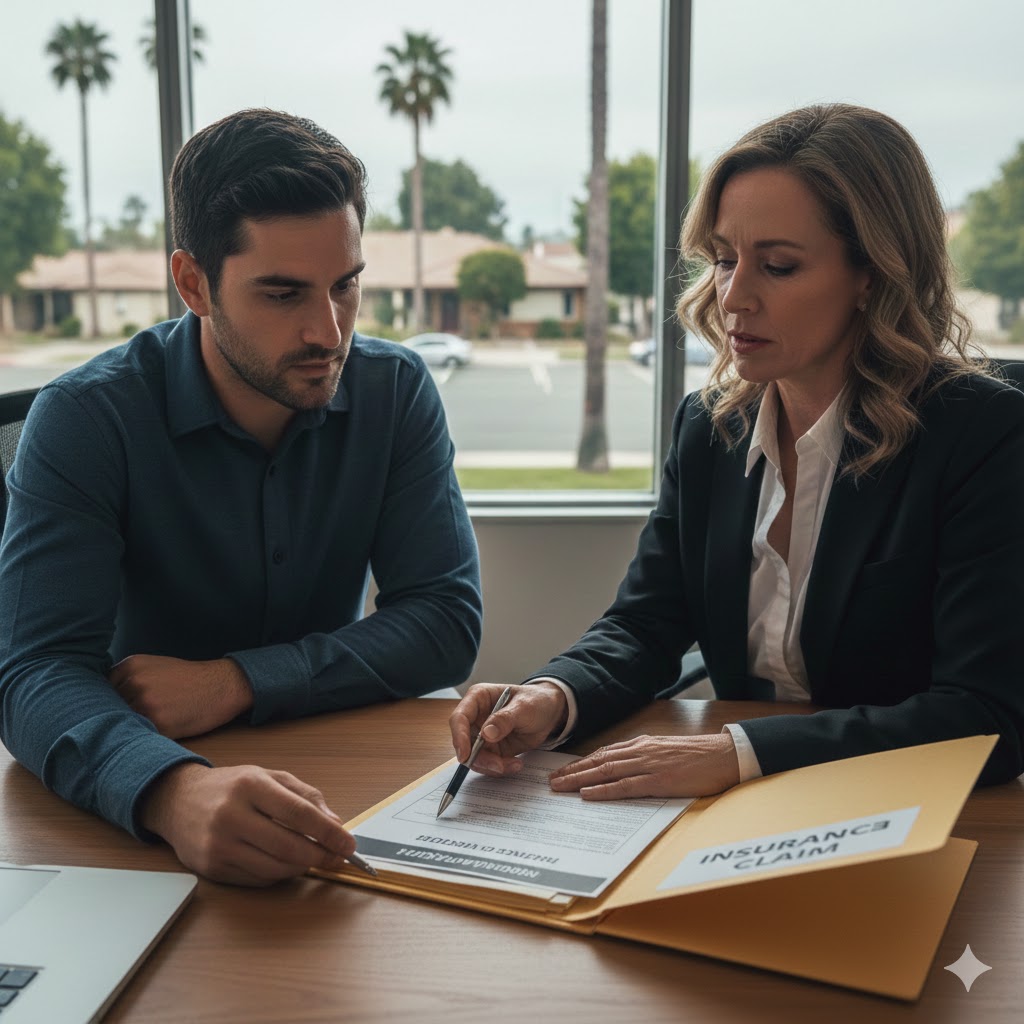
Do you always need a lawyer after a car accident in California
No. Many claims are handled successfully without attorneys.
Claims that often do not require lawyers include:
- Minor property damage claims
- Clear liability accidents
- No injury or very minor injury cases
- Claims paid promptly and fairly
Legal representation becomes valuable when complexity, risk, or insurer resistance increases.
Situations where hiring a lawyer makes sense
Certain scenarios strongly favor legal representation.
Serious or permanent injuries
If injuries involve:
- Hospitalization
- Surgery
- Long-term treatment
- Permanent impairment
- Chronic pain
An attorney can ensure that future medical costs and long-term damages are properly valued.
Disputed fault or comparative negligence
California’s pure comparative negligence system allows insurers to reduce payouts by assigning partial fault.
Lawyers help:
- Challenge unfair fault percentages
- Present evidence strategically
- Prevent unnecessary liability reductions
Fault disputes are one of the most common reasons settlements fall short.
Low settlement offers
Insurers often make early offers that undervalue claims.
Attorneys assess:
- True claim value
- Missing damage categories
- Future cost exposure
Legal pressure often increases settlement offers significantly.
Denied or delayed claims
When claims are denied or delayed without justification, lawyers can:
- Identify policy violations
- Escalate disputes
- Assert bad faith exposure
California law provides remedies for improper claim handling.
Policy limit issues
If damages exceed available policy limits:
- Lawyers evaluate recovery options
- Pursue multiple coverage sources
- Protect against premature settlement mistakes
Policy limit cases require careful strategy.
What a lawyer actually does in an auto insurance claim
Legal representation involves far more than filing lawsuits.
Claim evaluation and strategy
Attorneys:
- Review insurance policies
- Analyze coverage and exclusions
- Identify legal leverage
- Develop negotiation strategy
This groundwork shapes the entire claim.
Evidence development
Lawyers help gather and organize:
- Medical records
- Expert opinions
- Accident reconstruction
- Wage and income documentation
Strong evidence increases settlement value.
Communication with insurers
Attorneys handle:
- Adjuster communications
- Demand letters
- Settlement negotiations
- Dispute resolution
This shields clients from insurer pressure.
Negotiation and settlement
Most attorney-handled claims settle without trial.
Attorneys:
- Present structured settlement demands
- Counter low offers
- Use litigation risk to increase leverage
Negotiated settlements often improve significantly after legal involvement.
Litigation when necessary
If settlement fails, attorneys may:
- File lawsuits
- Conduct discovery
- Take depositions
- Present cases at trial
The threat of litigation alone often changes insurer behavior.
How attorney fees work in California auto claims
Most auto accident attorneys work on a contingency fee basis.
Contingency fees explained
Under contingency arrangements:
- No upfront payment is required
- Fees are a percentage of recovery
- Fees are paid only if compensation is obtained
Percentages vary but are commonly in the range of one-third.
Costs and expenses
In addition to fees, cases may involve:
- Filing fees
- Expert witness costs
- Medical record fees
Fee agreements should clearly explain how costs are handled.
When hiring a lawyer may not be the best choice
Legal representation is not always beneficial.
Minor claims with clear liability
For small claims:
- Attorney fees may exceed added value
- Simple negotiation may suffice
In these cases, self-representation often yields better net results.
Claims near policy limits without dispute
If:
- Liability is clear
- Policy limits are already offered
- No bad faith issues exist
Legal involvement may not increase recovery.
Timing: when to contact a lawyer
The best time to consult a lawyer is often earlier than drivers expect.
Early consultation helps:
- Avoid damaging statements
- Preserve evidence
- Protect deadlines
- Shape claim strategy
Consultation does not require immediate hiring.
Lawyers vs insurance adjusters
Adjusters work for insurers.
Lawyers:
- Work exclusively for clients
- Understand insurer negotiation limits
- Recognize undervaluation patterns
- Know when escalation is effective
This imbalance of experience often favors insurers when drivers act alone.
How lawyers affect claim timelines
Legal involvement may:
- Extend timelines initially
- Increase documentation requirements
- Delay settlement until claim value is clear
However, longer timelines often lead to higher settlements in injury cases.
Choosing the right lawyer in California
Drivers should evaluate:
- Experience with auto insurance claims
- Familiarity with California law
- Fee transparency
- Communication style
- Willingness to litigate if needed
Not all attorneys handle claims with equal effectiveness.
Red flags when hiring an attorney
Be cautious if a lawyer:
- Guarantees outcomes
- Pressures quick decisions
- Is vague about fees
- Has limited trial experience
Proper representation requires transparency and realistic expectations.
How lawyers work with medical providers
Attorneys may help:
- Coordinate treatment documentation
- Address medical liens
- Negotiate billing issues
This support can reduce financial stress during recovery.
The role of lawyers in bad faith claims
When insurers act improperly, lawyers:
- Document violations
- Assert statutory remedies
- Increase insurer exposure
Bad faith claims can exceed policy limits.
Settlement vs trial with legal representation
Most attorney-handled claims settle.
Trials occur when:
- Liability is heavily disputed
- Settlement offers remain unreasonable
- Policy limits are contested
Trial readiness strengthens negotiation leverage even without trial.
Impact of legal representation on net recovery
While fees reduce gross recovery, attorneys often:
- Increase total settlement
- Recover additional damage categories
- Reduce fault percentages
Net recovery may still be higher with representation.
Common myths about hiring a lawyer
Hiring a lawyer does not automatically mean going to court
Consultations are often free
Lawyers do not always slow claims unnecessarily
Legal help is not only for severe crashes
Understanding these realities helps drivers decide rationally.
How to decide whether to hire a lawyer
Consider hiring a lawyer if:
- Injuries are significant
- Fault is disputed
- Settlement offers feel inadequate
- Claims are denied or delayed
- You feel overwhelmed by the process
Avoid hiring a lawyer solely out of fear or frustration.
Hiring a lawyer for an auto insurance claim in California is not always necessary, but in the right circumstances it can significantly improve outcomes. Serious injuries, disputed fault, low settlement offers, and bad faith insurance practices are all situations where legal representation adds measurable value.
The key is timing and judgment. Drivers who understand when legal help is warranted and when it is not are better positioned to protect their financial interests. This guide completes a full state-specific auto insurance claim silo designed to help California drivers navigate claims with clarity, confidence, and strategic awareness.