How to switch auto insurance providers in California

Switching auto insurance providers is one of the most effective ways for drivers to lower premiums, improve coverage, and correct pricing errors. Yet many drivers in California hesitate to switch insurers due to confusion, fear of coverage gaps, or uncertainty about how state laws affect the process.
In California, switching auto insurance providers is governed by strict consumer protection laws, unique underwriting rules, and state-mandated discount structures. These regulations make the switching process both safer and more advantageous for informed drivers but also more complex than in many other states.
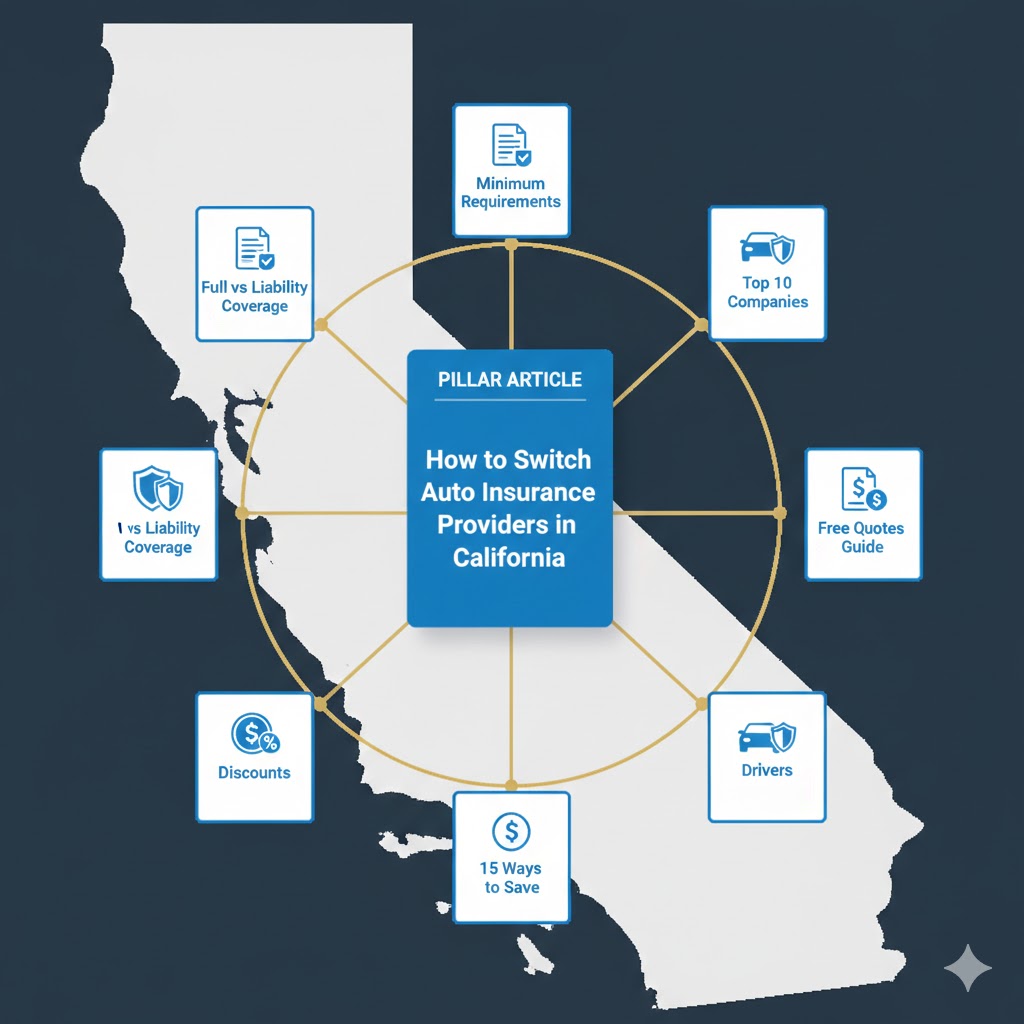
This pillar article explains how to switch auto insurance providers in California step by step, including legal considerations, timing strategies, documentation requirements, common mistakes, and how switching impacts discounts, claims history, and long-term premiums. It is designed as an authority resource for drivers and as a cornerstone article for automotive insurance niche websites.
Why California drivers switch auto insurance providers
California drivers switch insurers for many reasons, including:
- Rising premiums at renewal
- Loss or misapplication of discounts
- Lifestyle changes such as remote work or retirement
- Vehicle changes
- Dissatisfaction with claims handling
- Better pricing from competitors
Because California limits the use of credit scores and demographic pricing, shopping around is especially powerful. Two insurers may price the same driver very differently using the same legal rating factors.
Is it legal to switch auto insurance providers in California?
Yes. California drivers may switch auto insurance providers at any time, provided they maintain continuous coverage.
Key legal requirements
- Continuous liability coverage is mandatory
- Lapses in coverage can result in penalties and higher future premiums
- Cancellation of an old policy should only occur after a new policy is active
California law protects drivers from unfair cancellation practices and ensures that switching insurers does not automatically reset driving history or eligibility for mandatory discounts.
When is the best time to switch auto insurance in California?
Timing plays a major role in maximizing savings.
Best times to switch
- At policy renewal
- After a major life change (moving, job change, retirement)
- After violations or accidents age off your record
- After reducing annual mileage
- After adding or removing vehicles or drivers
Switching immediately after a rate increase is often the most cost-effective strategy.
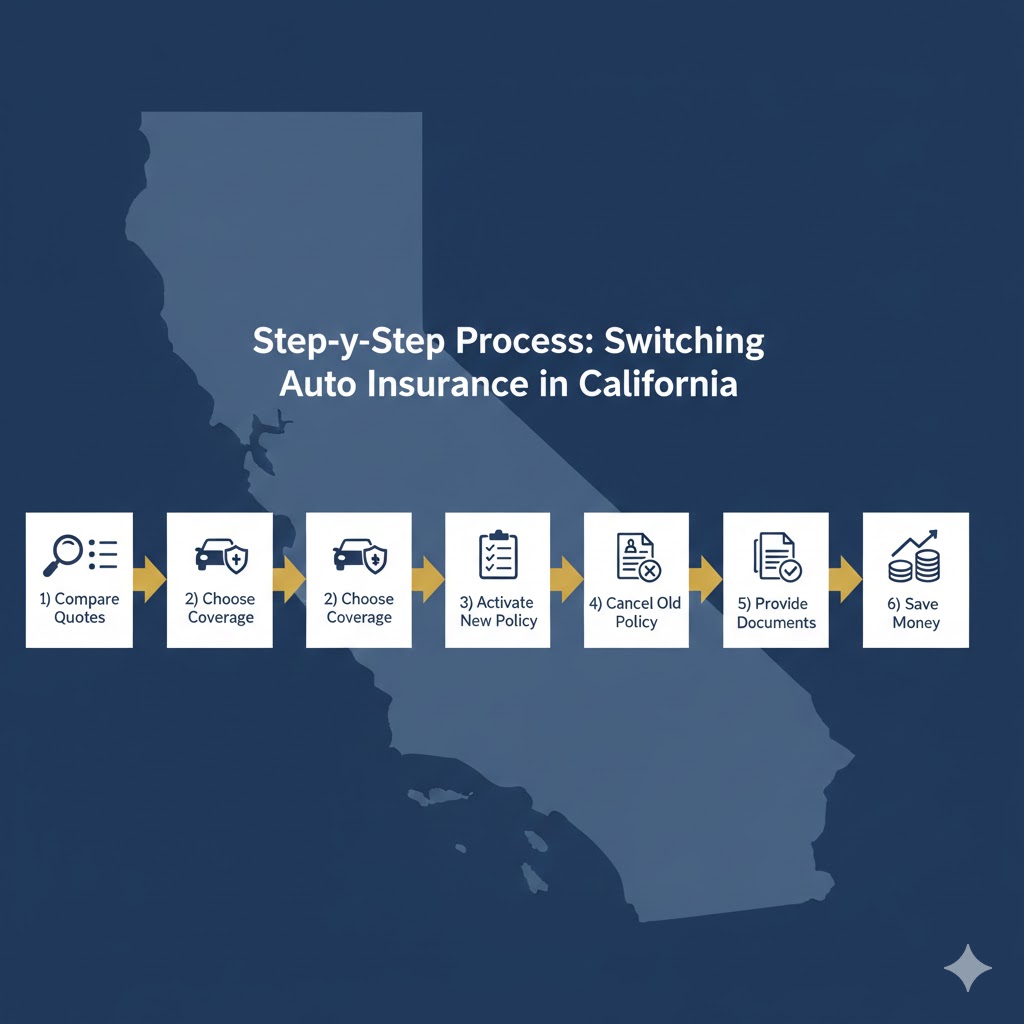
Step-by-step: How to switch auto insurance providers in California
Step 1: Review your current policy
Before shopping, review:
- Coverage limits
- Deductibles
- Applied discounts
- Annual mileage rating
- Driver listings
- Policy exclusions
This prevents underinsuring or overpaying when switching.
Step 2: Gather required information
Most insurers will request:
- Driver’s license numbers
- Vehicle identification numbers (VINs)
- Current mileage estimates
- Claims and violation history
- Current policy declarations page
Having this ready ensures accurate quotes.
Step 3: Compare California-specific quotes
Not all insurers price California drivers the same.
Important comparison factors:
- Mandatory Good Driver Discount application
- Mileage tier placement
- Claims handling reputation
- Optional discounts (telematics, defensive driving)
- Renewal stability
Avoid comparing price alone without matching coverage.
Step 4: Confirm discount eligibility
California discounts must be applied correctly.
Verify:
- Good Driver Discount
- Low mileage pricing
- Multi-policy discounts
- Student or senior discounts
- Vehicle safety discounts
Many drivers switch insurers simply because discounts were not applied correctly.
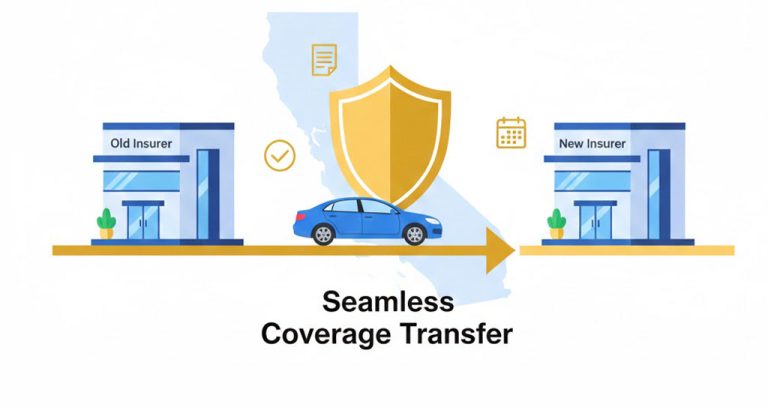
Step 5: Bind the new policy before canceling the old one
Coverage should overlap by at least one day.
This avoids:
- Coverage lapses
- DMV penalties
- Future premium increases
California insurers report coverage status electronically, so timing matters.
Step 6: Cancel your old policy properly
Cancellation should be:
- Requested in writing
- Dated after the new policy begins
- Confirmed with written acknowledgment
Unused premium may be refunded on a prorated basis.
Will switching auto insurance affect my driving record?
No. Your driving record is maintained by the state and follows you regardless of insurer.
However:
- Different insurers weigh violations differently
- Accident fault assessments may vary
- Older incidents may be rated differently
This is why switching can reduce premiums even with the same record.
Does switching reset the good driver discount?
No. If you qualify, the Good Driver Discount must be honored by any California insurer.
However:
- You may need to request verification
- Errors can occur during underwriting
- Drivers should confirm application in writing
This is one of the most important protections for California drivers.
Can switching auto insurance save money in California?
Yes—often significantly.
Savings come from:
- Better mileage tier placement
- Correct discount application
- Different underwriting models
- Competitive market pricing
Many drivers save 20–40 percent simply by switching at the right time.
Common mistakes when switching auto insurance
- Canceling before new coverage starts
- Underestimating mileage
- Choosing minimum coverage without evaluation
- Failing to verify discount application
- Ignoring claims service quality
Avoiding these mistakes ensures long-term savings, not just short-term price cuts.
How switching affects claims and coverage history
Claims history does not disappear when switching, but:
- Not all claims affect pricing equally
- Comprehensive claims often have less impact
- Time since last claim matters more than quantity
Switching after claims age off the rating window is often optimal.
Switching auto insurance with an open claim
Drivers can switch insurers even with an active claim.
Important considerations:
- The old insurer remains responsible for open claims
- The new insurer covers future incidents only
- Documentation should be retained carefully
How often should California drivers shop for insurance?
Best practice:
- Every 12 months
- After any major life change
- After rate increases
- After discount eligibility changes
Regular shopping is one of the strongest cost-control strategies available.
Switching auto insurance providers in California is not risky when done correctly it is strategic. State regulations protect drivers, reward safe behavior, and limit unfair pricing, making switching one of the most effective ways to control insurance costs.
Drivers who understand California-specific rules, verify discounts, and manage timing carefully can switch insurers confidently while maintaining full coverage and maximizing savings.