
Insurance discounts available in California: a complete guide for drivers
Car insurance in California is widely known for being expensive. High traffic congestion, dense urban populations, elevated accident rates, vehicle theft, and rising repair costs all contribute to higher-than-average premiums. However, California is also one of the most heavily regulated insurance markets in the United States, offering drivers access to legally protected and behavior-based insurance discounts that can significantly reduce costs.
Many drivers overpay simply because they are unaware of the discounts they qualify for or assume that insurers automatically apply all eligible savings. In reality, California insurance discounts often require active verification, documentation, and periodic reassessment.
This pillar article provides a comprehensive breakdown of insurance discounts available in California, including eligibility rules, savings potential, and strategies to combine multiple discounts legally. It is designed for drivers, insurance shoppers, and automotive insurance niche websites seeking long-term SEO authority.

Why insurance discounts in California are different
California car insurance is governed by Proposition 103, a voter-approved law that strictly regulates how insurers calculate premiums.
Under this law, insurers must prioritize:
- Driving safety record
- Annual mileage
- Years of driving experience
At the same time, California restricts or prohibits the use of:
- Credit scores
- Gender
- Income level
- Certain ZIP-code-based pricing practices
As a result, California insurance discounts are behavior-focused rather than demographic-based. Drivers who demonstrate lower risk through safe driving habits and reduced mileage are rewarded, while insurers have limited flexibility to price based on personal background.
Good driver discount (mandatory by law)
The Good Driver Discount is the most important and valuable discount available to California drivers.
Eligibility requirements
A driver qualifies if they:
- Have no more than one point on their driving record in the last three years
- Have no DUI convictions during that period
- Are not primarily at fault in accidents involving bodily injury or death
Discount value
- Minimum 20 percent discount
- Applies to liability, collision, and comprehensive coverage
- Required by California law
This discount is not optional. Insurers must offer it to all eligible drivers, though many do not clearly disclose it unless asked.
Why this discount matters
Because it applies across multiple coverage types, the Good Driver Discount alone can reduce annual premiums by hundreds of dollars. Over several years, the cumulative savings can be substantial.
Low mileage insurance discount
Mileage is one of the most influential rating factors in California insurance pricing.
How mileage is evaluated
Drivers are typically categorized into mileage tiers, such as:
- Under 7,500 miles per year
- 7,500 to 10,000 miles per year
- Over 10,000 miles per year
Lower mileage correlates with lower accident risk, making this discount particularly valuable for drivers who spend less time on the road.
Who benefits most
- Remote and hybrid workers
- Retirees
- Urban residents who rely on public transportation
- Households with multiple vehicles
Many drivers qualify for a low mileage discount but never update their annual mileage estimate, resulting in higher premiums than necessary.
Defensive driving course discount
California insurers often offer discounts to drivers who complete approved defensive driving or driver improvement courses.
Eligible drivers
- Senior drivers, commonly age 55 and older
- Drivers with minor traffic violations
- Drivers seeking to demonstrate reduced risk
Savings Range
- Typically 5 to 15 percent, depending on the insurer
Courses may be taken online or in person and usually remain valid for several years.
Usage-based insurance discounts (telematics programs)
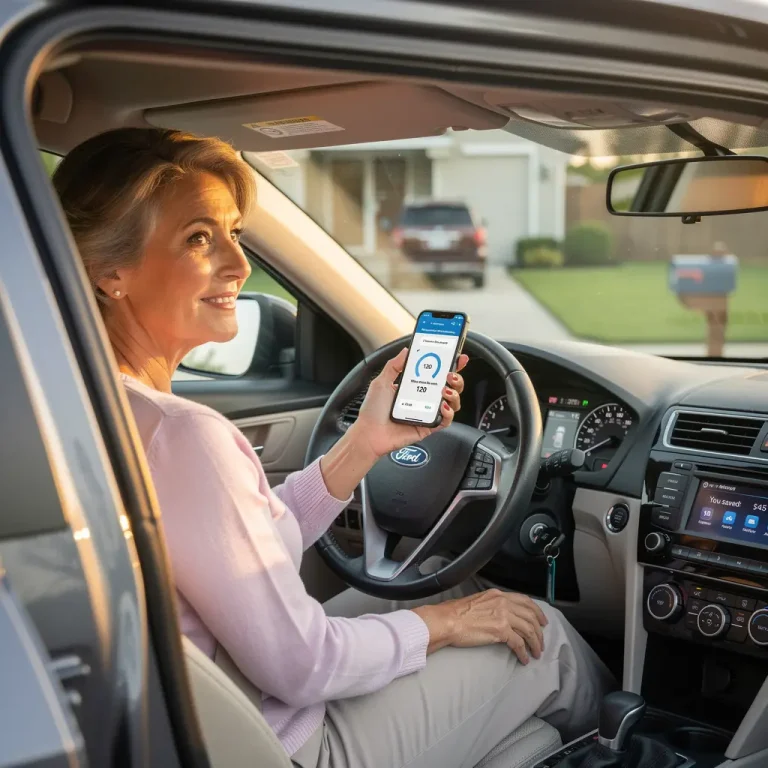
Usage-based insurance programs allow drivers to earn discounts based on actual driving behavior rather than estimated risk profiles.
What is monitored
- Braking and acceleration patterns
- Speed consistency
- Time of day the vehicle is driven
Legal protections in California
Participation is voluntary, and California law restricts insurers from increasing premiums based on telematics data. Drivers can only benefit from good performance, not be penalized for poor results.
Ideal candidates
- Consistent and cautious drivers
- Low-mileage drivers
- Drivers who avoid late-night and high-risk driving hours
Multi-policy (bundling) discounts
Bundling multiple insurance policies with the same provider is one of the easiest ways to reduce premiums.
Common bundles
- Auto and homeowners insurance
- Auto and renters insurance
- Auto and motorcycle or recreational vehicle insurance
Savings potential
- Approximately 10 to 25 percent, depending on coverage and insurer
Bundling also simplifies policy management and reduces the risk of coverage gaps.
Vehicle safety and anti-theft discounts
Insurers often provide discounts for vehicles equipped with safety and theft-prevention features.
Commonly eligible features
- Airbags and side-impact protection
- Anti-lock braking systems
- Electronic stability control
- Engine immobilizers
- Vehicle tracking or recovery systems
Newer vehicles typically qualify automatically, while aftermarket installations may require proof.
Student and young driver discounts
Young drivers face higher insurance costs due to limited driving experience, but California offers several programs to offset this risk.
Available discounts
- Good student discounts, usually requiring a B average or higher
- Student-away-from-home discounts for those attending school far from home
- Driver education and training programs
Savings generally range from 8 to 15 percent.
Military and government employee discounts
Some insurers offer optional discounts for:
- Active-duty military members
- Veterans
- Federal, state, or local government employees
These discounts are not mandated and must be requested directly from the insurer.
Loyalty and Claim-Free Discounts
Drivers who maintain continuous coverage and avoid claims may qualify for:
- Accident-free discounts
- Renewal loyalty pricing
- Long-term customer incentives
These discounts increase over time and reward policy stability.
Discounts not allowed in California
California law prohibits insurers from pricing or offering discounts based on:
- Credit score
- Gender
- Income level
- Employment stereotypes
This ensures fairer pricing but places greater emphasis on driving behavior and mileage.
How to combine and maximize insurance discounts in California
Drivers can significantly reduce premiums by:
- Requesting a full discount review annually
- Updating mileage estimates regularly
- Maintaining a clean driving record
- Bundling policies strategically
- Comparing insurers at each renewal cycle
Many California drivers qualify for multiple overlapping discounts, resulting in savings of 20 to 40 percent.
While car insurance in California can be expensive, the state also provides some of the strongest consumer protections and most valuable insurance discounts in the country. Drivers who understand how these discounts work and actively manage their policies can dramatically reduce insurance costs without sacrificing coverage.