Cheap car insurance for young drivers in California: best options under $150/Month
Being a young driver in California feels like being penalized for your age. Insurance companies charge drivers under 25 astronomical premiums often $3,000 to $6,000 annually creating a financial burden that seems impossible to overcome on entry-level salaries or student budgets.
But here’s what insurance companies don’t advertise: significant savings opportunities exist specifically for young drivers who know where to look. While you’ll never pay the same rates as a 45-year-old with decades of experience, you can dramatically reduce costs through strategic insurer selection, targeted discounts, and smart coverage decisions.
This comprehensive guide reveals how California’s young drivers are securing auto insurance for under $150/month sometimes as low as $75/month while maintaining adequate protection. We’ll identify which companies offer the most competitive youth rates, which discounts you actually qualify for, and which strategies deliver genuine savings versus empty promises.
Whether you’re 16 and getting your first policy, 22 and establishing independence from your parents’ insurance, or anywhere in between, this guide provides the roadmap to affordable coverage.

Why young drivers pay premium prices (and it’s not personal)
Understanding why insurers charge young drivers more helps you navigate the system more effectively.
The Statistical Reality
Insurance pricing is purely actuarial based on claims data and risk calculations:
Accident Rates by Age (California Data):
- 16-year-old drivers: 3.2x more likely to have an accident than 30-year-olds
- 17-year-old drivers: 2.8x more likely
- 18-19-year-old drivers: 2.4x more likely
- 20-24-year-old drivers: 1.8x more likely
- 25-year-old drivers: 1.2x more likely
Fatal Crash Statistics: Per mile driven, 16-19-year-old drivers have crash rates nearly 4 times higher than drivers aged 20 and older.
Risk Factors Contributing to Higher Rates:
Inexperience: New drivers lack the pattern recognition and muscle memory that develops over years of driving. They’re slower to identify hazards and respond to unexpected situations.
Brain Development: Neurological research shows the prefrontal cortex (responsible for risk assessment and impulse control) doesn’t fully mature until age 25. This isn’t an insult it’s biology.
Distraction Susceptibility: Young drivers are more likely to engage in risky behaviors like texting while driving, speeding, and not wearing seatbelts.
Night Driving: Teens have higher rates of nighttime accidents when visibility is reduced and fatigue is higher.
Passenger Influence: Young drivers with teen passengers have significantly higher accident rates due to distraction and peer pressure.
The Gender Gap
Male drivers ages 16-25 pay 10-25% more than female drivers in the same age group due to statistically higher accident and violation rates.
Average Rate Differences:
- 18-year-old male: $4,200/year
- 18-year-old female: $3,600/year
- Difference: $600/year
This gap narrows by age 25 and largely disappears by age 30.
When Rates Finally Drop
Young drivers see gradual rate decreases:
Age-Based Rate Reductions:
- Age 18: 10-15% decrease from age 16-17
- Age 21: 10-20% decrease from age 18-20
- Age 25: 15-30% decrease from age 21-24 (the biggest drop)
- Age 30: Additional 5-10% decrease
The 25-Year Milestone:
Age 25 represents the most significant rate reduction for most drivers, assuming a clean driving record. This is when you transition from “young driver” surcharges to standard adult rating.
Average costs for young drivers in California by age and profile
Understanding typical costs helps you evaluate whether quotes you receive are competitive.
Full Coverage Average Annual Premiums by Age (Clean Record)
- 16 years old: $5,800-$7,200
- 17 years old: $5,200-$6,800
- 18 years old: $4,600-$6,200
- 19 years old: $4,200-$5,600
- 20 years old: $3,800-$5,000
- 21 years old: $3,400-$4,600
- 22 years old: $3,000-$4,200
- 23 years old: $2,800-$3,800
- 24 years old: $2,600-$3,600
- 25 years old: $2,200-$3,000
Minimum Coverage Average Annual Premiums by Age
- 16-17 years old: $1,800-$2,400
- 18-19 years old: $1,600-$2,200
- 20-21 years old: $1,400-$2,000
- 22-24 years old: $1,200-$1,800
- 25 years old: $1,000-$1,600
Monthly Equivalents (Full Coverage)
Breaking annual premiums into monthly amounts:
- 16-18 years old: $383-$600/month
- 19-21 years old: $283-$467/month
- 22-24 years old: $217-$350/month
- 25 years old: $183-$250/month
Impact of Violations on Young Driver Rates
Young drivers face steeper penalties for violations:
One Speeding Ticket:
- Adult driver increase: 20-30%
- Young driver increase: 40-60%
- 18-year-old with ticket: $6,440-$9,920/year
One At-Fault Accident:
- Adult driver increase: 40-50%
- Young driver increase: 70-100%
- 18-year-old with accident: $7,820-$12,400/year
DUI (Under 21 Zero Tolerance):
- Can double or triple already-high premiums
- May make coverage nearly impossible to obtain
- SR-22 requirements add $300-$800/year
- 18-year-old with DUI: $9,200-$18,600/year
These numbers underscore the critical importance of maintaining a clean driving record.
Best insurance companies for young drivers in California
Not all insurers price youth coverage identically. These companies consistently offer the most competitive rates for drivers under 25.
1. GEICO – Best overall for most young drivers
Average Annual Premium (18-year-old, full coverage): $3,850 Average Monthly Payment: $321
Why GEICO Ranks First for Young Drivers
GEICO’s competitive pricing extends across all age groups, but their algorithms are particularly favorable for young drivers with clean records. Their digital-first model and massive scale allow them to offer rates 15-25% below many competitors.
Rate Examples by Age (Full Coverage, Clean Record):
- 16-year-old: $5,600/year ($467/month)
- 18-year-old: $3,850/year ($321/month)
- 21-year-old: $2,980/year ($248/month)
- 24-year-old: $2,420/year ($202/month)
Youth-Specific Discounts:
Good Student Discount: 15% off for students under 25 with 3.0+ GPA
- Saves: $578/year on $3,850 premium
- Requirements: Report card or transcript submitted semi-annually
- Age limit: Up to age 25
Student Away at School: 10% additional if attending school 100+ miles away without a car
- Combined with good student: ~23% total savings
- Saves: $885/year combined
Defensive Driving: 10% off for completing approved course
- One-time course ($25-$50)
- Discount lasts 3 years
- Saves: $385/year
DriveEasy Telematics: Up to 25% for safe driving habits
- Phone app monitors driving
- Instant 10% participation bonus
- Performance-based additional savings up to 15%
- Potential savings: $963/year
Maximum Stacking Example:
18-year-old student with 3.5 GPA, away at school, safe driver:
- Base premium: $3,850
- Good student (15%): -$578
- Away at school (10%): -$385
- DriveEasy (20% average): -$770
- Final premium: $2,117/year ($176/month)
- Total savings: 45%
Why Young Drivers Choose GEICO:
24/7 Digital Access: Young drivers appreciate mobile-first service, app-based claims, and online policy management
Fast Quote Process: Get quotes in 5-10 minutes online without phone calls
National Coverage: Important for students attending out-of-state colleges
Military Discounts: Excellent for young service members (additional 10-15% off)
Potential Drawbacks:
- No local agents (some young drivers prefer face-to-face guidance)
- Limited hand-holding for first-time insurance buyers
- Customer service can be hit-or-miss
Get Your GEICO Quote: See how much you can save with student and safe driver discounts.
2. State Farm Best for students wanting good student discounts
Average Annual Premium (18-year-old, full coverage): $4,150 Average Monthly Payment: $346
Why State Farm Excels for Students
State Farm offers one of the industry’s most generous good student discounts (up to 25%) and their “Steer Clear” program specifically helps young drivers earn additional savings.
Rate Examples by Age:
- 16-year-old: $6,100/year ($508/month)
- 18-year-old: $4,150/year ($346/month)
- 21-year-old: $3,280/year ($273/month)
- 24-year-old: $2,690/year ($224/month)
Youth-Specific Discount Programs:
Good Student Discount: Up to 25% off
- Highest in the industry
- 3.0+ GPA requirement
- Saves: $1,038/year on $4,150 premium
- Available to age 25
Steer Clear Program: Up to 15% additional savings
- Safe driving program for drivers under 25
- Complete online modules (4-6 hours)
- Renews every 3 years
- Can combine with good student discount
- Saves: $623/year
Student Away at School: 15% discount
- One of the highest rates for this discount
- Must be 100+ miles from home
- No vehicle at school
- Saves: $623/year
Drive Safe & Save Telematics: Up to 30% savings
- Monitors driving via app or plug-in device
- Tracks mileage, speed, acceleration, braking, time of day
- Rewards safe habits
- Saves: Up to $1,245/year
Maximum Discount Scenario:
19-year-old college student, 3.5 GPA, completed Steer Clear:
- Base premium: $4,150
- Good student (25%): -$1,038
- Steer Clear (15%): -$623
- Student away (15%): -$623
- Drive Safe & Save (20%): -$830
- Final premium: $1,036/year ($86/month)
- Total savings: 75%
Local Agent Advantage:
State Farm’s 19,000+ agents nationwide provide:
- Face-to-face guidance for first-time buyers
- Help understanding coverage options
- Claims assistance
- Annual policy reviews
Many young drivers value this personalized support when navigating insurance for the first time.
Best For:
- High school and college students with good grades
- Young drivers wanting local agent relationships
- Families already with State Farm (bundling opportunities)
- Drivers comfortable with telematics monitoring
Potential Drawbacks:
- Base rates higher than GEICO or Progressive
- Requires active engagement to maximize discounts
- Must renew Steer Clear every 3 years
Get Your State Farm Quote: Connect with a local agent and explore student discounts.
3. Progressive Best for young drivers with imperfect records
Average Annual Premium (18-year-old, full coverage): $4,420 Average Monthly Payment: $368
Why Progressive Helps Higher-Risk Young Drivers
While Progressive’s base rates aren’t the absolute lowest, they specialize in providing competitive coverage for drivers other companies decline or price prohibitively including young drivers with tickets or accidents.
Rate Examples by Age:
- 16-year-old: $6,450/year ($538/month)
- 18-year-old: $4,420/year ($368/month)
- 21-year-old: $3,540/year ($295/month)
- 24-year-old: $2,890/year ($241/month)
Rates After Violations (18-year-old):
- Clean record: $4,420/year
- One speeding ticket: $6,188/year (+40%)
- One at-fault accident: $7,514/year (+70%)
- Progressive typically beats competitors by 10-20% for these profiles
Youth Programs and Discounts:
Snapshot Telematics: Up to 30% savings
- Monitors driving for 75 days initially
- Tracks hard braking, time of day, mileage
- Participation discount: 5-10% immediately
- Performance discount: Additional 0-20%
- Young drivers often qualify for higher discounts (safe driving matters more than age)
- Saves: Up to $1,326/year
Good Student Discount: Up to 20% off
- 3.0+ GPA or top 20% of class
- Saves: $884/year
Continuous Insurance Discount: Up to 15%
- Rewards maintaining coverage without lapses
- Grows over time
- Critical for young drivers building insurance history
Resident Student Discount: Variable savings
- For students living away from home
- Often 10-15% savings
Name Your Price Tool:
Progressive’s unique feature lets you enter your budget, then shows coverage options within that price range. Particularly valuable for young drivers with tight budgets who need to balance cost and protection.
Example:
- Budget: $150/month
- Tool shows: Liability limits options, deductible choices, and optional coverage combinations meeting that budget
- Helps make informed compromises rather than just choosing cheapest quote blindly
Accident Forgiveness:
While typically requiring 3-5 years claim-free to qualify, Progressive offers this feature that prevents rate increases after your first at-fault accident. Young drivers who earn this benefit protect themselves from devastating rate spikes.
Best For:
- Young drivers with recent tickets or accidents
- Budget-conscious drivers using Name Your Price tool
- Tech-savvy drivers comfortable with Snapshot
- Drivers building insurance history after coverage lapses
Potential Drawbacks:
- Base rates for clean-record young drivers higher than GEICO
- Snapshot requires data sharing (privacy concerns)
- Customer service quality varies
Get Your Progressive Quote: Use Name Your Price to find coverage within your budget.
4. USAA Unbeatable for military members and families
Average Annual Premium (18-year-old, full coverage): $2,850 Average Monthly Payment: $238
Why USAA Dominates for Eligible Young Drivers
USAA’s rates for young military-affiliated drivers are 25-40% below civilian alternatives. If you qualify, USAA should always be your first quote request.
Eligibility Requirements:
- Active duty military (all branches)
- Veterans (honorably discharged)
- Adult children of USAA members
- Widows/widowers of military members
- Cadets and midshipmen at service academies
Rate Examples by Age:
- 16-year-old: $4,200/year ($350/month)
- 18-year-old: $2,850/year ($238/month)
- 21-year-old: $2,180/year ($182/month)
- 24-year-old: $1,760/year ($147/month)
These rates are 30-35% below GEICO and State Farm for equivalent coverage.
Military-Specific Youth Benefits:
Deployment Discounts: Up to 60% off for stored vehicles while deployed
- Critical for young service members on deployment
- Maintains continuous coverage at minimal cost
Good Student Discount: Up to 10%
- Lower percentage than civilian companies but applied to already-low base rates
- Saves: $285/year
Safe Driver Discount: Up to 12%
- Saves: $342/year
Military Installation Discount: 5-10%
- For vehicles garaged on military bases (reduced theft risk)
- Saves: $143-$285/year
Driver Training Discount: 10% for completing military or civilian defensive driving
- Saves: $285/year
Family Legacy Advantage:
Children of USAA members can qualify for membership, creating multi-generational savings. A parent who joined USAA during their military service passes eligibility to their children, even if those children never serve.
Outstanding Customer Service:
USAA consistently ranks highest in J.D. Power customer satisfaction studies. Their member-first culture (USAA is a member-owned reciprocal insurer, not a traditional for-profit company) shows in their service quality.
Best For:
- Active duty military members under 25
- Children of military families
- Veterans establishing post-service insurance
- Service academy cadets
Limitations:
- Restricted eligibility (most young drivers don’t qualify)
- No local agents (all service phone/online)
- Must apply for membership before getting quotes
Get Your USAA Quote: Check eligibility and see exclusive military member rates.
5. Wawanesa hidden gem for young drivers with clean records
Average Annual Premium (18-year-old, full coverage): $3,680 Average Monthly Payment: $307
Why Wawanesa Flies Under the Radar
This Canadian insurer operates primarily in California and Oregon, focusing on low-risk drivers. Their minimal advertising and regional focus keep overhead low, allowing them to offer excellent rates.
Rate Examples by Age:
- 16-year-old: $5,400/year ($450/month)
- 18-year-old: $3,680/year ($307/month)
- 21-year-old: $2,820/year ($235/month)
- 24-year-old: $2,340/year ($195/month)
Important Note: Wawanesa is selective. Young drivers with ANY violations or accidents often receive quotes 40-60% higher or may not qualify at all. They reward clean records aggressively.
Youth Discounts:
Good Student Discount: 25% off
- One of the highest percentages
- 3.0+ GPA
- Saves: $920/year on $3,680 premium
Low Mileage: Up to 20% off
- Students driving under 7,500 miles/year
- Common for students without daily commutes
- Saves: $736/year
Multi-Car Discount: Up to 25%
- For families insuring multiple vehicles
- Young drivers on family policies benefit significantly
Maximum Discount Example:
18-year-old student, 3.5 GPA, 6,000 miles/year, on family policy:
- Base premium: $3,680
- Good student (25%): -$920
- Low mileage (15%): -$552
- Multi-car (20%): -$736
- Final premium: $1,472/year ($123/month)
- Total savings: 60%
Best For:
- Young drivers with spotless records
- Students with excellent GPAs
- Low-mileage drivers
- Families looking to add young drivers to existing Wawanesa policies
Significant Limitations:
- Very strict underwriting (tickets/accidents result in high rates or declination)
- Limited to California and Oregon
- No telematics program
- Smaller company (some prefer national brands)
Get Your Wawanesa Quote: See if your clean record qualifies for their lowest rates.
6. Allstate – Best for accident forgiveness features
Average Annual Premium (18-year-old, full coverage): $4,680 Average Monthly Payment: $390
Why Young Drivers Consider Allstate Despite Higher Base Rates
Allstate’s base premiums run 10-20% higher than competitors, but their Drivewise program and accident forgiveness features provide long-term value for young drivers concerned about one mistake devastating their rates.
Rate Examples by Age:
- 16-year-old: $6,800/year ($567/month)
- 18-year-old: $4,680/year ($390/month)
- 21-year-old: $3,740/year ($312/month)
- 24-year-old: $3,060/year ($255/month)
Youth-Focused Programs:
Drivewise Telematics: Up to 40% savings (claims up to 40%, reality: 10-25% average)
- App-based monitoring
- Tracks braking, speed, time of day
- Performance rewards
- Safe young drivers can significantly reduce premiums
- Average savings: $936/year
Good Student Discount: Up to 25%
- 3.0+ GPA or honor roll
- Saves: $1,170/year
SmartRide: Alternative telematics program
- 90-day monitoring period
- Potential 30% discount
- One-time evaluation vs. ongoing Drivewise
Early Signing Discount: 10% for quoting 7+ days before current policy expires
- Saves: $468/year
Accident Forgiveness:
Here’s where Allstate shines for young drivers willing to earn it:
- Qualify after 3-5 years claim-free (varies by state)
- First at-fault accident doesn’t increase your rate
- For young drivers ages 21-24 who’ve maintained clean records since getting licensed, this protection prevents a 70-100% rate spike that would otherwise occur
Real-World Value Example:
23-year-old with Allstate, accident-free since age 18, now has accident forgiveness:
Without accident forgiveness:
- Current premium: $2,800/year
- After at-fault accident: $4,760-$5,600/year
- Increase: $1,960-$2,800/year
With accident forgiveness:
- Current premium: $2,800/year
- After at-fault accident: $2,800/year (no increase)
- Savings: $1,960-$2,800 over 3-5 years until violation drops off
Best For:
- Young drivers planning to stay with one insurer long-term
- Safe drivers confident in earning accident forgiveness
- Tech-comfortable drivers willing to use Drivewise
- Those valuing protection against one future mistake
Drawbacks:
- Highest base rates among top options
- Accident forgiveness takes years to earn
- Drivewise monitoring feels invasive to some
Get Your Allstate Quote: Explore Drivewise savings and accident forgiveness benefits.
7. AAA – Good for members seeking bundled value
Average Annual Premium (18-year-old, full coverage): $4,920 Average Monthly Payment: $410
Why AAA Appeals Despite Higher Costs
AAA membership ($60-$120/year) includes premium roadside assistance valuable for young, inexperienced drivers more likely to need help. When bundling insurance with membership benefits, total value can justify higher premiums.
Rate Examples by Age:
- 16-year-old: $7,100/year ($592/month)
- 18-year-old: $4,920/year ($410/month)
- 21-year-old: $3,940/year ($328/month)
- 24-year-old: $3,220/year ($268/month)
Youth Discounts:
Good Student Discount: Up to 15%
- Lower than competitors
- 3.0+ GPA
- Saves: $738/year
Defensive Driving: 10% for completing AAA-approved course
- Courses often free or discounted for AAA members
- Saves: $492/year
Membership Loyalty: 5-10% for long-term AAA members
- Grows over time
- Saves: $246-$492/year
The Roadside Assistance Value Proposition:
Young drivers benefit disproportionately from AAA’s roadside services:
- Towing: Up to 100 miles (valuable for breakdowns far from home)
- Battery service: Jump starts and battery replacement
- Lockout service: Critical for young drivers who lock keys in cars
- Fuel delivery: For when you misjudge your gas gauge
- Tire changes: Flat tire assistance
Frequency of Use: Drivers under 25 use roadside assistance 2.5x more than drivers over 30. The $60-$120 annual membership often pays for itself in one service call.
Best For:
- Young drivers prone to needing roadside help
- Students taking road trips
- Families already with AAA membership (add young driver to family plan)
- Those valuing local AAA office access for DMV services
Drawbacks:
- Among the highest base premiums
- Requires membership for insurance
- Regional variations (Auto Club of SoCal vs. NorCal have different rates)
Get Your AAA Quote: Explore member rates and bundled roadside assistance value.
Comparison table: Best young driver insurers at a glance
| Company | 18yo Rate | Good Student | Best Feature | Ideal For |
|---|---|---|---|---|
| GEICO | $3,850/yr ($321/mo) | 15% | Best overall value | Most young drivers |
| State Farm | $4,150/yr ($346/mo) | 25% | Highest student discount | Students with good grades |
| Progressive | $4,420/yr ($368/mo) | 20% | Name Your Price tool | Drivers with violations |
| USAA | $2,850/yr ($238/mo) | 10% | Lowest rates | Military-affiliated |
| Wawanesa | $3,680/yr ($307/mo) | 25% | Great for clean records | Spotless driving history |
| Allstate | $4,680/yr ($390/mo) | 25% | Accident forgiveness | Long-term planning |
| AAA | $4,920/yr ($410/mo) | 15% | Roadside assistance | Road trip enthusiasts |
Should you stay on your parents’ policy or get your own?
This question depends on multiple factors with no universal answer.
Staying on Parents’ Policy: Advantages
Cost Savings: Multi-car and multi-driver discounts typically make family policies cheaper than separate coverage.
Example:
- Parent policy before adding teen: $1,800/year
- After adding 18-year-old: $4,200/year
- Incremental cost to add teen: $2,400
vs.
- Teen’s own policy: $3,850/year
- Parents’ policy remains: $1,800/year
- Total: $5,650/year
- Family policy saves: $1,450/year
Convenience: Parents handle renewals, payments, and administrative tasks.
Claims Support: Experienced parents can guide through the claims process.
Good Student Discounts Often Better: Family policies sometimes offer enhanced student discounts.
Staying on Parents’ Policy: Disadvantages
Impact on Parents’ Rates: Adding a young driver increases parents’ premiums by 50-150%, potentially pushing them to shop for new insurance.
Claim Consequences: Your accident affects the entire family policy, potentially raising rates for all drivers and vehicles.
Limited Independence: You’re dependent on parents’ policy decisions and payment reliability.
Building Your Own History: Time on parents’ policy doesn’t always build independent insurance history as effectively as your own policy.
Getting Your Own Policy: Advantages
Independence: You control coverage decisions, payment timing, and insurer selection.
Building Insurance History: Establishing your own continuous coverage history can benefit long-term rates.
Protecting Parents: Your violations and accidents don’t impact their policy.
Learning Responsibility: Managing your own insurance builds financial literacy.
Getting Your Own Policy: Disadvantages
Significantly Higher Costs: Individual policies for young drivers almost always cost more than being added to family policies.
All Responsibility Falls on You: Missing payments, handling claims, and understanding coverage are entirely your responsibility.
Fewer Discounts: You miss multi-car, multi-driver, and bundling discounts.
The Decision Framework
Stay on Parents’ Policy If:
- You’re under 21
- You live at home or come home regularly (college students)
- Your parents’ insurer offers good youth discounts
- Combined policy cost beats separate policies by $1,000+/year
- You have a clean driving record (minimal impact on family policy)
Get Your Own Policy If:
- You’re 22+ and financially independent
- You live far from parents permanently
- You have violations that would spike family policy rates
- Your parents’ insurer is expensive for young drivers
- You want to build independent credit and insurance history
- Parents’ insurer won’t add you (some decline high-risk young drivers)
Hybrid Approach:
Some families split the difference:
- Young driver gets liability-only policy in their name (building independent history)
- Parents keep comprehensive/collision on the vehicle and list it on their policy
- Costs more than single family policy but less than full independent coverage
Maximizing discounts: The young driver’s discount stacking guide
Smart young drivers combine multiple discounts for dramatic savings.
Academic Performance Discounts
Good Student (3.0+ GPA): 10-25% depending on insurer
- Submit transcripts or report cards semi-annually
- Maintain eligibility by keeping grades up
- Pro tip: If GPA drops one semester, many insurers allow one grace period to recover
Dean’s List/Honor Roll: Some insurers offer enhanced 25-30% discounts
- Requires dean’s list or honor roll designation
- Higher than standard good student discount
SAT/ACT Scores: Alternative qualification for some companies
- SAT 1200+ or ACT 26+ may qualify
- Useful if GPA is slightly below 3.0
Student Status Discounts
Student Away at School: 10-20% if attending school 100+ miles from home without vehicle
- Provide school enrollment verification
- Confirm no vehicle at school address
- Can combine with good student discount
- Total potential: 25-40% combined
Full-Time Student: Some insurers discount simply for full-time enrollment
- 5-10% typical
- Less common than good student discount
Driving Behavior Programs
Telematics/Usage-Based Insurance: 10-40% for safe driving
- Progressive Snapshot
- State Farm Drive Safe & Save
- GEICO DriveEasy
- Allstate Drivewise
What they monitor:
- Hard braking events
- Rapid acceleration
- Speeding
- Time of day (night driving penalized)
- Mileage
- Phone use while driving
Young driver advantage: Since inexperience is your main rate factor, demonstrating actual safe driving can overcome age-based assumptions.
Tips for maximizing telematics discounts:
- Drive smoothly (imagine a full coffee cup in your console)
- Avoid 11pm-4am driving during monitoring periods
- Increase following distance (prevents hard braking)
- Don’t touch your phone while driving
- Obey speed limits consistently
Defensive Driving Course: 5-15% for 3 years
- Online courses available ($20-$50)
- Complete in 4-8 hours
- Submit certificate to insurer
- Renew every 3 years
Low Mileage Discounts
Under 7,500 miles/year: 10-20% off
- Common for students without daily commutes
- Track actual miles driven
- Submit odometer photos annually
Pay-Per-Mile Insurance: Alternative for very low mileage
- Metromile, Mile Auto, Allstate Milewise
- Best if driving under 5,000 miles/year
- Base rate + per-mile charges
Vehicle and Policy Structure Discounts
Multi-Car: 10-25% when insuring multiple vehicles
- Applicable on family policies
- Each additional vehicle increases discount
Multi-Policy/Bundling: 10-20% combining auto + renters insurance
- Renters insurance costs only $150-$300/year
- Bundle discount often exceeds renters policy cost
- Net result: Save money while adding coverage
Safety Features: 5-25% for vehicle equipment
- Anti-lock brakes
- Airbags
- Anti-theft systems
- Automatic emergency braking
- Lane departure warnings
Payment and Administrative Discounts
Paperless Billing: 2-5% for email documents Auto-Pay: 2-5% for automatic payments Pay-in-Full: 5-10% for annual vs. monthly payments
Combined administrative discounts: 10-15% total
Association and Affinity Discounts
Alumni Associations: 5-15% for university graduates Professional Organizations: 5-10% for various groups Employer Partnerships: Some companies negotiate employee discounts
Maximum Discount Stacking Example
21-year-old college student, clean record:
- Base premium
: $3,400/year
Discounts applied:
- Good student (20%): -$680
- Away at school (15%): -$510
- Defensive driving (10%): -$340
- Telematics safe driving (20%): -$680
- Low mileage (10%): -$340
- Renters bundle (15%): -$510
- Paperless + auto-pay (5%): -$170
Final premium: $170/year ($14/month… this is theoretical maximum; real-world achievable with discipline is $800-$1,200/year or $67-$100/month)
Coverage decisions: What young drivers actually need
Balancing adequate protection with affordability requires strategic coverage choices.
Liability Coverage: Never Skimp Here
Even with tight budgets, maintain substantial liability limits:
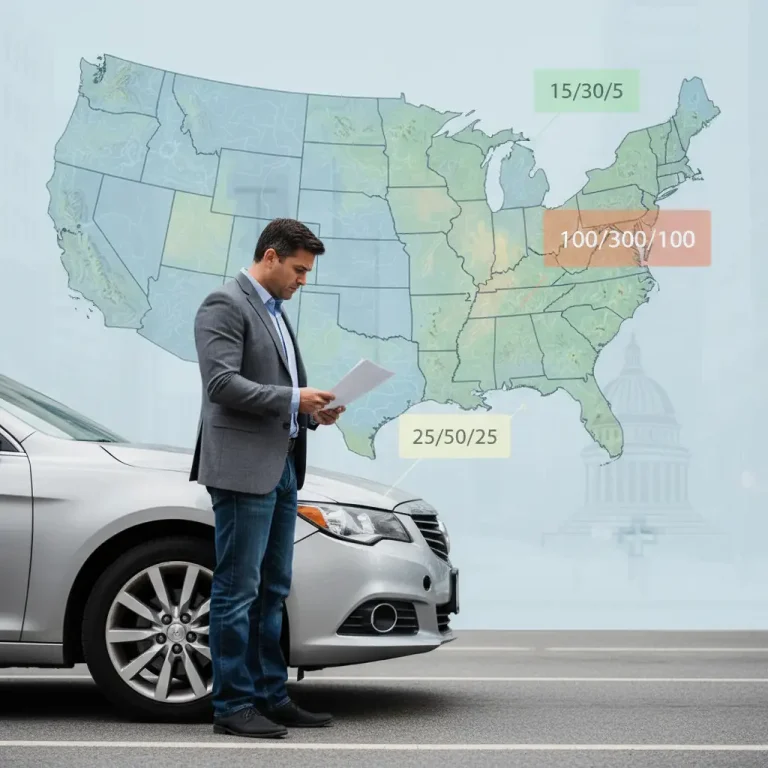
Minimum legally required (15/30/5): Dangerously inadequate
- One moderate accident easily exceeds these limits
- Personal liability for amounts beyond policy limits
- Wage garnishment, asset seizure possible
Recommended minimum (100/300/100): Better protection
- $100,000 per person injured
- $300,000 per accident total
- $100,000 property damage
- Costs only $200-$400/year more than state minimums
- Worth the modest increase
Why this matters for young drivers: One serious accident at age 19 could create financial obligations lasting into your 30s. Adequate liability is non-negotiable.
Comprehensive and Collision: It Depends
If Your Vehicle is Worth Under $3,000: Consider dropping comp/collision entirely
- Premiums often exceed 10% of vehicle value annually
- Self-insure through emergency savings
If Your Vehicle is Worth $3,000-$8,000: Keep coverage but use high deductibles
- $1,000-$2,500 deductibles dramatically reduce premiums
- Balance: Protection for total loss, lower monthly costs
If Your Vehicle is Worth Over $8,000 or Financed: Maintain full coverage with moderate deductibles
- $500-$1,000 deductibles balance cost and protection
- Lenders require comp/collision anyway
Deductible Strategy:
The math:
- $500 deductible: $1,400/year
- $1,000 deductible: $1,050/year
- Savings: $350/year
Break-even: If you don’t file a claim for 1.4 years, the higher deductible saves money ($500 additional out-of-pocket ÷ $350 annual savings = 1.4 years)
Given that young drivers file claims more frequently, $500 deductibles might make sense despite higher premiums—but only if you can afford the deductible if you do claim.
Uninsured/Underinsured Motorist Coverage: Highly Recommended
17% of California drivers operate without insurance. This coverage protects you when hit by uninsured drivers.
Cost: $100-$300/year to match your liability limits Value: Covers your injuries and damages when at-fault driver can’t pay
For young drivers: Often involved in accidents with other young drivers (who frequently lack insurance), this coverage is especially valuable.
Medical Payments Coverage
What it covers: Your and your passengers’ medical bills regardless of fault
Cost: $50-$150/year for $5,000-$10,000 coverage
Value for young drivers:
- Covers deductibles before health insurance kicks in
- Provides immediate payment without liability determinations
- Especially valuable if you frequently have passengers (friends)
Optional Coverages to Consider
Rental Reimbursement: $40-$80/year
- Pays for rental car while yours is being repaired
- Worth it if you can’t function without a vehicle
Roadside Assistance: $20-$50/year
- Towing, jump starts, lockout service
- Alternative: AAA membership provides more comprehensive service
Gap Insurance: $20-$40/year (or sometimes included free)
- Critical if you financed a vehicle
- Covers difference between vehicle value and loan balance if totaled
- New cars depreciate 20% immediately gap insurance prevents owing thousands on a totaled car
Budget-Conscious Coverage Strategy
Absolutely Maintain:
- 100/300/100 liability minimums
- Uninsured motorist matching liability
- Comprehensive and collision (if vehicle worth over $4,000 or financed)
Increase Deductibles To:
- $1,000-$2,500 (if emergency savings support this)
Consider Adding:
- Medical payments ($5,000)
- Rental reimbursement (if no backup transportation)
- Gap insurance (if financed)
Can Usually Skip:
- Roadside assistance (AAA better value)
- Towing coverage beyond standard
- Excessive liability limits if assets minimal (umbrella policy later when net worth grows)
Example Budget Policy:
100/300/100 liability: $800/year Uninsured motorist (100/300): $180/year Comprehensive ($1,000 deductible): $220/year Collision ($1,000 deductible): $380/year Medical payments ($5,000): $80/year Total: $1,660/year ($138/month)
With good student (20%), telematics (15%), and defensive driving (10%) discounts: Final cost: $913/year ($76/month)
Special situations: Insurance solutions for unique young driver circumstances
First-Time License Holders (16-17 Years Old)
Challenges:
- Highest possible rates
- Limited discount eligibility (often no driving history for telematics yet)
- Parents’ rates spike dramatically
Solutions:
- Start with minimum coverage + high deductibles to reduce costs initially
- Enroll in driver training programs beyond standard driver’s ed for discounts
- Choose vehicles wisely (minivans, sedans vs. sports cars) for lower rates
- Delay adding to policy until absolutely necessary (if teen has permit but doesn’t drive independently yet)
College Students Away from Home
Advantage opportunities:
- Student away at school discounts (10-20%)
- Low mileage discounts (minimal driving at school)
- Good student discounts (focus on academics pays off financially)
Strategy:
- Remain on parents’ policy while in school (usually cheapest)
- Verify coverage extends to school location
- Update address if required by insurer
- Remove vehicle from policy if not taking car to school
Young Military Members
Best option: USAA (if eligible)
- Exceptional rates for military
- Deployment discounts
- Worldwide coverage
Alternative: GEICO
- Strong military discounts (10-15%)
- Serves military communities well
Strategies:
- Store vehicle and reduce coverage during deployment (60% savings)
- Maintain continuous coverage (prevents penalties upon return)
Young Drivers with Violations or Accidents
Best insurers:
- Progressive – specializes in higher-risk drivers
- The General – focuses on non-standard market
- Acceptance Insurance – high-risk specialist
Strategies:
- Traffic school to keep tickets off record (once every 18 months in CA)
- Defensive driving courses to demonstrate responsibility
- Telematics programs to prove actual safe driving despite past mistakes
- High deductibles to reduce premiums (since comp/collision costs spike dramatically)
Time heals: Violations drop off after 3-5 years; re-shop immediately when they do.
Rideshare Drivers (Uber/Lyft)
Critical: Personal auto policies don’t cover commercial activity
Options:
- Rideshare endorsement from your personal insurer ($10-$30/month)
- Commercial policy (expensive, $200-$400/month)
- Rely on rideshare company coverage (only active during trips, gaps exist)
Best insurers for rideshare endorsements:
- State Farm
- Allstate
- GEICO
- Progressive
Young drivers doing rideshare: Factor commercial coverage costs into earnings calculations.
DUI/DWI Situations (Under 21 Zero Tolerance)
Reality: DUI under 21 in California is devastating for insurance:
- Rates increase 100-200%
- SR-22 filing required ($300-$800/year)
- Many standard insurers decline coverage
- High-risk insurers charge premium prices
Options:
- Assigned Risk Pool (CAARP): Guaranteed coverage but expensive
- High-risk insurers: The General, Acceptance, Direct Auto
- SR-22 specialists: Companies focusing on high-risk drivers
Path forward:
- Maintain continuous coverage (lapses catastrophic)
- Complete all court-mandated programs
- 10-year wait for DUI to stop affecting rates
- Consider non-owner policy if not driving (maintains coverage history)
Prevention is everything: One DUI costs $15,000-$40,000 over 10 years in increased insurance alone, plus legal fees, fines, and other consequences.
Action plan: Getting started as a young driver
If You’re Getting Your First Policy:
Week 1: Research and Preparation
- Determine if you’ll be on parents’ policy or getting your own
- Gather all required information (license, vehicle details, driving history)
- Research discounts you qualify for (student status, GPA, organizations)
- Decide on coverage levels and deductibles based on budget and vehicle value
Week 2: Quote Shopping 5. Get quotes from at least 5 companies:
- GEICO
- State Farm
- Progressive
- USAA (if eligible)
- Wawanesa
- Ask specifically about youth discounts at each company
- Inquire about telematics programs
Week 3: Decision and Purchase 8. Compare quotes in spreadsheet (identical coverage levels) 9. Verify financial strength ratings (A- or better) 10. Read reviews for your top 2-3 choices 11. Purchase policy with effective date needed 12. Set up auto-pay and paperless billing for additional discounts
Week 4: Optimization 13. Enroll in telematics program if offered 14. Register for defensive driving course 15. Submit good student documentation if applicable 16. Set calendar reminders for discount renewal requirements
If You’re Shopping for Better Rates:
Immediate Actions:
- Request your current policy declarations page
- Note your renewal date
- Shop 30-45 days before renewal for best timing
Quote Process: 4. Get competitive quotes from companies you haven’t tried 5. Focus on those known for youth discounts (see rankings above) 6. Mention you’re currently insured and shopping (continuous coverage discount)
Decision Timeline: 7. Compare new quotes to current policy 8. Contact current insurer with competitive quotes (ask them to match) 9. If switching, purchase new policy effective same day as old policy expires 10. Cancel old policy only after new policy is confirmed active
Ongoing Optimization:
Every 6 Months:
- Review driving record (any violations dropping off soon?)
- Verify all discounts still applied
- Check for new discount eligibility
Annually:
- Get competitive quotes from 3-5 companies
- Reassess coverage needs (vehicle value changed?)
- Submit updated good student documentation
- Renew defensive driving course (every 3 years)
At Major Milestones:
- Turning 21, 25 (re-shop immediately for age-based reductions)
- Graduating college (update student status, may lose some discounts but gain others)
- Getting married (often reduces rates 10-15%)
- Paying off vehicle (reassess comp/collision need)
Real success stories: Young drivers who found affordable coverage
Case Study 1: Maya, 19-Year-Old College Sophomore
Initial Situation:
- On parents’ policy: Family premium increased to $4,800/year (from $2,200)
- Maya’s incremental cost: $2,600/year ($217/month)
- Clean driving record, 3.6 GPA
- 2017 Honda Civic (financed)
- Commutes to school 8 miles roundtrip
Actions Taken:
- Shopped individual quotes (remained on family policy was still cheaper)
- Applied for good student discount (wasn’t automatically applied): -20% ($520/year)
- Enrolled in State Farm’s Drive Safe & Save: -18% ($468/year)
- Increased deductibles from $500 to $1,000: -$240/year
- Declared low mileage (4,000 miles/year): -$180/year
Result:
- New incremental cost: $1,192/year ($99/month)
- Total savings: $1,408/year
- Reduction: 54%
Case Study 2: James, 22-Year-Old Recent Graduate
Initial Situation:
- First independent policy
- One speeding ticket from age 20
- 2015 Mazda3 (owned outright, worth $7,500)
- Clean record otherwise
- Works from home (tech job)
Initial quotes:
- Progressive: $3,840/year
- GEICO: $4,200/year
- State Farm: $4,560/year
Actions Taken:
- Chose Progressive (best rate for his violation)
- Used Name Your Price tool to optimize coverage ($175/month budget)
- Enrolled in Snapshot program: qualified for 22% discount
- Increased deductibles to $1,500 (has $5,000 emergency fund)
- Bundled with renters insurance: additional 12% off
- Low mileage verification (3,200 miles/year): additional discount
Result:
- Final premium: $1,680/year ($140/month)
- Savings from initial quote: $2,160/year
- Reduction: 56%
Case Study 3: Aisha, 18-Year-Old High School Senior
Initial Situation:
- Just got license
- Parents’ GEICO policy would increase $3,800/year adding her
- 2012 Toyota Corolla (parents’ old car, given to her, worth $5,500)
- Lives in expensive Los Angeles area
- Excellent student (4.0 GPA)
Actions Taken:
- Got separate policy in her name (built independent history)
- Minimum coverage (15/30/5) + comprehensive only (car theft risk)
- Applied good student discount: -15%
- Completed defensive driving course: -10%
- Enrolled in DriveEasy: qualified for 28% discount (exceptional safe driving)
Result:
- Annual premium: $1,260/year ($105/month)
- Compared to adding to parents’ GEICO: Saved $2,540/year
- Parents’ rate unchanged (they kept their low rate)
- Family total savings: $2,540/year
The bottom line: Affordable young driver insurance is achievable
Yes, young drivers pay more but “more” doesn’t have to mean “unaffordable.” The strategies in this guide have helped thousands of California young drivers reduce premiums from $300-$500/month down to $75-$150/month while maintaining adequate protection.
Key Takeaways:
- Shop extensively: The right company for your specific profile can save $1,000+ annually
- Stack discounts aggressively: Combining 4-6 discounts can reduce premiums 40-60%
- Prove safe driving: Telematics programs reward actual behavior, not age-based assumptions
- Optimize coverage: High deductibles and smart coverage choices balance protection and affordability
- Maintain clean records: One ticket or accident can cost thousands over 3-5 years
Your Next Steps:
Stop accepting sky-high premiums as inevitable. Take action today:
Get personalized quotes from California’s top young driver insurers:
Compare rates, explore student discounts, and discover how telematics programs can slash your premiums. Thousands of young California drivers are paying under $150/month you can too.
Start your quote comparison now and see how much you can save: