Backup Camera and Parking Sensors Guide 2026
Backup cameras and parking sensors are now some of the most important everyday safety features, helping drivers avoid low‑speed crashes and spotting people or objects in blind spots. In 2026, most new cars include a rearview camera as standard, and many also offer front and rear parking sensors or 360‑degree camera systems.
How backup cameras work (and why they’re important)
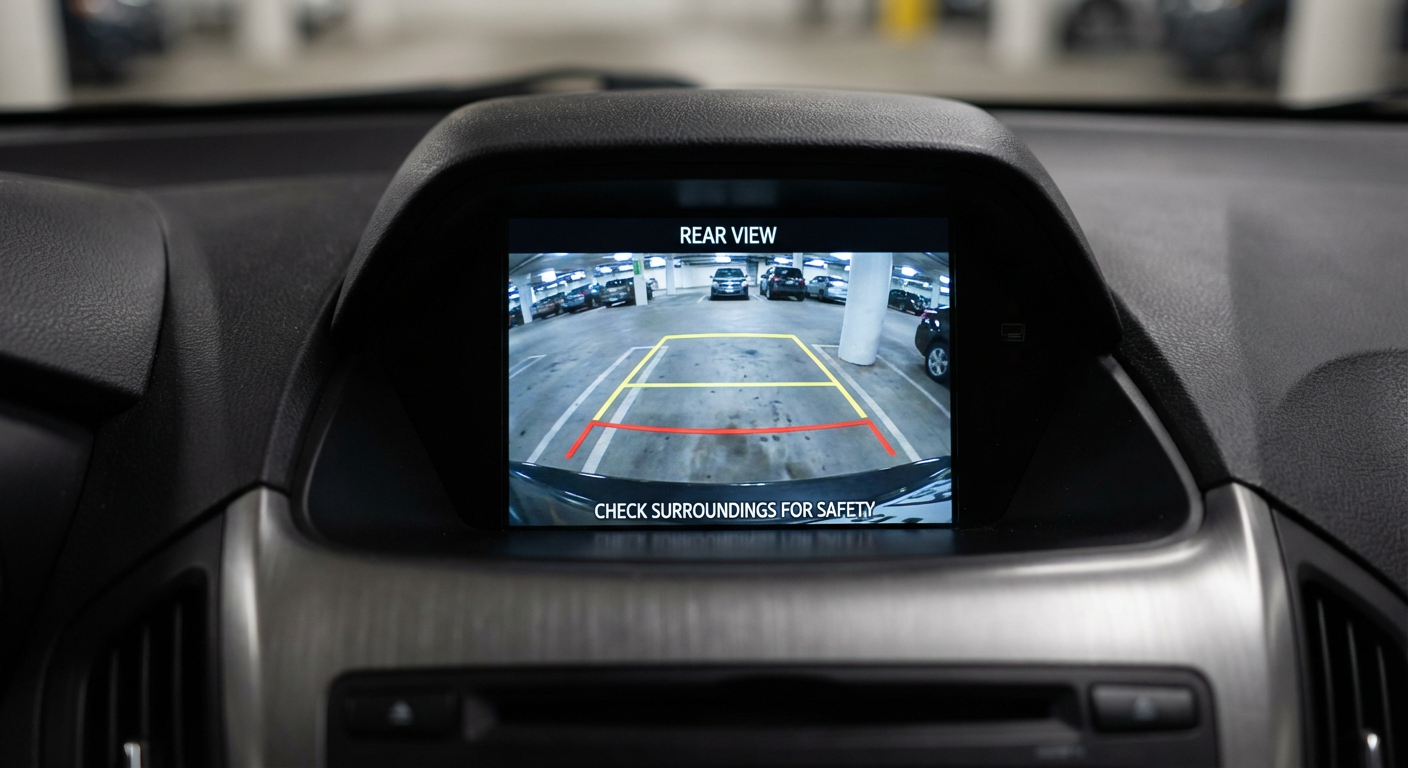
A backup camera is a rear‑facing video camera mounted at the back of the vehicle, usually near the center of the tailgate or trunk. When you shift into reverse, the system automatically shows a live video feed on the dashboard screen, often with colored guidelines to help you judge distance and angle.
Key points:
- The image is mirrored so that left and right match what you see in your mirrors.
- Wide‑angle lenses allow the camera to show everything from one rear corner to the other and down to the ground near the bumper.
- Backup cameras greatly reduce the rear blind spot and help drivers see children, pets, low objects and curbs that are invisible in mirrors alone.
Because of these benefits, rearview cameras are considered critical safety equipment and play a role in roadworthiness and inspection standards in many regions.
How parking sensors work
Parking sensors use sound waves or electromagnetic fields to detect obstacles near the car and warn the driver.
Two main types are common:
- Ultrasonic sensors: Emit sound waves from small “buttons” in the bumper; the control unit measures how long it takes for waves to bounce back to calculate distance.
- Electromagnetic sensors: Use an electromagnetic field along the bumper; when an object enters the field, the system detects the disturbance and triggers a warning.
Most parking sensors:
- Activate automatically when you shift into reverse or drive at very low speeds.
- Provide a series of beeps that get faster (and sometimes change tone) as you get closer to an obstacle.
- Are available as rear‑only or combined front‑and‑rear systems for tight urban parking and garages.
Read more : Best car safety features 2026
Backup camera + sensors: better together
Backup cameras and parking sensors complement each other:
- The camera gives you a visual of what is behind you, including objects and people.
- The sensors give you audible and sometimes visual warnings as you approach obstacles, even out of the camera’s view.
Combined systems can:
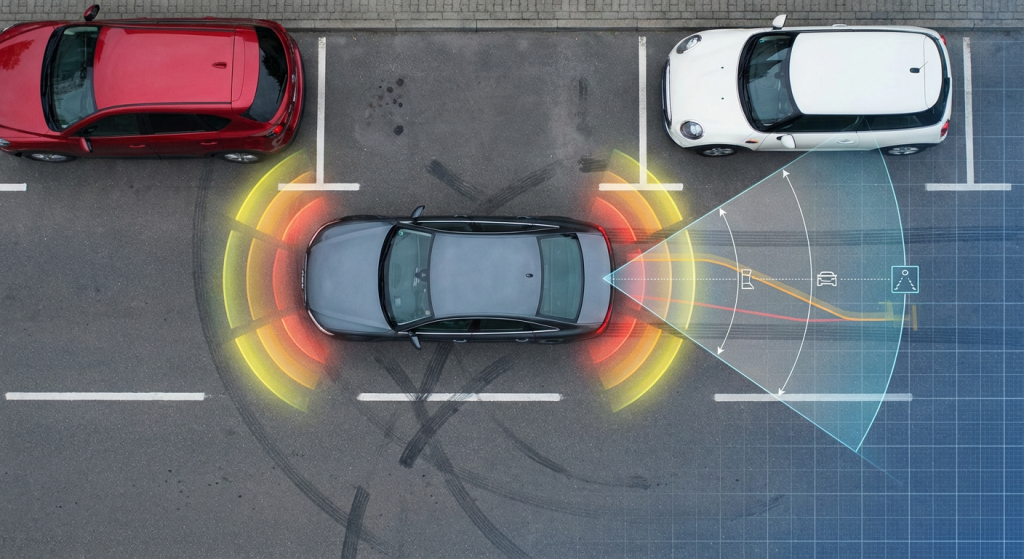
- Show a rear camera view with dynamic guidelines while sensors overlay colored distance bars.
- Provide 360‑degree views using multiple cameras, plus sensor alerts front and rear.
- Make parking in tight spaces and parallel parking much easier and safer, especially for new drivers or in large vehicles.
On many cars, the system activates automatically in reverse, but some also allow a “driving rear view” mode at low speeds.
How to use cameras and sensors safely
Even with these features, the driver must stay alert and use mirrors and direct observation. Good practice includes:
- Always checking mirrors and over your shoulder before reversing, using the camera as additional help, not a replacement.
- Listening carefully to sensor beeps and stopping immediately if they become continuous or very rapid.
- Keeping camera lenses and sensor areas clean so dirt, snow or ice do not block them.
Used correctly, backup cameras and parking sensors significantly reduce the risk of low‑speed collisions and make daily driving less stressful.
Read more :Best car safety features 2026