Pre-purchase mechanical inspection: what mechanics check
A professional pre-purchase inspection reveals hidden mechanical issues that could cost thousands in repairs. While many buyers focus on cosmetic details, certified mechanics examine critical systems including engine compression, transmission behavior, brake wear, and suspension integrity. Understanding what experts look for during these inspections empowers you to make confident decisions. This comprehensive used car buying guide approach ensures you spot potential problems before signing any paperwork. Armed with mechanical knowledge, you’ll negotiate better prices and avoid vehicles with expensive underlying issues that surface only after purchase.
why professional mechanics matter
I’ve learned this the hard way. Three years ago I bought what looked like a pristine 2015 Accord without a pre-purchase inspection. Two weeks later the transmission started slipping. The repair bill hit $4,200. That mistake taught me something valuable: what you can’t see matters more than what you can.
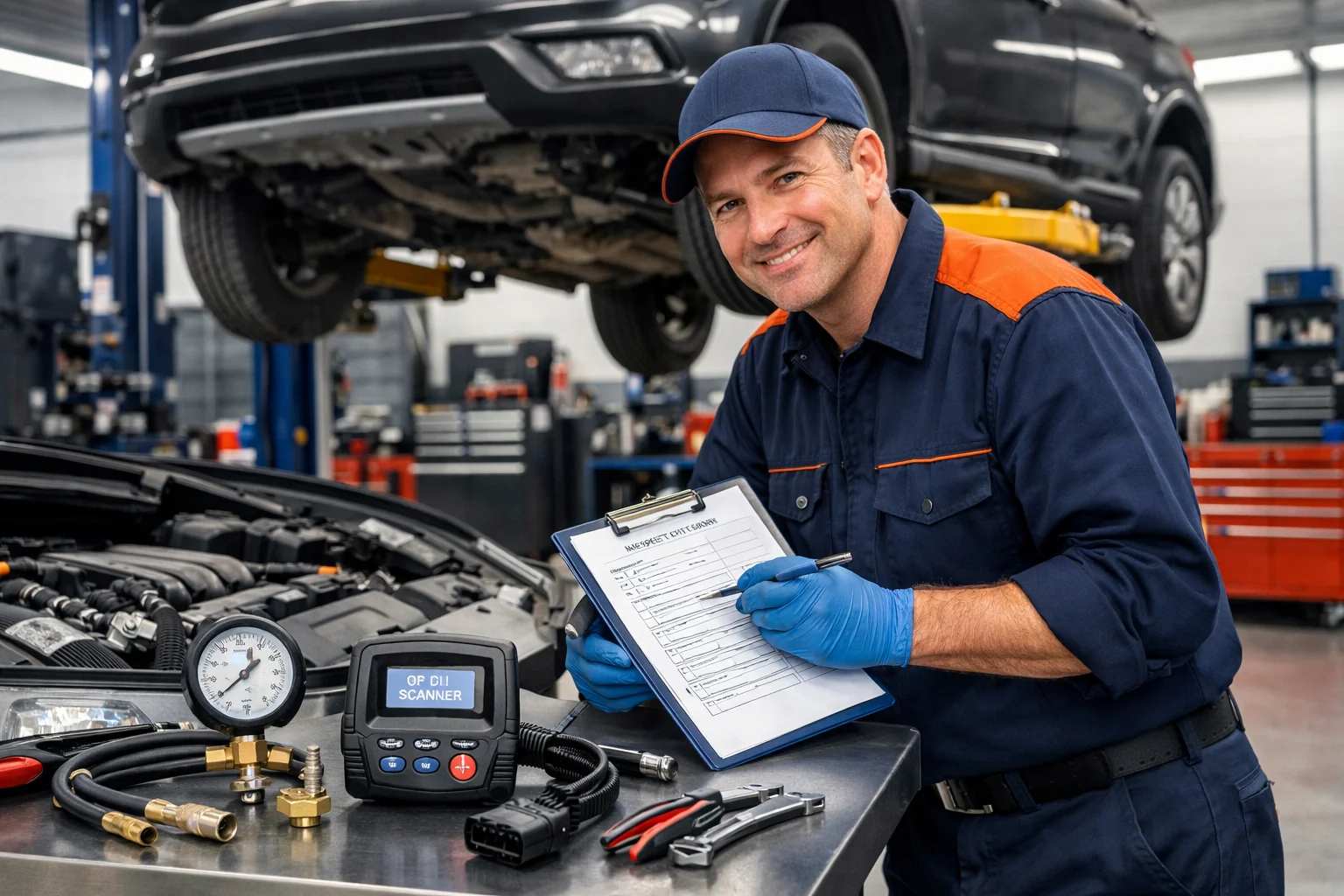
Professional mechanics have tools and experience that reveal problems invisible to average buyers. They know where manufacturers cut corners and which components fail first. Most importantly they approach each inspection without emotional attachment to the vehicle. You might fall in love with heated seats or a sunroof but a mechanic only cares about whether the car will reliably get you from point A to point B.
under the hood examination
The engine compartment tells experienced mechanics everything they need to know about previous ownership. They start by checking fluid levels and conditions. Fresh oil in a car with 80,000 miles might seem good but it could also mean the seller just changed it to hide a leak or burning issue.
Coolant color and consistency reveal cooling system health. Rusty orange coolant suggests neglected maintenance while a milky appearance indicates a head gasket leak mixing oil and coolant. That’s a $1,500 repair minimum. Brake fluid should be clear or light amber. Dark brake fluid means moisture contamination and potential brake system corrosion.
Mechanics inspect belts and hoses for cracks, fraying, or unusual wear patterns. A serpentine belt costs $50 to replace but if it snaps while driving you might damage the alternator, water pump, or power steering pump. Those repairs quickly exceed $800.
They also look for signs of oil leaks around valve covers, oil pan, and rear main seal. Small leaks become big problems. I’ve seen engines seize because owners ignored a “minor” leak that eventually drained all the oil during highway driving.
compression and leak-down testing
This is where things get technical but critical. Mechanics use a compression tester to measure cylinder pressure. Healthy engines show consistent compression across all cylinders. Significant variations indicate worn piston rings, damaged valves, or head gasket problems.
A leak-down test goes further by pressurizing each cylinder and measuring how much pressure escapes. This pinpoints exactly where compression is lost. Is it valves? Rings? Head gasket? Each problem has different repair costs ranging from $800 to $3,500.
These tests take 30 minutes but provide definitive answers about engine health. No amount of visual inspection replaces actual pressure measurements. You wouldn’t buy a house without checking the foundation and you shouldn’t buy a car without checking the engine’s internal condition.
transmission evaluation
Transmission problems rank as the second most expensive repair after engine replacement. Good mechanics don’t just check fluid color. They examine fluid for metal particles using a magnet or their fingers. Metal shavings mean internal wear and imminent failure.
During the test drive they monitor shift quality through all gears. Smooth shifts happen within a narrow RPM range. Delayed engagement, hard shifts, or slipping between gears signal trouble. Automatic transmissions should shift seamlessly. Manual transmissions should engage each gear without grinding or resistance.
They also check for leaks around transmission pan, seals, and cooler lines. Transmission fluid is typically red or pink. If you see it pooling under the car walk away. Rebuilding or replacing a transmission costs $2,000 to $7,000 depending on the vehicle.
brake system analysis
Mechanics measure brake pad and rotor thickness with precision tools. Minimum thickness specifications exist for safety reasons. Pads below 3mm need immediate replacement. Rotors below minimum thickness can’t be resurfaced and must be replaced entirely.
They inspect brake lines for rust, damage, or leaks. Rubber brake hoses crack with age allowing air into the system. Air in brake lines creates a spongy pedal feel and reduced stopping power. That’s a safety hazard you can’t ignore.
Caliper operation gets tested too. Sticking calipers cause uneven brake wear and pull the vehicle to one side during braking. Replacing calipers runs $300 to $500 per wheel including labor.
suspension and steering components
Worn suspension components affect handling, tire wear, and ride quality. Mechanics check ball joints, tie rod ends, control arm bushings, and sway bar links for excessive play or damage. They bounce each corner of the car listening for clunking sounds or watching for continued bouncing after release.
Struts and shocks should dampen movement effectively. If the car continues bouncing more than once after being pushed down the dampers are worn. Replacing all four struts costs $800 to $1,200 but improves safety dramatically.
Power steering systems get checked for leaks and proper assist. Electric power steering has fewer problems than hydraulic systems but both can fail. Mechanics test steering response and listen for unusual noises during turns.
frame and undercarriage inspection
This requires a lift or at minimum getting under the vehicle. Mechanics look for frame damage, rust perforation, or previous accident repairs. Frame damage affects alignment, handling, and safety. Rust holes in structural components make vehicles unsafe and often unrepairable in states with strict inspections.
They examine exhaust systems for leaks or damage. A small exhaust leak near the engine bay can fill the cabin with carbon monoxide. That’s deadly. Exhaust repairs range from $150 for a simple pipe replacement to $1,000 for catalytic converter issues.
Fuel lines, brake lines, and electrical wiring running underneath get inspected for damage or corrosion. Road salt in northern states accelerates metal deterioration. I’ve seen brake lines rupture on 10-year-old vehicles from salt exposure. Regular undercoating helps but many owners skip this maintenance.
electrical system check
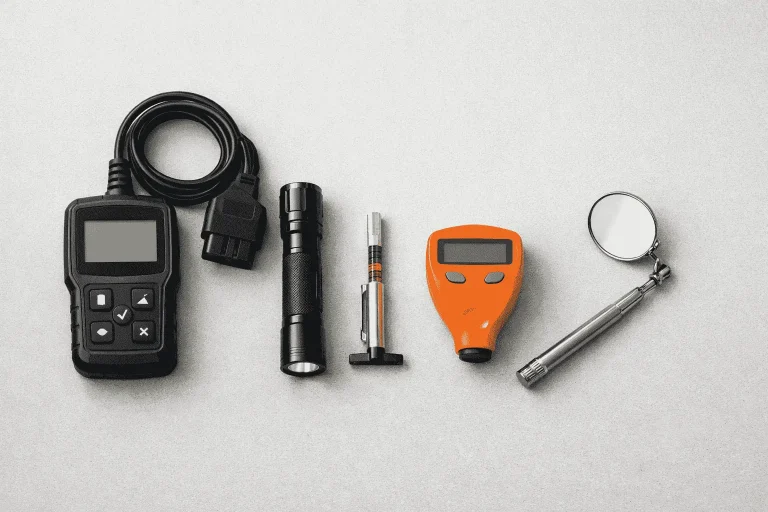
Modern vehicles rely heavily on electronics. Mechanics connect diagnostic scanners to read trouble codes from the engine control module, transmission control module, ABS system, and airbag system. Stored codes reveal problems even if warning lights aren’t currently illuminated.
They test battery voltage and alternator output. Batteries last 4-6 years. Alternators typically last 100,000 miles. Replacing both costs $400 to $600. Testing takes five minutes and prevents getting stranded.
All lights, windows, locks, and accessories get tested. Power window motors fail frequently. Door lock actuators stick or break. Radio and climate control systems malfunction. These aren’t critical safety items but they affect daily usability and resale value.
the investment worth making
Pre-purchase inspections typically cost $100 to $200. That’s cheap insurance against buying a $5,000 problem disguised as a $15,000 car. I now refuse to buy any used vehicle without this inspection regardless of how good it looks or how trustworthy the seller seems.
Understanding what mechanics check helps you ask informed questions and interpret inspection results. You don’t need to become a mechanic yourself but knowing the process protects your investment. After my expensive transmission lesson I’ve helped friends avoid similar mistakes by insisting they get professional inspections. Every single time the mechanic has found issues the seller didn’t disclose.
The inspection report becomes your negotiation tool. Minor issues like worn brake pads justify price reductions. Major problems like engine compression loss mean walking away entirely. Either way you make informed decisions based on facts instead of emotions or seller promises.
Knowledge about common problems by brand helps you prepare specific questions before the inspection even begins.