Pickup Truck Payload Guide 2026: How Payload Really Works (Simple Explanation)
Payload is one of the most misunderstood truck specs, but it is critical for safety and for choosing the right work or tow vehicle. In simple terms, payload is how much weight your truck can safely carry in the cab and bed, not how much it can pull behind it.
Payload vs towing: what’s the difference?
Many people confuse payload with towing capacity, but they measure two different limits.
- Payload capacity: Maximum weight the truck can carry inside itself (passengers, cargo in the bed, accessories, and trailer tongue weight).
- Towing capacity: Maximum weight the truck can safely pull behind it using a trailer, usually a much larger number than payload.
You can think of payload as the limit of what the truck’s suspension, frame and brakes can safely support, while towing capacity is more about what the powertrain and cooling systems can pull with help from the trailer’s own axles.
How to calculate payload capacity (simple formula)
Manufacturers calculate payload and list it in the owner’s manual or on the door‑jamb sticker, but you can also compute it yourself.
Basic formula:
Where:
- GVWR (Gross Vehicle Weight Rating): Maximum allowed total weight of the truck plus people and cargo.
- Curb weight: Weight of the empty truck with all fluids and a full tank of fuel, but no passengers or cargo.
Example:
If a truck has a GVWR of 9,000 lbs and a curb weight of 5,000 lbs, its payload capacity is 4,000 lbs (9,000 − 5,000). That 4,000 lbs must cover passengers, gear, tools, bed cargo and any tongue weight from a trailer.
Read more : Heavy Duty Diesel Trucks 2026
How towing affects payload
When you tow a trailer, some of the trailer’s weight sits on the truck as tongue weight, and that counts against payload.
- Typical tongue weight is about 10–15% of the total trailer weight for bumper‑pull trailers.
- That portion reduces how much other cargo and passenger weight the truck can carry before hitting its payload limit.
Example:
Using the previous 4,000‑lb payload truck: if you tow a 7,000‑lb trailer with 10% tongue weight (700 lbs), that 700 lbs uses part of your payload, leaving only 3,300 lbs for people, tools and other cargo.
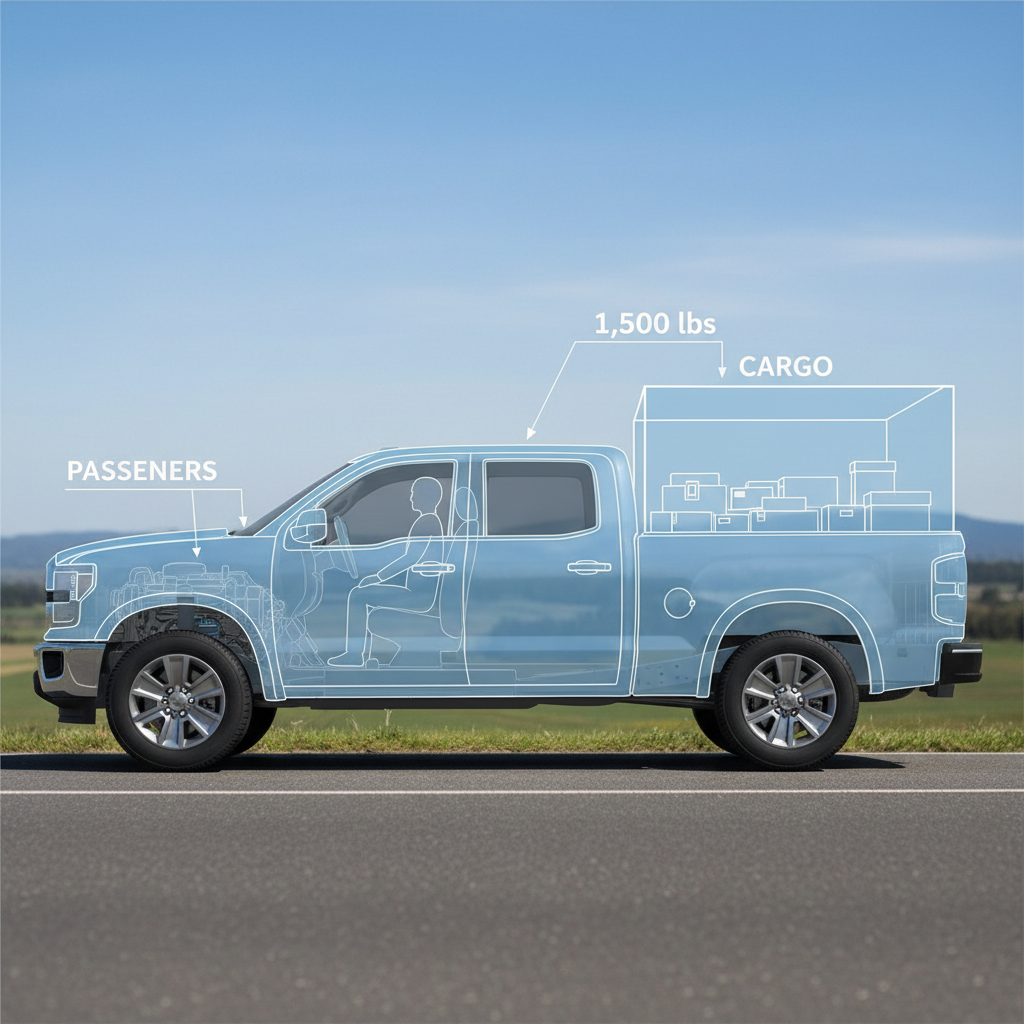
Why payload matters for safety and durability
Exceeding payload can cause more problems than just poor fuel economy. Too much weight can:
- Overload suspension and brakes, increasing stopping distances and rollover risk.
- Overstress tires and axles, leading to premature wear or even failures.
- Void warranties or put you out of compliance with safety regulations in commercial use.
That is why many fleets and experienced towers treat payload as the real limiting factor, especially on half‑ton trucks where it is often reached before towing capacity.
How to check and manage your truck’s payload
To manage payload correctly in 2026:
- Check the payload sticker on your truck (often on the driver’s door jamb).
- Add up estimated weights of passengers, tools, bed cargo and any trailer tongue weight.
- Stay at or below the listed payload, ideally with a safety margin.
- Recalculate if you add heavy accessories like steel bumpers, bed caps or tool bodies, as they increase curb weight and reduce payload.
By understanding payload and watching this number closely, you can choose a truck that truly matches your work and towing needs, instead of relying only on advertised max tow ratings.
Read more : Best trucks for towing and work 2026