Best portable ev chargers for road trips (2025 buyer’s guide)
Long-distance travel in an electric vehicle is far easier today than it was just a few years ago, yet charging access on the road can still vary widely by region and season. For drivers who frequently travel between states, stay in rural areas, or rely on temporary parking locations, having a reliable portable charging solution adds an important layer of flexibility and security. As explained in our main industry reference, Electric Vehicles (EV) Reviews & Trends: The 2025 Guide for U.S. Drivers, a resilient charging strategy combines home infrastructure, public fast-charging, and mobile backup options.
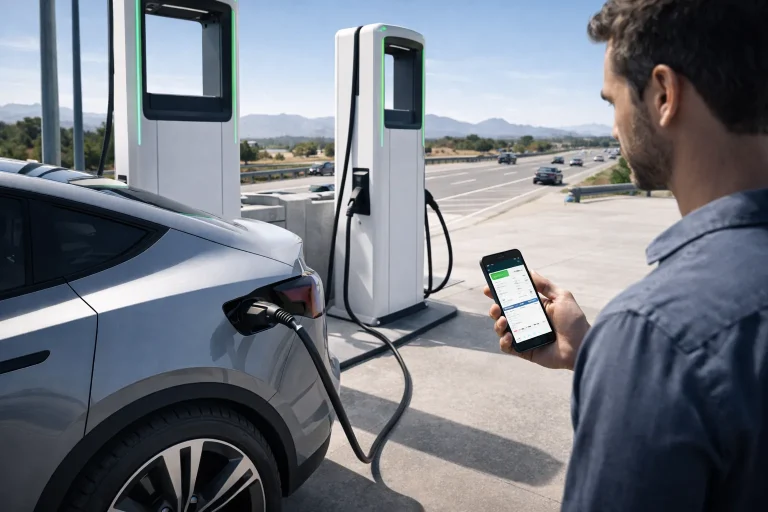
Portable EV chargers allow drivers to draw power from a wide range of outlets, including campground connections, workshop sockets, and dedicated 240-volt circuits at vacation rentals. In emergency situations, they can also provide a slow but dependable way to restore enough range to reach the next public station. In 2025, the market for portable chargers has matured, with improved safety certification, higher power output, and broader vehicle compatibility.
This buyer’s guide reviews the most dependable portable EV chargers for U.S. road trips, focusing on charging speed, outlet flexibility, safety systems, and real-world usability.
Why portable chargers matter for road travel
Even with expanding fast-charging networks, several situations make portable equipment valuable:
- Travel through regions with limited DC fast-charging coverage
- Overnight stays at locations without dedicated EV stations
- Congestion or temporary outages at public chargers
- Emergency range recovery during severe weather or grid disruptions
For drivers who already use a fixed residential system such as those reviewed in Best home ev chargers in 2025 (level 2) – reviews & installation guide, a portable charger serves as a backup and an extension of their charging options beyond the home garage.
Types of portable ev chargers
Level 1 portable chargers
These operate on standard 120-volt outlets and are usually included with the vehicle. They add roughly 3 to 5 miles of range per hour and are best suited for overnight emergency use rather than routine travel charging.
Level 2 portable chargers
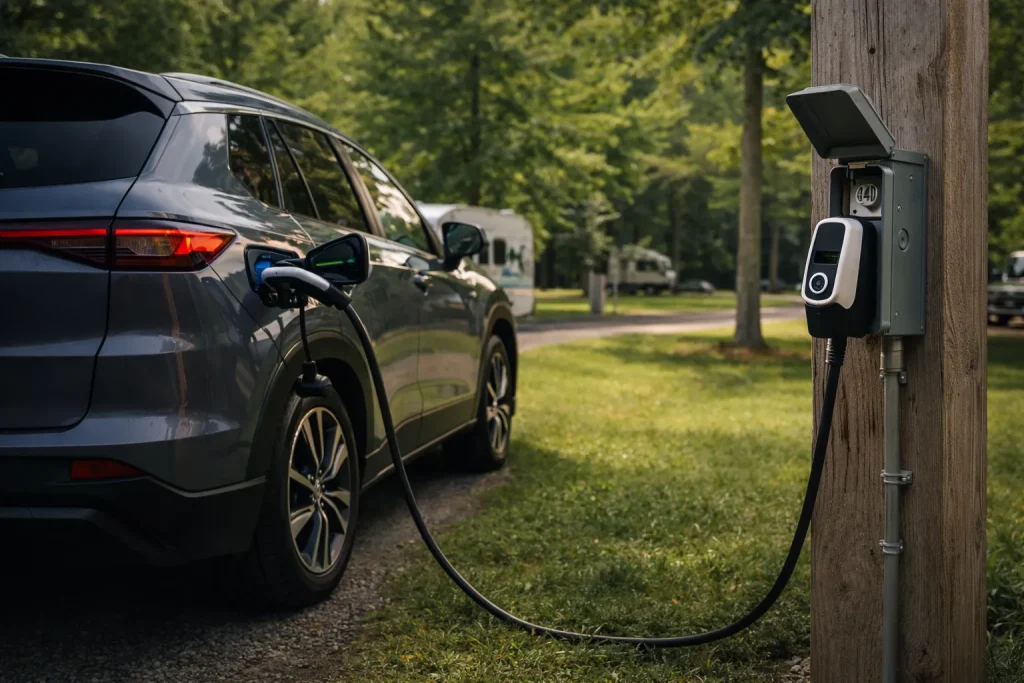
Level 2 mobile units use 240-volt outlets, commonly NEMA 14-50 or NEMA 6-50. These are frequently found at RV parks, marinas, and some residential garages. They can add 15 to 40 miles of range per hour, approaching the performance of wall-mounted systems while remaining transportable.
Key features to evaluate
Power output and amperage
Most portable Level 2 chargers deliver between 16 and 40 amps. Higher amperage shortens charging time but requires properly rated outlets and circuit protection.
Safety certification
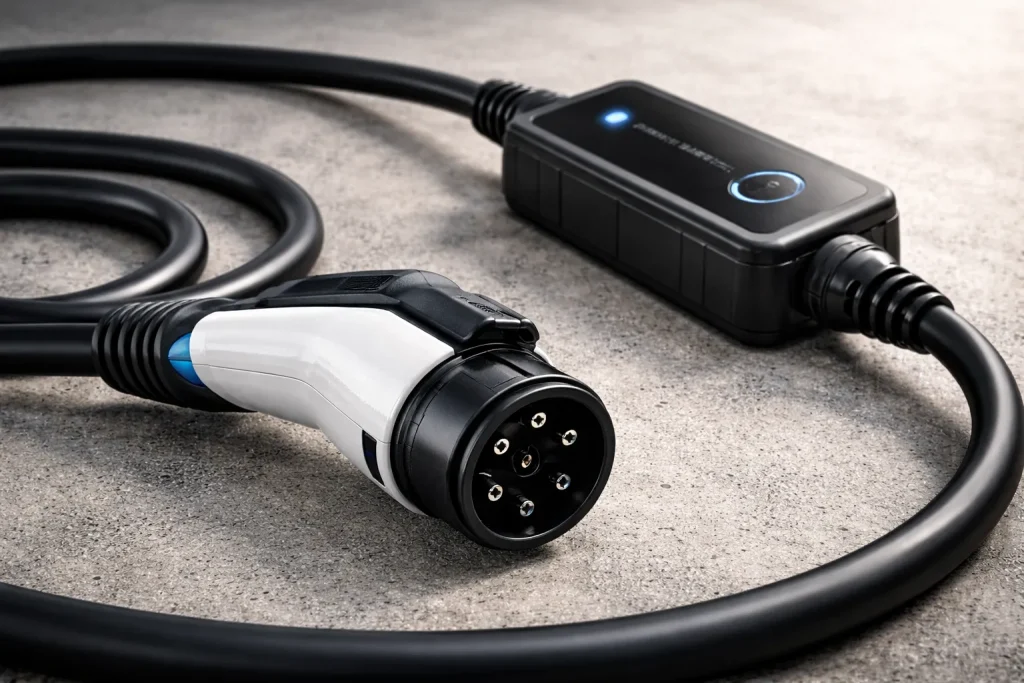
UL listing, ground-fault protection, temperature monitoring, and automatic shutoff are essential. Portable chargers are often used outdoors and in unfamiliar electrical environments, making robust safety systems critical.
Connector and vehicle compatibility
Support for the J1772 connector and compatibility with NACS adapters ensures operation across both Tesla and non-Tesla vehicles.
Cable length and durability
Long, cold-weather-flexible cables and weather-resistant enclosures improve usability at campsites and roadside locations.
Leading portable ev chargers in the u.s. in 2025
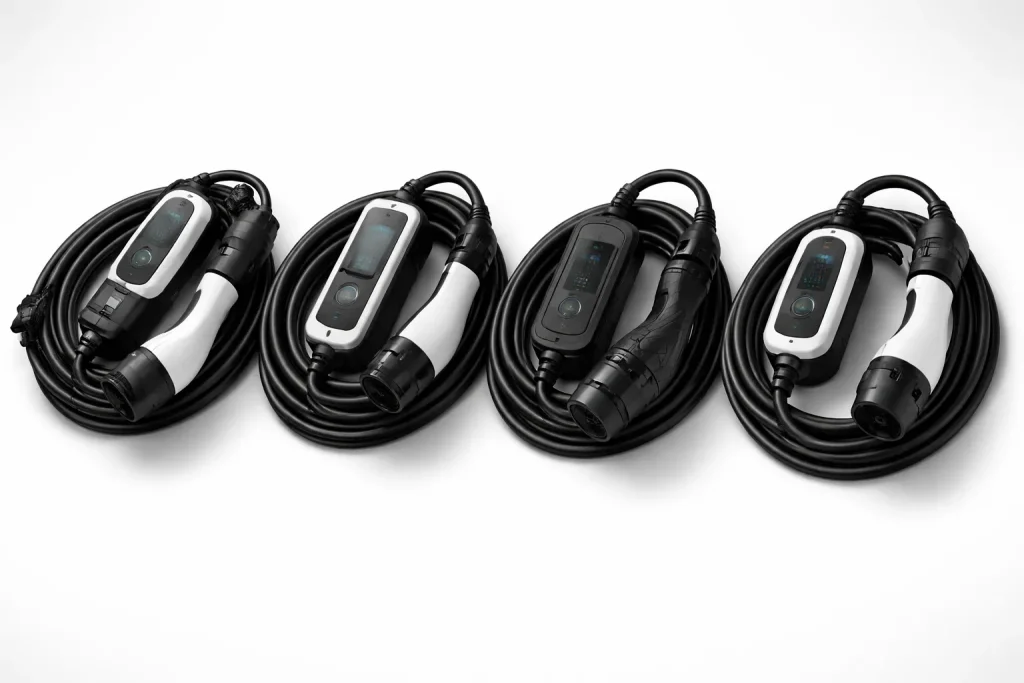
Lectron portable level 2 chargers
Lectron offers a broad range of mobile chargers with interchangeable plug options and outputs up to 40 amps. They are widely used by travelers due to solid thermal protection, competitive pricing, and good outlet compatibility.
Schumacher travel ev chargers
Schumacher focuses on industrial-grade construction and advanced fault detection. Their units feature reinforced connectors and stable performance during prolonged charging sessions, making them suitable for frequent road use.
Mustart travelmaster series
Mustart provides high-amperage portable chargers with long cable reach and strong power delivery. These are popular among RV travelers who rely on campground 240-volt connections.
BougeRV portable ev chargers
BougeRV targets outdoor and adventure-oriented drivers. Their compact, water-resistant units emphasize portability and reliable operation under variable environmental conditions.
Mid-article links to neighboring satellites
For drivers who want to integrate mobile charging with a permanent home solution, equipment selection, installation requirements, and smart-charging features are analyzed in Best home ev chargers in 2025 (level 2) – reviews & installation guide. That article explains when a fixed system offers the best long-term efficiency and cost control.
Long-distance travel also depends on access to reliable public networks. Coverage, pricing, and membership programs are examined in Best public charging apps & membership plans compared, which shows how portable chargers can complement DC fast-charging by reducing dependence on congested corridors and peak-rate stations.
Practical use on road trips
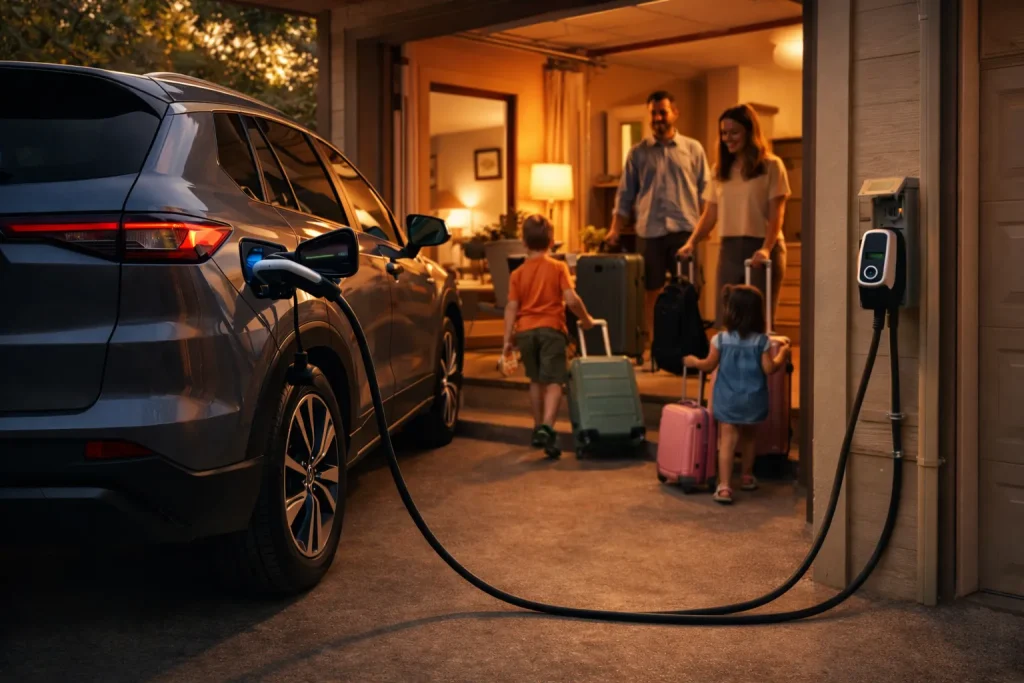
When planning extended travel, portable chargers allow drivers to:
- Charge overnight at campgrounds or RV parks using 240-volt outlets
- Recover range at vacation rentals with suitable electrical service
- Maintain mobility in areas with sparse fast-charging infrastructure
They are particularly useful for drivers of lower-range EVs, where an additional overnight Level 2 session can eliminate the need for an extra fast-charging stop the following day.
Safety and best practices
To ensure safe operation:
- Verify outlet capacity and breaker rating before connection
- Avoid extension cords unless specifically rated for high current
- Keep connectors clean and dry
- Monitor ambient temperature during long charging sessions
Regular inspection of cables and plugs helps prevent overheating and contact wear.
Conclusion
In 2025, portable EV chargers remain an essential tool for U.S. drivers who travel beyond dense urban charging networks. They provide flexibility for renters, reassurance for long-distance travelers, and resilience during infrastructure disruptions. High-quality options from Lectron, Schumacher, Mustart, and BougeRV combine solid power output with robust safety systems and broad outlet compatibility.
When viewed within the broader framework of Electric Vehicles (EV) Reviews & Trends: The 2025 Guide for U.S. Drivers, portable charging is a key component of a complete electric mobility strategy. Alongside dependable home Level 2 infrastructure and reliable public fast-charging networks, a well-chosen mobile charger ensures that EV ownership remains practical, adaptable, and ready for the varied travel conditions encountered across the United States.