Washington state auto insurance: 25/50/10 requirements
Washington State Auto Insurance: 25/50/10 Requirements. Washington State requires 25/50/10 liability coverage. That’s $25,000 per person for bodily injury, $50,000 per accident for bodily injury, and $10,000 for property damage.
If you live in Seattle you already see the problem. Ten thousand dollars for property damage in 2026 is laughable. One Tesla fender bender and your coverage is gone.
I’ve been analyzing insurance claims for years and Washington consistently stands out for having a property damage minimum that’s completely disconnected from reality. The bodily injury limits aren’t great either but that $10,000 property damage cap is particularly absurd given what vehicles cost now.
Let me break down what Washington actually requires and why it’s nowhere near enough especially if you drive anywhere near Seattle.
What Washington requires
Every driver in Washington needs liability insurance. The minimums are 25/50/10 which means $25,000 per person for bodily injury, $50,000 total per accident for bodily injury, and $10,000 for property damage.
You need proof of insurance to register your vehicle. Washington uses an electronic verification system that checks your coverage status in real time. Your policy lapses for even a day and the Department of Licensing knows about it immediately.
Get caught driving without insurance and you’re looking at fines starting at $450 for a first offense. License suspension. SR-22 filing requirements that make your insurance way more expensive for years. Washington doesn’t play around with enforcement.
Washington doesn’t require Personal Injury Protection. No mandatory uninsured motorist coverage though companies have to offer it. No required medical payments coverage.
Washington is a traditional at-fault state. Whoever causes the accident is responsible for damages. Their insurance pays up to policy limits. Everything beyond that is personal liability.
That $10,000 property damage limit is the real killer here.
Why that $10,000 property damage limit is insane
Ten thousand dollars might have been reasonable in 1990. In 2026 it’s completely inadequate.
The average new vehicle price is around $48,000 now. In Seattle where Subarus, Teslas, and luxury SUVs dominate the roads the average is even higher.
Hit a parked 2024 Subaru Outback and cause moderate damage you’re looking at $12,000 to $18,000 in repairs easily. All the sensors and cameras in modern vehicles make even minor accidents expensive to fix.
Rear-end a Tesla Model Y in Bellevue and the repair estimate will be $15,000 to $25,000 before you even get to potential battery damage concerns. Your $10,000 property damage limit doesn’t come close.
Total loss a vehicle and your $10,000 limit might cover a 15-year-old sedan but nothing newer. You’re personally liable for the difference between what the vehicle is worth and what your insurance pays.
I talked to someone in Tacoma last year who rear-ended a 2023 F-150. Moderate damage. No injuries thankfully. The repair estimate came back at $16,800. His property damage limit was the state minimum of $10,000. He owed $6,800 personally.
For a relatively minor accident with no injuries he ended up making payments for two years to cover the difference. That’s what minimum coverage gets you in Washington.
The bodily injury limits aren’t much better
Twenty-five thousand dollars per person for bodily injury sounds reasonable until someone actually gets hurt.
Emergency room visit at Harborview or Swedish or any Seattle hospital runs $7,000 to $14,000 for anything beyond minor injuries. Add imaging, specialists, potential admission. The costs climb fast.
If someone needs surgery you’re looking at $45,000 to $90,000 easily. Orthopedic surgery, back surgery, internal injuries. Seattle medical costs are among the highest in the country.
Then comes rehabilitation and follow-up care. Physical therapy for three months costs $9,000 to $14,000. Specialist appointments. Medications. Lost wages if they can’t work.
Your $25,000 per person limit gets exhausted before they finish initial treatment. Then their lawyer starts examining your assets to figure out how much more they can get from you personally.
Washington courts are reasonably balanced but King County juries can award substantial damages especially for serious injuries. Having minimum coverage in Seattle is asking for trouble.
Washington is an at-fault state
Washington uses a traditional fault-based system. Whoever causes the accident pays for damages through their liability insurance.
If you run a red light and hit someone you’re at fault. Your insurance covers their damages up to your limits. Everything beyond that comes directly from you.
Washington allows injured parties to sue without any injury threshold. Even relatively minor accidents can end up in litigation if someone claims ongoing issues or disputes the settlement amount.
Washington uses pure comparative negligence which is slightly different from some other states. Even if you’re 99% at fault you can still recover 1% of damages from the other party if they were 1% at fault. But practically speaking if you’re mostly at fault you’re paying most of the damages.
This creates disputes over fault percentages. Insurance companies investigate. Lawyers argue over who did what. A straightforward accident turns into months of negotiation and potential litigation.
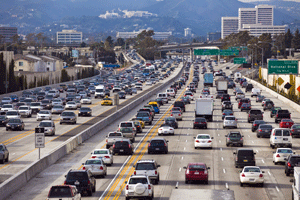
Seattle traffic makes this worse. I-5 through downtown is a nightmare. I-405 around Bellevue is terrible. SR-99, I-90, SR-520. These roads are packed and accidents happen constantly.
Real scenario on I-5
Let me give you a realistic example that happens all the time in Seattle.
You’re heading north on I-5 through downtown. It’s 5:30 PM on a weekday. Traffic is crawling. You’re frustrated because it’s raining again and you just want to get home.
Traffic slows suddenly near the convention center. You’re looking at your GPS trying to figure out if surface streets would be faster. You don’t brake in time.
You hit the Subaru Crosstrek in front of you at maybe 15 mph. Not fast but enough to do damage.
The driver is a 38-year-old software engineer. She gets whiplash from the impact. Goes to urgent care that night. X-rays, evaluation, pain medication, soft collar. Initial bill is $3,200.
Over the next month she sees a chiropractor twice a week and her regular doctor three times. Her neck is messed up. Another $4,800. She misses a week of work. Lost wages of $3,800.
Total medical and lost wages is $11,800. Her lawyer is claiming ongoing neck pain and demanding $35,000 to settle.
Your $25,000 per person limit covers $25,000. That handles this claim but doesn’t leave much room if the settlement demand goes higher or if she needs more treatment.
Now the vehicle damage. Her 2023 Crosstrek has rear-end damage. Bumper, sensors, tailgate, internal structure. The estimate comes back at $14,200.
Your property damage limit is $10,000. The repair is $14,200. You personally owe $4,200.
Add your own vehicle damage which your collision coverage handles if you have it. Plus your rates are going up significantly after an at-fault accident.
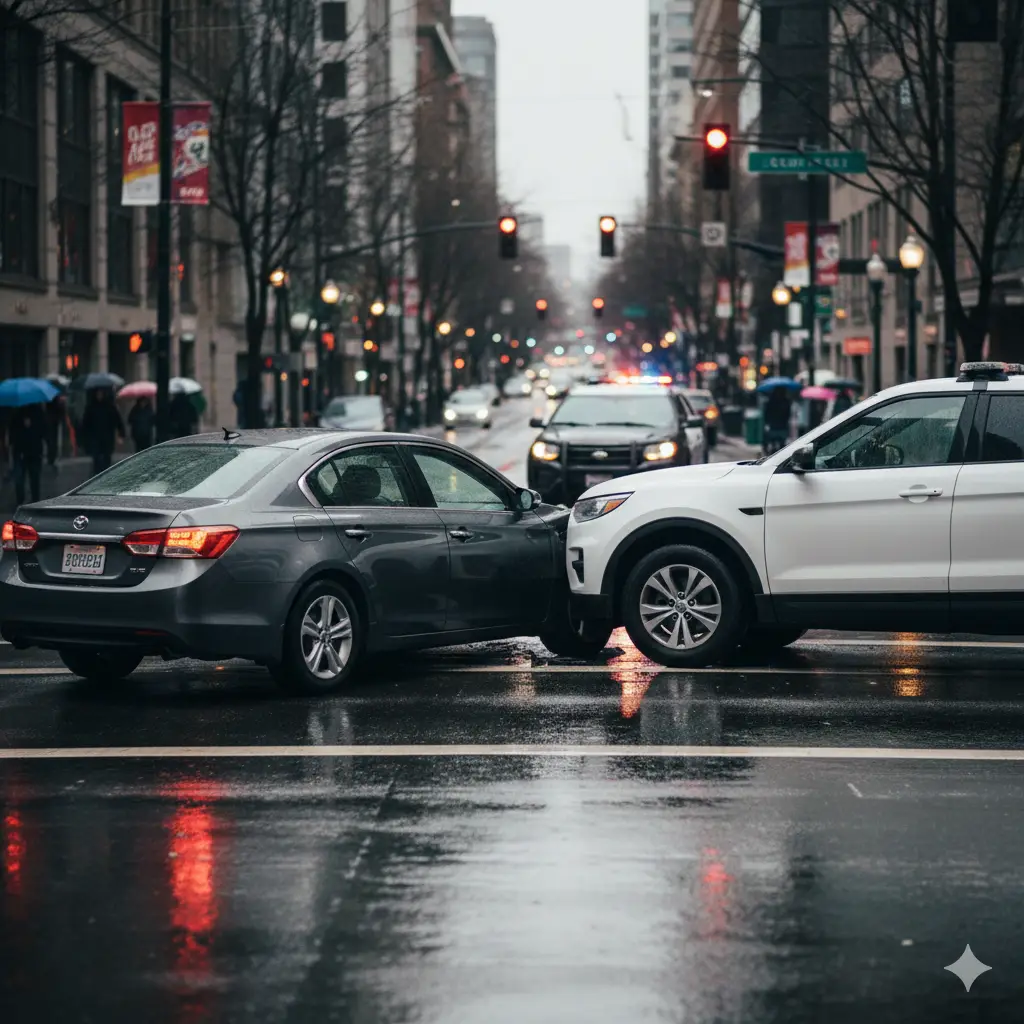
This is a normal accident. Light impact. No catastrophic injuries. Just regular Seattle traffic collision.
Your minimum coverage left you owing $4,200 personally just for the property damage. If the injury claim escalates you could owe a lot more.
The uninsured driver problem
About 11% of Washington drivers have no insurance. That’s roughly one in nine vehicles on the road.
Seattle has pockets where the uninsured rate is much higher especially in certain neighborhoods. Tacoma and Spokane also have significant uninsured populations.
Washington doesn’t require uninsured motorist coverage but insurance companies have to offer it. You can decline it but most agents will push pretty hard for you to keep it.
A lot of people decline UM coverage to save $25 to $40 per month. Then they get hit by someone with no insurance and they’re stuck paying everything themselves.
I know someone in Everett who got T-boned by an uninsured driver running a red light. Serious injuries. Medical bills over $50,000. The other driver had no insurance and no assets. No way to recover anything.
She had declined uninsured motorist coverage to save thirty bucks a month. Now she’s dealing with medical debt that’ll take years to pay off. For thirty dollars a month.
Don’t make that mistake. Get uninsured motorist coverage especially in Washington where the uninsured rate is over 10%.
How Washington compares to other states
Washington’s 25/50/10 requirement is actually one of the lowest in the country for property damage. Most states require at least $15,000 or $20,000 for property damage. Washington’s $10,000 is particularly inadequate.
The bodily injury minimums are middle of the pack. Not the lowest but nowhere near adequate for 2026 medical costs.
When you look at auto insurance requirements across all states Washington stands out for having a property damage minimum that’s completely out of touch with vehicle values and repair costs.
Washington also has higher than average insurance costs especially in King County. Partly because Seattle has high collision rates. Partly because vehicle theft is a major problem in Seattle and Tacoma. Partly because the uninsured rate is significant.
The average Washington driver pays around $2,000 per year for auto insurance. Seattle and Bellevue drivers pay more. Spokane and rural areas pay less.
What you actually need in Washington
The legal minimum in Washington is 25/50/10. That keeps you legal but leaves you massively exposed especially for property damage.
Here’s what I’d recommend for Washington drivers in 2026.
Carry at least 100/300/100 liability coverage. That’s $100,000 per person for bodily injury, $300,000 per accident, and $100,000 for property damage. This gives you real protection against modern costs.
If you live in Seattle or Bellevue or have significant assets consider even higher limits. The cost difference between 100/300/100 and 250/500/250 is usually only $20 to $40 more per month.
The premium difference between 25/50/10 and 100/300/100 in Washington is typically $55 to $95 per month depending on location, age, and driving history. King County costs more than Spokane County but it’s manageable.
Add uninsured motorist coverage at matching limits. With 11% of drivers uninsured you need this protection. It typically costs $25 to $45 per month.
Consider medical payments coverage of $5,000 to $10,000. Washington doesn’t require PIP so you need a way to pay your own medical bills quickly while fault gets determined.
Keep comprehensive and collision if your vehicle is worth more than $5,000. Seattle has high vehicle theft rates especially for certain models. Comprehensive protects against theft, vandalism, and weather damage.
Common mistakes Washington drivers make
The biggest mistake is sticking with that $10,000 property damage minimum. It’s nowhere near enough in 2026. You will end up owing money personally after even a moderate accident.
Another huge mistake is declining uninsured motorist coverage to save a few bucks per month. With over 10% of drivers uninsured this is incredibly shortsighted.
A lot of Washington drivers don’t understand that liability coverage only pays for damage they cause to others. It doesn’t cover their own injuries or vehicle damage. That’s what medical payments and collision coverage handle.
Some people think they can upgrade coverage after an accident. You can’t. You’re stuck with whatever you had when the accident happened.
Young drivers often go minimum coverage because insurance is expensive under 25. But young drivers statistically cause more accidents which makes low limits especially dangerous.
Seattle versus rest of Washington
Insurance needs and costs vary across Washington but everyone needs way more than the minimum.
Seattle and King County drivers face the highest premiums and highest risk. The traffic is terrible. I-5, I-405, SR-99, SR-520. These roads are packed. Accidents happen constantly. Higher limits are essential.
Eastside cities like Bellevue, Redmond, Kirkland. Expensive vehicles everywhere. Teslas, BMWs, Audis, luxury SUVs. That $10,000 property damage limit is a joke in these areas.
Tacoma and Pierce County. Still urban. Still congested. You need solid coverage here too.
Spokane on the east side. Less traffic than Seattle but accidents still cost the same. Medical bills and vehicle repairs don’t care which side of the Cascades you’re on.
Rural Washington in places like Yakima, Wenatchee, Walla Walla. Lower premiums. Less traffic. But you still need adequate coverage. One serious accident and minimum limits won’t cut it.
The 25/50/10 minimum is inadequate everywhere in Washington. The degree varies slightly but everyone needs higher coverage.
Final thoughts
Washington’s 25/50/10 minimum insurance requirement is particularly weak on property damage coverage. That $10,000 limit hasn’t been updated in decades while vehicle values have more than doubled.
Seattle traffic and expensive vehicles make minimum coverage especially risky in the metro area. But even in less congested parts of Washington modern accident costs exceed these minimums regularly.
The cost difference between minimum and adequate coverage is usually $70 to $120 per month. That’s real money but it’s nothing compared to being personally liable for $30,000 or $50,000 after an at-fault accident.
If you want to see how Washington fits into the national picture of state insurance requirements, it’s near the bottom for property damage minimums. And if you’re comparing Washington to states with higher requirements Texas mandates 30/60/25 which is better but still not enough for serious accidents in 2026.
Stay covered, stay safe, and happy driving.