Best home ev chargers in 2025 (level 2) – reviews & installation guide
For most American electric vehicle owners, the real EV experience begins at home. While public fast-charging networks continue to expand, daily convenience, long-term cost control, and battery health still depend primarily on having a reliable residential charging solution. As explained in our main industry reference, Electric Vehicles (EV) Reviews & Trends: The 2025 Guide for U.S. Drivers, access to dependable home charging remains the foundation of practical electric mobility in the United States.
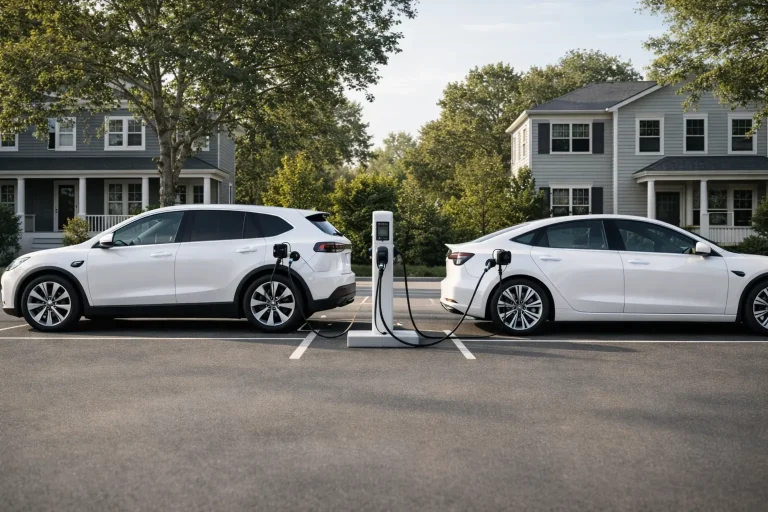
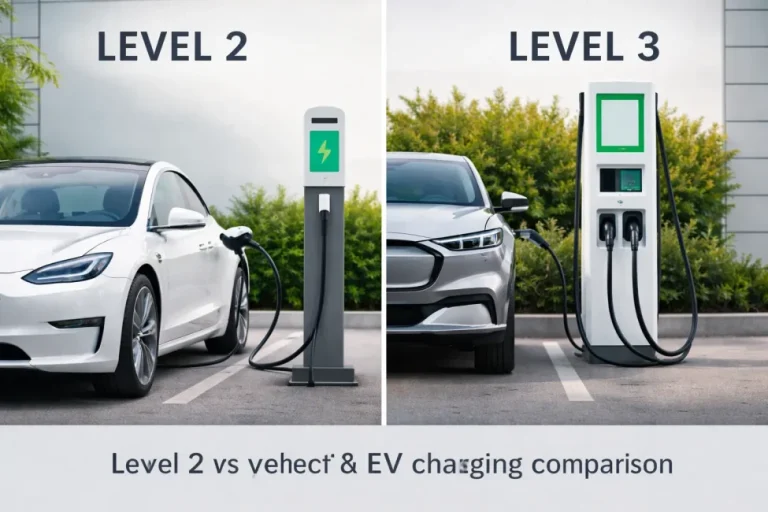
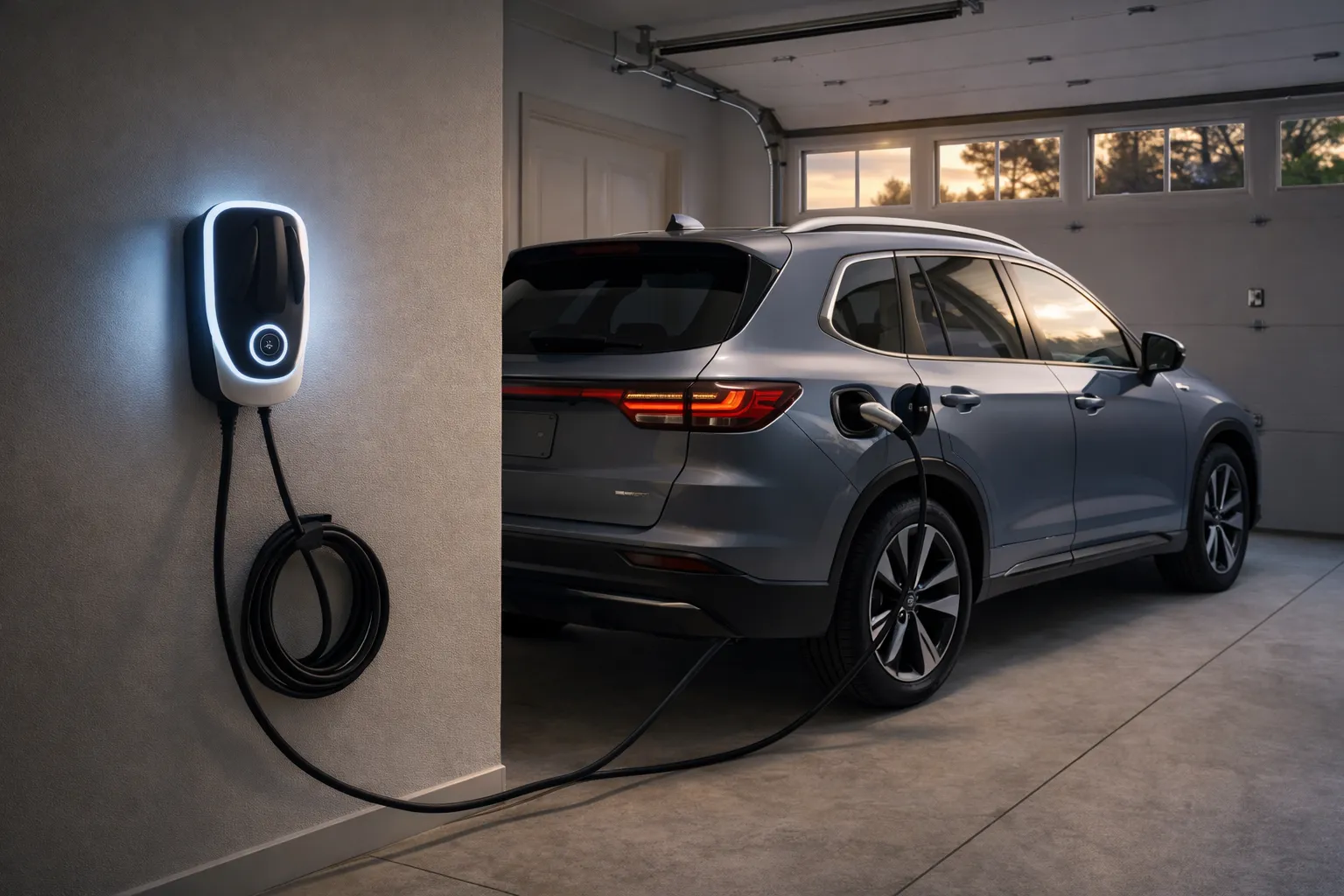
In 2025, Level 2 chargers have become the standard for home use. They operate on a 240-volt circuit and can restore 25 to 45 miles of range per hour, allowing most EVs to fully recharge overnight. Compared with a standard wall outlet, Level 2 systems dramatically reduce charging time, lower energy cost per mile, and place less thermal stress on battery cells than frequent reliance on high-power public fast charging.
This review examines the most reliable Level 2 home EV chargers available in the U.S. today, focusing on performance, safety certification, installation requirements, smart-charging features, and long-term value.
Why level 2 charging is essential for home ev owners
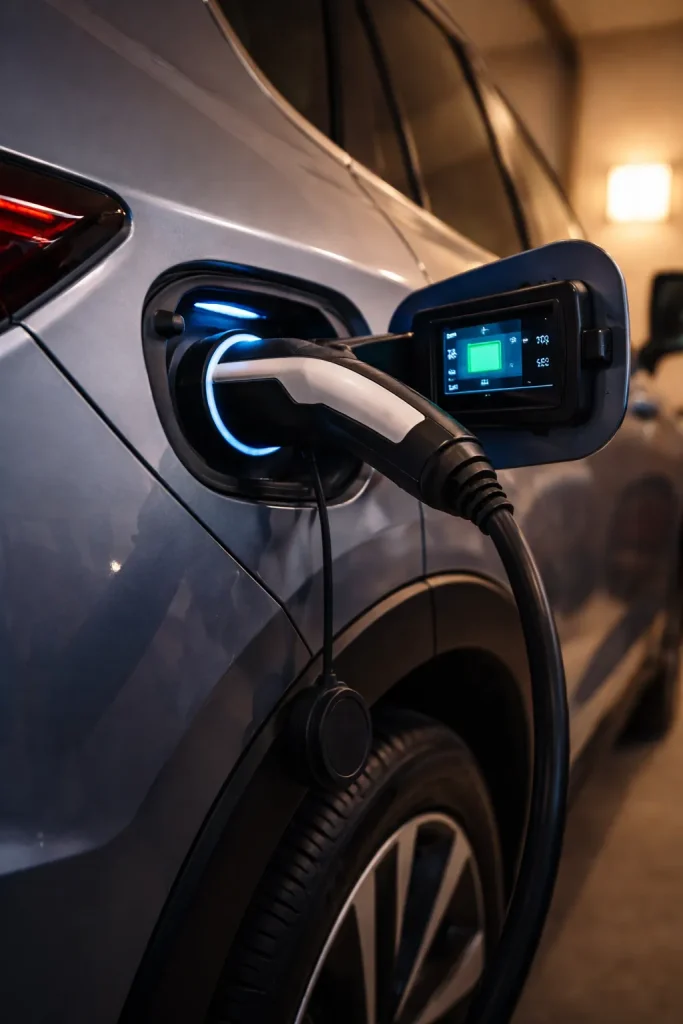
A Level 2 charger typically delivers between 7 and 11 kW of power, depending on amperage and household electrical capacity. This is sufficient for daily commuting needs and even for large-battery SUVs, provided charging is done overnight.
From an ownership perspective, Level 2 charging offers three decisive advantages:
First, it provides time efficiency. A vehicle that might take more than 24 hours to recharge on a standard outlet can often be fully replenished in six to ten hours with a Level 2 system.
Second, it reduces operating cost. Home electricity, particularly when combined with time-of-use rates, is significantly cheaper than public DC fast charging.
Third, it supports battery longevity. Moderate, consistent charging generates less heat and reduces long-term degradation compared with frequent high-power sessions.
These factors explain why automakers and energy agencies consistently recommend Level 2 home charging as the primary solution for EV owners with access to private parking.
What to consider when choosing a level 2 home charger
Power output and compatibility
Most residential units deliver between 32 and 48 amps. A 40-amp charger is sufficient for the majority of EVs, while 48-amp models provide faster recovery for vehicles equipped with high-capacity onboard chargers.
Safety and certification
UL listing and compliance with National Electrical Code standards are essential. Quality chargers include ground-fault protection, temperature monitoring, and automatic shut-off to prevent overheating and electrical faults.
Smart features
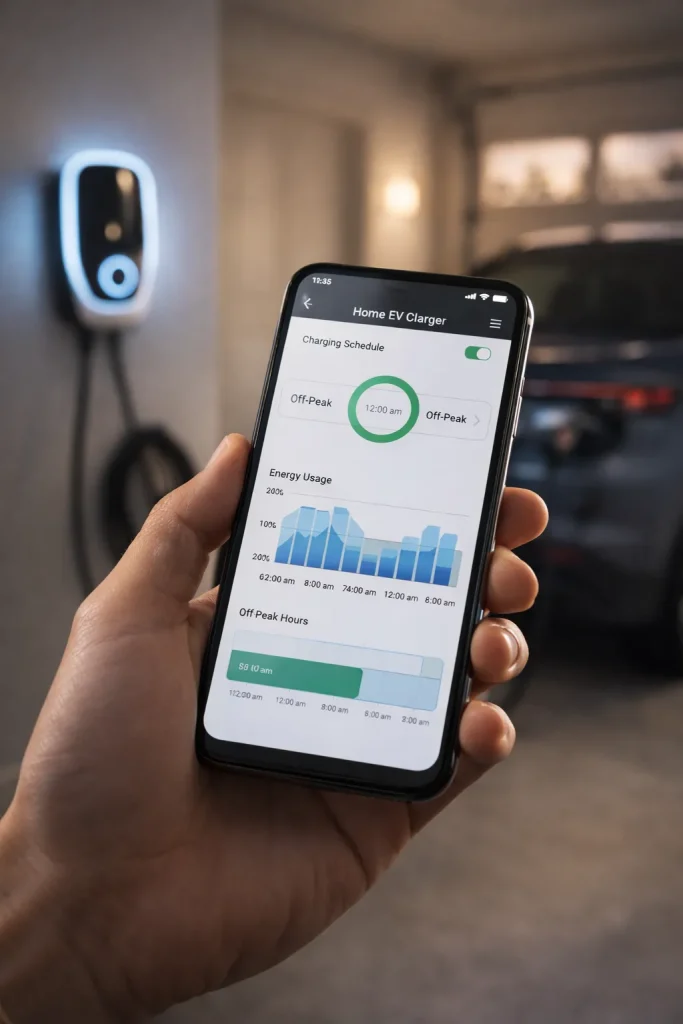
Wi-Fi connectivity enables scheduled charging, energy-use monitoring, and integration with off-peak electricity pricing. Some chargers also support load management, which is important for homes with limited panel capacity or multiple EVs.
Installation type
Hardwired units allow higher amperage and a cleaner installation, while plug-in models offer easier replacement and flexibility for renters, though they may be limited in maximum output.
Leading level 2 home ev chargers in the u.s. in 2025
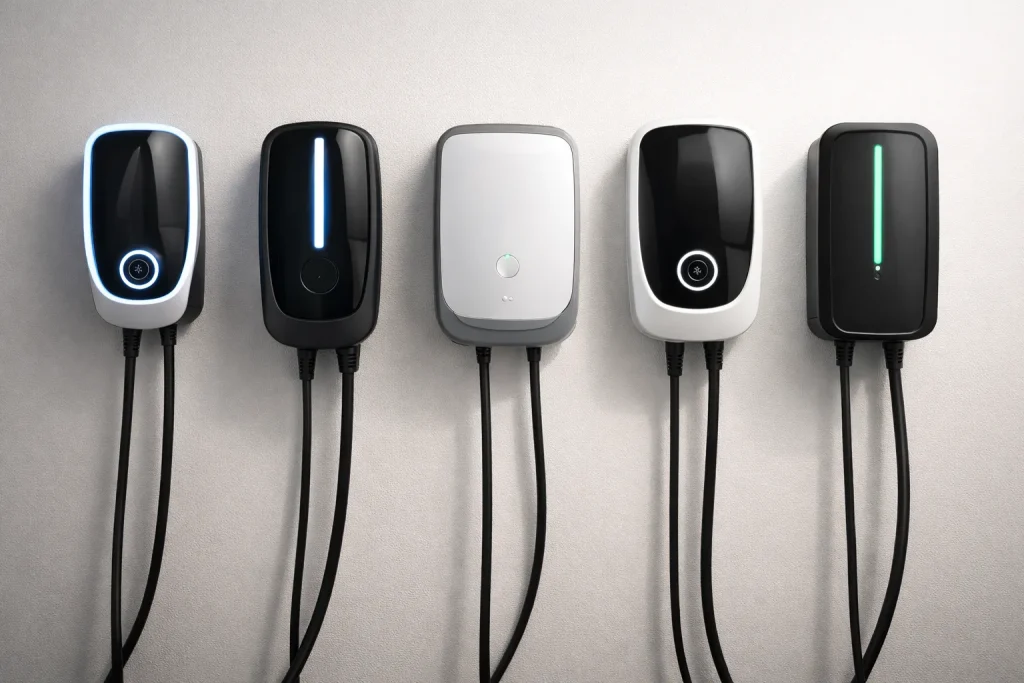
ChargePoint home flex
The ChargePoint Home Flex remains a benchmark in the U.S. market. It supports adjustable power output up to 50 amps when hardwired and integrates with a mature mobile application that provides detailed energy tracking and utility rate scheduling. Its wide compatibility with rebate programs and strong customer-support network make it a reliable long-term choice.
Wallbox pulsar plus
Wallbox’s Pulsar Plus stands out for its compact design and advanced electrical management. Dynamic load balancing allows it to reduce charging power automatically to prevent overloading household circuits, making it suitable for older homes or multi-EV households.
Emporia level 2 ev charger
Emporia offers high output at a competitive price. Its charger provides up to 48 amps and includes real-time energy monitoring with solar-integration capabilities. While its app interface is less refined than premium competitors, its value-to-performance ratio is among the strongest in the segment.
Grizzl-E classic and smart
Grizzl-E chargers emphasize durability. Built with heavy-duty metal enclosures, they perform reliably in extreme climates and outdoor installations. The Smart version adds Wi-Fi scheduling, while the Classic focuses on simplicity and robustness.
FLO home x5
FLO brings commercial-grade build quality to residential charging. The Home X5 supports high amperage, strong thermal protection, and long service life, making it well suited for drivers seeking maximum reliability.
Installation cost and incentives
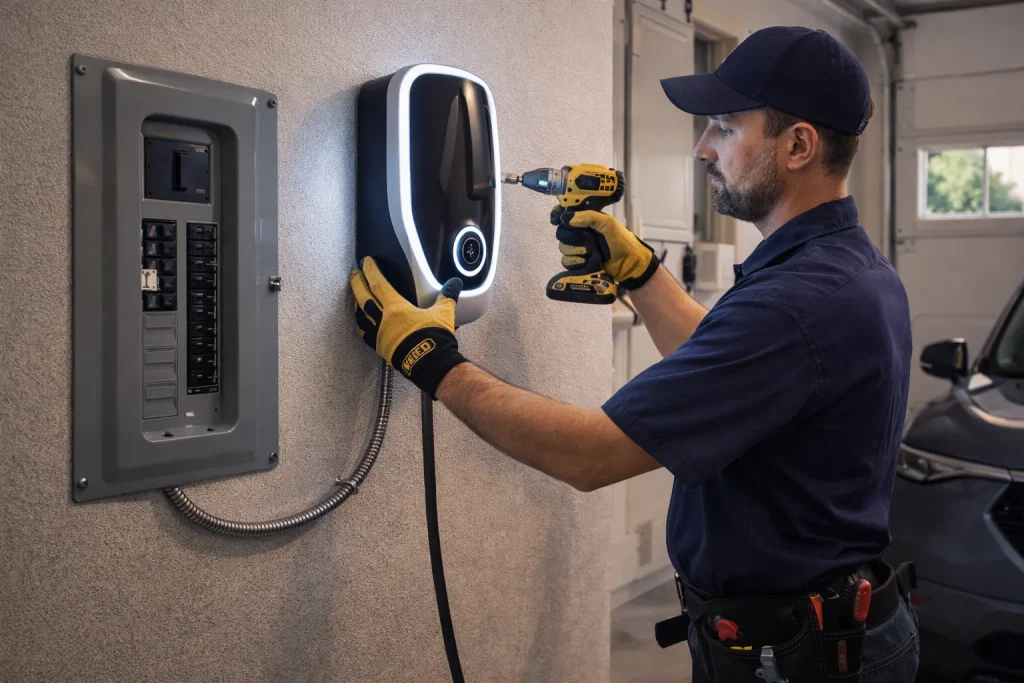
Professional installation in the U.S. typically costs between $500 and $2,000, depending on panel capacity, wiring distance, and whether service upgrades are required. Many utilities and state programs offer rebates that offset part of this cost, and some provide reduced electricity rates for off-peak EV charging.
Proper installation is essential for safety and warranty protection. Circuit sizing, grounding, and code compliance should always be handled by a licensed electrician.
Mid-article links to neighboring satellites
For drivers who cannot install a permanent wall unit or who need a backup solution for travel, a full technical comparison of mobile options is available in Best portable ev chargers for road trips (2025 buyer’s guide) That analysis explains outlet compatibility, safety certification, and real-world charging speed for portable Level 2 and Level 1 devices.
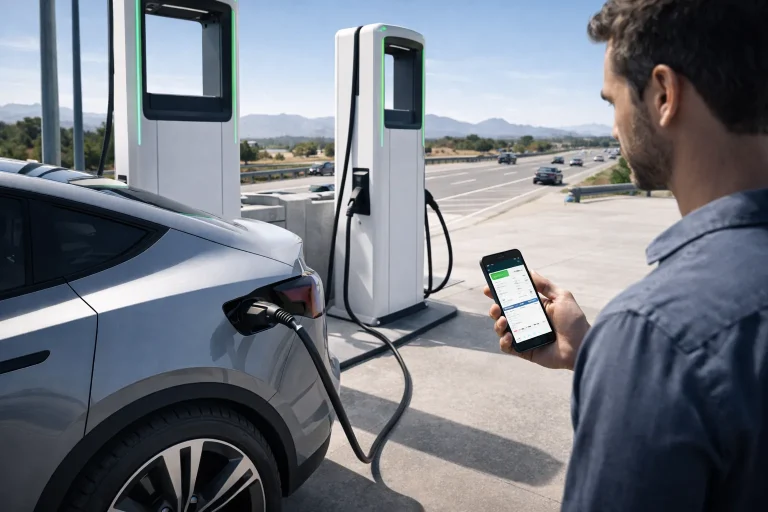
Home charging efficiency also depends on the reliability and pricing of public infrastructure for longer trips. Coverage, membership plans, and network uptime are examined in Best public charging apps & membership plans compared, which helps drivers integrate residential charging with nationwide fast-charging access.
Daily usability and long-term ownership impact
A well-chosen Level 2 charger can reduce total energy cost per mile by more than half compared with exclusive reliance on public fast charging. It also simplifies daily routines by ensuring the vehicle starts each morning with sufficient range.
From a resale perspective, homes equipped with a professionally installed EV charger are increasingly viewed as more attractive to future buyers, particularly in regions with high EV adoption.
Conclusion
In 2025, a reliable Level 2 home charger is not a luxury accessory but a core component of practical electric vehicle ownership. Models from ChargePoint, Wallbox, Emporia, Grizzl-E, and FLO offer different strengths in power delivery, smart features, and durability, allowing homeowners to select equipment that matches their electrical capacity, climate, and driving habits.
When placed in the broader context of Electric Vehicles (EV) Reviews & Trends: The 2025 Guide for U.S. Drivers, it becomes clear that residential charging, portable backup solutions, and public networks form a single integrated ecosystem. A dependable Level 2 charger at home remains the most efficient and economical foundation of that system for U.S. drivers transitioning to electric mobility.