New York auto insurance laws: 25/50/10 plus PIP guide
New York doesn’t mess around with auto insurance. The state requires more coverage than most places and enforces it aggressively. If you’re moving to New York or just trying to understand what you actually need the requirements can feel overwhelming at first.
I’ve spent years breaking down insurance regulations across the country and New York consistently stands out for taking financial responsibility more seriously than most states. That’s good for accident victims. It’s more expensive for drivers. But it’s better than being underinsured.
Let me walk you through what New York actually requires and why these rules exist.
What New York requires
New York mandates liability coverage and Personal Injury Protection for every registered vehicle. The minimum liability limits are 25/50/10.
Breaking that down: $25,000 for bodily injury per person, $50,000 for bodily injury per accident, and $10,000 for property damage.
You also need at least $50,000 in PIP coverage. Some people call it no-fault coverage. Same thing. It pays your medical bills and lost wages after an accident regardless of who caused it.
New York also requires uninsured motorist coverage at the same limits as your liability coverage. So if you carry 25/50/10 liability you need 25/50 uninsured motorist protection as well.
That’s a lot more than most states require right out of the gate. California only mandates 15/30/5 with no PIP requirement. Texas requires 30/60/25 but no PIP. New York bundles all of it together as the baseline.
Why New York went with this approach
New York adopted no-fault insurance back in the 1970s for the same reasons other states did. Too many lawsuits. Too much court congestion. Injured people waiting forever to get paid while lawyers and insurance companies fought over fault.
The no-fault system speeds things up. Your insurance pays your medical bills and lost wages immediately. No waiting for a fault determination. No lengthy negotiations. You get treatment and your bills get paid.
But New York kept the liability requirements in place unlike some other no-fault states. You still need coverage for injuries you cause to others. The PIP handles your immediate medical needs. The liability coverage protects you from lawsuits when you cause serious injuries.
New York also recognized early on that uninsured drivers were a major problem. Making uninsured motorist coverage mandatory protects people when they get hit by someone with no insurance. About 6% of New York drivers are uninsured which is actually lower than the national average. But 6% still means tens of thousands of vehicles on the road with nothing.
What PIP covers in New York
New York PIP pays up to $50,000 per person for medical expenses, lost earnings, and other reasonable expenses. It covers you, family members in your household, passengers in your vehicle, and pedestrians you hit.
The coverage is pretty comprehensive. Medical bills, rehabilitation, lost wages if you can’t work, and even necessary expenses like hiring someone to help with household tasks if you’re injured.
PIP pays regardless of fault. You could cause the accident and your PIP still covers you. The other driver could cause it and their PIP covers them while your PIP covers you.
There’s no deductible for the first $50,000 in basic coverage. If you want to add optional additional PIP coverage beyond $50,000 you can but most people stick with the minimum.
One important note. New York PIP is primary over your health insurance for auto accidents. That means your auto insurance pays first before your health insurance gets involved. This prevents the delays that happen when two insurance companies argue about who should pay.
The liability requirements
New York’s 25/50/10 liability minimums are higher than many states but still pretty modest when you look at actual accident costs.
One serious injury can blow past $25,000 before you even get to pain and suffering. A newer SUV repair can cost $15,000 or more. So even though New York sets higher baselines than places like California these limits still leave gaps.
Most insurance agents in New York will recommend at least 100/300/100 coverage. That’s $100,000 per person for bodily injury, $300,000 per accident, and $100,000 for property damage. The cost difference between 25/50/10 and 100/300/100 is usually $30 to $60 per month depending on where you live and your driving record.
Manhattan and the boroughs obviously cost more than upstate. Buffalo and Rochester are cheaper than New York City. But across the board the premium increase for higher limits is small compared to the protection you get.
If you cause a serious accident in New York and your liability limits aren’t high enough you’re personally liable for the difference. New York courts are plaintiff-friendly and juries can award substantial damages. Your house, your savings, your future wages are all at risk if you’re underinsured.
Uninsured motorist coverage
New York requires uninsured motorist coverage at the same limits as your liability coverage. So if you have 25/50 liability you need 25/50 uninsured motorist protection.
This coverage protects you when you’re hit by someone with no insurance or someone whose insurance isn’t enough to cover your damages.
Even though New York has a lower uninsured rate than most states 6% still means you have about a one in seventeen chance of getting hit by an uninsured driver at some point. Those odds aren’t great.
Uninsured motorist coverage steps in and pays what the at-fault driver should have paid. Medical bills, lost wages, pain and suffering, everything. Without it you’re stuck trying to collect money from someone who probably has no assets.
The cost for uninsured motorist coverage is relatively low. Usually $10 to $25 per month depending on your limits and location. It’s absolutely worth having especially if you increase your liability limits beyond the minimum.
How New York compares to other states
New York’s requirements are among the most comprehensive in the country. The combination of liability coverage, PIP, and mandatory uninsured motorist protection gives New York drivers better baseline protection than most states offer.
When you look at how different states structure their insurance requirements New York stands out for requiring multiple layers of protection rather than just basic liability.
Florida requires PIP but makes bodily injury liability optional. Michigan has higher PIP requirements but different liability rules. Pennsylvania lets you choose between limited and full tort options. New York keeps it straightforward. You need everything.
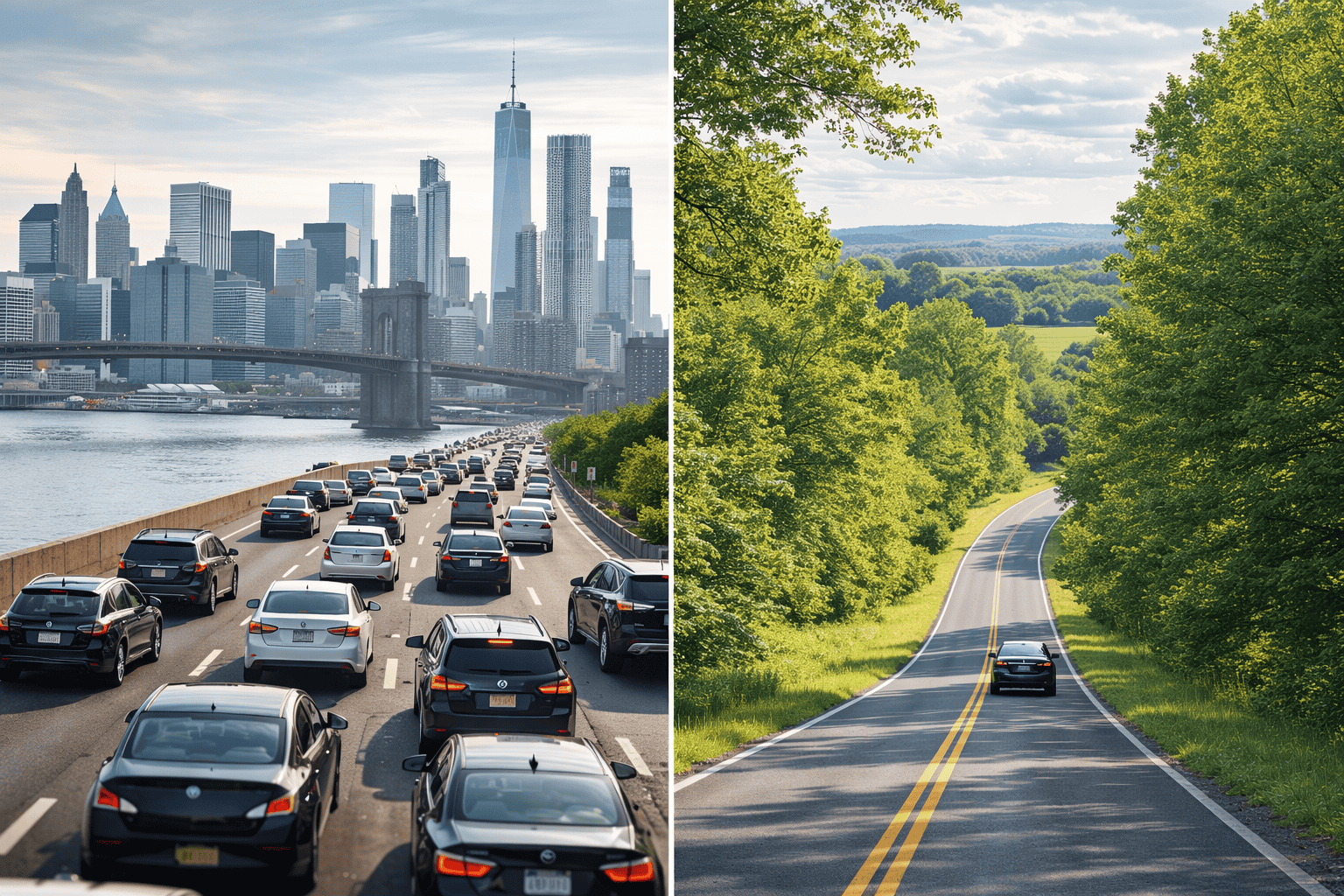
The downside is cost. New York has some of the highest average auto insurance premiums in the country. New York City is especially expensive. Brooklyn, Queens, and Manhattan drivers pay significantly more than drivers in rural areas upstate.
But higher premiums buy you real protection. New York drivers are less likely to face personal financial ruin after an accident compared to drivers in states with minimal requirements.
What you actually need in New York
The legal minimum in New York is 25/50/10 liability, $50,000 PIP, and 25/50 uninsured motorist coverage. That keeps you legal and provides decent baseline protection.
But I’d recommend most New York drivers carry at least 100/300/100 liability with matching uninsured motorist limits. If you live in New York City or have significant assets consider even higher limits or an umbrella policy.
Keep the $50,000 PIP unless you have exceptional health insurance with low deductibles. Even then PIP is primary so it pays first anyway.
Add comprehensive and collision coverage if you’re financing or leasing your vehicle. Even if you own your car outright these coverages make sense if the vehicle is worth more than a few thousand dollars.
The cost difference between minimum coverage and solid protection in New York is usually $50 to $100 per month. That sounds like a lot until you consider what one serious accident costs without adequate coverage.
Common mistakes New York drivers make
The biggest mistake is sticking with minimum liability limits. 25/50/10 satisfies the law but leaves you exposed to personal liability in any serious accident.
Another mistake is not understanding how PIP works with health insurance. Your auto insurance pays first for auto accidents. Don’t assume your health insurance will cover everything and skip the PIP. You can’t skip it anyway. It’s mandatory.
A lot of drivers also don’t realize that New York’s no-fault system has a serious injury threshold. If your injuries are serious enough you can step outside the no-fault system and sue the at-fault driver for pain and suffering. Serious injury means significant disfigurement, bone fractures, permanent limitation of use of a body organ or member, significant limitation of use of a body function or system, or a medically determined injury that prevents you from performing substantially all of your usual daily activities for at least 90 days.
If your injuries meet that threshold you can sue. If they don’t you’re limited to your PIP benefits and economic damages only. Understanding this matters when you’re deciding on coverage limits.
Final thoughts
New York takes auto insurance seriously and requires drivers to carry comprehensive protection from day one. The mandatory PIP provides immediate medical coverage. The liability requirements protect others when you cause an accident. The uninsured motorist coverage protects you when others don’t follow the rules.
It’s more expensive than minimal coverage states but it’s also more protection. New York drivers are better positioned to handle accidents without facing financial catastrophe compared to drivers in states with bare-bones requirements.
If you’re trying to understand how New York fits into the national picture of auto insurance regulations across all states it sits on the higher end of protection and cost. And if you’re comparing New York to a traditional fault-based state without PIP requirements Texas offers an interesting contrast with a completely different approach to insurance and liability.
Stay covered, stay safe, and happy driving.