
Texas minimum car insurance laws explained
Here’s something most people get wrong about Texas auto insurance: they call it “strict.” That’s not quite right. The laws themselves? They’re actually pretty straightforward. It’s the consequences of screwing them up that’ll get you.
Every driver in Texas needs to carry auto insurance. Period. The rules aren’t complicated I’ve seen way worse in other states but man, if you misunderstand what you’re actually covered for, you’re setting yourself up for a world of financial hurt.
What Texas really cares about is financial responsibility. And they don’t mess around when it comes to enforcing it.
I’ve been looking at insurance claims in Texas for the better part of a decade now, and I can tell you this much: there’s this massive gap between what the law requires you to have and what actually keeps you safe if something goes wrong. And honestly? That gap just keeps getting wider.
What Texas actually requires (the bare minimum)
So here’s the deal with Texas minimum liability insurance. The law says you need what’s called 30/60/25 coverage. If you’re new to this, those numbers probably look like some kind of code. Let me break it down:
- $30,000 for bodily injury per person
- $60,000 for bodily injury per accident
- $25,000 for property damage
Have a policy that meets those numbers? Congratulations, you’re legal to drive in Texas.
But and this is a big but being legal and being protected are two completely different things.
Medical bills, car repairs, legal fees…they all blow past these limits constantly. I’m talking about regular accidents here, not some five-car highway pileup. Just normal “somebody wasn’t paying attention” crashes. One accident can wipe out your minimum coverage before you even realize what’s happening, and then guess who’s on the hook for the rest? You are. Personally.
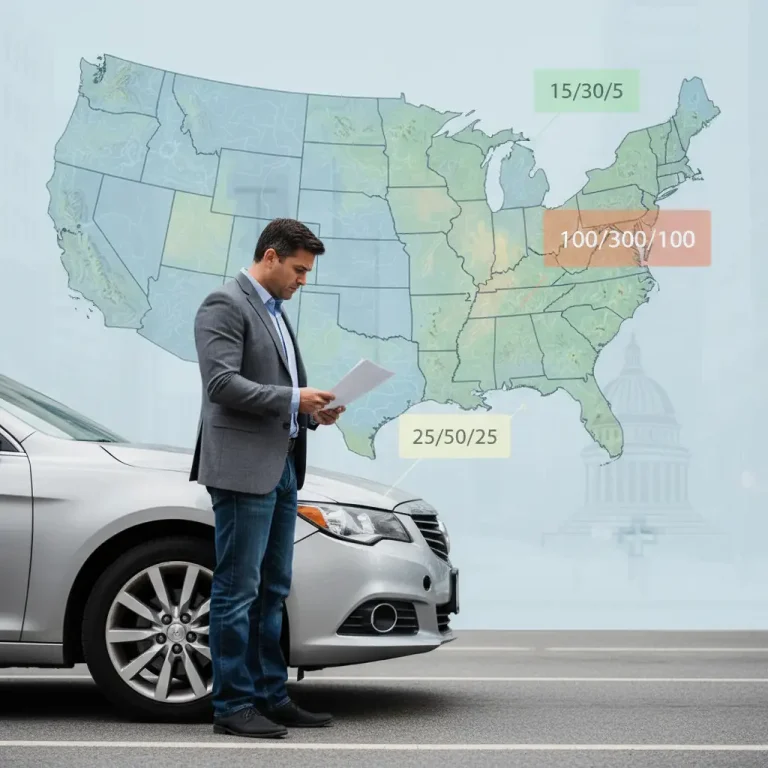
This isn’t just a Texas thing either. Most states have this same problem where the legal minimums are basically a joke compared to real-world costs. There’s actually a good breakdown of how this plays out across the country in State-by-State Auto Insurance Requirements in the United States if you want to see how Texas compares.
What these numbers mean when you actually crash
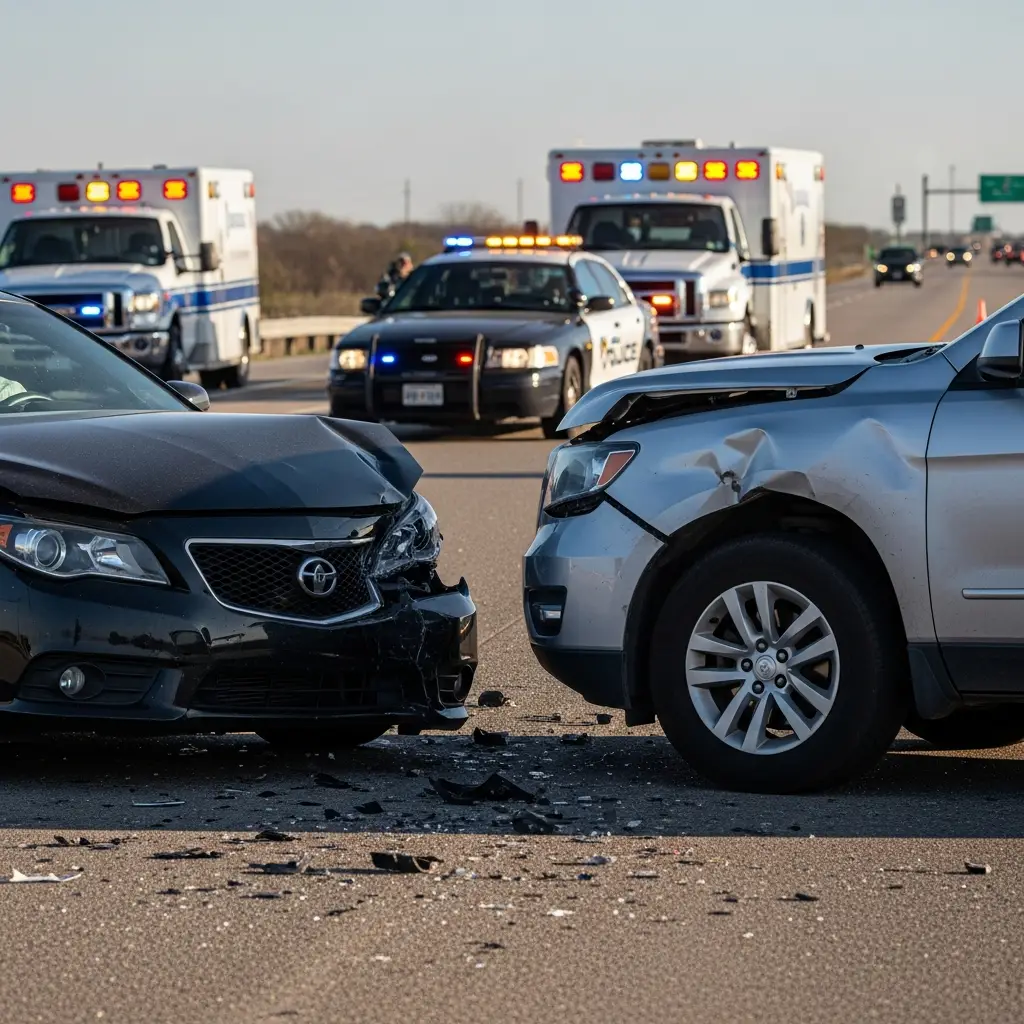
Let me paint you a picture. Real scenario, happened to someone I know.
You’re heading south on I-35 through Austin. It’s 5:30 PM on a Wednesday, so traffic is already a nightmare. Everything slows down suddenly because of course it does, it’s Austin. You glance down at your phone for literally two seconds to skip a song.
When you look up? Oh crap. You slam into the SUV in front of you, which then hits the car ahead of it.
The SUV driver gets a concussion and whiplash. Not terrible, but not nothing either. Emergency room, CT scan, neurologist, the whole deal. Within two days, the medical bills are already at $18,000. Then come three months of physical therapy add another $6,000. She misses two weeks of work: $2,400 in lost wages.
We’re at $26,400 and we haven’t even talked about pain and suffering yet, which her lawyer definitely will.
Now the vehicle damage. The SUV is a 2024 model, which means it’s loaded with sensors and cameras and all this technology that makes modern cars incredibly expensive to repair. The estimate? $14,700. For rear-end damage. I know, it’s insane, but that’s where we are with modern vehicles.
The car in front had minor damage “just” $4,200.
Total damages: Over $45,000.
Your minimum policy covers:
- $30,000 toward the injured driver (which covers her medical bills and lost wages, but leaves nothing for pain and suffering)
- $14,700 for the SUV repair (covered under property damage)
- $4,200 for the front car (still under the $25,000 property limit, so we’re okay there)
But here’s where it gets ugly. The injured driver’s attorney because of course she got one is now coming after you personally for everything your insurance didn’t cover. Future medical treatment, pain and suffering, emotional distress… they’re asking for another $50,000.
Your insurance is tapped out. It’s done. Now they’re looking at your house, your savings account, your future wages.
This isn’t some dramatic worst-case scenario I’m making up. This is Tuesday in Texas.
Why Texas makes you carry more than some states (but it’s still not enough)
Compared to somewhere like California, Texas actually requires higher minimum limits. There’s a reason for that.
Texas has always been pretty plaintiff-friendly when it comes to car accidents. The courts here make it relatively easy to sue, and when juries award damages, they can be substantial. The thinking behind the higher minimums was basically “let’s make sure injured people can get at least some money without having to immediately lawyer up and go to court.”
Nice idea. But these limits haven’t changed since 2011.
Think about what’s happened since 2011. The average vehicle price has jumped by more than 50%. Medical costs are up around 40%. But the insurance minimums? Same as they were fifteen years ago.
And don’t even get me started on repair costs. Modern cars are basically computers on wheels. You can’t just slap a new bumper on anymore. Now you’ve got to replace sensors, recalibrate collision avoidance systems, reprogram the backup camera…
A buddy of mine in the industry told me about a claim he handled recently. Minor parking lot collision. 2025 Ford F-150. The damage didn’t even look that bad. The repair bill? Eleven thousand dollars. Most of it was sensor replacement and calibration.
The minimum requirements might satisfy the law, but they’re nowhere close to covering what accidents actually cost these days.
Texas is an at-fault state (which matters more than you think)
This is important, so stay with me.
Texas operates under what’s called a traditional at-fault system. What that means is:
- If you cause the accident, you’re financially responsible for it
- Claims get filed against the at-fault driver’s insurance
- People can sue you without meeting some injury threshold
Everything revolves around fault in Texas. Insurance companies investigate every accident to figure out who caused it, then negotiate based on that. If fault gets disputed—which happens a lot—everything slows to a crawl and the chances of a lawsuit go way up.
This is really different from states like Florida that use no-fault systems. In those states, your own insurance pays your medical bills first, regardless of who caused the crash. You can see how that changes the whole dynamic.
In Texas, if you’re 100% at fault, you’re 100% liable. There’s no injury threshold someone has to meet before they can sue you. Even minor accidents can end up in court if someone claims injury or if things get contentious.
What does this mean practically? Every accident where you’re at fault is potential lawsuit territory. Your insurance company will defend you, sure, but only up to your policy limits. After that? You’re flying solo.
How minimum coverage actually performs (spoiler: not great)
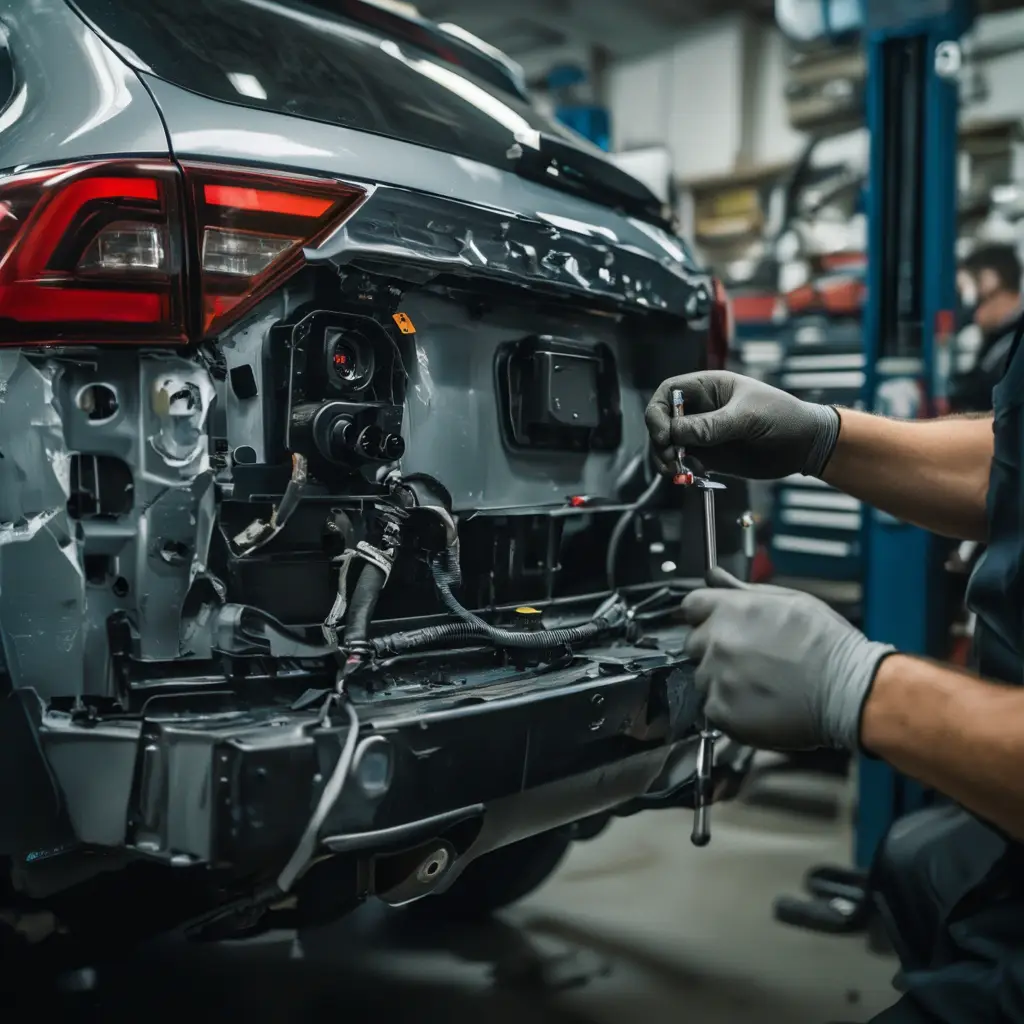
On paper, Texas’s limits look pretty decent compared to a lot of other states. In reality? They fall short constantly.
Here’s a typical scenario:
- One newer pickup or SUV (which is like half the vehicles in Texas)
- One injured person
- Ambulance and ER visit
The vehicle repairs alone can run over $25,000, especially with trucks and SUVs. Medical costs can hit $30,000 before you even get into follow-up care or physical therapy. And if more than one person got hurt? Now you’re dividing that $60,000 per-accident limit between multiple people.
I reviewed a claim last year out of El Paso that still makes me wince. Driver with minimum coverage ran a red light—probably looking at their phone, though they denied it—and T-boned a sedan with three people inside.
Nobody died, thank God. But all three needed emergency treatment. The $60,000 bodily injury limit got split between them. Twenty grand each, maximum, from the insurance company.
One of them had medical bills over $35,000. Just one person.
That driver is now being sued personally for the difference, plus pain and suffering, plus legal fees. Last I heard, they were looking at over $80,000 in personal liability. For one accident. One moment of not paying attention.
When your policy limits run out, the remaining responsibility shifts directly to you. Texas law allows injured parties to go after your personal assets, your wages, even your future earnings to get their money.
Minimum coverage protects other people from getting nothing. It doesn’t protect you from financial ruin.
Uninsured motorist coverage (you probably need this)

Want to hear something that’ll make you nervous? About 14% of Texas drivers don’t have insurance at all. That’s roughly one in seven cars on the road.
In some areas and I won’t name names, but you can probably guess that number is even higher.
So what happens when one of those uninsured drivers hits you?
That’s where uninsured and underinsured motorist coverage comes in. It protects you when:
- The at-fault driver has no insurance
- The at-fault driver only has minimum coverage (which we’ve established is basically nothing)
Here’s the thing about Texas: this coverage isn’t mandatory. Insurance companies have to offer it to you, but you can say no. And a lot of people do say no, because it saves them maybe $15-20 a month.
I talked to a woman in Houston a few months ago. She got seriously injured by an uninsured driver who ran a stop sign. Her medical bills topped $80,000. The other driver had no insurance and no assets basically judgment-proof. She’d declined uninsured motorist coverage to save fifteen bucks a month on her premium.
She’s now dealing with medical debt that’ll follow her for years, possibly forever. For fifteen dollars a month.
Don’t be that person. Seriously. The cost is minimal compared to the protection. Especially in Texas, where the uninsured rate is high and getting caught isn’t guaranteed.
PIP and MedPay (the coverages people skip and then regret it)
Texas isn’t a no-fault state, but we do have Personal Injury Protection (PIP) and Medical Payments (MedPay) coverage available.
PIP can cover:
- Medical expenses
- Lost wages
- Essential services (like if you’re injured and need to hire someone to help with your kids)
Insurance companies in Texas have to offer you PIP. You have to actively reject it if you don’t want it. MedPay is simpler it just covers medical bills and it’s optional.
Neither of these replace liability insurance. They work alongside it.
Here’s why they matter: even if you’re not at fault, you still might need immediate medical care. Your health insurance might have a huge deductible, or might not cover auto injuries right away, or might be in some fight with the car insurance company about who pays first.
PIP pays out fast. Like, within days usually. Regardless of whose fault the accident was.
I’ve seen this save people more times than I can count. Woman got rear-ended at a stoplight, needed surgery on her back within a week. Her health insurance had a $5,000 deductible. PIP covered it immediately while everyone was still figuring out the liability claim.
MedPay is cheaper than PIP but more limited it only does medical bills. No lost wages, no household services. For most people, if you’re going to get one, PIP is worth the extra cost. But honestly, either one is better than neither.
Comprehensive and collision (required by your lender, optional by law)
Texas law doesn’t require comprehensive or collision coverage.
Your lender, though? Yeah, they definitely require it.
If you’re financing or leasing your vehicle, your loan agreement almost certainly requires both coverages. The lender wants to make sure their investment is protected, which makes sense from their perspective.
Even if you own your car outright, a lot of Texas drivers keep these coverages because:
- Cars are expensive
- Texas weather is brutal
- Theft and vandalism are real concerns
Let me tell you about Texas weather. Hail season in North Texas is legitimately terrifying if you care about your car. I’ve seen entire dealership lots totaled from a single hailstorm. Like, every single car. Total losses.
And flooding Houston especially, but really anywhere along the Gulf Coast. Streets turn into rivers. Cars get submerged. Comprehensive coverage handles flood damage. Liability? Nope.
Whether you need collision coverage depends on your car’s value and your financial situation. If you’re driving a 2008 sedan worth $2,500, paying for collision coverage probably doesn’t make sense. But I’d still keep comprehensive. Hail and flooding don’t care what your car is worth.
The penalties for driving without insurance (they’re worse than you think)
Texas doesn’t play around with insurance enforcement.
Get caught without it and you’re looking at:
- Fines from $175 to $350 for your first offense
- License suspension
- Possible vehicle impoundment
- SR-22 filing requirements (which is basically proof you’re high-risk)
- Surcharges of $250 per year for three years
Second offense? Fines up to $1,000. Your car can get impounded, and good luck getting affordable insurance after that.
Texas uses this system called TexasSure that lets cops and the DMV verify your insurance status electronically. In real-time. It’s actually pretty sophisticated.
Your policy lapses for even one day? You might get a notice demanding proof of insurance. Don’t respond, and your registration gets suspended. Then you’re really in trouble.
I know people who thought they could get away with a brief coverage gap while they “shopped around” or waited for payday or whatever. They ended up paying way more in fines, reinstatement fees, and higher premiums than the insurance would’ve cost in the first place.
Just don’t do it. It’s not worth it.
Keep your proof of insurance handy (seriously, just do it)
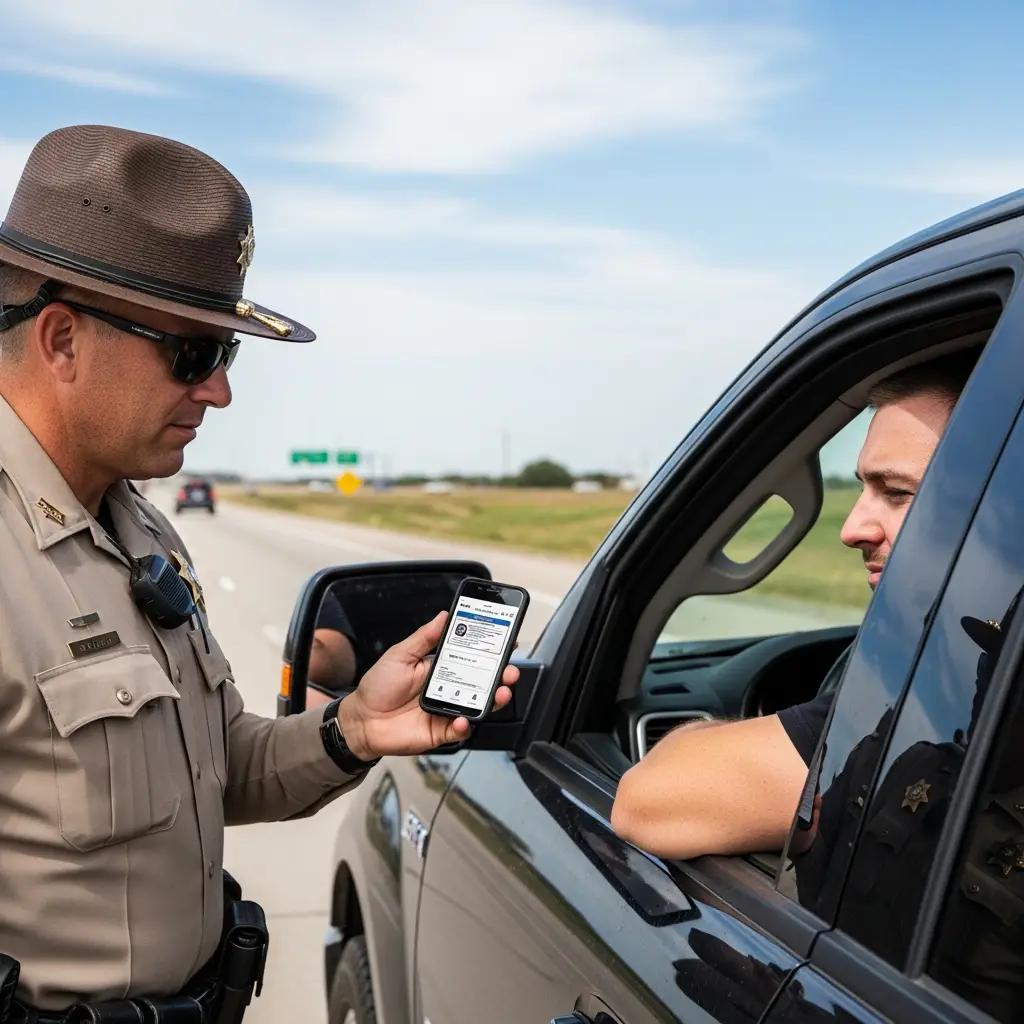
You have to be able to prove you’re insured at any time in Texas.
You can show:
- A physical insurance card
- Digital proof on your phone (yes, this is officially acceptable now)
You’ll need to show proof:
- When you get pulled over
- After an accident
- When you register or renew your vehicle
Here’s a situation that happens all the time: someone gets pulled over for a broken taillight or whatever. Cop asks for insurance. They know they’re insured, but they can’t find the card. It’s somewhere in the glove box under all the napkins and receipts and old mail, or maybe they left it in their other car, or who knows.
Officer writes them a citation anyway.
Now they’ve got to go to court or the DMV with proof that they were insured at the time of the stop. It’s a massive hassle for no reason.
Keep a digital copy on your phone. Keep a physical card in your glove box. Update both every time you renew or switch policies. This is the easiest problem to avoid.
How Texas compares to other states
Texas is kind of in the middle when you look at major states.
California’s minimums are actually lower (15/30/5), but they have the same at-fault litigation environment. Florida does the no-fault thing, which is its own mess. New York has higher requirements and more mandatory protections.
Texas relies heavily on the fault-based system with moderate minimum limits. Which means if you’re underinsured, you’re exposed to some serious legal and financial risk.
Neighboring states for comparison:
- Oklahoma: 25/50/25
- Louisiana: 15/30/25
- New Mexico: 25/50/10
Texas is in the middle of the pack on requirements, but our enforcement is definitely on the stricter side.
Misconceptions I hear constantly

“Minimum coverage is fine if I’m a careful driver”
Being careful is great. I’m all for it. But careful doesn’t prevent accidents. You can be the most cautious, defensive driver on the planet and still cause an accident because of a tire blowout, a sudden medical issue, a kid running into the street, ice on a bridge, a million things beyond your control.
“Uninsured drivers are rare”
Fourteen percent. That’s millions of vehicles in Texas. You’re going to encounter uninsured drivers. It’s not a matter of if, it’s when.
“My policy will cover anything serious”
Your minimum policy is designed to meet the legal requirement. That’s it. It’ll handle small fender-benders fine. Anything involving injury or newer vehicles? You’re probably going to exceed those limits.
“I can’t afford more than minimum”
The difference between minimum coverage and actually good coverage is often $30-50 a month. Sometimes less. The cost of being underinsured can be hundreds of thousands of dollars, bankruptcy, wage garnishment for years.
Which can you really not afford?
How to actually think about your coverage
The question isn’t “am I legal?”
The question is “am I protected?”
Insurance transfers risk from you to the insurance company. Low limits mean you’re keeping more of that risk yourself. Higher limits mean the insurance company is taking on more of it.
Texas law sets a minimum, not a recommendation something that becomes clear when you compare requirements across states in this nationwide insurance law overview. this nationwide insurance law overview
Here’s how I think about it:
Look at what you own. Got a house? Savings? A decent income? Those are all assets someone can come after in a lawsuit. Higher liability limits protect those assets.
Use realistic numbers. What does a new truck cost? What would an ER visit plus surgery run you? Use actual costs to evaluate whether $30,000 sounds like enough.
Check the price difference. Get quotes for 100/300/100 coverage. You might be shocked at how affordable it is compared to minimum coverage.
Add uninsured motorist protection. It’s usually pretty cheap and it protects you from the 14% of drivers who have nothing.
Consider an umbrella policy. If you’ve got significant assets, a personal umbrella policy adds $1-5 million in liability coverage across your auto, home, everything. And it’s surprisingly affordable.
Different situations need different coverage
Young drivers: If you’re under 25, you’re statistically more likely to crash. Sorry, it’s just the data. Minimum coverage puts you at huge risk. I know insurance is expensive when you’re young, but getting sued is way more expensive.
Older cars: Driving a car worth $3,000? You can probably skip collision coverage. But don’t skip liability or uninsured motorist. That’s not about protecting your car, it’s about protecting you.
Long commutes: Drive a lot for work? You’re on the road more, which means more exposure. Upgrade your coverage.
Rideshare drivers: Oh man, this is a whole thing. Your personal policy doesn’t cover you when you’re driving for Uber or Lyft. There are gaps in coverage that most rideshare drivers don’t even know about. Make sure you understand how your coverage works in different situations.
Final thoughts
Look, Texas minimum car insurance laws are clear. They’re enforceable. They’re strict about enforcement.
Meeting the minimum keeps you legal.
Understanding what you actually need keeps you protected.
Those are two different things.
The roads are more crowded than ever. I-35, I-45, the 610 loop in Houston they’re parking lots half the day. Vehicles cost more than they ever have. A base model pickup can run $40,000 now. Medical costs keep climbing. And Texas courts remain wide open to injured parties seeking compensation.
Your insurance policy is the only thing standing between a bad day and complete financial catastrophe. Make sure it’s actually strong enough to do its job.
I’ve seen too many people learn this lesson the hard way. Don’t be one of them.
Stay covered, stay safe, and happy driving.