What auto insurance is legally required in California
California law requires every driver to carry liability insurance. Nothing more. Nothing less.
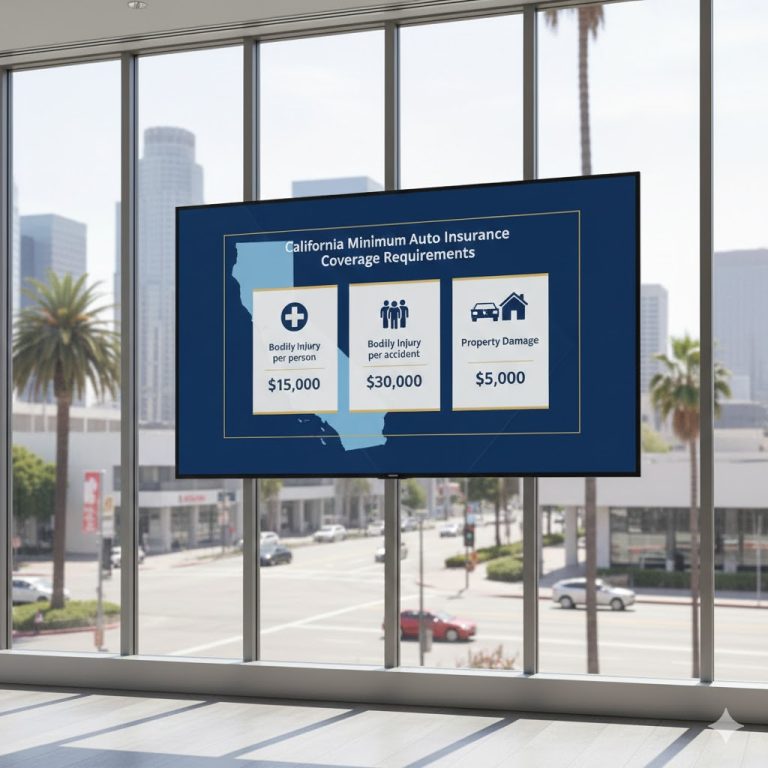
The minimum limits are written as 15/30/5, meaning:
$15,000 for bodily injury per person
$30,000 for bodily injury per accident
$5,000 for property damage
If your policy meets these limits, you are legally allowed to drive.
But legality and adequacy are not the same thing.
In modern California traffic, a single low‑speed collision can exceed the property damage limit almost instantly. One emergency room visit can reach the bodily injury limit before treatment truly begins.
This gap between what the law requires and what reality demands is not unique to California. It appears repeatedly across the country, and it’s explained in depth in the article: State‑by‑state auto insurance requirements in the United States
Why California’s minimum limits remain so low
Many drivers assume California’s limits must be outdated. In a sense, they are, but not by accident.
Raising mandatory insurance limits is politically sensitive. Higher limits mean higher premiums, and higher premiums are unpopular. California lawmakers have historically relied on two assumptions:
- drivers will voluntarily purchase higher coverage
- the court system will handle damages that exceed policy limits
That approach shifts risk away from regulation and toward individuals.
It works until it doesn’t.
When an accident involves serious injuries or multiple vehicles, minimum coverage becomes irrelevant almost immediately. The law allows it, but the consequences fall directly on the drivces once those limits are exhausted.
California as an at‑fault insurance state
California follows a pure at‑fault system, which plays a central role in how insurance claims unfold.
In an at‑fault system:
- The driver who causes the accident is financially responsible
- Claims are made against the at‑fault driver’s insurance
- Lawsuits are allowed without injury thresholds
Fault matters in California. Determining who caused the accident often defines the entire claims process, from initial negotiations to potential litigation.
This structure differs fundamentally from no‑fault systems used in states like Florida, where each driver’s insurer pays for their own medical bills regardless of blame. In no‑fault states, liability disputes are limited, and lawsuits are restricted unless injuries meet specific thresholds. Florida’s approach, for example, prioritizes fast medical payments through mandatory personal injury protection coverage.
California’s system emphasizes accountability but also exposes drivers to greater legal and financial risk when coverage limits are low.
How liability coverage performs in real‑world accidents

On paper, liability insurance appears straightforward. It pays for injuries and property damage you cause to others. In practice, it often collapses under modern costs.
Consider a common California accident scenario:
- One late‑model vehicle
- One injured passenger
- Emergency medical response
Vehicle repair alone can exceed $5,000, particularly when advanced safety features are damaged. Medical costs can exceed $15,000 before long‑term treatment begins. If more than one person is injured, the per‑accident limit is quickly consumed.
When policy limits are reached, responsibility does not disappear. It transfers directly to the driver. Personal assets, wages, and future earnings may be exposed through lawsuits or settlement demands.
This is why minimum coverage protects the public, not the policyholder. It ensures that some compensation exists, but it does not guarantee full protection.
Uninsured and underinsured motorist coverage in california
California has a significant number of uninsured and underinsured drivers. Even when insurance exists, many policies carry only minimum limits.
Uninsured and underinsured motorist coverage is designed to protect you when:
- The at‑fault driver has no insurance
- Their insurance limits are too low to cover your damages
In California, this coverage is optional. Drivers can decline it to reduce premiums.
That decision often appears harmless until it isn’t.
Accidents involving uninsured or minimally insured drivers are not rare. When they occur, drivers without this coverage may find themselves responsible for medical bills, lost income, and long‑term recovery costs with no reliable source of compensation. Nationally, this issue is examined in analyses of uninsured motorist coverage requirements by state, where California consistently stands out due to its low liability thresholds.
Comprehensive and collision coverage: optional but often essential

California does not require comprehensive or collision coverage. From a legal perspective, they are optional.
From a financial perspective, they often are not.
If your vehicle is financed or leased, your lender almost certainly requires both coverages. These requirements exist to protect the lender’s interest in the vehicle, not the driver’s convenience.
Even without lender mandates, opting out of comprehensive and collision coverage in a state with high traffic density, elevated theft rates, and frequent weather‑related losses is a calculated risk. Some drivers make that choice knowingly. Others only realize the consequences after a loss that is not covered.
Insurance law sets minimums. Financial reality sets expectations.
Penalties for driving without insurance in California
Driving without insurance in California carries serious consequences.
Possible penalties include:
- Fines
- License suspension
- Vehicle impoundment
- Mandatory SR‑22 filings
Repeat offenses increase both cost and restriction. Insurance premiums can rise dramatically for years, even after coverage is restored.
California’s enforcement approach is firm but structured. While penalties differ in detail, the underlying philosophy is similar to states like Texas, where uninsured driving also triggers escalating legal and financial consequences under state law.
Proof of insurance requirements
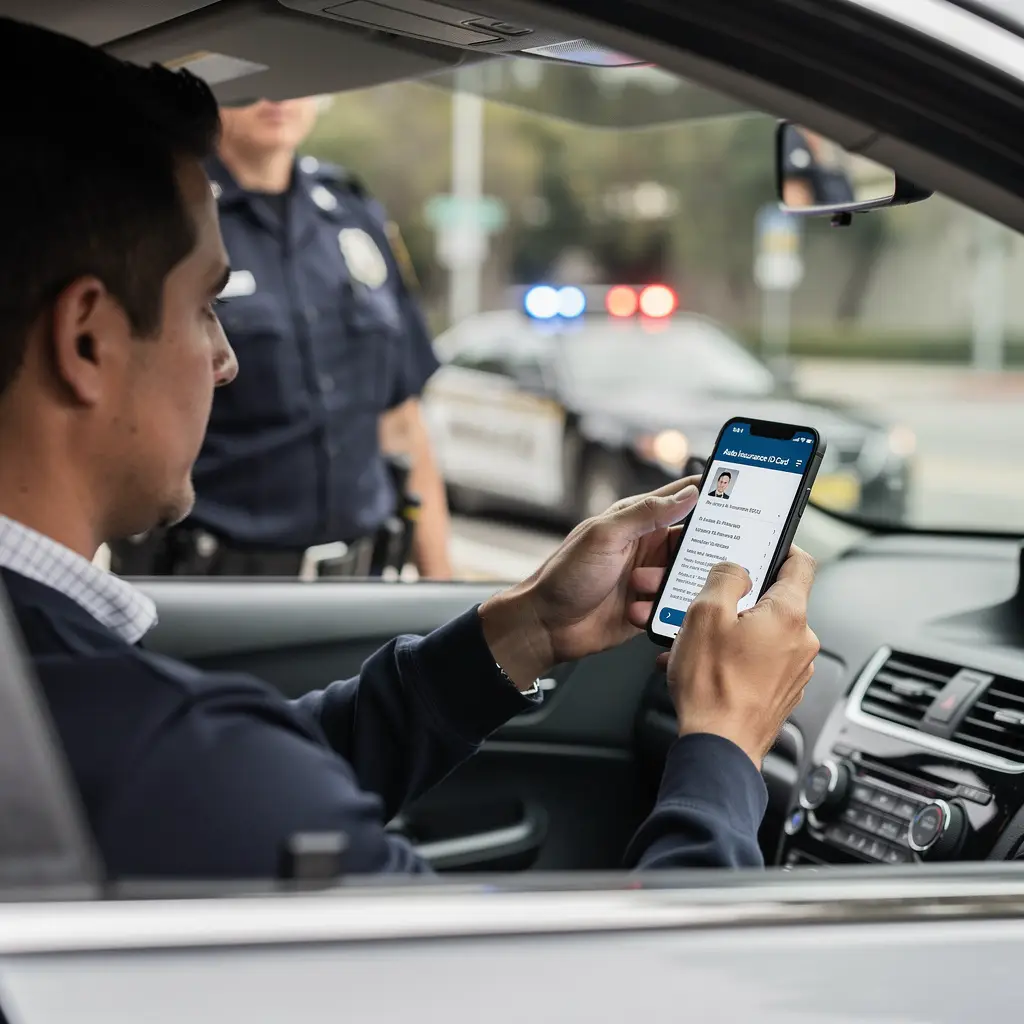
Having insurance is not enough. Drivers must be able to prove it.
California requires drivers to carry proof of insurance at all times. Acceptable forms include physical insurance cards or digital proof displayed on a smartphone.
Proof may be requested:
- During traffic stops
- After accidents
- During vehicle registration or renewal
Failing to show proof even when insured can result in citations or penalties. This technical requirement surprises many drivers and often leads to unnecessary complications during routine encounters with law enforcement.
How California compares to other large states
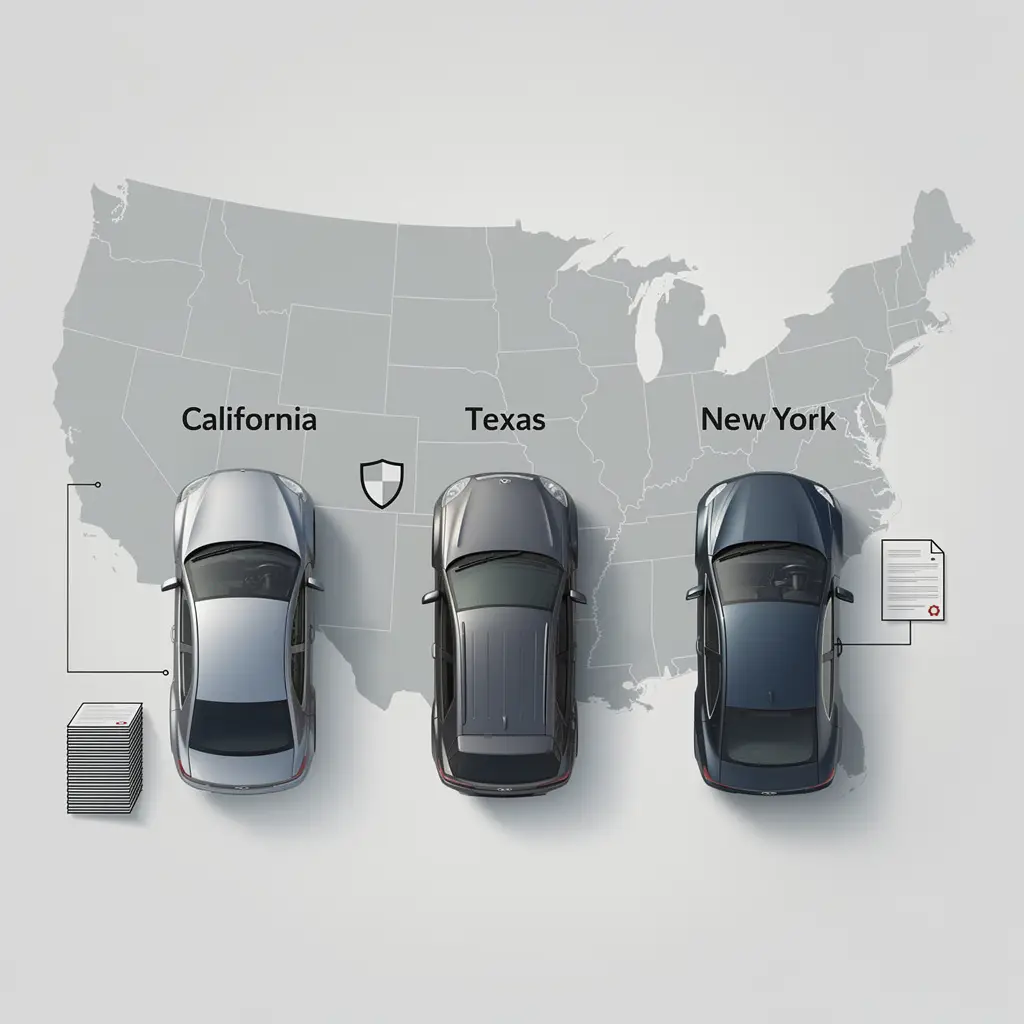
California’s insurance system is not strict. It is minimal.
Compared with other major states:
- Texas requires higher liability limits
- Florida mandates no‑fault medical coverage
- New York combines higher limits with additional mandatory protections
California relies more heavily on personal decision‑making than regulation. This philosophy shapes everything from premium affordability to lawsuit frequency. A broader comparison across all states illustrates how differently jurisdictions balance cost, protection, and accountability.
Common misunderstandings among california drivers
Several beliefs persist despite evidence:
- “Minimum coverage is enough if I’m careful”
- “Insurance works the same everywhere”
- “Good drivers don’t need high limits”
Accidents do not measure intent. Courts do not measure caution. They measure damages.
Careful drivers can still face uninsured motorists, distracted drivers, or unavoidable collisions. Insurance exists not because accidents are expected, but because consequences are expensive when they happen.
Thinking about coverage realistically
The most important question is not, “What is the cheapest legal option?”
It is, “How much risk am I willing to carry personally?”
Insurance transfers risk. Lower limits transfer more of that risk back to the driver. Higher limits shift it away.
Minimum coverage satisfies the law. It does not guarantee financial safety.
Final thought
California auto insurance law sets a low bar for legality. It does not set a high bar for protection.
Drivers who treat minimum coverage as a starting point not a solution are better prepared for the financial realities of modern driving. Meeting the requirement keeps you legal. Understanding the requirement keeps you protected.
Stay covered, stay safe, and happy driving.