Brake pad replacement cost: what drivers should expect in the U.S.
Brake pad replacement cost is one of the most common concerns for drivers facing brake service. Prices can vary significantly depending on vehicle type, pad material, labor rates, and whether rotors also need replacement.
This guide explains average brake pad replacement costs in the U.S., what factors influence pricing, and how drivers can plan service without compromising safety.
For full context on how cost fits into brake maintenance, review how brake inspection and pad replacement affect safety.
Average brake pad replacement cost in the U.S.
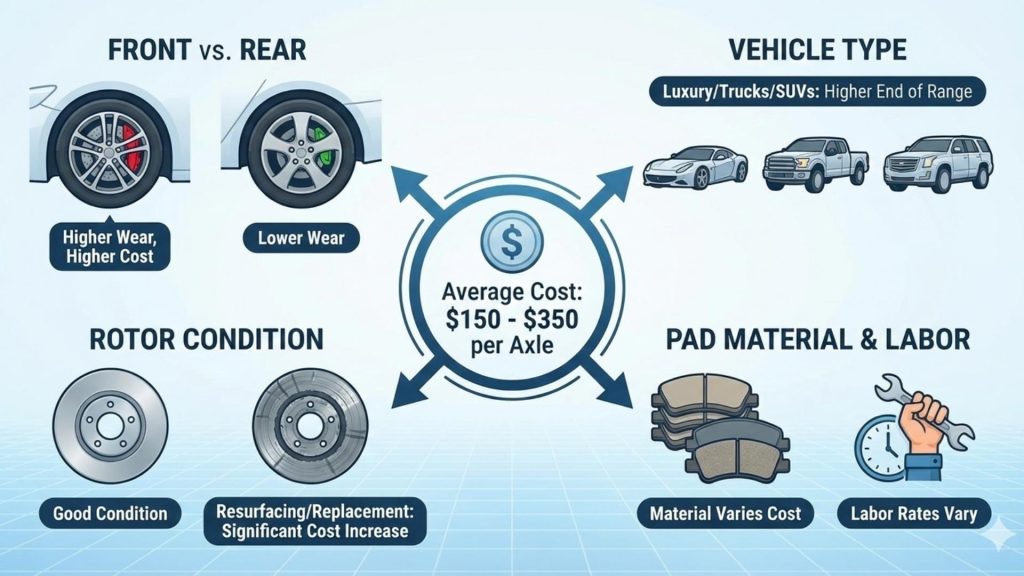
On average, brake pad replacement in the U.S. costs between $150 and $350 per axle. This range includes parts and labor for standard passenger vehicles.
Front brake pads are typically more expensive than rear pads because they handle more braking force and wear faster. Luxury vehicles, trucks, and SUVs often fall at the higher end of the price range.
Costs increase significantly if rotors require resurfacing or replacement.
Cost breakdown: parts vs labor
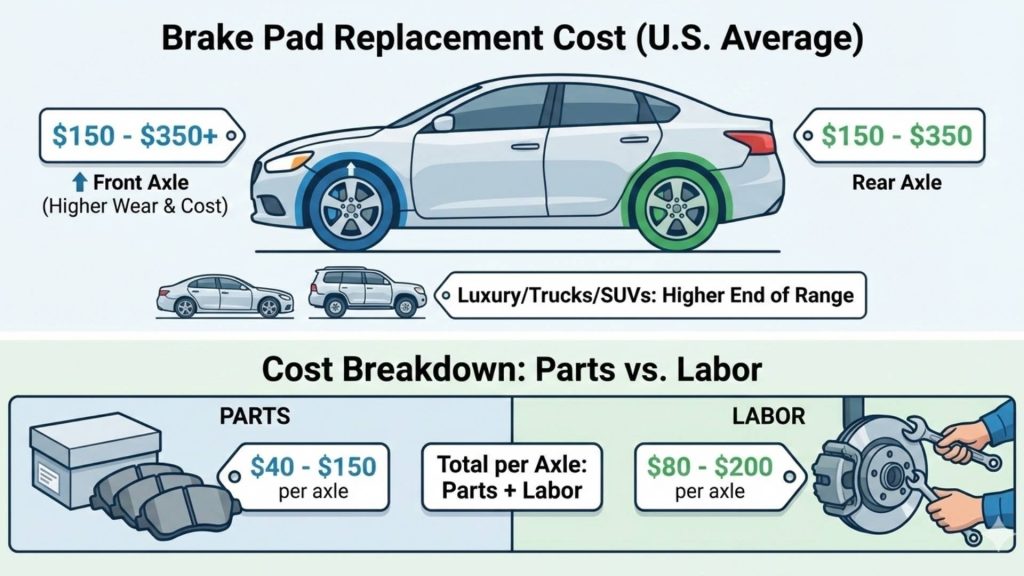
Brake service costs are divided into two main components: parts and labor.
Brake pads themselves usually cost between $40 and $150 per axle, depending on pad material and brand. Labor typically ranges from $80 to $200 per axle, depending on shop rates and vehicle complexity.
Understanding this breakdown helps drivers identify whether a quote is reasonable.
How brake pad material affects cost
Brake pad material plays a major role in total replacement cost.
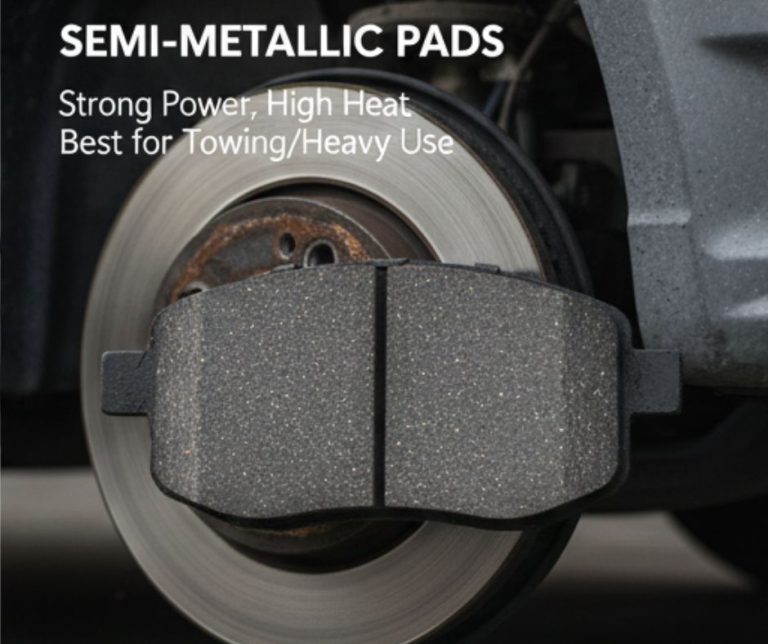
Ceramic brake pads are usually the most expensive but offer longer lifespan, quieter operation, and reduced rotor wear. Semi-metallic pads are often more affordable and perform well under heavy use but may increase rotor wear. Organic pads are typically the cheapest upfront but wear faster.
Material differences are explained in detail in brake pad types explained: ceramic vs semi-metallic vs organic.
When rotor replacement increases total cost
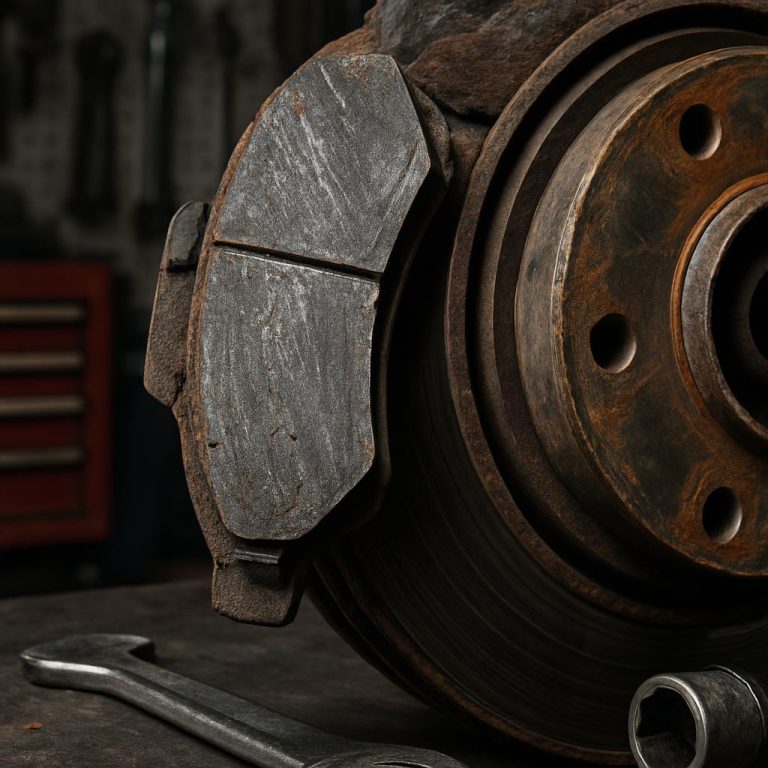
Brake pads and rotors work together. If pads are replaced too late, rotors may become damaged by metal-on-metal contact or excessive heat.
Rotor resurfacing typically adds $30–$75 per rotor, while full rotor replacement can add $200–$500 per axle or more, depending on the vehicle.
Timely pad replacement, as explained in when should brake pads be replaced?, helps avoid these additional costs.
Front vs rear brake pad replacement cost
Front brake pads usually cost more than rear pads because they wear faster and require more labor. Many vehicles use different pad sizes and designs for front and rear axles.
Some vehicles also use electronic parking brakes on the rear axle, which can increase labor cost due to required diagnostic tools.
Drivers should always confirm whether quotes are per axle or per vehicle.
Dealership vs independent shop pricing
Dealerships generally charge higher labor rates and use OEM parts, which increases cost. Independent repair shops often offer lower prices while using high-quality aftermarket pads.
Both options can be safe when work is done correctly. Choosing between them depends on budget, warranty preferences, and vehicle age.
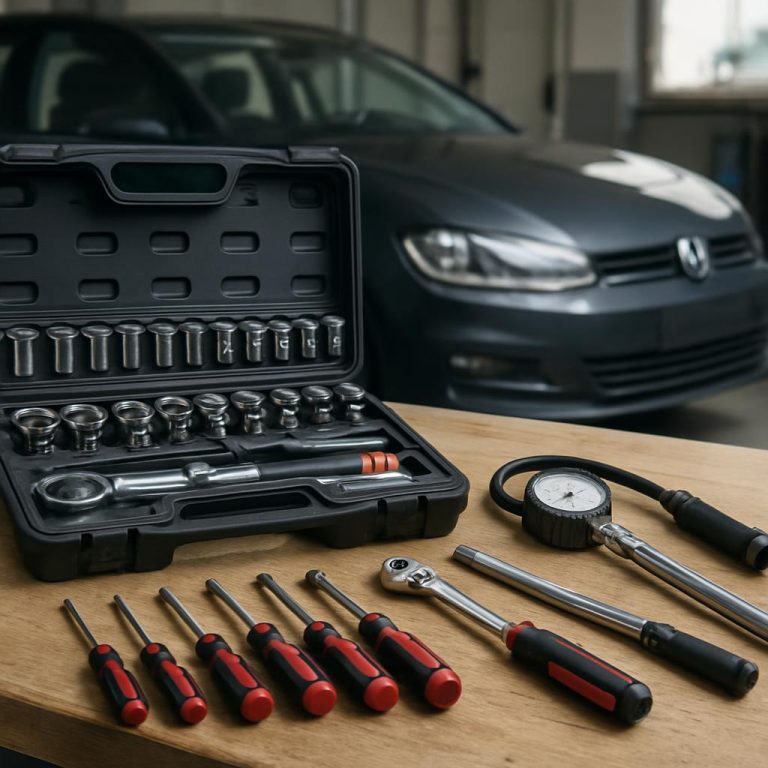
For drivers considering doing the work themselves, review DIY vs professional brake service before deciding.
How driving habits affect long-term brake cost
Aggressive braking, heavy loads, and frequent stop-and-go driving increase pad wear and replacement frequency. Smooth braking and proper following distance extend pad life and reduce long-term cost.
Replacing pads early often reduces overall expense by protecting rotors and calipers from damage.
Brake cost is closely tied to driving behavior.
Can cheap brake pads save money?
Low-cost brake pads may reduce upfront expense but often wear faster, produce more noise, and increase rotor wear. This can lead to higher total maintenance cost over time.
Quality pads matched to driving conditions provide better value than the cheapest available option.
Cost should be evaluated over the lifespan of the braking system, not just the initial invoice.
Common mistakes that increase brake replacement cost
One common mistake is ignoring early warning signs such as squealing or vibration. Another is replacing pads without inspecting rotors.
Choosing the wrong pad material for the vehicle’s use can also lead to premature wear and repeat service.
Regular inspection, as outlined in how to inspect your brakes: a step-by-step safety guide, helps prevent unnecessary expenses.
Final thoughts on brake pad replacement cost
Brake pad replacement cost varies, but understanding average pricing and cost drivers helps avoid surprises. Timely replacement, proper pad selection, and regular inspection reduce both safety risks and long-term expense.
Drivers who plan brake service early maintain better braking performance and lower repair costs.
For a complete overview of brake maintenance decisions, return to reliable brake pad options for everyday driving.