certified pre-owned vs used cars: key differences explained
The gap between certified pre-owned and standard used vehicles extends far beyond price tags. CPO programs promise manufacturer-backed warranties and rigorous inspections, while traditional used cars offer lower costs and wider selection. Understanding these differences—from warranty coverage to financing rates—helps you determine which path aligns with your risk tolerance and budget constraints when following a complete pre-owned vehicle checklist for purchasing decisions.
I bought my first CPO vehicle three years ago after getting burned on a regular used car that needed constant repairs. The extra 2,000 dollars I paid for CPO status saved me probably 4,000 in repair costs over two years. But CPO isn’t always the smart choice depending on your situation.
what certified pre-owned actually means
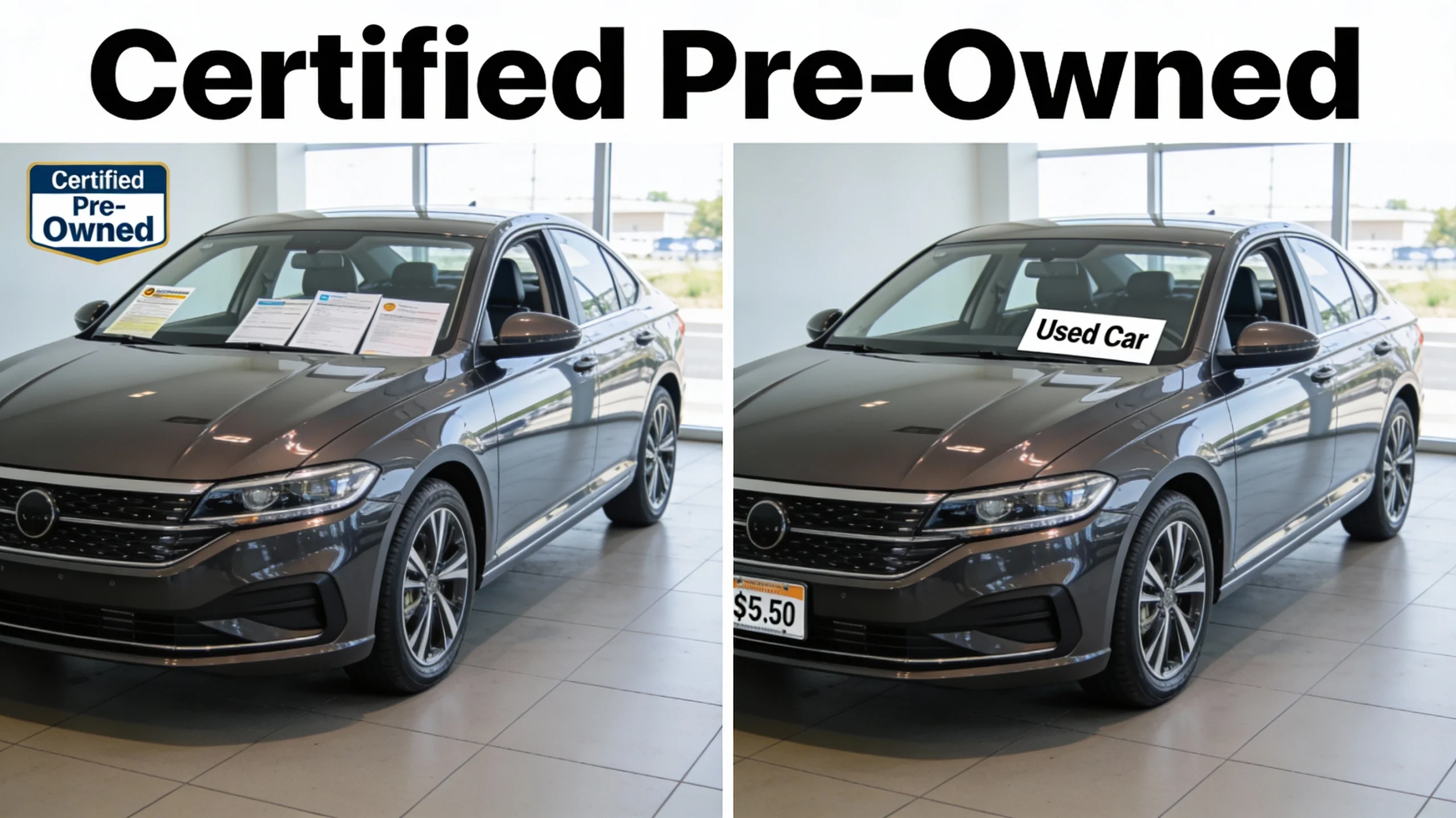
Certified pre-owned programs are manufacturer-sponsored programs that put used vehicles through extensive inspections and reconditioning. Each brand sets its own standards but most require vehicles to be less than five years old with under 60,000 to 80,000 miles.
The inspection process typically covers 150 to 300 points including engine, transmission, brakes, suspension, electrical systems, and interior components. Any parts that don’t meet standards get replaced with genuine OEM parts before the vehicle earns CPO certification.
Not every used car at a dealership qualifies for CPO status. Vehicles with accident history, frame damage, or flood damage automatically fail certification. Some brands also reject cars with salvage titles or excessive wear even if mechanically sound.
Third-party dealerships sometimes advertise their own certified programs but these lack manufacturer backing. True CPO programs come directly from brands like Toyota, Honda, BMW, or Ford. Don’t confuse dealer certifications with actual manufacturer CPO programs.
CPO warranty coverage breakdown
The warranty is the biggest difference between CPO and regular used cars. Most CPO programs extend the original factory warranty or provide a new limited warranty covering major components. Toyota offers a 12-month or 12,000-mile limited warranty plus a seven-year or 100,000-mile powertrain warranty from the original in-service date.
Honda provides a seven-year or 100,000-mile powertrain warranty along with a one-year or 12,000-mile non-powertrain warranty. BMW gives you one year of unlimited mileage coverage on most components. Luxury brands generally offer more comprehensive coverage than economy brands.
Coverage varies significantly by manufacturer. Some include roadside assistance, trip interruption coverage, and rental car reimbursement. Others just cover basic mechanical components. Read the warranty documentation carefully before assuming what’s included.
Regular used cars come with no warranty unless you purchase an extended warranty separately. You’re responsible for all repairs the moment you drive away. This risk is why CPO vehicles command premium prices.
the real cost difference
CPO vehicles typically cost 1,500 to 3,000 dollars more than identical non-certified used cars. Luxury brands see even bigger gaps with some CPO premiums reaching 5,000 dollars. You’re paying for the inspection, reconditioning, and warranty coverage.
Whether that premium makes financial sense depends on the vehicle’s reliability history and your mechanical knowledge. A CPO Toyota Camry might not justify the extra cost because Camrys rarely need major repairs. A CPO BMW 5 Series could save you thousands given BMW’s higher repair costs.
I compared a CPO Mazda CX-5 priced at 21,500 against a similar non-CPO one at 19,200. The 2,300 dollar difference seemed steep until I factored in the warranty value. A single transmission repair would cost more than the CPO premium.
Calculate the warranty’s value by researching common repairs for your target vehicle. If those repairs typically cost more than the CPO premium, certification makes sense. If the car has a bulletproof reliability record, save your money on the cheaper used option.
financing advantages of CPO programs
Lenders view CPO vehicles as lower risk because of the inspection and warranty. This translates to better interest rates for buyers. The rate difference might be one to two percentage points compared to regular used car loans.
On a 20,000 dollar loan over five years, a two percent rate difference equals roughly 1,000 dollars in interest savings. Combined with the warranty coverage, the financing advantage helps offset the higher purchase price.
Manufacturers sometimes offer special APR promotions on CPO vehicles similar to new car deals. I’ve seen CPO financing as low as 2.9 percent when regular used car rates were around 6 to 7 percent. These promotions change monthly so check current offerings.
Some CPO programs include gap insurance or other protection products at no extra charge. Regular used cars require you to purchase these separately if you want coverage.
quality standards and peace of mind
The multi-point inspection process for CPO certification catches problems that typical dealer inspections miss. Technicians check everything from brake pad thickness to computer error codes. Items that fail inspection get repaired or replaced before sale.
I toured a Toyota CPO facility once and watched technicians pull engines apart to check internal components. They weren’t just doing quick visual inspections. This level of scrutiny explains why CPO vehicles command higher prices.
Regular used cars might get basic safety inspections but dealers aren’t obligated to fix non-safety issues. That check engine light might stay on as long as the car runs well enough for a test drive. CPO programs require all warning lights to be diagnosed and resolved.
The reconditioning process also addresses cosmetic issues. CPO vehicles get detailed, paint corrected, and interior repairs completed. They should look nearly new when you take delivery.
vehicle history and transparency
CPO programs require clean vehicle history reports. Cars with significant accidents, multiple owners in short timeframes, or questionable title status won’t qualify. This screening process eliminates many problematic vehicles from consideration.
You still need to review the history report yourself but CPO certification provides additional assurance. The manufacturer has financial incentive to avoid certifying vehicles that will generate warranty claims.
Regular used cars come with no such guarantees. Sellers might provide history reports but they’re not required to reject cars with concerning histories. You bear all the risk of buying a vehicle with hidden problems.
Some buyers feel comfortable with this risk especially when buying reliable brands like Honda or Mazda. Others prefer the additional screening that CPO programs provide.
mileage and age restrictions
Most CPO programs limit eligibility to vehicles under five or six years old with mileage caps between 60,000 and 100,000 miles depending on the manufacturer. These restrictions ensure certified vehicles have significant remaining useful life.
Mercedes-Benz limits CPO certification to vehicles under six years old with less than 75,000 miles. Hyundai extends to vehicles under five years old with under 60,000 miles. Check specific program requirements for brands you’re considering.
These restrictions create a sweet spot for CPO shopping. You’re buying vehicles past their steepest depreciation but still with plenty of life remaining. A three-year-old CPO vehicle with 35,000 miles has already lost 40 to 50 percent of its original value.
Regular used car shopping has no such restrictions. You can buy a 10-year-old car with 150,000 miles if you’re comfortable with the higher risk. This flexibility lets you find better deals if you know how to assess vehicle condition yourself.
return policies and trial periods
Many CPO programs include return windows or exchange policies that regular used car sales don’t offer. Some brands give you three to seven days to return the vehicle if you’re unsatisfied. Others allow exchanges within 30 days.
These policies remove some purchase anxiety. If you discover problems during the first week, you’re not stuck with the car. Regular used car sales are typically final with no recourse unless you can prove fraud.
Read the return policy details carefully. Some brands only allow returns if specific conditions exist like mechanical failure. Others give you broader discretion. Some charge restocking fees for returns.
I know someone who returned a CPO Volkswagen after four days because it wasn’t the right fit for her commute. The dealer accepted the return under VW’s CPO policy without hassle. That same flexibility doesn’t exist with private party or non-CPO dealer purchases.
when regular used cars make More sense
If you’re mechanically inclined and comfortable performing your own inspections, paying the CPO premium might not be necessary. You can find excellent deals on regular used cars if you know what to look for.
Buyers with limited budgets often can’t afford CPO prices. A 3,000 dollar price difference might represent your entire down payment. In these cases, buying a reliable non-CPO vehicle makes financial sense even with higher risk.
Vehicles with excellent reliability records don’t benefit much from CPO warranties. A used Toyota Prius or Honda Civic rarely needs major repairs so you’re paying for coverage you probably won’t use.
Some buyers plan to perform extensive modifications or use the vehicle for specific purposes like track days. CPO warranties often become void with modifications so certification provides no value.
making your decision
Consider your mechanical knowledge, budget constraints, and risk tolerance when choosing between CPO and regular used cars. Someone buying their first car might benefit from CPO’s added security. An experienced buyer comfortable with repairs might skip certification.
Calculate the total cost of ownership including the purchase price, likely repairs, and warranty coverage. Sometimes the math clearly favors one option. Other times it’s close enough that personal preference matters more than numbers.
Test drive both CPO and non-CPO versions of your target vehicle. Sometimes the condition difference justifies the premium. Other times regular used cars look equally good for less money.
Whatever you choose, don’t let CPO certification replace your due diligence. Still get a pre-purchase inspection, review history reports, and negotiate firmly on price. Certification reduces risk but doesn’t eliminate it entirely. After deciding which type fits your needs, exploring financing options for used vehicles helps you secure the best rates and terms for your purchase.